



A major mine northeast of Tucson that closed more than 20 years ago could see new life as part of a Canadian company’s push to tap other copper deposits in the area.
The San Manuel Mine in Pinal County once ranked among the world’s largest underground copper mines, but operations shut down in 1999, and the site closed — seemingly for good — in 2003, leaving more than 2,500 people out of work.
British Columbia-based Faraday Copper is now exploring the possibility of reopening the mine in San Manuel in conjunction with the open-pit and underground Copper Creek Project it hopes to develop in the Galiuro Mountains, about 15 miles away.
The exploration company has signed a non-binding letter of intent to acquire about 27,000 acres of San Manuel property from BHP, the Australia-based global metals giant that bought the mine in 1996 and closed it three years later amid sagging copper prices.

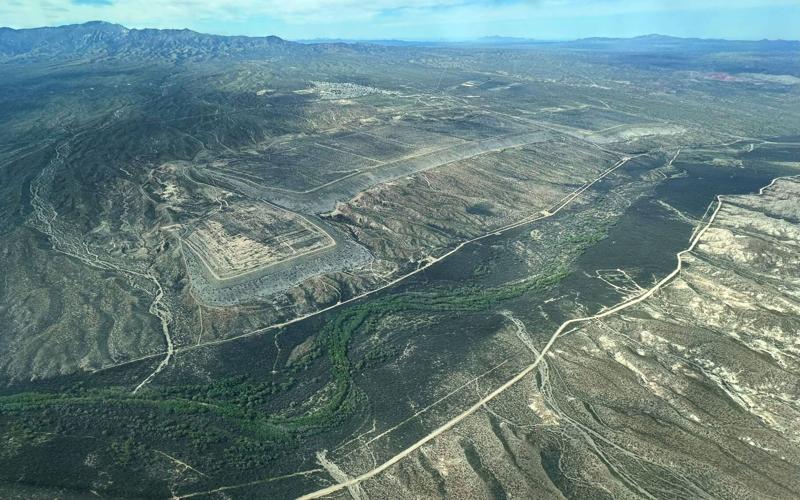
The San Pedro River snakes past tailings piles left over from the San Manuel Mine in an aerial photo taken March 4. The town of San Manuel can be seen in the background. British Columbia-based Faraday Copper is now exploring the possibility of reopening the mine in San Manuel, where previous operations shut down in 1999.

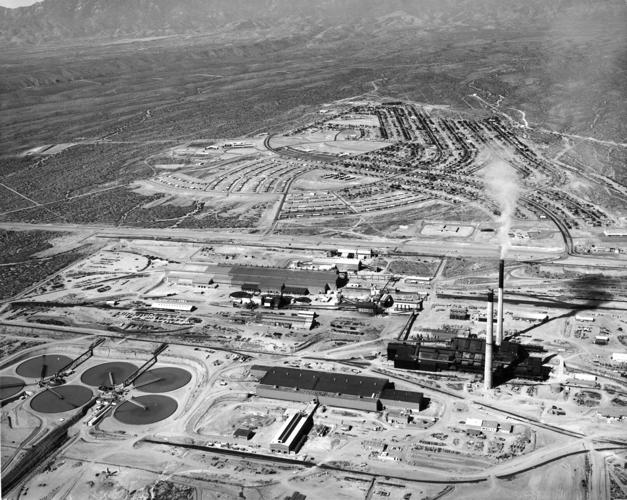
The crusher, concentrator and smelter at San Manuel as it looked in 1971, after a $200 million expansion of the facility. The smelter got a second smoke stack. In the background, the company town of San Manuel got another 200 houses.
Under the proposed deal, Faraday would take ownership of the closed open pit and underground shafts, two nearby quarries and all the land surrounding the town of San Manuel, including the tailings piles near the San Pedro River and the reclaimed site where the mine’s processing plant and smelter once stood. The company would also take on all of BHP’s liabilities related to the previous operation, including its closure and environmental monitoring requirements.
In exchange, BHP would get a 30% stake in Faraday and the opportunity to “explore pathways for the restart of the San Manuel copper mine and development of a new copper hub in Arizona,” BHP said in a Feb. 20 news release announcing the letter of intent.

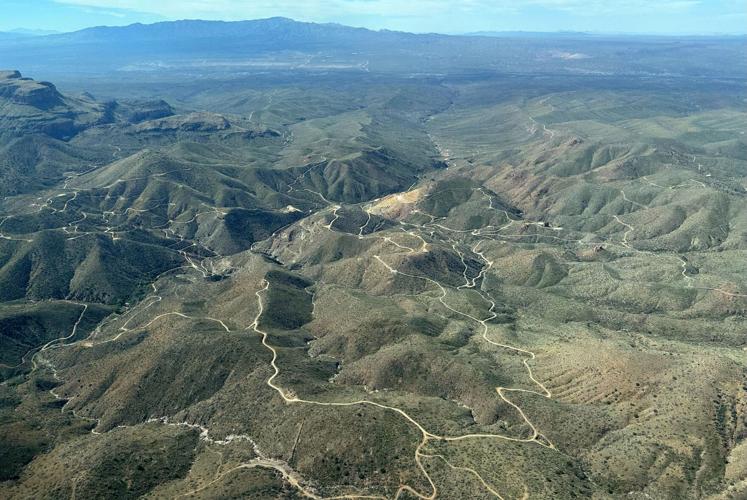
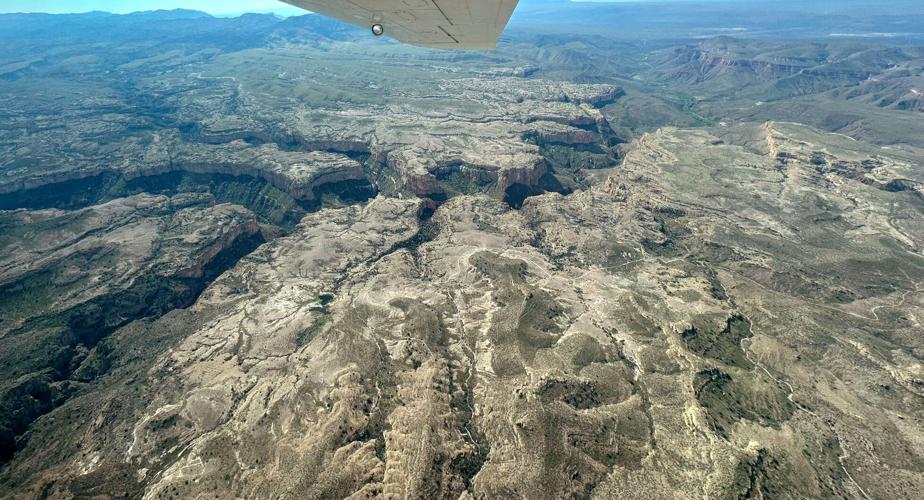
Access roads crisscross the hills to exploratory drilling sites for the proposed Copper Creek mining project in the Galiuro Mountains, 55 miles northeast of Tucson, in an aerial photo taken March 4.
Faraday has spent the past several years cutting roads and conducting exploratory drilling in the Galiuros, about 55 miles northeast of Tucson, where the company is touting plans for as many as six open pits. The proposed Copper Creek Project, on roughly 25 square miles of public and private land, would also feature a massive, underground block-cave mining operation like the one that eventually caused a large sinkhole to develop next to the pit at the San Manuel Mine.
Cutoff creek
Faraday is still characterizing the Copper Creek deposit but has already called it “one of the largest undeveloped copper resources in North America,” with an estimated yield of 4.2 billion pounds of the metal.
In July, the Bureau of Land Management signed off on the company’s plans to clear up to 67 pads for exploratory drilling on federal land near the project’s namesake creek, and that work is ongoing.
By consolidating the new mine with the old one in San Manuel, Faraday seeks to create a “multi-generational copper district delivering made-in-America copper, while providing significant economic opportunities to the local communities,” said company president Paul Harbridge in a written statement.
Conservationists and some nearby residents expect something else from the combined mining venture: a slow-rolling environmental catastrophe for the Galiuro Mountains and surrounding watersheds.
Melissa Crytzer Fry is chairwoman of the Lower San Pedro Watershed Alliance, a small conservation nonprofit based in Mammoth, about 10 miles southwest of the Copper Creek Project.
The San Pedro River snakes past tailings piles left over from the San Manuel Mine in an aerial photo taken March 4. The town of San Manuel can be seen in the background. British Columbia-based Faraday Copper is now exploring the possibility of reopening the mine in San Manuel, where previous operations shut down in 1999.
“The biggest concern about the location of the open pit mine, aside from the massive scale of it, is that it will wipe out Copper Creek,” Crytzer Fry said. “I think the largest pit that they have planned is smack dab in the middle of the creek. And Copper Creek is a tributary that feeds the Lower San Pedro, so there are big concerns about what happens when you rob the (river) of that water.”

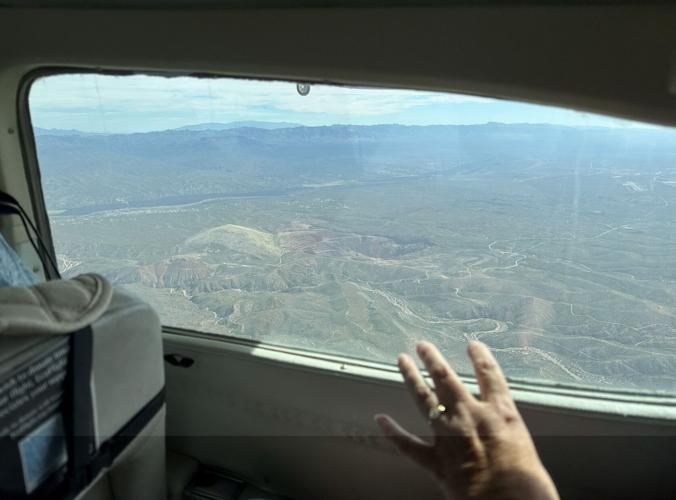
Melissa Crytzer Fry from the Lower San Pedro Watershed Alliance points out the pit of the closed San Manuel Mine, about 40 miles northeast of Tucson, during an aerial tour of the area on March 4.
She also laments the possible destruction of a natural playground in the Galiuros for hikers, hunters, birders and other outdoor enthusiasts.
“That area is filled with mature cottonwoods and mature saguaros, and the amount of biodiversity is just off the charts,” said Crytzer Fry, who has lived in the San Pedro Valley just outside Mammoth for the past 20 years. “It has mountain lions and black bears and coatimundi, ringtails and every skunk that the state of Arizona has. We have even documented Mexican spotted owls, which is an endangered species.”
Water worries
What worries Keith Nelson are the cumulative impacts from mining activity and other stressors on the region’s already tenuous water network.
A decline in one area can eventually impact flows in other places, because it’s all interconnected and “there’s no free lunch,” said Nelson, a retired hydrologist for the Arizona Department of Water Resources now serving as an advisor to the Lower San Pedro Watershed Alliance.
Of particular concern are fragile and increasingly rare desert systems like the San Pedro or Aravaipa Creek, which feeds a lush ribbon of canyon wilderness snaking along the northern edge of the Galiuros. Heavy groundwater pumping and consumptive use by new mines in the area will only exacerbate declines already underway from human use upstream, tributary depletion and climate change.

Aravaipa Canyon branches across the landscape at the northern edge of the Galiuro Mountains in Pinal County in an aerial photo taken on March 4. British Columbia-based Faraday Copper hopes to develop its Copper Creek open-pit and underground project in the Galiuro Mountains.
Nelson said the impacts could take decades to materialize. “We need to understand the whole system,” he said. “We’re doing this for our kids. It’s not for us old-timers.”
Crytzer Fry said foreign companies like Faraday and BHP already benefit from permissive U.S. mining laws dating back to the 19th century. Now she worries that efforts by the Trump administration to weaken the National Environmental Policy Act and the Endangered Species Act could make it impossible to protect communities and fragile ecosystems from industrial development.
If new mining does dry out or harm the Lower San Pedro, Crytzer Fry said, we risk losing thousands of acres of river habitat previously set aside to compensate for ecological damage elsewhere. That includes a tract owned by the Salt River Project to offset riparian areas flooded by Roosevelt Dam and a ranch on the river conserved as part of a land swap that gave Resolution Copper its embattled Oak Flat mine site.
“This is Arizona's default repository for offsite mitigation,” she said. “When anything bad happens anywhere else, the Lower San Pedro is where they come for mitigation land.”
Historic hole
Mineral exploration at San Manuel is almost as old as Pinal County itself, dating back to the late 1800s.
The Magma Copper Company began sinking shafts for large-scale production at the site in 1948, and by 1954, the new company town of San Manuel had been built a few miles away. It was Del Webb’s first master-planned community in Arizona, with homes, stores, parks, schools and a Magma-owned hospital for the mine workers and their families.
Over the 44-year life of the mine, more than 700 million tons of ore were pulled from underground, and almost 93 million tons were hauled from the open pit that was excavated starting in 1985.

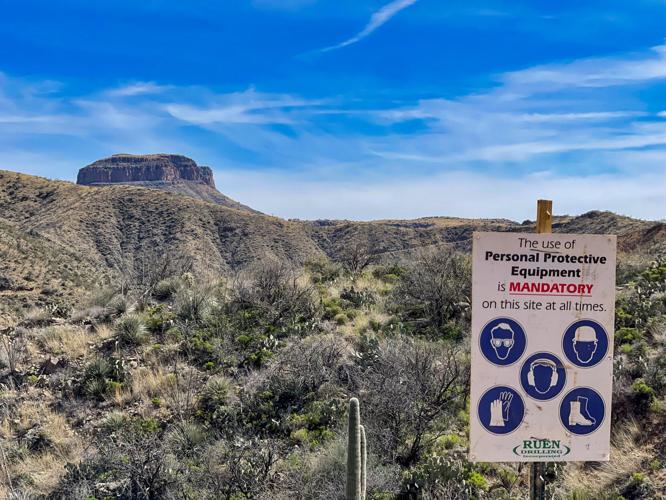
A sign in the Galiuro Mountains marks the location of drilling activity in 2023 for the proposed Copper Creek open-pit and underground mine.
BHP acquired San Manuel through its merger with Magma Copper in 1996. A temporary work stoppage in June 1999 became permanent in February 2002, when the pumps were switched off, and the underground tunnels were allowed to flood with groundwater. The rest of the operation shut down for good the following year, and the mine’s processing facilities were demolished.
The smelter’s two 500-foot smoke stacks were the last to come down in 2007, the same year BHP completed what has been called one of the largest owner-funded mine closure and reclamation projects in the world.
In last month’s announcement of its possible deal with Faraday, BHP said that “a significant mineral inventory” still remained on site when excavation ceased in 1999.
Any leftover ore could now be worth a second look, thanks to high copper prices, rising demand and improved extraction techniques. The base metal was selling for about 65 cents a pound when the mine closed in 1999. Copper is currently hovering around $5.75 a pound, after hitting a record high of nearly $6.60 in January.
Faraday’s share price on the Toronto Stock Exchange has increased by more than 40% in the two weeks since the company announced its plans to explore purchasing the San Manuel property.
Mining for jobs
Pinal County hasn’t staked out an official position on the new mining proposal yet, but county Supervisor Jeffrey McClure certainly has: He’s all for it.
“It will bring a lot of economic growth to the area and a lot of jobs,” said McClure, whose district includes San Manuel and Copper Creek. “That’s really what that area needs.”

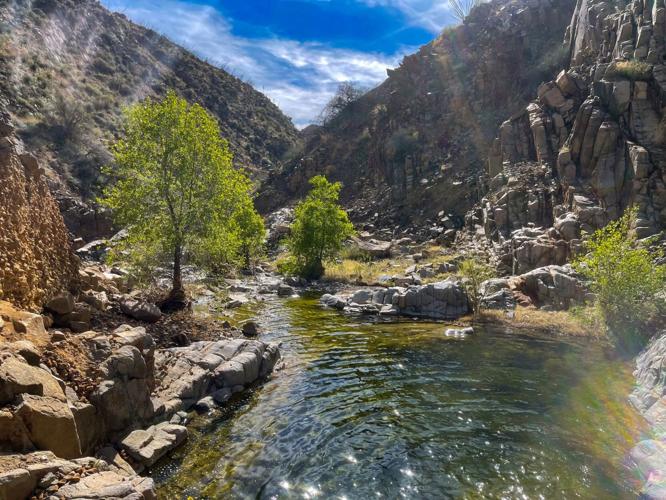
Water flows down Copper Creek, not far from the site in the Galiuro Mountains where Canadian company Faraday Copper is proposing to build an open-pit and underground mine.
The plan, as McClure understands it, is for the old mine to reopen initially as a reprocessing operation, collecting copper and other metals from the tailings and waste rock left over at the site. Underground excavation would then resume after several years, depending on commodity prices and other factors, he said. “That’s what I’m led to believe.”
Faraday declined to provide details about its plans for the mine beyond its hope to “re-start mining activities on the property.”
“If the proposed transaction is finalized, our team would be evaluating many options as it relates to the redevelopment of the San Manuel mine,” company officials said in a written response to questions from the Star.
McClure largely brushed off the concerns from conservationists. “Everything you do is going to have an environmental impact,” he said. “There’s always going to be someone who isn’t happy.”
His primary focus is on helping San Manuel, which is still struggling almost three decades after the mine closed down. He said the isolated community of about 3,300 residents is hungry for employment opportunities and investment, and mining represents one of the only viable options.

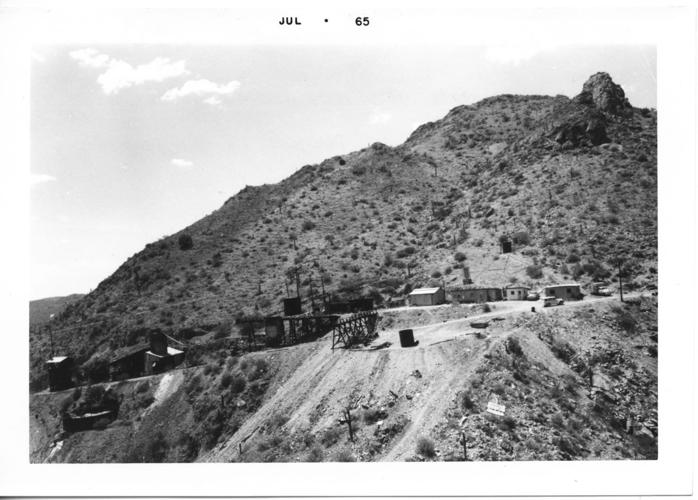
The Old Reliable Mine, seen here in July 1965, is one of several mining ventures that operated in the same part of the Galiuro Mountains where Canadian company Faraday Copper is proposing an open-pit and underground mine.
Crytzer Fry called such thinking “very shortsighted.”
“If you don't have clean air and you don't have clean water, then money doesn't mean anything,” she said. “Maybe a mine here would result in 30 years of jobs, but what does that gain anyone if the three or four communities along the river no longer have water at the end of that run? You can't have communities without water.”
Besides, she said, there are other ways to boost the economy in southeastern Pinal County.
“This is an area that would be perfect for ecotourism, but I don't know how you break that cycle,” Crytzer Fry said. “I don't know how you introduce something new like that to a community that was founded, literally, by mining.”

