



After years of legislative inaction, political infighting and falling water tables under Arizona’s farmland, a compromise over how to manage heretofore unregulated pumping of rural groundwater appears close at hand.
Representatives of both sides of the protracted debate pronounced themselves close to an agreement about proposed legislation in interviews and at a public meeting over the past few days.
While at least two sticking points still need resolution, both sides have compromised on several other, previously intractable issues, heightening the chances of agreement. This optimism comes despite the Legislature’s failure to pass a rural groundwater bill in its just-finished 2024 session.
“We’re still committed to building on this momentum to reach a legislative solution. While we have much more work to be done, this path to resolution is attainable,” said Patrick Adams, a natural resources policy advisor for Gov. Katie Hobbs, who has made it a priority to get a handle on unregulated rural pumping. Adams spoke Tuesday at a meeting in Phoenix of the Governor’s Water Policy Council.
On Thursday, Arizona Farm Bureau President Stefanie Smallhouse told the Star, “We’re very close.”
Despite the recent legislative impasse, “I think we’ve put way too much time into it to just throw our hands up. We’ve been working on this for 8 months. I would never want to say we’re done,” Smallhouse said.
Smallhouse farms in the Lower San Pedro Valley, in the ghost town of Redington and about 20 miles east of the Rincon Mountains.

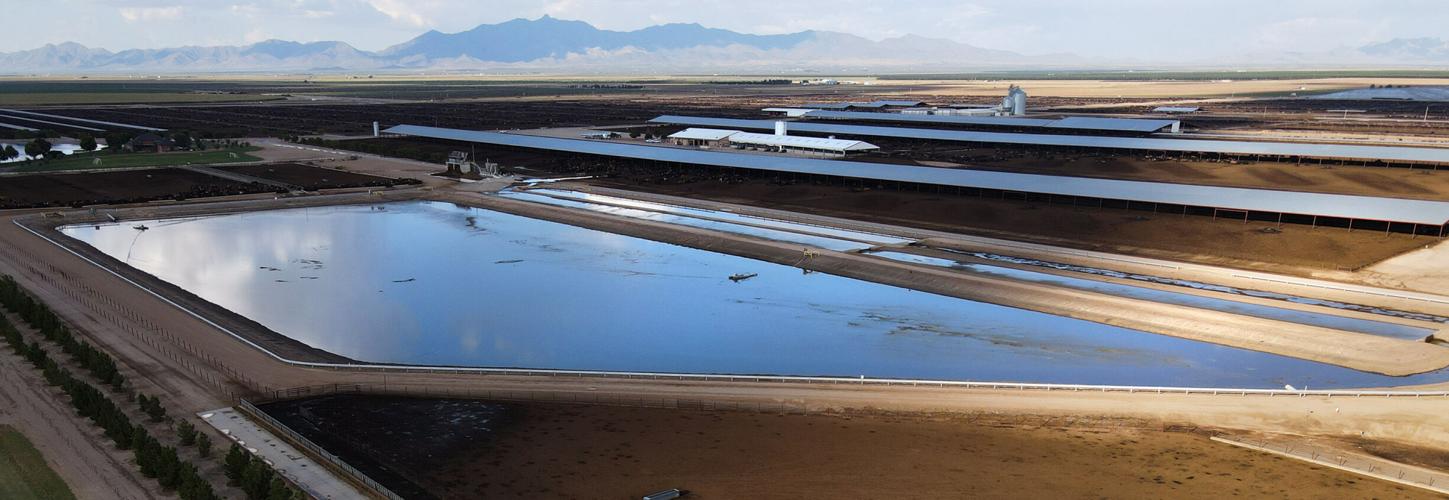
Water basins at Coronado Dairy in Willcox, which pumps groundwater for its operations.
Open to special legislative session
For years if not decades, the two sides were locked in perpetual conflict between those who felt aquifers across the state’s rural heartlands were at risk of collapse without regulation, and those who said regulations would violate farmers’ private property rights and wreck their local economies.
While urban Arizona’s groundwater pumping has been regulated since the 1980 passage of the Arizona Groundwater Management Act, rural areas were left out of that arrangement, at least partly by their leaders’ own choice.
Even as aquifers in rural areas across the state declined, resistance among many farmers and some surrounding local communities remained fierce at least partly because of their economic dependence on agriculture.
Now they’re close enough, both sides said, that if they can reach full agreement, they’d be open to having a special legislative session called later this year to etch the agreement into law. The governor is also open to calling such a session under that circumstance, Adams told the Water Policy Council.
The bill that would have ushered in a system of rural regulation proposed by Republican legislators failed on a 29-28 party-line vote in the House on the session’s last day, June 15.
Because two Republican representatives weren’t present for the vote, backers failed to get the 31 votes needed to pass the bill. The Senate had approved it more than three months earlier.
The bill would have allowed for creation of rural groundwater basin management areas in three areas plagued by falling water tables. One is the Willcox Basin in Cochise County. The second is in the Gila Bend Basin that includes the city of Gila Bend in Maricopa County. The third is in the Hualapai Basin north of Kingman in Mojave County.
Once such management areas were created, if the bill had passed, the basins would have been closed to new pumping by farmers. That’s already the case in the Hualapai Basin, which the state designated in 2022 as a formal Irrigation Non-Expansion Area.
All three basins have substantial overdrafts of groundwater pumping compared to recharge. In the Willcox area, scores of shallow residential wells have been dried up by pumping for agriculture.
Progress toward bipartisan compromise
“While that bill did fail, I want to emphasize we have been making significant progress toward a bipartisan compromise,” Adams told the Governor’s Water Policy Council.
The need for action on rural groundwater has not ended, he said.
“We still have residents, communities and businesses pleading for rural groundwater reform … asking for help. Their livelihoods, their communities” depend on it, Adams said.
Responding at the meeting, Rep. Gail Griffin, a Hereford Republican who chairs the House Energy, Natural Resources and Water Committee, said, “We have met the last four-plus months weekly, sometimes two and three times a week, with the governor’s staff and Democrats and the agricultural community.

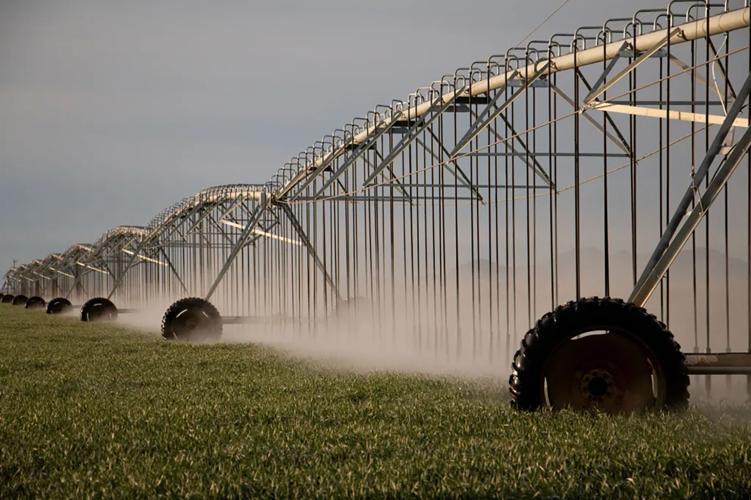
A center pivot sprinkler arm irrigates a field in the Sulphur Springs Valley of Arizona’s Cochise County.
“We’re still at the table. We continue to work on this issue,” said Griffin.
Even eight months ago, the chances of agreement seemed remote.
A few months after the Water Policy Council first convened, two agricultural representatives, Smallhouse and farmer-Sen. Sine Kerr quit. They said proposals under discussion by the council put too much power in the hands of Arizona Department of Water Resources Director Tom Buschatzke to appoint members of new rural groundwater management councils.
Kerr said the council was “nothing more than a forum to rubber stamp the progressive environmental goals of special interest groups.” She accused them of pushing a “radical agenda” to destroy farmers’ and ranchers’ livelihoods.
Griffin remained on the council but she agreed with many of her fellow rural representatives’ criticisms. An ardent property rights advocate, she had blocked passage of many groundwater regulation bills in the past, including some proposed by Republicans, by denying them a hearing before her committee.
But since last fall, negotiations have produced agreement on several key fronts.
First, farm bureau officials and agriculture advocates agreed to have some form of regulation, which had not happened before. The bill just defeated in the Legislature would have allowed for water use cuts of up to 10% over 10 years if locally managed groundwater basin councils concluded they were needed to protect aquifers. Another 5% water use cut could happen later, although no cut could exceed 2% in a single year.
Originally, legislative Democrats and their allies wanted the bill to allow water use cuts of up to 40%, Smallhouse said. That’s not accurate, said Sen. Priya Sundareshan, a Tucson Democrat who has led the charge for stricter regulation — she said the Democrats originally proposed limiting cuts to 20% from existing use.
Second, the backers of strict regulation agreed to back off on a call for mandatory metering of farmers’ well pumping. Instead, both sides have agreed to call on farmers to choose between meters, or estimating water use by disclosing to the state their wells’ pumping capacity and their electric power use.
Third, farmers gave up on their previous insistence that members of a groundwater basin management council would have to be elected. The defeated bill that they backed called for having all five council members appointed. One would be picked by the governor alone, two would be chosen by the House speaker and Senate president, and two more would be picked by the governor from lists provided by House and Senate minority party leaders.
Smallhouse told the Star she feels the farmers and their allies have addressed “all of the big disagreements. I felt like we compromised a lot on these disagreements. We can’t be the only ones who compromise.”
Sticking points remain
The two big issues left to resolve are:
— Those favoring stricter regulation, including Willcox-area chile grower Ed Curry and Sen. Sundareshan would like the groundwater basin councils to have more leeway to reduce groundwater pumping more than 5% after the basins’ first 10 years.
“Just keep it going with a cut of 1% a year over 30 years. One percent probably is digestible on both sides. Stopping at 10 years — the governor’s side is not going to go for it,” said Curry, who farms near Sunsites in the Willcox Basin.
Limiting cuts to 15% not only crimps the basin area councils’ usefulness, it limits “the ability for science and data to drive the management that may be needed, in order to stabilize the aquifer,” Sundareshan said.
Smallhouse replied that the problem is that as some conservation is carried out, additional conservation gets more difficult to achieve due to costs and the limits of available technology.
“As technology improves farmers will be able to achieve greater conservation, but we have to allow some time for farmers to absorb these cuts. The challenges that we face developed over a series of decades, it is unreasonable to expect the situation to improve in a matter of years,” she said.
— Democrats and their allies dislike a provision in the defeated bill that allowed farmers to leave out consideration of years when they planted no crops when it comes time to determine their historic, 10-year average water use.
Those historic uses would be employed to set up certificates of long-term groundwater rights for farmers.
Sundareshan and Curry say they’re particularly concerned that farmers who have either started or significantly increased pumping in the past few years as the specter of regulation loomed will take advantage of these provisions.
They fear those farmers could claim such activity as “substantial investments” that would be counted toward establishing long-term groundwater pumping rights.
Smallhouse, however, said farmers on her side of the issue are “adamant” that years when farmers did no pumping shouldn’t be counted toward their 10-year average use.
“Regardless of size, there are numerous reasons why a farmer would not irrigate certain acres in certain years. Many of those are based on the premise of conservation. So by not counting those years — you are punishing a farmer for conserving.
“When farmers transition to a higher efficiency irrigation system they would also not farm those acres in certain years — again punishing acts of conservation,” Smallhouse said.
"A tree planted in the ground is not unlike any other plant. It requires different amounts of water to grow depending on the stage of the plant," Smallhouse said. "(Sundareshan) is ignoring this fact. She is suggesting that farmers who have invested thousands if not millions in a tree crop in its 2nd or 3rd year have not the same rights as anyone else growing a crop."
But if the state is going to close groundwater basins to new farmers, and grant existing farmers certificates of perpetual water rights, "it seems only fair to also have a permanent, ongoing conservation framework in place,'" allowing additional cuts beyond the first 15% if conditions warrantit, said Rep. Christopher Mathis, another Tucson Democrat.
"The right needs to go hand in hand with the responsibility," said Mathis, who authored a stricter rural groundwater regulation bill that died after not getting a legislative hearing.
Longtime Arizona Daily Star reporter Tony Davis talks about the viability of seawater desalination and wastewater treatment as alternatives to reliance on the Colorado River.

