


Crash!
It’s Saturday night in downtown Tucson, and a cocktail glass wizzes by your head.
Smash!
It crashes — tequila permeates the air.
There’s shouting. There’s pushing, then “Bam!’, fists hit flesh.
“It definitely ruins the night if you’re out somewhere and a fight breaks out,” Tucson night-lifer Danielle Standage said of those nights-gone-wrong. “It can get really dangerous really fast, so I typically leave if I see people fighting or about to. You never know who is armed, and I don’t want anyone in my party losing their life over some stupid argument that had nothing to do with us.
“It’s always the same people that cause problems. Weed them out and solve the issue.”

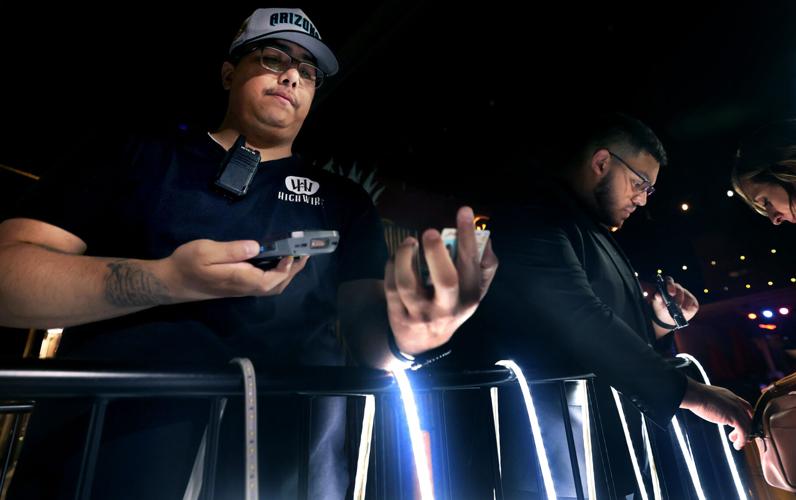
Doorman Jonathan Romero, left, uses a handheld scanner to verify a state issued ID outside HighWire Tucson. The popular venue is one of three popular downtown hotspots to get tough on troublemakers.
Which is exactly what three downtown Tucson hotspots, Highwire, Chelas and Cobra Arcade, have teamed up to do.
Ne’re-do-wells are banned, on the spot, from each location if they fight, disrespect staff, get too handsy or commit other infractions.
Highwire Owner Justin Olson said a single situation gone wrong could put bar owners and their employees out thousands of dollars in damages and lost income. It could end with a call from the state liquor board, and worse, guests who don’t feel safe enough to stay, or come back.
“If a fight were to break out at club/bar I was at, I would be out the door as quickly as I could collect my friends,” Facebook user Haley Madison said of her safety routine. “Too many Darwin candidates are walking around with guns.”
For Madison and her friends, it’s “onto the next spot.”
The bar room “boxers,” they aren’t so lucky.
This is how their night will play out.
No club for you
Back at the bar, two drunk men with sweaty foreheads and bleeding lips are tossed out, only this time they are banned ... likely forever.
In fact, by the time it takes them to walk to the next stop, they will have been banned entirely from all three venues.

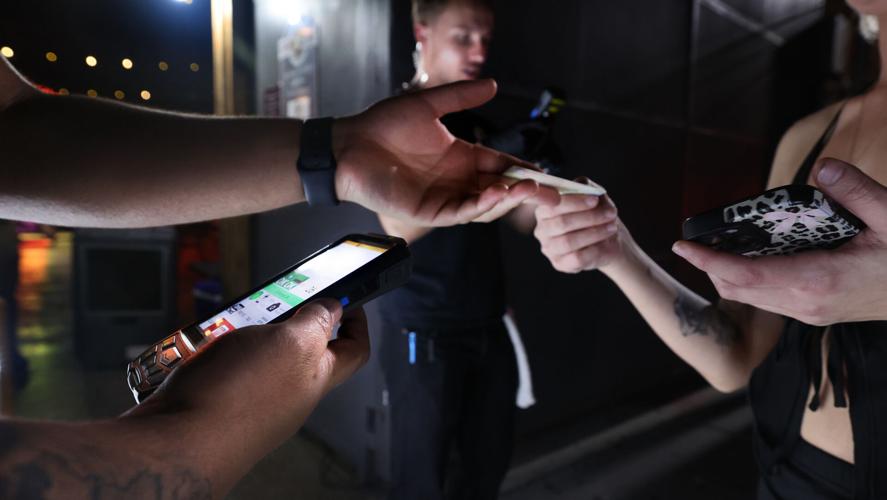
Doorman Jonathan Romero returns an ID after using a handheld unit to verify information in the Together Tucson database, used by three venues downtown to try to keep known troublemakers from getting inside.
The three establishments have been banning rude and unruly club-goers from their businesses simultaneously by using wirelessly connected hand-held devices that will notify doormen at all participating locations if a banned person is attempting to enter their establishment.
“I really hope people start realizing, at least inside our night clubs, that we don’t want (trouble makers). They can take it somewhere else,” Olson said.
Keeping in the good graces of the state liquor board means keeping his 60 employees paid, keeping his drinks flowing, the lights low and the DJ bumping.
How it works
The process starts when patrons of each venue get their photos taken at the door. (Some even choose to strike a cheeky pose, Olson said).
Once in the system, they won’t be asked again. This helps provide a current photograph and not a “classic, years-old, driver’s license picture.”
In a snap, this information is shared across the network.
The goal? Identify and weed out the bad apples.
“We want to come together to ensure guests have a pleasant experience without fear of some event taking place that’s going to have a negative impact on their evening,” Olson explained.
As of last month, approximately 15 people had been banned from the network of clubs. Moore said eight people have inquired about reinstatement, and three people have initiated the actual process. None have gotten their privileges back as of yet.
Many nightlife lovers are delighted by the collaboration and hope to see it grow.
“I think it’s a great idea,” Madison expressed when asked about the policy and how it could change her nighttime outings.
The collaboration also boosted the confidence of the older crowd, who have been avoiding downtown nightlife because of perceived violence.
Violent videos circulating on social media glamorizing downtown fights have kept some away for years, and for good reason. Perhaps changes like this will bring back the confidence in those currently avoiding the area, Olson suggested.
As someone who worked downtown during his college career, Christopher Schwerin said this is “a great idea to get rid of those only looking to fight.” He noted that it might also teach people to monitor their liquor for fear of getting the boot from three hot spots at once.
Steps to get back in
To get readmitted is an option, but it won’t be an easy one, explained Crystal Moore with Downtown Tucson Partnership.
“I think it’s going to take a lot for these bar owners to allow someone back in. They would really need to show remorse and show that they’re not going to do it again,” Moore said.
Olson said that the $20 a banned guest would likely spend versus the $1,000 in possible damages in the venue wouldn’t be a good business practice.
Banned people, however, have a chance to come back.
A QR code on the door of each venue leads patrons to a website where they can plead their case for re-entry. Since the trio began keeping statistics in late May, 15 individuals have been banned.
Eight people have inquired about the reinstatement process, and three have followed through with it. No one has been reinstated.
To beat the ban, each banned person must sit before a panel and apologize for their actions. They must hold themselves accountable and discuss why they acted a particular way on that particular night.
“What it takes for them to actually get in front of us — they should be proud of the effort they’re making,” Moore said. “We want a commitment that they’ll have a good time without being disruptive.”
Each event is different and is treated as such.
Potential for growth
Currently, just the three locations are connected via scanner, but Moore hopes to see that change.
“It’s the first of its kind in Tucson that I’m aware of and there has been interest from other operators downtown,” Moore said. “I’ve gotten calls from far East.”
She’s also received positive interest from Mercado, Fourth Avenue and Main Gate businesses.
The scanners, which cost around $1,000, might be out of reach for some businesses’ price point. As of now, Rio Nuevo will pay $500 toward the cost. Linking scanners and an annual subscription will be paid by the businesses themselves.
“This is remarkable and so exciting,” Moore said. “It’s a direct connect to what the community is asking for. They are embracing the idea of us protecting their good time.”

