



The University of Arizona has already received some “stop work” orders from the Trump administration on federally funded projects, its senior vice president for research and innovation told the Faculty Senate.
The official, Tomás Díaz de la Rubia, said the UA has gotten some directives from federal sponsors, including the National Science Foundation, the National Institutes of Health and the Department of Education, to stop part of its work immediately. He did not specify which research.
“Some agencies like NSF have taken a very strong approach. Others are taking time to review grants. They’re the only ones that can really guide you on what piece of your work can and cannot be executed,” Díaz de la Rubia told the Faculty Senate at a meeting Monday.
He was responding to a question from faculty senator Carol Brochin on how the UA is defining diversity, equity and inclusion, to understand which programs might be affected by President Donald Trump’s executive order targeting DEI. Trump ordered on Jan. 20 that all DEI programs be terminated across the federal government, calling them discriminatory.
“What we have been doing is, telling everybody, ‘If you get a stop order from your federal (funding) sponsor, follow that order. If you don’t, continue working,’” Díaz de la Rubia responded to Brochin. “I have said this several times in various meetings, in various forums, and really at the end of the day, the only person that can define for you what they mean by DEIA (Diversity, Equity, Inclusion, and Accessibility) is your federal sponsor.”
The UA has more than 730 federally funded research projects and several hundred federal contracts with over 1,500 proposals in different stages of progress, Chair of the Faculty Leila Hudson said.
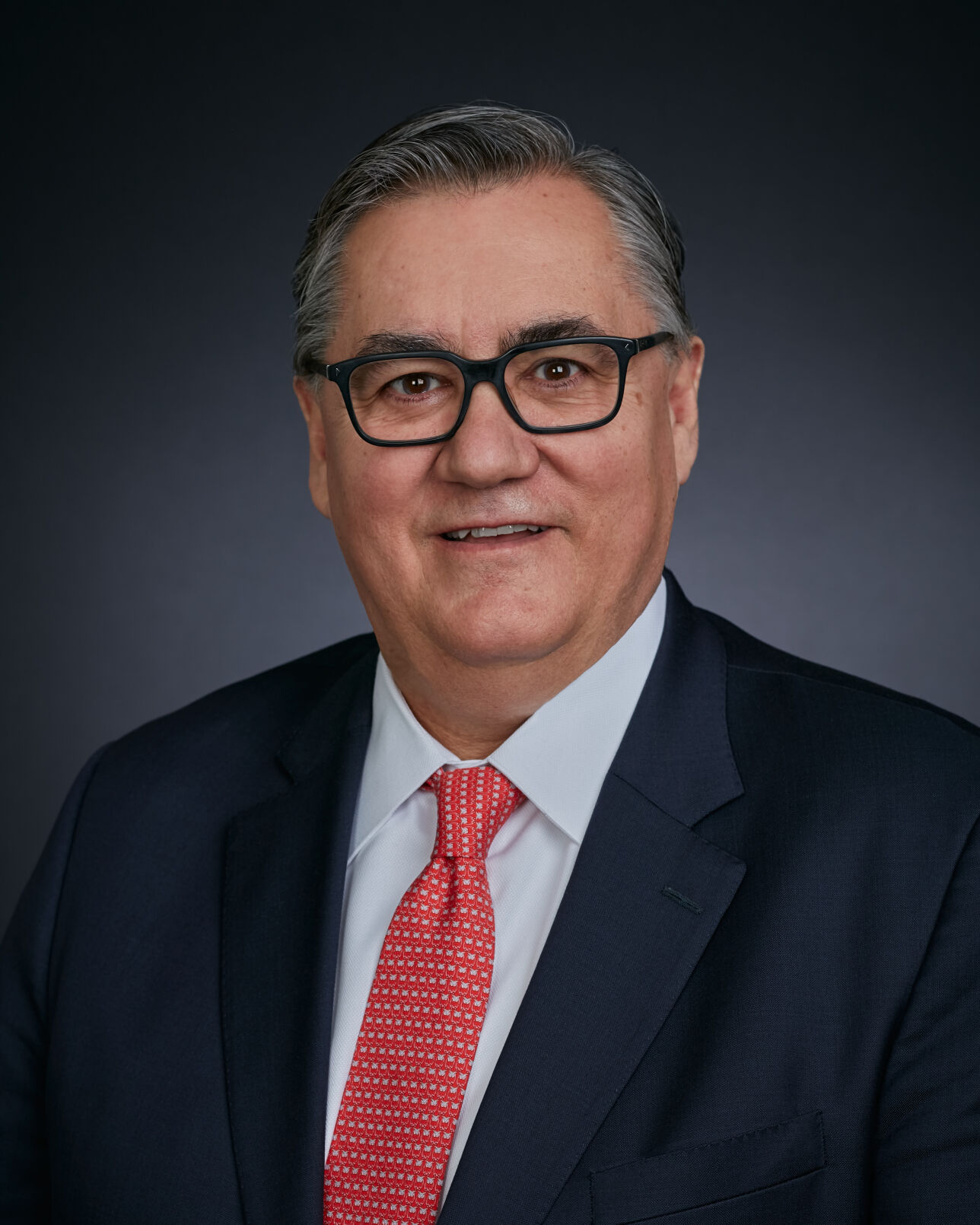
Díaz de la Rubia
Researchers and faculty are worried as Trump’s executive orders affect higher education and he threatens the federal funding that university research depends on, Hudson noted in an email to faculty.
“I write to you as your elected faculty chair to caution you against panic and despair, to remind you that you are not alone in worries that may keep you up at night, and to open up channels of communication about recent and anticipated federal changes that concern us,” Hudson wrote.
“In a rapidly shifting landscape of federal administrative regulations and priorities that test the extent of executive power, our work and community have faced disruption and uncertainty, to put it mildly,” she wrote.
The email was sent the week after Trump’s executive orders freezing federal grants, loans, financial assistance and DEI (Diversity, Equity and Inclusion) programs; the pause on federal grants has since been rescinded.
The freeze “threatened so many livelihoods and projects,” Hudson wrote. The University of Arizona is one of Southern Arizona’s largest employers.
Timely guidance from UA officials is needed for federal grantees and contractors as available, she said.

Hudson
Díaz de la Rubia invited Secretary of the Faculty Katie Zeiders to join administrators working on responses to all of the executive orders and court rulings.
“It’s really important for me to hear the voice from the faculty to really understand what your pain points are and what the successes are,” he said at Monday’s meeting.
Díaz de la Rubia advised faculty in a Jan. 27 memo to continue submitting research proposals but also to seek alternative funding sources from foundations and non-federal sponsors.
He wrote that memo before the White House expanded a pause on federal grants and then rescinded it, but as federal orders were affecting university research in other ways.
At the time, the federal Office of Science was “immediately ending the requirement for Promoting Inclusive and Equitable Research (PIER) plans on any proposals submitted to the office; open solicitations have been or will be amended to remove the PIER plan,” he told faculty.
Díaz de la Rubia encouraged faculty to reconfirm proposal deadlines and funding statuses, monitor budget balances to avoid deficits, and prioritize submission of any overdue technical reports or deliverables.
The provost’s office at UA announced Thursday that the university’s Office of Research, Innovation and Impact has created a Federal Funding Updates webpage.
“Researchers should continue to work on federal awards unless there is a project-specific stop work order, suspension, or termination from the federal award or prime sponsor,” said guidance Wednesday from the office. “If researchers receive a notice from a sponsor, they should forward it to sponsor@arizona.edu, and continue to be in touch with their program officer for further guidance.”
Hudson addressed Trump’s “test of federal presidential power” in a statement to faculty senators at Monday’s meeting.
“Don’t panic, don’t silence yourself or others, and don’t comply in advance with efforts that fly in the face of mainstream understandings of law and common sense. That is my personal collegial advice to a community that is struggling to interpret in real time,” she said.
Melanie Hingle, associate director of the School of Nutritional Sciences and Wellness, said she is glad UA leaders, including Díaz de la Rubia and Interim Provost Ron Marx are regularly reaching out to faculty and staff to keep them informed and coordinate their responses during a time of uncertainty.
“To give you an example of the far-reaching consequences of federal funding cuts or even halts, potential loss of federal funding and/or lower access to funding in nutritional sciences (my own discipline) means fewer opportunities to impact on people’s health and wellbeing — and given that more than two-thirds of Americans are at risk of, or have, at least one diet-sensitive condition, we are hurting ourselves by not investing in research that can lead to better prevention and management of disease,” Hingle told the Arizona Daily Star Thursday.
“We also use federal funding to train our students, who are our next generation of scientists — therefore, potential funding loss also translates to a loss of capacity in our nation’s research strength and advantage, and with fewer future scientists, we are risking our nation’s stature as the world’s leading innovator and producer of cutting-edge research and technologies, which in turn impacts our economic and political strength at home, and globally,” she continued.
In her email, Hudson said federal directives are challenging operations focused on access for all and advanced research on matters of gender, ecological science and health care. Those directives will be tested in court with the pushback of legal experts, she said.
“But if upheld, these measures will have real implications for our academic freedom, our constitutional freedoms, and our organizational structure as well as a range of programs and projects,” said Hudson.
Johann Rafelski, a professor of physics, said, “the silence is loud” from the Arizona Board of Regents, which oversees the state’s three public universities.
“They need to stand up and be heard in times present to assure that higher educational activity in Arizona continues its mission and general morale is upheld,” Rafelski told the Star Thursday.
ABOR did not respond to a request for comment.
“Faculty morale is already low for obvious reasons, so these executive orders make matters worse,” said Faculty Senator Lucy Ziurys.
“However, I feel, as others do, that the university needs to be more proactive on these issues. It is my understanding that executive orders cannot impound federal funds nor change laws,” Ziurys said. “The laws for diversity, equity and inclusion are still in place, I believe. The university needs to uphold the law. Moreover, these executive orders need to be vigorously challenged in court by the university, not just whispered about in faculty meetings.”

Old Main at the University of Arizona.

