



Come Friday, getting access to pictures of nudes and sexual activity online is going to be the same as buying cigarettes, liquor and lottery tickets:
Arizonans will have to prove they're old enough.
That's when a new law takes effect that requires any publisher of material "harmful to minors'' to set up a system of either digital identification or a commercial age-verification system before access can be gained.
The measure allows parents to seek $10,000-a-day penalties from publishers that don't comply.
And that's just part of it. The new law says a court can impose a fine of up to $250,000 if the failure to use age verification results in one or more minors younger than 18 getting access to the forbidden materials.
Arizona lawmakers approved the measure despite constitutional concerns, including whether having to upload a picture of yourself along with government ID — one of the verification methods — could lead to identity theft, despite provisions in the law that say websites have to discard the information after verifying someone's age.

Arizonans are going to have to prove they're old enough before accessing pornography online. The new law takes effect Friday, Sept. 26. It requires any publisher of material "harmful to minors'' to set up a system of either digital identification or a commercial age-verification system before access can be gained.
There was also debate about infringing on the rights of adults who are legally entitled to view what the new law makes off-limits to minors.
But those issues appear, at least for the time being, to be moot: After Arizona's bill was signed into law by Gov. Katie Hobbs, the U.S. Supreme Court said Texas can enforce a similar statute.
The change here will involve more than providing proof of age to navigate to certain websites. At least one site will appear as being unavailable in Arizona.
Pornhub says it will block Arizonans
A spokesman for Aylo, the owner of Pornhub, one of the most-visited websites for adult videos, said his company will block its services in the state when the new law kicks in.
He said the law's requirements are not only ineffective but means adult sites will "collect significant amounts of highly sensitive personal information, putting user safety in jeopardy.''
Pornhub's announcement did not bother Rep. Nick Kupper, the Surprise Republican who wrote the legislation that takes effect Friday, Sept. 26.
"Our children and grandchildren will now have slightly safer childhoods,'' he said.
Still, there appears to be a technical workaround for Arizonans who want to access Pornhub.
Central to the legislation is the argument that the system in place now to restrict access to adults — to the extent it can be called a "system'' — isn't sufficient to keep a child with a computer, tablet or a cell phone from accessing pretty much anything.
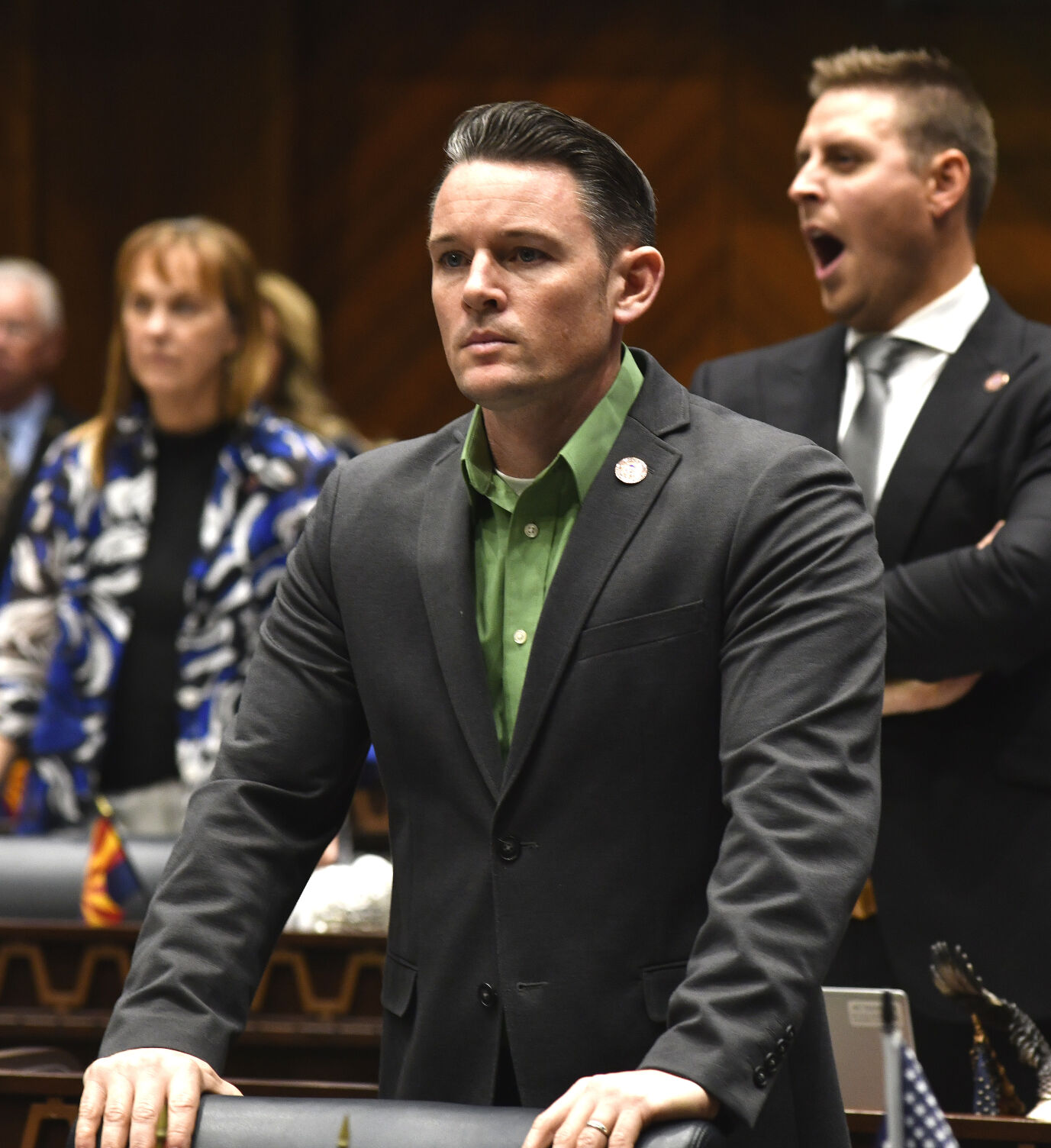
Rep. Nick Kupper wrote the legislation.
Put simply, said Kupper, anyone currently going to a website with images of nudity or sex acts is not exactly screened.
"If a minor child, let's assume a 13-year-old child for instance, goes to a pornography website, it simply asks, 'Are you 18?,' '' he said. "If a child has made it to a pornography website, they're not going to be stopped by a question.''
One option under the new law is to upload a copy of government-issued identification like a driver's license or passport. That could also require a live "selfie'' of the person at the computer to be sure it matches the documents.
The measure also allows websites to use a "commercially reasonable method'' that can verify someone's age, perhaps through a link to a credit card, mortgage documents or education and employment records.
There already are some companies advertising their ability to do that. And they even are offering "facial age recognition,'' using technology to determine whether a person seeking access appears to be at least 18.
All that raised concerns that these websites or the companies that are doing the verification will not keep it to themselves. So Kupper inserted a provision saying the companies cannot retain the data and imposing $10,000 fines for passing any of this on to any federal, state or local government entity.
Arguments against new law
But the measure drew opposition.
"We support age verification,'' said Michael Stabile, who represents the Free Speech Coalition, an organization that represents what it calls the "adult entertainment industry.'' "We don't want minors on our sites.''
But Stabile told lawmakers this isn't the way to do it.
One big problem, he said, is that the internet is worldwide. That means there are websites outside of the United States who don't — and won't — comply with any domestic laws about screening for minors.
What that leaves, Stabile said, are U.S. firms that are attempting to comply. But he said what they found is that adults — who are legally entitled to access what the sites are offering — opt not to go through the hassle of age verification and choose to find those other sites.
One reason users can do that is because the new Arizona law, similar to legislation in some other states, specifically says the responsibility to screen for minors falls only to the website originating the content deemed "harmful to minors.'' There is no responsibility to check the age of users by internet service providers, web browsers, search engines or cloud service providers that transmit the materials between the site originating the material and the customer.
The better alternative, Stabile said, is putting age-verification into computers and cell phones.
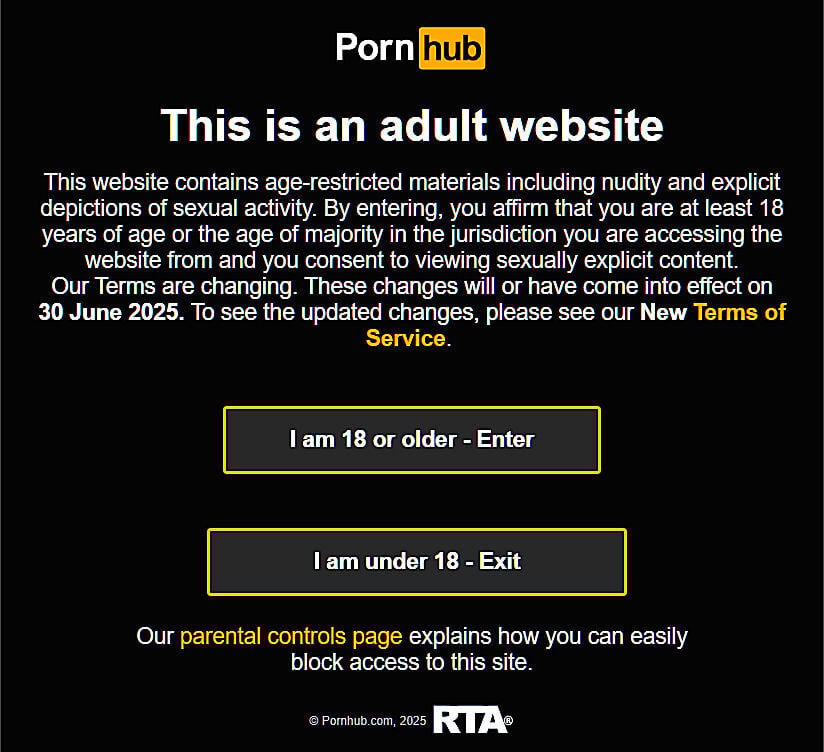
This is the current message seen by Arizonans who seek to sign in to Pornhub — which the company says will be replaced on Friday to deny access to the site.
In essence, it would be up to the adults who are providing the equipment to youngsters to install and activate features that allow for content to be filtered.
"You verify once on your device. It knows who you are,'' Stabile explained. More to the point, it blocks access to inappropriate materials "whether or not that site is in the Netherlands or whether or not the site is in Arizona.''
He said it's also more acceptable to adults who are legally entitled to access the material.
"There are far fewer issues in terms of getting consumers to upload their ID because they're not uploading it every time they're going to an adult site,'' Stabile said. "They're not having to scan their face 15,000 times a year.''
Rep. Lupe Contreras said that makes sense to him. In fact, the Avondale Democrat said he and his wife already have parental controls installed on the electronic devices for his three children.
"We're always aware of what's going on on a daily basis,'' he said. "We check their devices and we talk to our kids.''
What this bill amounts to, Contreras said, is "government overstepping.''
"One layer of protection"
Kupper told colleagues that device-specific protections only go so far.
"It doesn't protect if the minor goes to another kid's house where they don't have their devices protected in this manner,'' he said.
He acknowledged there are other weaknesses in the system, including the use of VPNs — virtual private networks — which can hide a user's location by routing internet traffic through a remote server in another state.
"Kids are creative,'' Kupper said. "And there will be some kids who get past the system.''
He said his legislation should not be seen as a cure-all but as one layer of protection.
It's not unlike the "Swiss cheese management'' system he learned in the Air Force.
"There's going to be holes in it,'' Kupper explained. "The hope is that you have enough layers of protection in the Swiss cheese that the holes don't line up.''
There are other concerns, including where the line is drawn on what content would require producing proof of being 18 or older.
The law says it applies to "sexual material that is harmful to minors.''
That, in turn, leads to a complex definition including whether the average person, applying contemporary community standards, would find the material as a whole, and with respect to minors, is designed to appeal to "prurient interest.''
It also gets into specifics, saying the definition includes depictions — whether actual, simulated or animated — of pubic hair, genitals, anus or the nipple of a female breast. Also included is a list of off-limits sexual activities that cannot be displayed.
All that, in turn, is subject to the test of whether taken as a whole, it "lacks serious literary, artistic, political or scientific value for minors.''
Marilyn Rodriguez, who lobbies for the American Civil Liberties Union, said she worries the way the bill is crafted, it would deny access to information about LGBTQ issues, sexually transmitted diseases and even domestic violence.
Kupper, however, said there's a feature in his bill that doesn't exist elsewhere: Its provision giving the right to sue to parents and not to the government when a child accesses a site because there are no protections.
Consider, he said, what happens if a child accesses a site on transgender education that a parent does not consider to be appropriate and believes runs afoul of the new law.
"You get to take it to court,'' Kupper said. At that point it will be up to a judge to decide if what's on the site fits the definition of "harmful to minors'' or is legally acceptable.
"We as the government are not making that call,'' he said.
Kupper also noted that the law mandating ID affects only websites where more than a third of the content is sexual material harmful to minors. He said that provides a lot of latitude to otherwise educational websites that might also have some material that fits the definition.
Workaround to get to Pornhub?
Less clear is how much effect the measure and its new identification hurdles may have on the ability of adults in Arizona to access sites they can now visit.
Kupper said the Arizona law was modeled after the Texas law that the U.S. Supreme Court ultimately allowed to be enforced. What happened there is that Pornhub disabled access to its service to anyone logging in from Texas.
That, however, gets to the issue of a workaround.
Following what happened in Texas, Cybernews.com put up detailed instructions for how residents of that state can obtain VPN service, install the software, create an account, and connect to a server outside of the state, all of which it says will allow residents to continue to access the site. The same option remains for Arizonans who want to browse PornHub, which does not and will not seek proof of age.
While all but two Arizona Democratic lawmakers voted against the final bill, it did get the approval of the Democratic governor.
What makes that noteworthy is that Hobbs had vetoed a nearly identical bill the year before, saying while she wants children protected, it "should be bipartisan and work within the bounds of the First Amendment, which this bill does not.''
Asked what changed this year, the governor said it was due to feedback.
"I heard from parents across the state about their concerns about the harm caused by materials that children are exposed to online,'' Hobbs said.
As to the comparison with having to present ID to buy cigarettes, alcohol or lottery tickets, there is one notable difference. You have to be 21 to do any of those in Arizona. But sexual websites will remain available to those 18 and older — with proper identification.

