




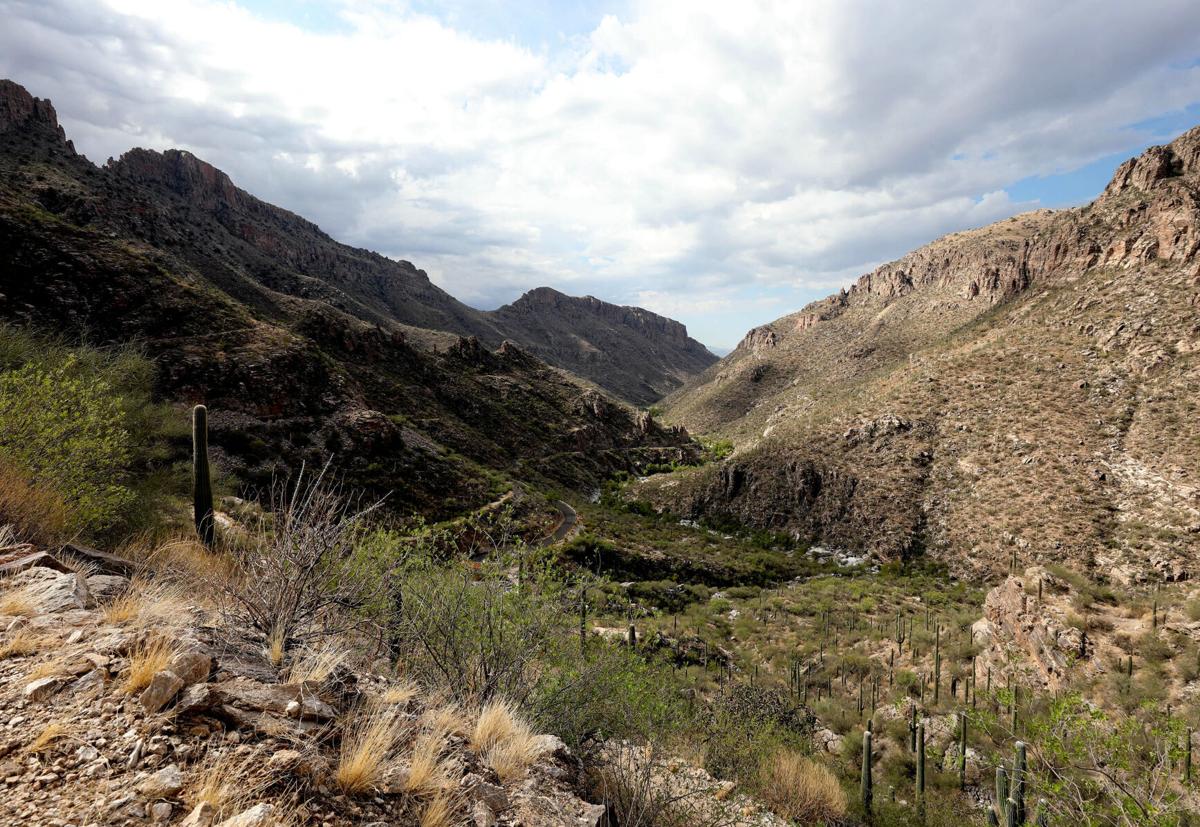
Sabino Canyon, Madera Canyon, Mount Lemmon and Mount Graham are among a huge array of National Forest lands across the West that were taken off the possibly “For Sale” list, and local environmentalists are overjoyed.
Utah Republican Sen. Mike Lee announced late Monday he will pull all Forest Service land from his proposed legislation that would have authorized the sale of up to 3.3 million acres of federal land.
His move would also limit all sales of U.S. Bureau of Land Management land to parcels lying within 5 miles of population centers such as Tucson and Phoenix.
Lee’s original bill would have required the federal government to sell 2.5 million to 3.3 million acres, or up to .75% of its total land holdings. About 250 million acres of federal land would have been eligible for purchase under the legislation even though it had excluded national parks and monuments and national recreation and wilderness areas.
“I am ecstatic. It was probably my No. 1 worry in my life that they would sell off forest lands,” said Jackie Holland-Craig, a board member for Friends of Ironwood Forest National Monument. “The reason I live in Tucson is to go hiking in all these areas. The thought of having them sold is really devastating to me.
“I go to Madera Canyon every week in the summer to hike and it would have been tragic for that area to be sold,” she said. “Just last week I was hiking in Madera Canyon and I saw an elegant trogon close to the parking lot for the trails to Mount Wrightson.”
Lee changed his legislation after the U.S. Senate parliamentarian ruled late Monday that the public lands sale bill could not be legally included as part of President Donald Trump’s big tax cut and budget cut bill when it came time for a vote on it. That came less than two weeks after he introduced his bill, which drew fierce opposition from not just environmentalists but from hunters, fishers, other outdoor recreationalists and many other public land advocates.
Because it can’t be included in the Trump tax cut bill, Lee’s legislation, unlike the Trump bill’s key budget and tax components, could not be approved by 51 votes through a Senate process known as “reconciliation.” Instead the land sale legislation, like most other Senate bills, would require 60 votes in favor.
He would need seven Democrats to vote for the legislation to get it approved, if all 53 Republican senators were to support it — which right now seems quite unlikely. Already, four Republican senators from Idaho and Montana have come out against Lee’s original legislation.
The parliamentarian cited the Byrd Rule, which says the Senate budget reconciliation process can be used only for bills directly related to budgetary issues, including federal taxing and spending.
The Ironwood monument itself couldn’t be sold off under either version of Lee’s bill because national monuments aren’t eligible under its provisions to be put up for sale. But Trump’s Interior Department is considering shrinking the size of the Ironwood monument along with five other national monuments in the West through an administrative action.
On the social media site X, Lee said the new version of his legislation would significantly reduce the amount of BLM land covered by the bill.
The new legislation will “protect our farmers, ranchers, and recreational users. They come first,” he said.
“Yes, the Byrd Rule limits what can go in the reconciliation bill, but I’m doing everything I can to support President Trump and move this forward. Stay tuned. We’re just getting started,” Lee said.
Reminding people that he was pushing this legislation to promote affordable housing, he posted, “Housing prices are crushing families and keeping young Americans from living where they grew up. We need to change that.”
But while he and other backers of the bill said selling public lands would open up more opportunities to build housing, opponents said the bill contains nothing to insure that affordable housing is built on the lands once sold. That means prize public parcels could become mega-mansions or upscale apartment complexes, they have said.
In fact, Lee’s original legislation said that 10 years after public land is sold, it can be used for any purpose, including shopping centers or industrial development, opponents have noted.
Scott Garlid, executive director of the Arizona Wildlife Federation, called the parliamentarian’s action and Lee’s revision to his legislation a step in the right direction. “This isn’t over,” but because the legislation will now have to go through public hearings — which aren’t required for bills going through the reconciliation process — there will now be transparency and public input before a bill can be approved, he said.
“You’ve seen just the explosion of reaction to the bill from social media. Hunters, other sportsmen, hikers, birdwatchers, even people who don’t use public lands,” Garlid said.
Every single year, a West-wide opinion poll conducted by Colorado College finds the same thing, he said: “Americans really value their public lands. They want them protected.”
“Just a very few people favor this land sale, like Senator Lee who view the public lands as an asset and want financial gain from them,” he said.
There are a number of pockets of BLM land that could still be sold under Lee’s plan to revise his legislation, said Christina McVie, a longtime Tucson environmentalist.
For one, there’s BLM land south of Tucson Mountain Park lying within 5 miles of Tucson city limits, she said. Another parcel near Saginaw Hill — a long-abandoned mining area — lies south of Tucson within 5 miles of the Drexel Heights area, she said.
More BLM land lies west of Sahuarita near the long-shuttered Twin Buttes mine near Interstate 19, she said. There are also three BLM-owned parcels in the Tortolita Mountains, near Marana and Oro Valley, she said.
And “quite a bit of BLM land” lies east of the San Pedro Riparian National Conservation Area near Tombstone, she said.
Another issue opponents have with Lee’s legislation is that while it gives local governments and tribes the “first right of refusal” to buy federal land before it’s put on the open market, the legislation would require that the tribes and cities buy the land to keep it from being sold to a private party.
“They have budgets” to meet and they don’t have the time frame to gather that kind of money before the public lands are sold, Garlid said.
“Even if it was a good idea for a city to purchase some of the land, they have to go through a bond referendum and get voters to vote on it,” Garlid said. “It will take two years to come up with money for something like that.”
Whether or not Lee’s feeling the heat, it’s clear across the country that “people value their public lands and are not keen to see them privatized,” said Mike Quigley, state director of the Wilderness Society. “Why that message is not getting through to Senator Lee, I don’t understand.”

