





In Aldous Huxley’s 1932 dystopian novel “Brave New World,” cattle ranches and chicken coops are no longer the source of meat on the dinner plate.
Instead, scientists engineer a synthetic protein in a lab that’s readily available and sustainable.
Now, science fiction has become reality. And that reality is on the menu at Tucson’s Kingfisher Bar & Grill.

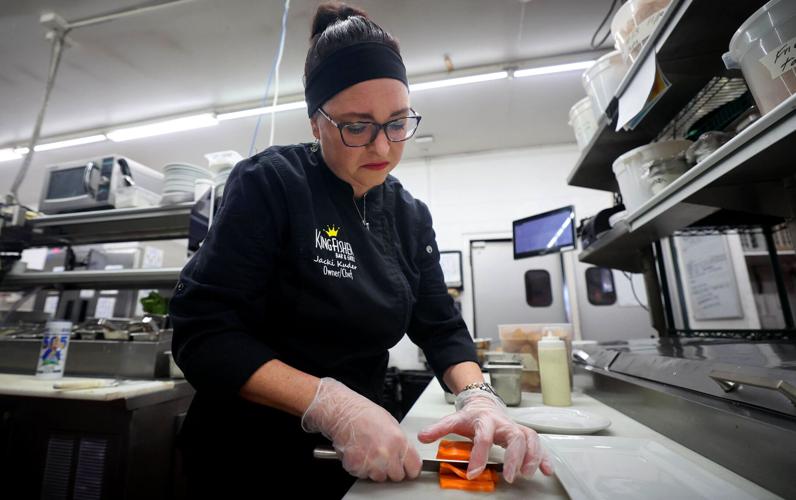
Kingfisher chef-co-owner Jacki Kuder prepares a plate of salmon crudo using lab-raised salmon.
Two guys in San Francisco are cultivating salmon from juvenile fish cells to create a sustainable source of seafood, and Kingfisher, at 2564 E. Grant Road, is one of just four restaurants nationwide to offer it.
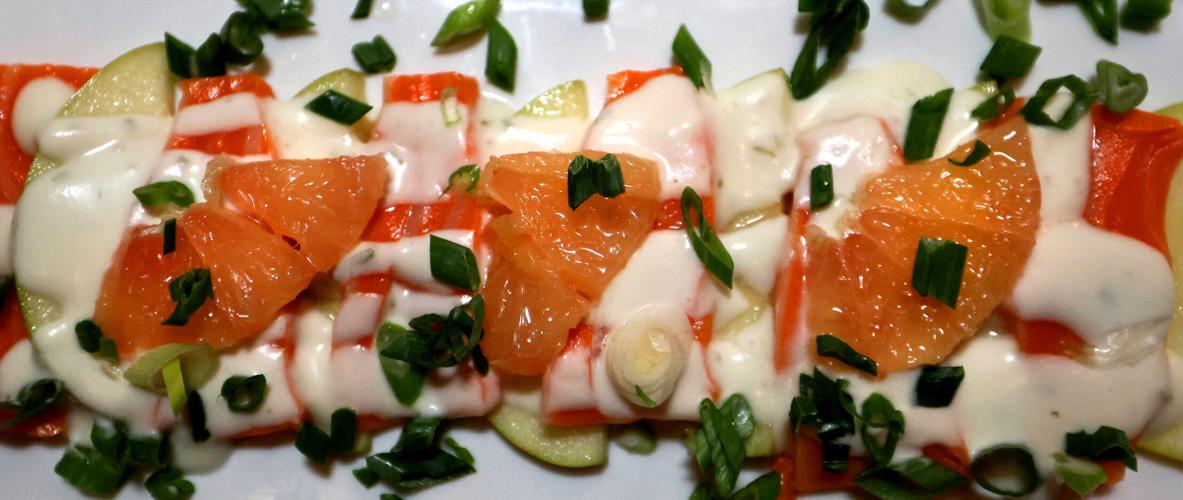
Chef-co-owner Jacqueline “Jacki” Kuder created a salmon crudo appetizer using Wildtype sushi-grade salmon. The dish was introduced on the fall menu that the midtown restaurant rolled out on Oct. 27.
Two weeks in, Kuder said she had sold 10 orders and gotten mostly positive feedback.
“I just want to do it and see how it goes,” she said. “I feel like we’re going to reach a point where seafood and ocean sustainability is a continuing issue. ... Is it the be all, end all? I’m not sure, but it’s an interesting take on it.”
In May, Wildtype salmon became the first cell-cultured seafood to earn U.S. Food and Drug Administration safety approval.

Kingfisher’s salmon crudo appetizer using lab-raised salmon will be on the menu at least through next March or April.
The FDA has also given the OK to cell-cultivated chicken products from Upside Foods and GOOD Meat.
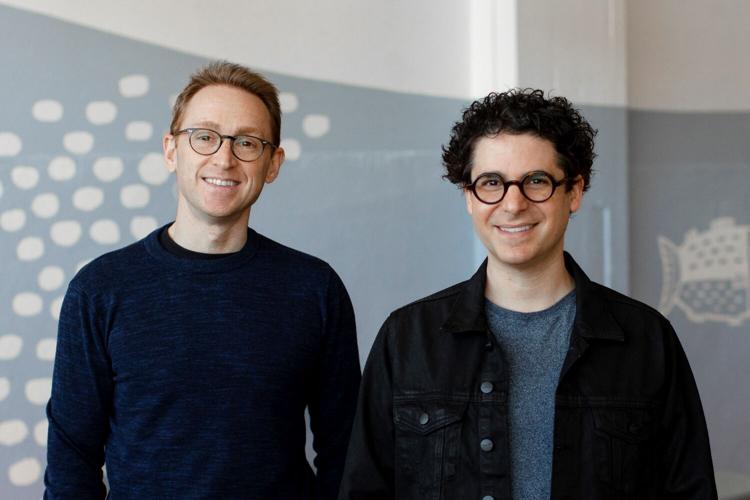
Wildtype was the brainchild of longtime friends Justin Kolbeck and Dr. Aryé Elfenbein, who in 2016 began experimenting with cultivating cells from juvenile coho salmon.
By the following year, both had quit their day jobs — Dr. Elfenbein was a fellow in cardiovascular medicine and an internal medicine resident at Yale University School of Medicine and Kolbeck had spent five years working as a U.S. foreign service officer in food-insecure regions of Afghanistan — to focus full-time on Wildtype.
Both believe cultivated proteins can be part of the solution to global hunger and sustainability as well as mitigating the environmental impact of commercial fishing, including greenhouse gas emissions from deep-sea vessels.
Back in 2016, Elfenbein extracted cells from juvenile Pacific salmon and grew them in steel tanks at a former San Francisco brewery. They fed the cells nutrients, including protein, fat, salt and minerals, much like you would feed a sourdough bread starter.
Kolbeck said that, unlike creating plant-based versions of proteins that consumers often complain is “not the real thing,” Wildtype’s salmon is genetically identical.
“We’re growing real salmon cells,” he said.
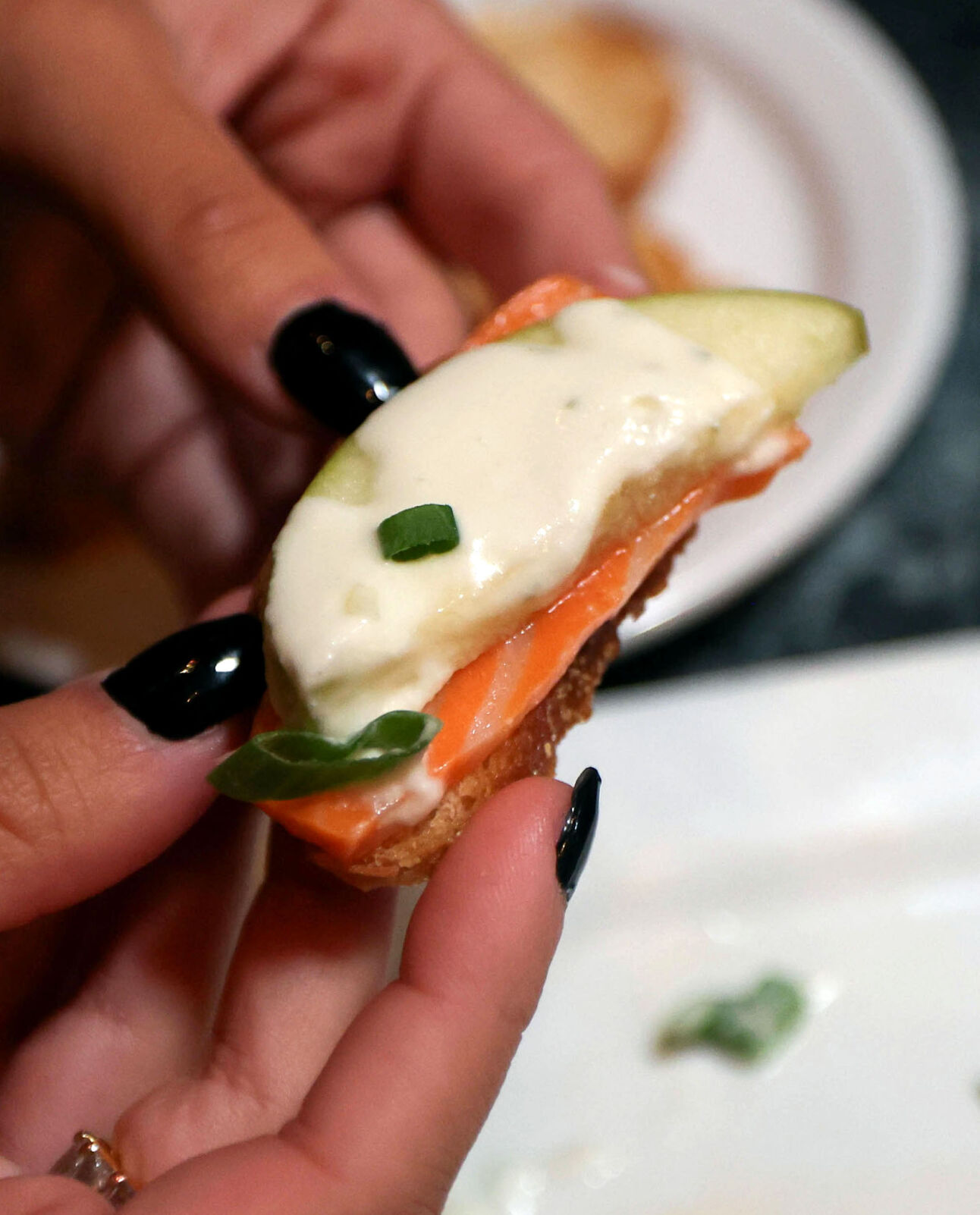
Kingfisher in late October introduced a salmon crudo appetizer that uses lab-raised salmon.
The cells are harvested from the tank and mixed with a few plant-based ingredients as well as beta-carotene and lycopene to give it salmon’s characteristic red/orange color. The mixture is then put in trays where the raw salmon, over several weeks, takes its shape right down to the white bands, Elfenbein explained.
It took a number of tries before Wildtype created a product they were ready to market. In July, the award-winning sustainability restaurant Kann in Portland, Oregon, was the first to put Wildtype on its menu.
Seattle oyster bar The Walrus and the Carpenter and San Francisco’s modern Japanese restaurant Robin introduced Wildtype on their menus in August.
Otoko in Austin, Texas, was also on board, but the state on Sept. 1 imposed a two-year ban on cell-cultivated foods. Another restaurant in Aspen, Colorado, was serving Wildtype before it closed.
At Kingfisher, Kuder places thin slices of the salmon on green apple that’s topped with grapefruit sections. The dish, which is served with crostini, is drizzled with a sauce made from coconut, pineapple, ginger and lime.
“It tastes, for me, just like salmon,” Kuder said. “I will say the texture is not like 100% there, but this is just their first version out to market. They’re working on improving texture, and you know, that’s all the crazy science stuff (that is) out of my wheelhouse.”

Thin-sliced Wildtype cultivated salmon on a bagel.
“The texture doesn’t really have this nice fibrous pull apart, like you get from a super high grade salmon,” Kolbeck allowed. “I would say, just in all honesty, we didn’t fully nail that. However, the great thing about what we’re doing is that we didn’t just make one product and we’re done. We’re actively working on the next edition which very much addresses that shortcoming, and we should be able to introduce that into our commercial partners in a matter of months.”

Longtime friends, from left, Justin Kolbeck and Dr. Aryé Elfenbein are the driving force behind Wildtype cultivated salmon, which is served in Tucson’s Kingfisher Bar and Grill.
That version is a smoked salmon, which Kuder said she has sampled and plans to put on Kingfisher’s menu as soon as it’s available.
“I literally could not tell the difference. It was pretty amazing,” she said.
Kuder said Kingfisher will serve the Wildstyle salmon crudo at least until March or April, when they roll out their spring menu.

