


PHOENIX — Republican lawmakers are advancing what could be a head-on challenge to the options women have under the newly approved constitutional amendment guaranteeing a fundamental right to terminate a pregnancy.
And a separate bill GOP awaiting a House vote would undermine state funding for health clinics if their staffers even mention to patients that they have the legal option of abortion.
On a party-line vote, the Republican-controlled House Judiciary Committee approved legislation this past week that would impose new requirements and restrictions on the use of abortion-inducing drugs. These range from requiring a physician to first examine the patient, to requiring blood tests and the scheduling of a follow-up visit.
Rep. Rachel Keshel, the sponsor of House Bill 2681, did not show up to testify at the hearing to explain her legislation or the need for it. The Tucson Republican also did not return messages seeking comment.
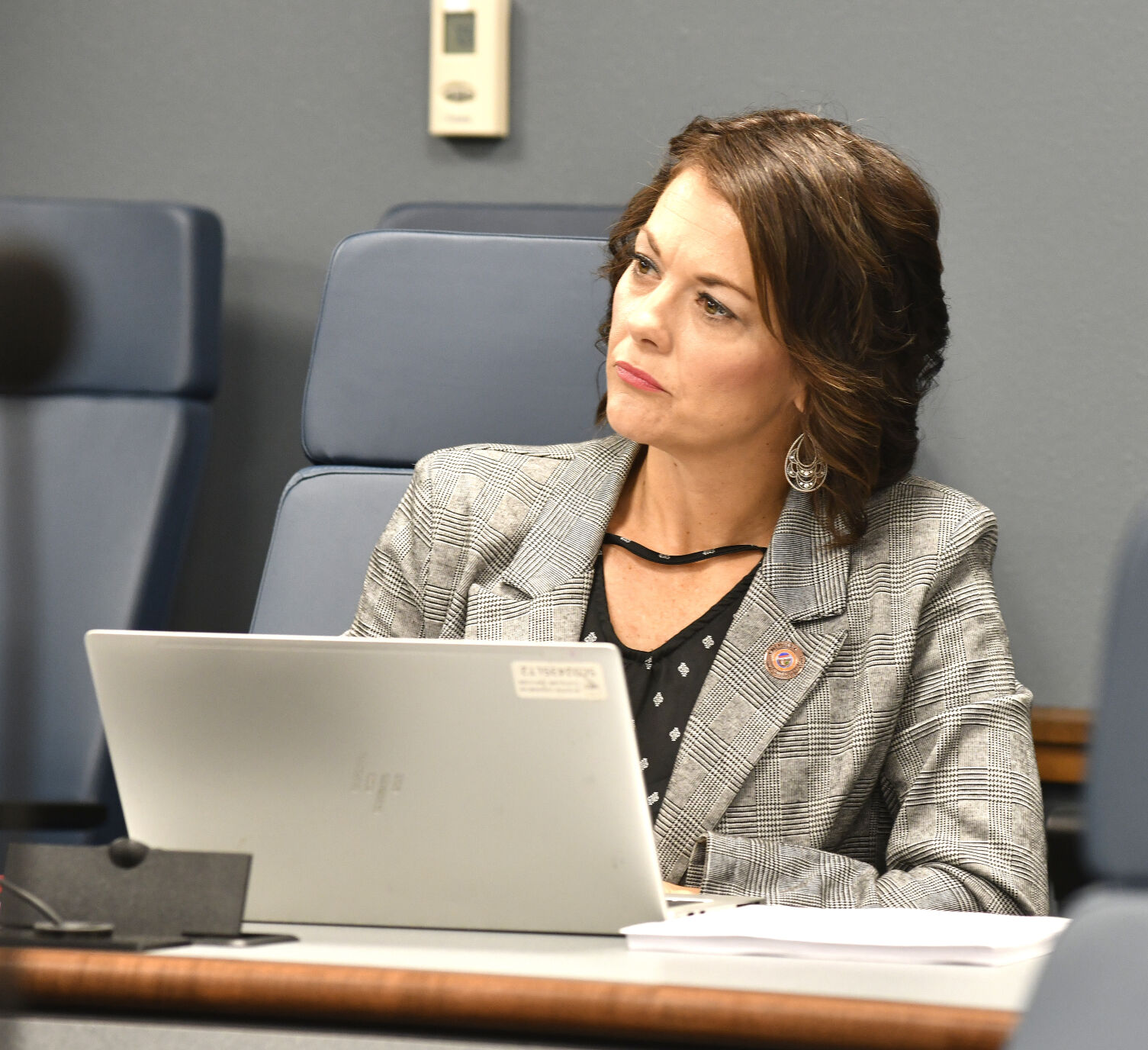
Rep. Rachel Keshel
Instead, lawmakers heard from Maura Rodriguez from Arizona Right to Life, who said she used to work for Planned Parenthood and related stories of women she said were given bad advice or no advice at all.
Grace Hertz told legislators about other women whom she said had problems, including bleeding, after using the pills.
But Keshel has made no secret she wants to undo Proposition 139, approved by Arizona voters in November by a 3-2 margin.
She argues that voters made a mistake — and, she contends, were misled — when they approved the initiative. Keshel is also sponsoring a measure to ask voters to partially repeal the constitutional amendment in 2026.
This proposal, however, takes a different tack. It seeks to impose the new restrictions despite the explicit language and prohibitions in Proposition 139 on further legislative restrictions.
Arizona law already spells out that only doctors may provide abortion-inducing drugs. There also are requirements for such issues as ensuring patients have given informed consent, as well as reporting requirements.
The legality of none of these has been tested since approval of Prop 139.
Despite that, Keshel’s House Bill 2681 seeks to impose more requirements, including that the doctor independently verify a pregnancy exists, determine the patient’s blood type and inform the patient “of possible physical and psychological after-effects’’ of the drug. It also would set new documentation requirements.
Jodi Liggett, lobbyist for Reproductive Freedom for All, contends the state can’t do that.
“In November, Arizona voters approved Proposition 139, enshrining a constitutional right to abortion,’’ she reminded lawmakers.
She reminded lawmakers that the proposition approved by Arizona voters spells out that abortion is a constitutional right prior to the point of fetal viability. According to the wording voters approved, that means the state cannot deny, restrict or interfere with that right “unless justified by a compelling state interest that is achieved by the least restrictive means.’’
“We believe that these restrictions violate the constitution,’’ Liggett said.
Rep. Quang Nguyen, who chairs the House Judiciary Committee, was not convinced. He pointed out that the two individuals who spoke in favor of the bill said women were not given directions, told stories about others who had suffered bleeding, and that some people received the drugs through the mail.
“I can’t speak to an individual experience,’’ Liggett responded.
She said, though, that the state already regulates the practice of medicine, just as the U.S. Food and Drug Administration does of drugs. And when the protocols are followed, more than 300 studies have shown the medications are safe, Liggett said.
“Of course, it’s a tragedy when someone falls into that less than one-third of 1 percent’’ who have complications, she said.
The question remains of how much latitude lawmakers have to impose new restrictions given the language of Proposition 139.
“Arizonans spoke loud and clear last election when they overwhelmingly approved Proposition 139,’’ said Erika Mach. She is a lobbyist for Planned Parenthood Advocates of Arizona, the political arm of the organization.
“Yet this Republican-controlled state Legislature is continuing to introduce and advance legislation that amends and dismantles this newly founded constitutional right to abortion,’’ Mach said.
She contends that some of the laws already on the books before the November vote are themselves now illegal.
Mach said those specifically include a ban on telemedicine, instead requiring women to have a face-to-face visit with a doctor to obtain the abortion drug. Also overruled, she argues, are requirements for a 24-hour waiting period, what she called “unnecessary ultrasounds,’’ and a requirement that medication abortions be done only by doctors and not specially trained clinicians.
Another is the ban on the mailing of medication abortions.
So far the only challenge filed alleging a conflict with Prop. 139 is to the state’s 15-week limit on abortions. Planned Parenthood and others filed suit in December seeking a ruling that is no longer enforceable, and their staffers cannot be prosecuted for abortions beyond that point, because of the language in the initiative.
Maricopa County Superior Court Judge Frank Moskowitz has yet to rule on the request.
Keshel’s bill isn’t the only bid by GOP lawmakers to restrict abortions, at least indirectly.
Arizona law already bars the use of state dollars to perform abortions. That prohibition on using state funds also applies to any person who performs abortions as well as anyone who operates a facility where abortions are performed.
Now the House is set to consider a bill that would deny state money to any individual who even “promotes’’ abortions.
There is no definition in HB 2547 of what that means. But Liggett told the House Government Committee hearing that measure that it would defund clinics that provide other reproductive and health care services, just because they inform women they are legally entitled to terminate a pregnancy.
“We think this is dangerous for the patient,’’ she said.
Liggett said it would also endanger funding for clinics that don’t provide abortions but do provide services such as family planning, contraception and treatment of sexually transmitted diseases — and do tell patients of their rights.
This isn’t just about grants to those clinics.
Dr. Julie Kwatra, a Scottsdale obstetrician and gynecologist, said it also could endanger the ability of doctors to get reimbursement for routine services for patients who are in the state’s Medicaid program simply because they tell some about the option to terminate a pregnancy.
But Rep. Lupe Diaz, sponsor of the legislation, told colleagues that the approval of Proposition 139 proves to him there is no need for any state dollars to go to anyone who even promotes abortion.
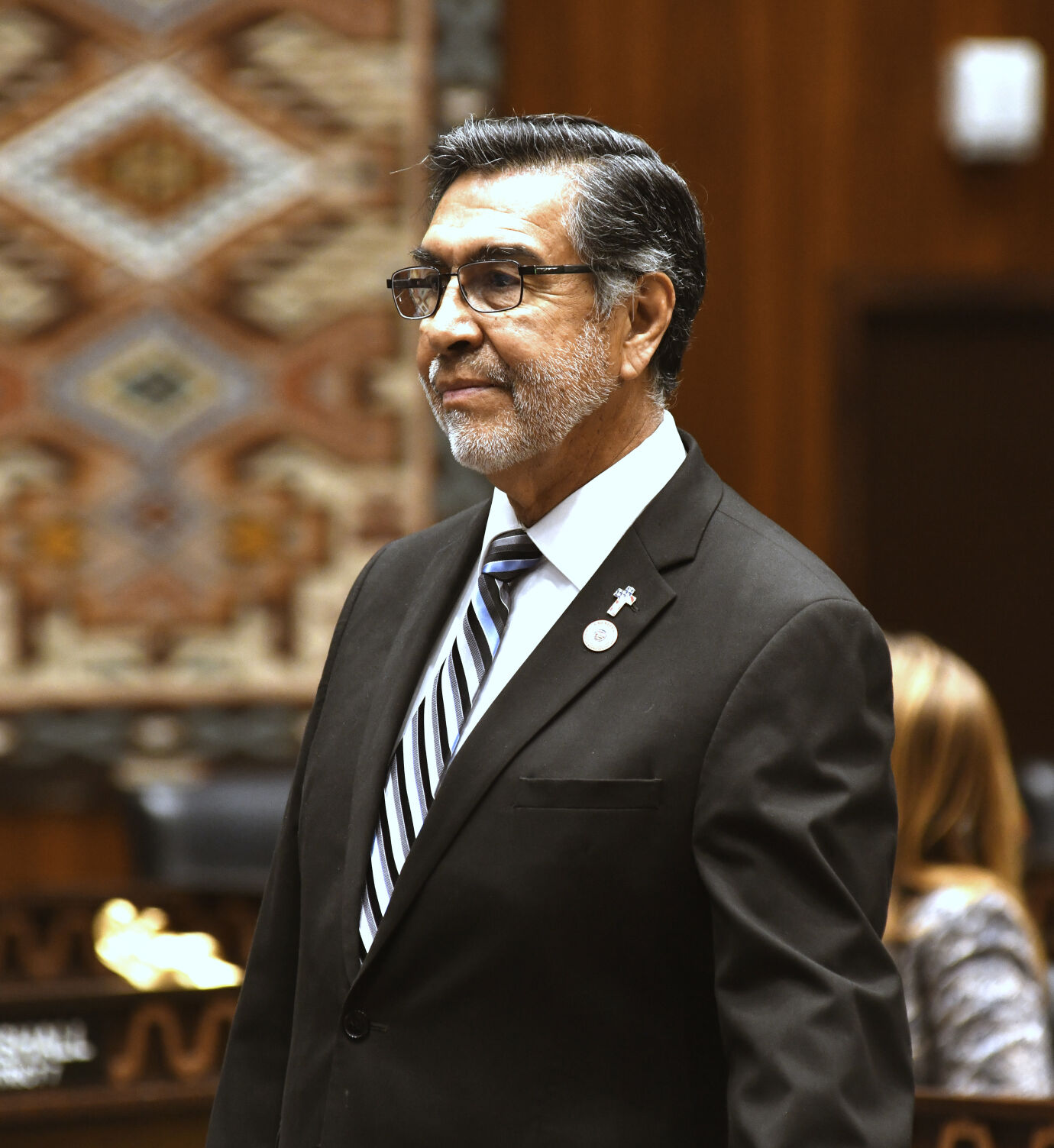
Rep. Lupe Diaz
“The abortion industry has a ton of money already,’’ said the Benson Republican.
“They were able to fund 139 with monies coming in from out of state, from throughout the nation, and probably outside of the nation,’’ he said.
Campaign finance reports show proponents of the ballot measure spent more than $33 million. That includes $4.7 million from The Fairness Project, which supports abortion ballot measures in multiple states, $3.25 million from the Advocacy Action Fund and $3 million from Planned Parenthood Action Fund.
There is no evidence of international donations.
The 4-3 vote in the committee came after Marilyn Rodriguez, a lobbyist for Planned Parenthood Advocates, informed each of the lawmakers on the panel that Proposition 139 was approved by voters in each of their legislative districts.
For example, she said, 95,000 residents of LD 17 — the one represented by Keshel — supported the initiative. By contrast, Rodriguez said, Keshel herself got just 71,000 votes.
“Your voters support abortion,’’ she told lawmakers, asking them to “respect their constitutional rights and vote ‘no.’”
Keshel, for her part, said she sides with Diaz, citing figures that Planned Parenthood nationally received close to $998 million in private donations in the 2022-2023 cycle.
“People like us, who do not support abortions, I don’t want a single penny of my taxpayer dollars going to that,’’ she said. “Planned Parenthood is doing just fine with donations from people who do support that.’’

