

Dinolene Kaska thought change was finally coming to Havasupai Elementary School.
For decades, she said, the federal Bureau of Indian Education had offered kids from Arizona’s remote Havasupai Indian Reservation a substandard education in an understaffed school.
So when a group of nine Havasupai Elementary students banded together and sued the Bureau of Indian Education in 2017, Kaska, a Havasupai tribal member and the current president of the school board, believed change might be possible.
That change seemed imminent when a pair of settlements in the case were reached, but many problems persist, she said.

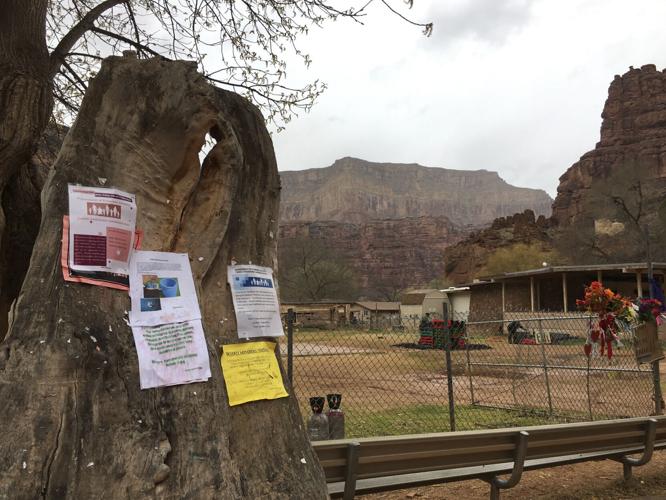
A 2020 lawsuit alleged that the BIE had discriminated against students with disabilities at Havasupai Elementary School, shown here in a Feb. 17, 2018 photo.
Now, though, the schoolchildren and their families are getting support from newly released findings of the Department of the Interior’s Office of Inspector General.
That federal office is calling out the BIE for allowing a range of problems to persist at Havasupai Elementary School — problems that endanger student health, safety and security.
Many of those same concerns came to light in the 2017 court filings by the students and their families.
The plaintiffs pointed to data from the 2012-2013 school year that found "Havasupai Elementary School students performed at only the 1st percentile in reading and 3rd percentile in math."
Among the causes of such underachievement, the lawsuit alleged, were "persistent teacher and staff vacancies" as well as a lack of a safe school environment, where students were subject to "excessive exclusionary discipline," "abusive law enforcement involvement" and "failure to provide necessary wellness and mental health support."
The lawsuit, which uses pseudonyms for students, alleged a litany of excessive punishments and abuses at the school, including:
- an 11-year-old student "prosecuted in federal court for pulling the cord out of the back of a computer monitor."
- a 10-year-old "forcibly restrained" in a classroom by a teacher who "sat and laid down" on the student "while he cried out and yelled, ‘I can’t breathe. Get off me. You’re hurting me."
- two students drinking hand sanitizer from a supply cabinet, resulting in one child being airlifted for medical treatment and the other being handcuffed and taken to a local clinic.
- one student, identified in the lawsuit as Taylor P., being "pushed against a wall and choked by another student while her kindergarten teacher wasn’t watching."
- Taylor P. being "sexually assaulted … by another student on the playground."
- "In neither situation," the lawsuit said, "was Taylor P.’s mother, Billie P., informed by the school of what had happened."
The lawsuit alleged that the BIE’s failure to maintain adequate staffing levels has contributed to student harm.
When the federal government partially settled that suit with promises to ensure adequate staffing, support for students with disabilities, counseling services and facilities, Kaska thought things would finally be made right.
But that hasn’t happened, said Kaska.
"Nothing has changed," Kaska said. "It's still the same, and it's still ongoing. They're still non-compliant in a lot of issues. Now it's the building. It's the safety of the children. It just continues to happen. We have a lack of teachers. We have uncertified teachers teaching the classroom."
New support for reform
But it’s not just Kaska who has identified the BIE’s continued failures at the school.
It’s the federal government itself in the Inspector General’s new report.
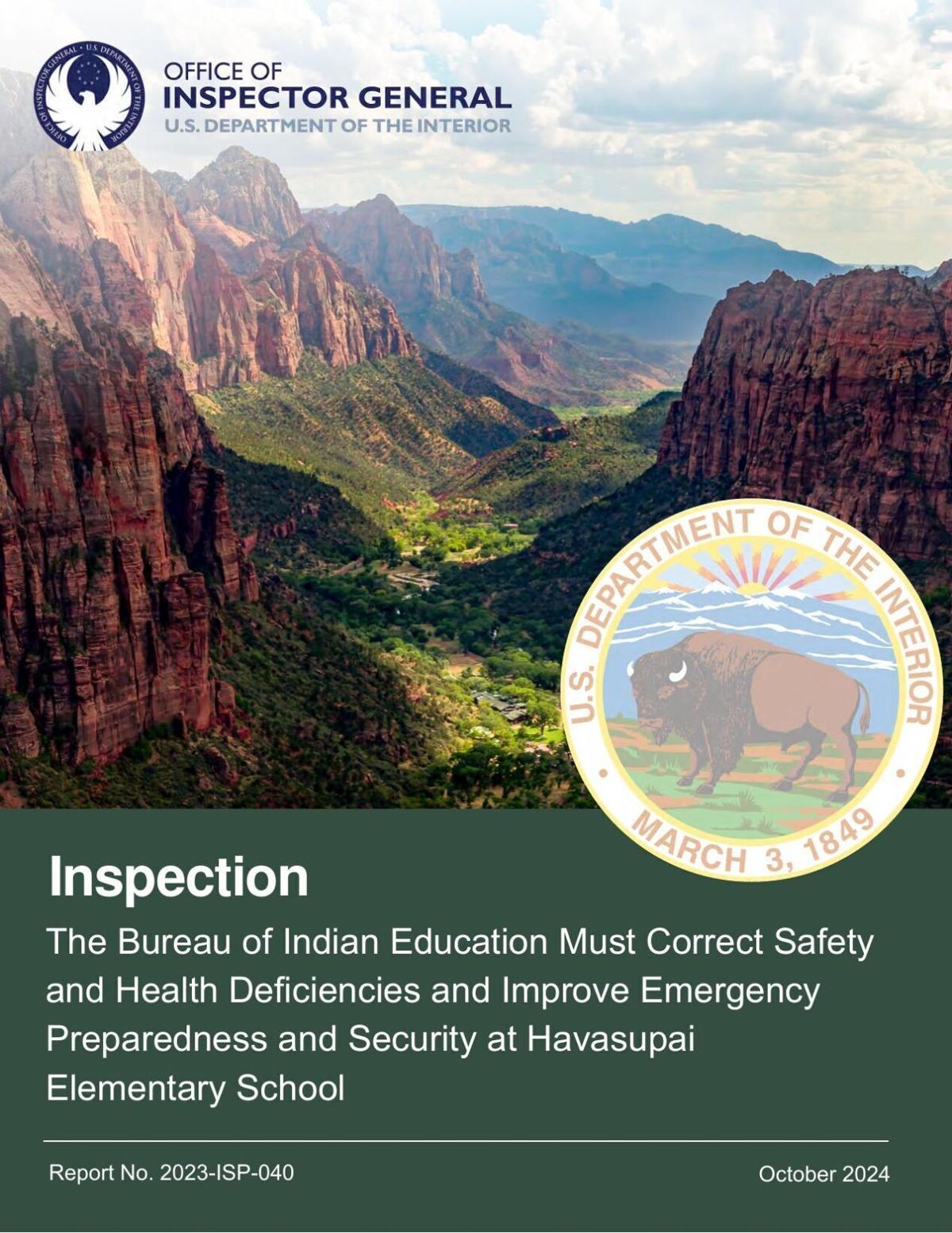
"Specifically," the authors of that investigation wrote, "the school had critical and significant deficiencies — including repeat deficiencies — from the last three annual safety and health inspections that remained unaddressed, and of those we reviewed that were corrected, none were completed within the school’s established abatement plan timelines."
Some of the issues pertain to the state of the school facility, where investigators found "an unreliable heating, ventilation, and air conditioning system and a roof in poor condition."
But the BIE’s failings are far more pervasive, according to the report released in October.
"We also found that the school did not implement a comprehensive emergency management program, did not develop a security plan, did not train staff, and did not conduct all required emergency drills," the report’s authors wrote.
In addition to having untrained staff members, the school does not have nearly enough of them.
The report found that as of December, more than half of the school’s positions — approximately 53% — were vacant.
It is critical that these "severe staffing shortages" be rectified, the report’s authors wrote, to create "a safer school environment."

Dearman
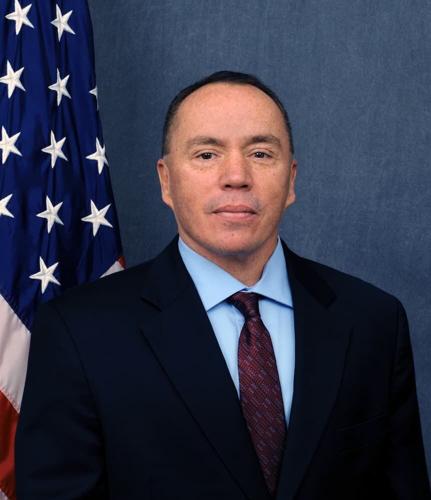
Tony Dearman, director of the BIE, responded to the OIG report in a September letter in which he wrote that the "BIE concurs with all recommendations identified" and detailed steps the bureau has taken or plans to take to address the issues at Havasupai elementary.
The BIE hired a facilities manager earlier this year, Dearman wrote, and "has taken several measures to ensure a broader applicant pool and to retain staff."
While his letter did not say whether any additional staff had been hired, Dearman wrote that the BIE "waived the Indian Preference policy otherwise in place for BIE vacancies to ensure consideration for both Indian and non-Indian applicants" and "conducted outreach" to organizations like Teach for America.
Calls for change echoing for years
But Havasupai students, families and officials have been calling for a safer, healthier and more effective school for years. And federal officials have been promising in documents and meetings and in-person visits that they would deliver one, Kaska said.
"Those are always the same things that they're saying: 'Oh, yeah, we're going to fix this. We're on it,’" Kaska said. "They just write the words that you want to hear, but then they don't put that into action. And it's a shame that the kids went through all that, and yet, the school is still in the same situation as it was before the lawsuit."
In a statement provided to the Lee Enterprises Public Service Journalism Team on behalf of the Havasupai Tribal Council, Chairwoman Bernadine Jones said the new report’s findings point to serious problems that have long plagued the BIE-operated school.
"While the numerous critical and significant deficiency findings in the report may be shocking to many, we were not surprised," Jones wrote. "This has been our reality for decades. We have fought a frustratingly long battle against BIE and other federal agencies to improve the educational services in Supai and afford our children with the same quality of education that children across the United States receive."
‘Dismally failed’
Havasupai, Arizona, is one of the most remote communities in the Lower 48.
Located on the floor of the Grand Canyon and home to fewer than 700 tribal members, the community is accessible only by helicopter or an eight-mile hike.
And Havasupai Elementary, which serves some 70 students in kindergarten through eighth grade, is the only school on the tribe’s almost 188,000-acre reservation.
In an email response to questions for this story, a BIE spokesperson acknowledged that the school’s remoteness "contributes to various challenges, including recruiting and retaining teachers, limited access to educational resources, and difficulties in securing needed maintenance resources. However, the BIE works consistently with the Tribe to address such challenges, including with staff across the agency engaging directly with Tribal leadership on an ongoing basis."

Ford
Tara Ford, a lawyer for the nonprofit firm Public Counsel who helped represent the Havasupai plaintiffs in their lawsuit, said the fact that students have no other local option for elementary or middle school and must leave home to attend high school make "it all the more important that the BIE meet its obligations."
Those obligations, according to the 2017 lawsuit, are to "provide Native children with educational opportunities that equal or exceed those for all other students in the United States."
Filed when nine minor students of Havasupai Elementary School joined with the Native American Disability Law Center to demand improvement, that lawsuit alleged that the "U.S. government has dismally failed to fulfill these responsibilities."
The suit argued that the BIE and the other defendants "have knowingly failed to provide basic general education, a system of special education, and necessary wellness and mental health support to Havasupai students, resulting in indefensible deficits in academic achievement and educational attainment."
"The consequences of these educational deprivations for Havasupai children are devastating and enduring," the lawsuit said.
Partial settlement
In 2020, a partial settlement required the BIE to permanently provide support, services and equal access for students with disabilities.
Three years later, in 2023, the BIE settled further elements of the lawsuit and agreed to comply with 13 federal regulations, including those that provide for adequate staffing, counseling services and facilities.
Ford said the settlement agreement was "very robust."
"And we were counting on the BIE to take a significant number of important steps to improve the quality of education it was making available to students in Havasupai," Ford said. "We were also very specifically and directly asking them to address the state of the school itself."
Ford said "we were very heartened by the BIE's agreement to take very specific steps" to make improvements at the time.
That hope only made it more "devastating" to read the Office of Inspector General’s new findings that the school remains unsafe and that staffing levels are still inadequate, Ford said.
What’s happening at the school, she argued, is a "very heartbreaking example of the BIE not fulfilling its obligations under its own regulations or under the settlement in this case."
Solutions
Kaska said the BIE’s ongoing shortcomings at Havasupai Elementary School aren’t just items in a government report.
The BIE’s failure to provide the tribe’s kids with an adequate education is impeding the progress of those who want to "go to college and make a better future for themselves," she said.
While the latest report is discouraging, Kaska said she will continue to "fight for what we deserve."
Ford said she believes the "most direct path" for reform is for the BIE to meet the obligations it agreed to in the recent settlement. But, she noted, "this case is not over, and we're continuing to implement the settlement."
And while Ford said the new report casts doubt on the federal government’s ability to implement the improvements required, she said she hasn’t given up hope.
"My confidence is in the community," Ford said. "My confidence is in the parents and the tribal members' commitment to improving education for their children. I have a lot of confidence in the community and their passion to improve education for their students."
Jones, the tribe’s chairwoman, indicated she and her fellow tribal officials would continue to push the BIE to meet its obligations.
In response to questions, the BIE spokesperson wrote that the bureau has been "working diligently to improve the education space available to students" and "will continue to work with the Tribe and local community to provide HES students with a high-quality and culturally relevant education that its students deserve."
"Given that Havasupai Elementary is one of the most isolated tribal communities, the BIE has allocated additional resources to the school," the spokesperson wrote. "These include educator recruitment and retention awards, enhanced maintenance support, and housing incentives to increase the availability of faculty.
"BIE has also worked to address the challenges of staffing a school in Havasupai's unique remote location by adding contract staff. The school also receives additional funding due to its geographic location, but additional funds from Congress could help support further action."
In her statement, Jones noted that the bureau "has agreed to take appropriate action to implement the OIG recommendations." And she expressed optimism that the BIE would "utilize non-conventional hiring and recruiting efforts to improve staffing levels at the school."

