


WASHINGTON — The midterms are here.
The 2026 campaign kicked off Tuesday with high-profile primary elections in Texas, where Republican Sen. John Cornyn is heading toward a runoff vote against state attorney general Ken Paxton. Democrats chose state Rep. James Talarico over U.S. Rep. Jasmine Crockett to be their candidate.
For all the focus on Texas, elections in North Carolina could have a bigger impact on which party ultimately wins the Senate majority in the fall.
In the first election since President Donald Trump joined Israel in launching dramatic attacks on Iran, there were also contests in Arkansas.
Here are some takeaways from Tuesday night.

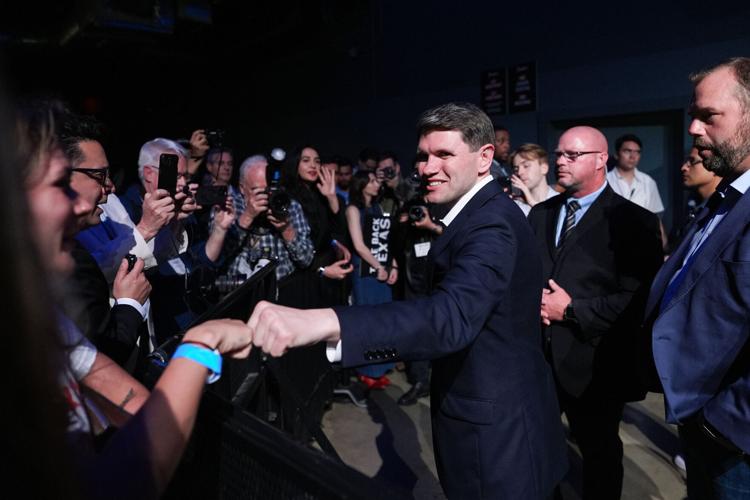
Texas state Rep. James Talarico, D-Austin, a Democratic candidate for the U.S. Senate, greets supporters at a primary election watch party on March 3 in Austin, Texas.
Democrats choose their fighter in Texas
By rallying behind Talarico, the party sided with someone who pledged to change Washington while finding consensus.
The 36-year-old state representative's win over Crockett cements his status as a rising star and will likely make him one of Democrats' most prominent candidates this year. He campaigned with denunciations of "politics as a blood sport" and an insistence that people want "a return to more timeless values of sincerity and honesty and compassion and respect."
That was in contrast to Crockett, who gained national fame with her fiery style and unabashed antagonism of Trump and other Republicans.
Indeed, the biggest differences between Talarico and Crockett largely hinged on style rather than policy.
Crockett argued that Democrats need to focus on energizing their base, betting that motivated voters in metropolises like Houston and Dallas could swamp Republicans. Talarico's campaign, meanwhile, took a more expansive approach, often highlighting his faith in ways that could appeal beyond diehard Democrats.
That style is why many Republicans are worried about Talarico's candidacy. Though a Democrat hasn't won a statewide race in Texas since 1994, Talarico's campaign could prove potent depending on who emerges from the Republican runoff.

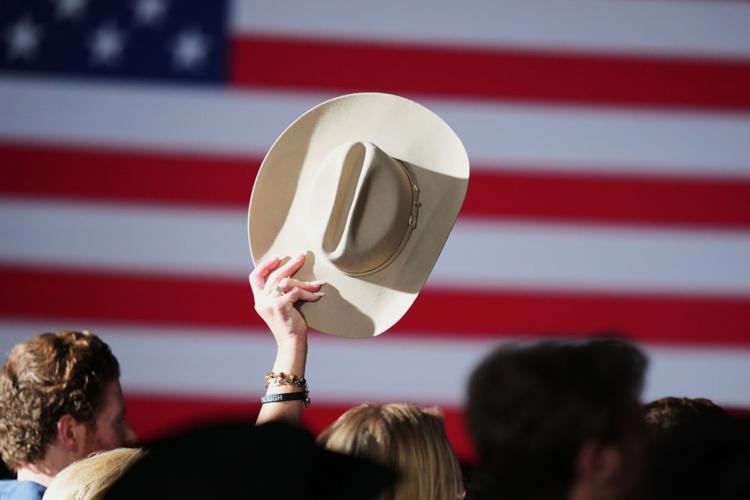
A supporter raises their hat at an election night primary watch party for Texas Attorney General Ken Paxton, a Republican candidate for the U.S. Senate, on March 3 in Dallas.
The election isn't over for Republicans in Texas
Cornyn and Paxton will keep fighting for the Republican nomination through a May 26 runoff.
For Cornyn, the results keep alive his hopes of remaining in the Senate. But it's still a sign of vulnerability that he couldn't win the race outright.
Although Cornyn has expressed occasional skepticism of Trump, he has been a reliable ally to the president. Paxton, however, claimed he was more aligned with Trump's Make America Great Again movement, pulling support away from Cornyn.
Trump didn't endorse either candidate during the primary, but he said Wednesday that he would soon weigh in with his pick. Republicans in Washington have expressed concern that Paxton, who has well-documented political baggage, may be a weaker candidate in the general election.
Regardless of what happens, expect more cash to be pumped into the race. Cornyn and well-funded allied groups spent at least $64 million in television advertising alone since July.
While the race goes on, one person will be missing: Wesley Hunt. The congressman was a late entry into what had been a head-on contest between Cornyn and Paxton. His presence in the race further divided Republicans, making the runoff harder to avoid.

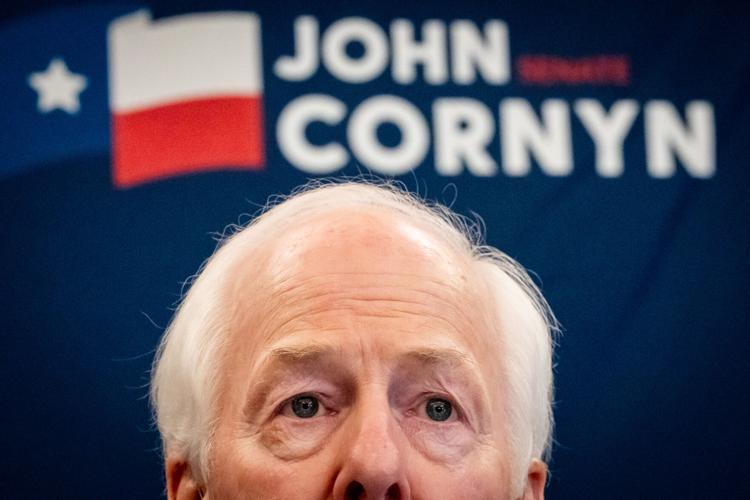
Sen. John Cornyn, R-Texas, speaks to the media on March 3 in Austin.
The first elections of the year weren't entirely smooth sailing
In two major Texas counties — Dallas and Williamson — there was significant confusion over where voters could cast their ballot. For years, they could vote anywhere in the county. But for this primary, the local Republican parties opted against countywide voting.
With state law mandating that both parties have to agree to use the countywide system, voters could only vote at their assigned precinct — forcing many to figure out where exactly that was.
Things quickly turned messy, with lawsuits, changes to voting hours and Democrats calling foul. Crockett called the rule change an "effort to suppress the vote." Talarico's campaign said it was "deeply concerned."
Political parties run their own primaries in Texas, meaning a repeat of Tuesday's confusion is unlikely to repeat in November.
But this isn't happening in a vacuum. Texas is central to Trump's redistricting effort to protect Republicans' narrow majority in the House.
The party has also pushed legislation that would impose strict new proof-of-citizenship requirements. The bill is a long shot in the Senate but serves as another reminder of Republican efforts to change election rules heading into November.
In addition, any raw feelings could complicate Democrats' chances later this year. Crockett's campaign has said she'll sue over voting problems, and her accusations of voter suppression are important in a state where Black voters are central to any Democratic candidate's success.
If Talarico has a shot, he will likely need Crockett's help in encouraging her disappointed supporters to back him.

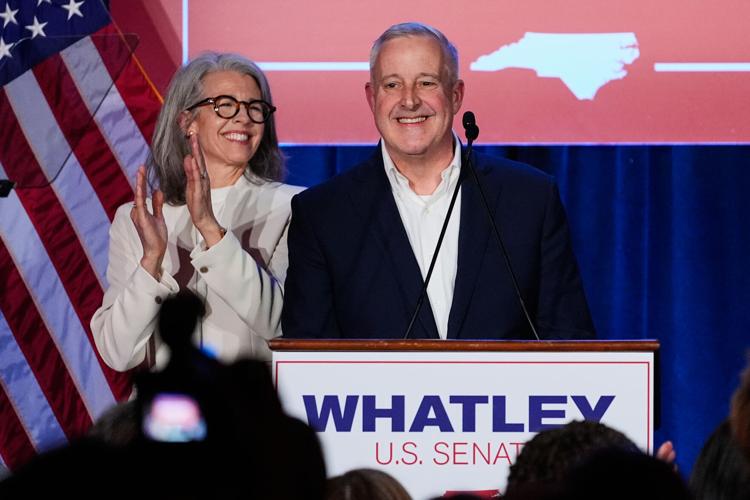
North Carolina Republican Senate candidate former RNC Chairman Michael Whatley speaks at a primary election night watch party on March 3 in Charlotte, N.C.
A critical Senate race takes shape in North Carolina
One of this year's marquee Senate contests was practically a done deal heading into Tuesday.
Democrat Roy Cooper will face Republican Michael Whatley in a race that's critical to deciding control of the Senate in November.
Both parties have reason to feel confident about their chances in the general election.
For Democrats, Cooper is an ideal candidate in one of the most politically competitive states. A former two-term governor, he has proved that he can win statewide elections.

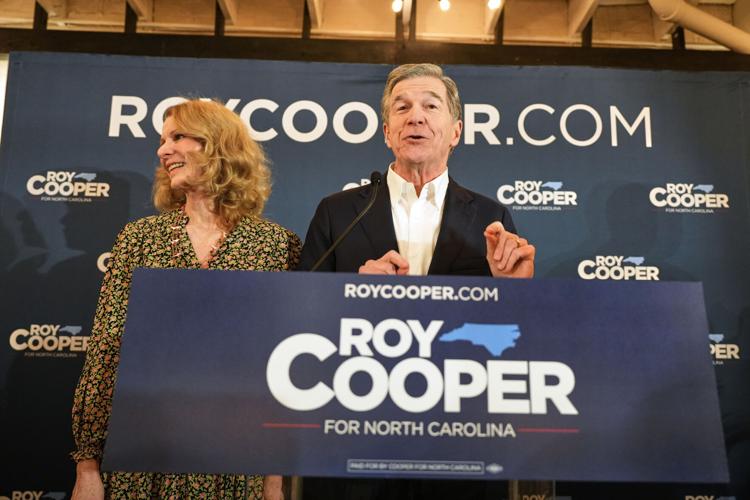
North Carolina Democratic Senate candidate former Gov. Roy Cooper speaks at a primary election night watch party on March 3 in Raleigh, N.C.
Republicans, meanwhile, are going into the campaign with a candidate who is backed by Trump, an endorsement that could help energize voters during an otherwise challenging year. And as the former chair of the Republican National Committee, Whatley is familiar with party resources and how they can be deployed during a tough campaign.
Still, each candidate must overcome notable challenges. While Democrats like Cooper have been successful in races for governor, they've struggled in Senate contests. Whatley will also need to make inroads with moderate or independent voters that may not view Trump's endorsement as a reason to turn out in November. Trump is the reason this is an open Senate contest in the first place. His disagreements with the incumbent Republican, Thom Tillis, prompted the two-term senator to decide against reelection.
Get ready for what could be a messy race to November — one where spending could hit $1 billion.
All eyes on Texas as the midterm elections officially begin, in photos

Rep. Jasmine Crockett, D-Texas, a Democratic candidate for U.S. Senate, speaks during a primary election watch party Tuesday, March 3, 2026, in Dallas. (AP Photo/Tony Gutierrez)

U.S. Rep. Wesley Hunt, R-Texas, a Republican candidate for the U.S. Senate greets a supporter at a primary election watch party Tuesday, March, 3, 2026 in Houston. (AP Photo/Ashley Landis)

Sen. John Cornyn, R-Texas, speaks to the media Tuesday, March 3, 2026, in Austin, Texas. (AP Photo/Jack Myer)

Sen. John Cornyn, R-Texas, speaks to the media Tuesday, March 3, 2026, in Austin, Texas. (AP Photo/Jack Myer)

Texas Attorney General Ken Paxton, a Republican candidate for the U.S. Senate, speaks during a primary election night watch party Tuesday, March 3, 2026, in Dallas. (AP Photo/Julio Cortez)

Texas Attorney General Ken Paxton, a Republican candidate for the U.S. Senate, poses for a selfie with a supporter during a primary election night watch party Tuesday, March 3, 2026, in Dallas. (AP Photo/Julio Cortez)

Supporters of Texas state Rep. James Talarico, D-Austin, a Democratic candidate for the U.S. Senate, watch results come in on their phones during a primary election watch party Tuesday, March 3, 2026, in Austin, Texas. (AP Photo/Eric Gay)

Texas state Rep. James Talarico, D-Austin, a Democratic candidate for the U.S. Senate, speaks at a primary election watch party Tuesday, March 3, 2026, in Austin, Texas. (AP Photo/Eric Gay)

North Carolina Democratic Senate candidate former Gov. Roy Cooper, right, shares a moment with his wife, Kristin Cooper, left, as he speaks at a primary election night watch party Tuesday, March 3, 2026, in Raleigh, N.C. (AP Photo/Matt Ramey)

Supporters of North Carolina Democratic Senate candidate former Gov. Roy Cooper watch as he speaks at a primary election night watch party Tuesday, March 3, 2026, in Raleigh, N.C. (AP Photo/Matt Ramey)

North Carolina Democratic Senate candidate former Gov. Roy Cooper speaks at a primary election night watch party Tuesday, March 3, 2026, in Raleigh, N.C. (AP Photo/Matt Ramey)

Supporters of Texas state Rep. James Talarico, D-Austin, a Democratic candidate for the U.S. Senate, attend a primary election watch party Tuesday, March 3, 2026, in Austin, Texas. (AP Photo/Eric Gay)

Supporters of Rep. Jasmine Crockett, D-Texas, a Democratic candidate for U.S. Senate, attend a primary election night watch party Tuesday, March 3, 2026, in Dallas. (AP Photo/Tony Gutierrez)

Supporters of Texas state Rep. James Talarico, D-Austin, a Democratic candidate for the U.S. Senate, react as results come in during a primary election watch party Tuesday, March 3, 2026, in Austin, Texas. (AP Photo/Eric Gay)

An attendee waits for the festivities at a primary night election watch party for Texas Attorney General Ken Paxton, a Republican candidate for the U.S. Senate, on Tuesday, March 3, 2026, in Dallas. (AP Photo/Julio Cortez)

Television host Sara Gonzales speaks on stage at a primary night election watch party for Texas Attorney General Ken Paxton, a Republican candidate for the U.S. Senate, on Tuesday, March 3, 2026, in Dallas. (AP Photo/Julio Cortez)

U.S. Rep. Wesley Hunt, R-Texas, a Republican candidate for the U.S. Senate, waves to supporters at a primary election night watch party Tuesday, March, 3, 2026, in Houston. (AP Photo/Ashley Landis)

Pat Garris wears a hat full of political buttons outside a polling location Tuesday, March 3, 2026, in Spring, Texas. (AP Photo/David J. Phillip)

Primary voters line up to cast ballots at a voting center in Dallas, Tuesday, March 3, 2026. (AP Photo/LM Otero)

Primary candidate for U.S. Senate, Rep. Jasmine Crockett, D-Texas, addresses supporters at a campaign stop in Waco, Texas, Tuesday, March 3, 2026. (Rod Aydelotte/Waco Tribune-Herald, via AP)

Voters in central Texas head to an active polling station at the Ben Hur Shriners Ballroom to vote, in north Austin, Texas, Tuesday, March 3, 2026. (Ricardo B. Brazziell/Austin American-Statesman via AP)

People attend the primary election night watch party for former RNC Chairman Michael Whatley, a Republican candidate for the U.S. Senate, Tuesday, March 3, 2026, in Charlotte, N.C. (AP Photo/Erik Verduzco)

North Carolina Republican Senate candidate former RNC Chairman Michael Whatley speaks at a primary election night watch party Tuesday, March 3, 2026, in Charlotte, N.C. (AP Photo/Erik Verduzco)

Texas state Rep. James Talarico, D-Austin, a Democratic candidate for the U.S. Senate, greets supporters at a primary election watch party Tuesday, March 3, 2026, in Austin, Texas. (AP Photo/Eric Gay)

North Carolina Republican Senate candidate former RNC Chairman Michael Whatley speaks at a primary election night watch party Tuesday, March 3, 2026, in Charlotte, N.C. (AP Photo/Erik Verduzco)

North Carolina Democratic Senate candidate former Gov. Roy Cooper speaks at a primary election night watch party Tuesday, March 3, 2026, in Raleigh, N.C. (AP Photo/Matt Ramey)

A supporter raises their hat at an election night primary watch party for Texas Attorney General Ken Paxton, a Republican candidate for the U.S. Senate, on Tuesday, March 3, 2026, in Dallas. (AP Photo/Julio Cortez)

Sen. John Cornyn, R-Texas, speaks to the media Tuesday, March 3, 2026, in Austin. (Sara Diggins/Austin American-Statesman via AP)

