


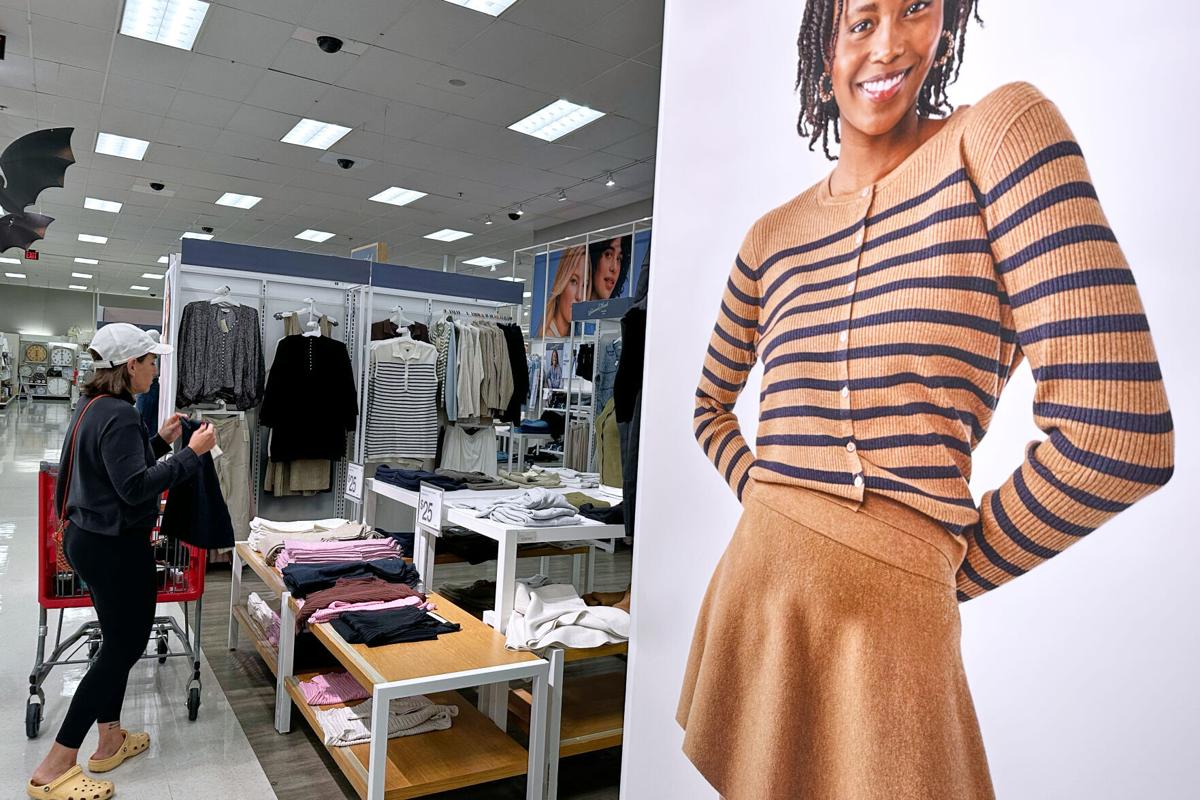
NEW YORK — American shoppers are expected to spend more during this holiday shopping season than last year despite economic uncertainty and rising prices.
The 2025 forecast from the National Retail Federation estimates that shoppers will collectively spend between $1.01 trillion and $1.02 trillion in November and December, an increase of 3.7% to 4.2% compared with last year.
Retailers rung up $976 billion in holiday sales last year, a 4.3% increase from the prior year, the group said.
“We're seeing really positive behavior and engagement from consumers,” NRF President and CEO Matthew Shay told reporters on a call Thursday. “In fairness, that’s been somewhat of a surprise.”
But Shay said more Americans are growing selective and they're focused on discounts. And while spending is expected to be up again, the growth of that spending may be in decline.
That is still greater than the average increase of 3.6% between 2010 and 2019. Americans ramped up spending after that during the coronavirus pandemic. Holiday season sales rose 8.9% in 2020 and soared 12.5% in 2021, according to the NRF.
The group's holiday forecast is based on economic modeling using various key economic indicators including consumer spending, disposable personal income, employment, wages, inflation and previous monthly retail sales releases. NRF’s calculation excludes automobile dealers, gasoline stations and restaurants to focus on core retail.
Holiday spending accounts for 19% of annual sales for the retail industry, though for some retailers the number is a lot higher, according to the NRF. And consumer spending in the U.S. is monitored closely because it drives about 70% of the nation's gross domestic product.
The forecast this year, however, arrives during the longest government shutdown in U.S. history. There has been no government data released on the jobs market or retail sales since the shutdown began.
“Forecasting is increasingly challenging in this environment,” Shay acknowledged.
The NRF forecast is in line with other estimates, however, which point to slowing growth.
Mastercard SpendingPulse, which tracks spending across all payment methods including cash, predicts that holiday sales will be up 3.6% from Nov. 1 through Dec. 24. That compares with a 4.1% increase last year.
Deloitte Services LP forecasts holiday retail sales to be up between 2.9% to 3.4% from Nov. 1 through Jan. 31, compared with last year’s 4.2%.
Adobe expects U.S. online sales to hit $253.4 billion this holiday season, representing 5.3% growth. That’s smaller than last year’s 8.7% growth.
Consumer spending in the U.S. has remained resilient even as consumer confidence has eroded.
Mark Matthews, NRF's chief economist and executive director of research, said consumer behavior is changing with a sharper focus on finding deals. And the frequency of family nights out at a restaurant is on the decline, NRF executives said.
The timing of the government shutdown is “absolutely problematic,” Matthews said, noting that it’s led to a loss in private-sector income, which erodes consumer demand.
Spending should recover once the shutdown ends, Matthews said, but there are broader issues of concern that will not be solved when the government shutdown ends.
The gap between wealthy and lower-income households is widening, according to analysts.
Based on spending from its credit card and bank customers, Bank of America found that spending growth among lower income households rose 0.6% in September compared with the same period last year. Among higher income brackets, spending rose at more than four times that speed, or 2.6%, in September. And wages are growing faster for higher income households.
That is making it more difficult for lower income households to keep up when tariffs and other economic factors are pushing prices higher.
In a separate report this week, Bank of America estimated that U.S. consumers are bearing 50% to 70% of the U.S. tariff costs, and it expects that load to grow.
“We think there is overwhelming evidence that tariffs have pushed inflation higher for consumers,’’ Bank of America economists Stephen Juneau and Aditya Bhave wrote.
At the same time, U.S. companies have announced tens of thousands of job cuts. Some companies have cited rising operational costs from new tariffs under the Trump administration, as well as shifting consumer spending, corporate restructuring, or increased spending on artificial intelligence.
That has led retailers to pull back on the hiring of seasonal workers.

