


WASHINGTON — The U.S. military is preparing to deploy at least 1,000 troops from the 82nd Airborne Division to the Middle East in the coming days, according to three people with knowledge of the plans.
The unit is considered the Army's emergency response force and can be deployed on short notice. The force would include a battalion of the 1st Brigade Combat Team as well as Maj. Gen. Brandon Tegtmeier, the division's commander, and division staff, according to the people, who spoke Tuesday on condition of anonymity to discuss sensitive military plans or private conversations.
When asked about the deployment, White House spokeswoman Anna Kelly deferred to the Pentagon but noted, "President (Donald) Trump always has all military options at his disposal."
Members of the Senate Armed Services Committee are scheduled to receive a classified briefing from Pentagon officials Wednesday on Capitol Hill where the potential deployment is expected to be discussed, according to a U.S. official who was not authorized to comment publicly and spoke on condition of anonymity.
The New York Times earlier reported the possible deployment of the 82nd Airborne to the Middle East.

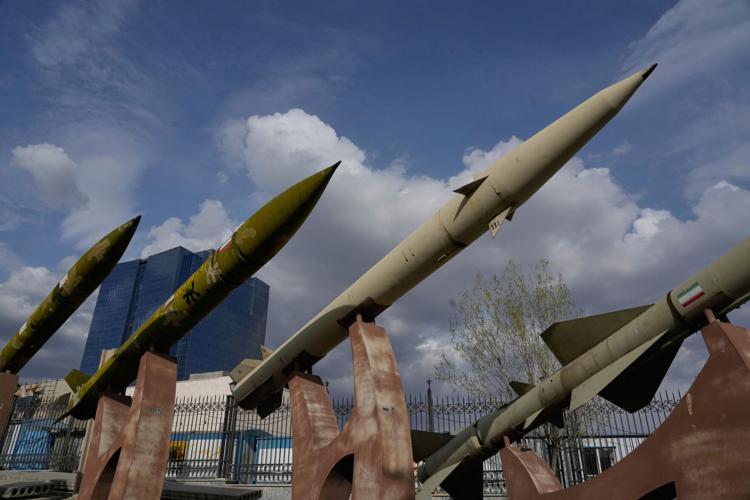
Domestically built Iranian missiles are displayed Tuesday as part of a permanent exhibition in a recreational area of northern Tehran, Iran.
Marines on the way to the Persian Gulf
Thousands of Marines headed to the region, raising speculation the U.S. may try to seize Kharg Island, which is vital to Iran's oil network. The U.S. bombed the Persian Gulf island more than a week ago, hitting its defenses but saying it had left oil infrastructure intact.
U.S. officials previously said the Japan-based USS Tripoli and the 31st Marine Expeditionary Unit were ordered to the Middle East — shifting them from exercises near Taiwan.
While the Marine units are trained in missions that include supporting U.S. embassies, evacuating civilians and disaster relief, the soldiers of 82nd Airborne — based at Fort Bragg in North Carolina — are trained to parachute into hostile or contested territory to secure key territory and airfields.
Officials also confirmed the Navy rushed to deploy a set of ships carrying a rapid-response Marine force to the Middle East from their home post of San Diego.

The pair of Marine Expeditionary Units will add about 5,000 Marines and thousands of sailors to the region, where the U.S. already has about 50,000 troops.
The troops are being added just as the Trump administration says it began negotiations with Iran to end the war. Pakistan offered to host diplomatic talks, but Iran denied that any negotiations are taking place.
Iran threatened to mine the Gulf if the U.S. appears to be on the verge of landing troops.
Trump said he would hold off on a threat to bomb Iran's power stations while talks unfold — a delay that could be aimed at buying time for the Marines to arrive, the New York-based Soufan Center think tank wrote in an analysis.
However, the center also noted, "Trump could be actively seeking an offramp."
Trump previously said he has no plans to send ground forces into Iran but has not ruled it out. Israel suggested its ground forces could participate in the war.

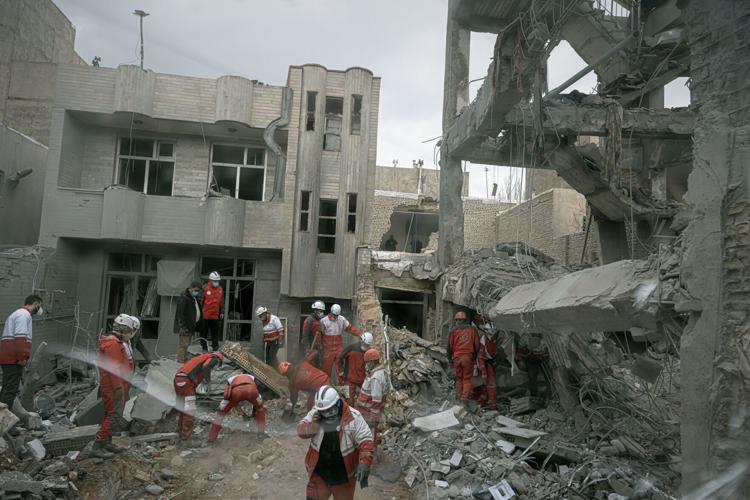
First responders on Tuesday inspect the remnants of a residential building hit in an overnight strike during the U.S.-Israeli military campaign in Tabriz, East Azerbaijan Province, northwestern Iran.
Meanwhile, airstrikes battered Iran and Iranian missiles and drones targeted Israel and sites across the Mideast on Tuesday.
With thousands more troops on their way to the Gulf, both sides firing barrages and Iran denying any negotiations are taking place, the war's tempo remained high a day after Trump delayed his self-imposed deadline for Iran to reopen the Strait of Hormuz. Tehran's chokehold on that crucial waterway snarled international shipping, sent fuel prices skyrocketing, and threatened the world economy.
Iran remained defiant, vowing to fight "until complete victory."
Talks between the U.S. and Iran would face monumental challenges. Many of Washington's shifting objectives, particularly over Iran's ballistic missile and nuclear programs, remain difficult to achieve. Meanwhile, it's not clear who in Iran's government would have the authority to negotiate — or be willing to, as Israel has vowed to continue taking out leaders after killing several.
Iran remains highly suspicious of the United States, which twice under the Trump administration attacked during high-level diplomatic talks, including with the Feb. 28 strikes that started this war.

People react Tuesday at the site of an Iranian missile strike in Tel Aviv, Israel.
Prime Minister Shehbaz Sharif wrote on social media that Pakistan is ready to "facilitate meaningful and conclusive talks" to end the Iran war.
The U.S. agreed in principle to join talks in Pakistan, according to three Pakistani officials, one Egyptian official and a Gulf diplomat, while mediators were still working to convince Iran.
One diplomat from the region said the talks could happen by early next week, and that special envoy Steve Witkoff and Trump's son-in-law Jared Kushner are expected to represent the U.S. The officials spoke on condition of anonymity because they were not authorized to provide details to the media.
Speaking Tuesday at the White House, the Republican president said the U.S. is "in negotiations right now" and the participants included Witkoff, Kushner, Secretary of State Marco Rubio and Vice President JD Vance.
"We have a number of people doing it," Trump said. "And the other side, I can tell you, they'd like to make a deal."

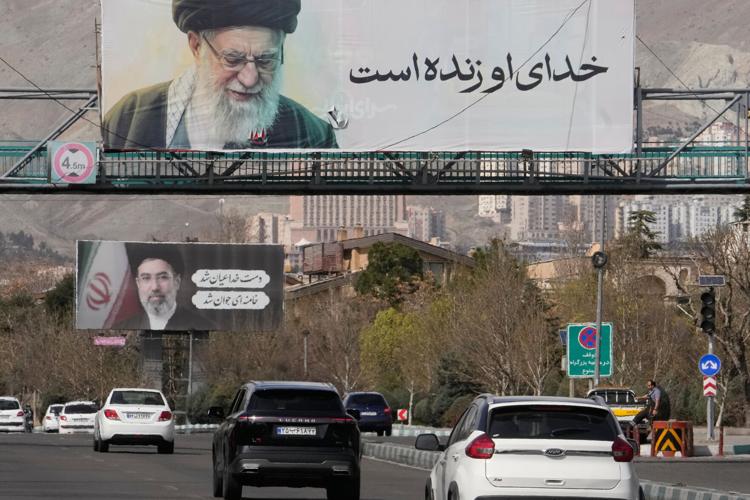
Vehicles drive under billboards show portraits of the late Iranian Supreme Leader Ayatollah Ali Khamenei, foreground, and his successor, son Ayatollah Mojtaba Khamenei, on Tuesday along a highway in Tehran.
Iranian Foreign Minister Abbas Araghchi's office said he discussed the war this week with several counterparts. However, Mohammad Bagher Qalibaf, the speaker of Iran's parliament, denied Trump's claim of direct talks, and an Iranian military spokesman issued a newly defiant statement.
"Iran's powerful armed forces are proud, victorious and steadfast in defending Iran's integrity, and this path will continue until complete victory," Iranian state television quoted Maj. Gen. Ali Abdollahi Aliabadi as saying Tuesday.
Aliabadi did not say what victory would look like, but Iran's military could be trying to warn political leaders against offering concessions in any possible negotiations.
The Egyptian official said efforts are centered on "trust-building" between the U.S. and Iran, with the aim of bringing about a pause in fighting. Israel is not involved.
The official, who is involved in the efforts, said the priority is to prevent attacks on regional energy infrastructure and that they were working on a "mechanism" for Iran to reopen the Strait of Hormuz.
Talk of negotiations briefly drove down oil prices and boosted stocks. But that respite was short-lived, with the price of Brent crude, the international standard, nudging back over $100 a barrel Tuesday, up nearly 40% since the war started.

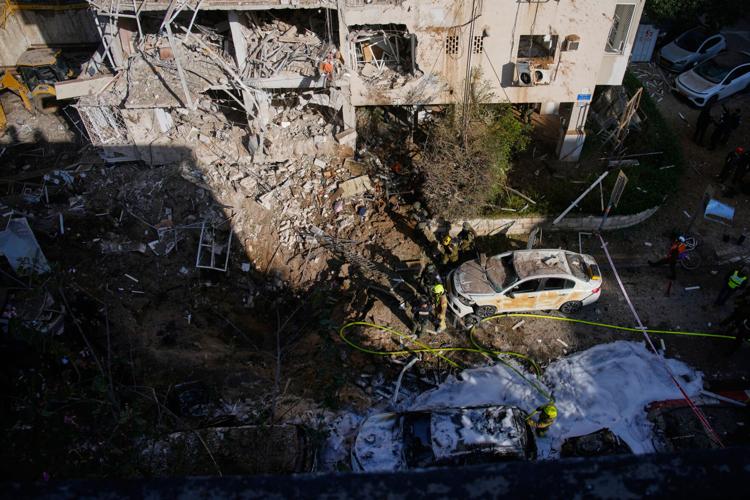
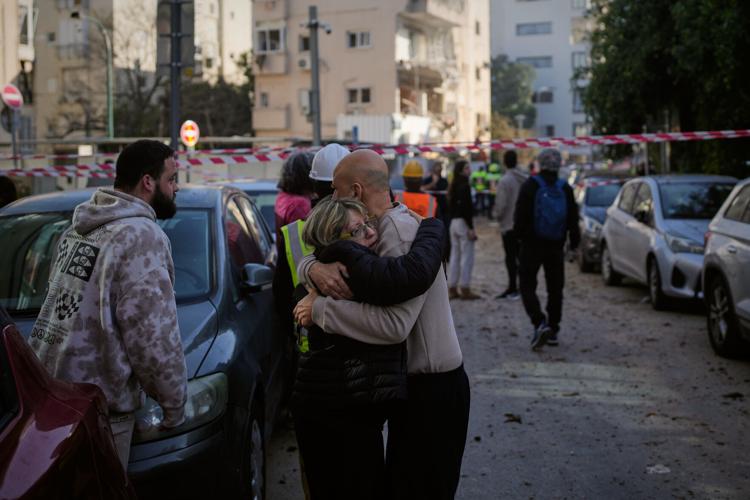
Israeli security forces and rescue team respond Tuesday at the site of an Iranian missile strike in Tel Aviv, Israel.
Iran hits Israel and Gulf neighbors while Israel attacks Beirut
Israel said it carried out an extensive series of strikes on Iranian "production sites," without providing more information. In Tehran, a massive blast was heard in northern neighborhoods and another in the city center.
Iran also fired at least a dozen waves of missiles at Israel, and first responders said three people were wounded in southern Israel, and four others suffered minor wounds in Tel Aviv.
A Moroccan civilian contractor with the United Arab Emirates' armed forces was killed in Bahrain in an Iranian attack, the UAE Defense Ministry said. In Kuwait, power lines were hit by air defense shrapnel, causing partial electricity outages for several hours. Saudi Arabia said it destroyed Iranian drones targeting its oil-rich Eastern Province.
Israel pounded Beirut's southern suburbs, saying it targeted infrastructure used by the Iran-linked Hezbollah militant group.
A strike on a residential apartment southeast of the Lebanese capital killed at least three people, including a 3-year-old girl, according to the Lebanese Health Ministry. Another five people were killed in the south.

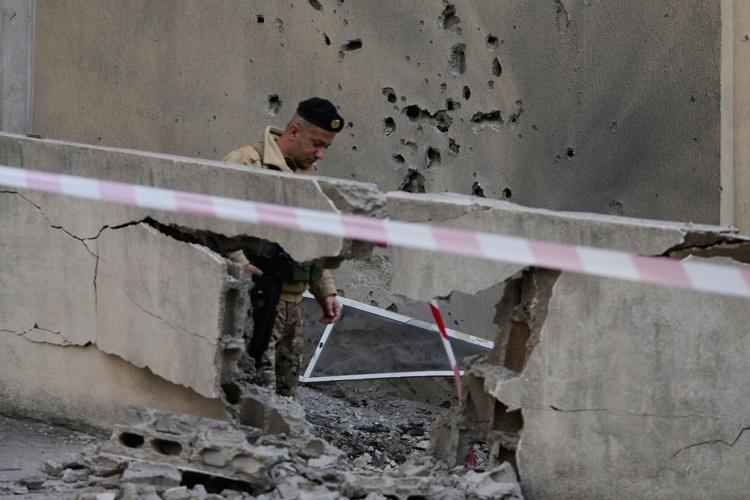
An army soldier checks the site where intercepted missiles fell Tuesday in Sahel Alma, north of Beirut, Lebanon.
In northern Israel, a woman was killed by shrapnel during an attack from Lebanon.
Meanwhile, Lebanon declared Iran's ambassador persona non grata and ordered him to leave by Sunday.
Iranian flights have been banned from landing in Lebanon, out of fear that they would carry weapons or funding for Hezbollah, and some top Lebanese government officials have accused Iran of dragging Lebanon into another war with Israel.
Authorities say Israeli strikes have killed more than 1,000 people in Lebanon and displaced more than 1 million.
Iran's death toll has surpassed 1,500, its Health Ministry has said. In Israel, 16 people have been killed. At least 13 U.S. military members have been killed, along with more than a dozen civilians in the occupied West Bank and Gulf Arab states.
____
Associated Press writers Michelle L. Price and Collin Binkley contributed to this report.
Photos from the Mideast in the 4th week of the Iran war

A man takes cover as air raid sirens sound, warning of rockets launched from Lebanon toward Israel, in Kiryat Shmona, northern Israel, Monday, March 23, 2026. (AP Photo/Ariel Schalit)

Israeli security forces and rescue team respond at the site of an Iranian missile strike in Tel Aviv, Israel, Tuesday, March 24, 2026. (AP Photo/Ohad Zwigenberg)

Relatives grieve in Baghdad, Iraq, Tuesday, March 24, 2026, during a funeral of members of the Popular Mobilization Forces who were killed in a U.S. airstrike in Anbar, Iraq. (AP Photo/Hadi Mizban)

Israeli soldiers secure the site where an Iranian missile wreckage landed in the West Bank village of Kifl Haris Tuesday, March 24, 2026. (AP Photo/Majdi Mohammed)

An Israeli soldier jumps from a tank in northern Israel near the border with Lebanon, Saturday, March 21, 2026. (AP Photo/Ariel Schalit)

Israeli security forces and rescue teams work at the site struck by an Iranian missile in Arad, southern Israel, Sunday, March 22, 2026. (AP Photo/Ohad Zwigenberg)

Israeli security forces survey the site that was struck by an Iranian missile in Dimona, southern Israel, Sunday, March 22, 2026. (AP Photo/Ariel Schalit)

Smoke and flames rise from an Israeli airstrike that hit the Qasmiyeh Bridge near the coastal city of Tyre, Lebanon, Sunday, March 22, 2026. (AP Photo/Mohammad Zaatari)

Rescue workers and first responders work at a residential building hit in an earlier U.S.-Israeli strike in Tehran, Iran, Monday, March 23, 2026. (AP Photo/Vahid Salemi)

Children play beside a fragment of an Iranian ballistic missile that landed in a schoolyard in the Israeli settlement of Peduel in the West Bank Monday, March 23, 2026. (AP Photo/Ohad Zwigenberg)

People follow a truck carrying the flag draped coffins of Gen. Ali Mohammad Naeini, a spokesperson for Iran’s paramilitary Revolutionary Guard and one of his comrades Amir Hossein Bidi , during their funeral procession in Tehran, Iran, Saturday, March 21, 2026. (AP Photo/Vahid Salemi)

Iranian worshippers perform Eid al-Fitr prayers marking the end of the holy fasting month of Ramadan as one of them wears an Iranian flag at the Imam Khomeini Grand Mosque in Tehran, Iran, Saturday, March 21, 2026. (AP Photo/Vahid Salemi)

A displaced woman who fled Israeli airstrikes in southern Lebanon, carries her belonging as she moves to a better spot to shelter from the rain, past an Arabic anti-war poster that reads, "Sacrificing for whom? Lebanon does not need war," in Beirut, Saturday, March 21, 2026.(AP Photo/Hussein Malla)

Iranian Kurdish Mariam crosses the Haji Omeran border crossing on foot between Iran and the autonomous Kurdistan Region of Iraq (KRI), Iraq, Sunday, March 15, 2026, as the border remains open. (AP Photo/Leo Correa)

A man cleans debris from his apartment damaged when a nearby police station was hit Friday in a U.S.-Israeli strike in Tehran, Iran, Sunday, March 15, 2026. (AP Photo/Vahid Salemi)

The shattered structure of a police station is seen after it was hit Friday in a U.S.-Israeli strike in Tehran, Iran, Sunday, March 15, 2026. (AP Photo/Vahid Salemi)

A FlyDubai plane is parked at Dubai International Airport as smoke rises in the background after a drone struck a fuel tank early morning, forcing the temporary suspension of flights, in Dubai, United Arab Emirates, Monday, March 16, 2026. (AP Photo)

A member of the armed wing of the Kurdish-Iranian opposition group Organization of Iranian Kurdistan Struggle, known as Khabat, stands in front of a shrapnel pockmarked wall that allegedly was damaged in strike by Iranian-backed militias in Iraq last week at a military base on the outskirts of Irbil, Iraq, Monday, March 16, 2026. (AP Photo/Leo Correa)

Israeli security forces inspect a house in east Jerusalem where a fragment of an Iranian missile crashed onto the rooftop, Monday, March 16, 2026. (AP Photo/Mahmoud Illean)

Israeli soldiers operate next to their mobile artillery unit on the border with Lebanon in northern Israel, Monday, March 16, 2026. (AP Photo/Ariel Schalit)

Nofar Eliash holds her dog as she takes shelter with others while air raid sirens warn of incoming Iranian and Hezbollah missile strikes in Kiryat Shmona, northern Israel, Monday, March 16, 2026. (AP Photo/Ariel Schalit)

A man runs past a bulldozer clearing debris from a building damaged in an Israeli airstrike in Dahiyeh, Beirut's southern suburbs, Lebanon, Tuesday, March 17, 2026. (AP Photo/Hassan Ammar)

Residents inspect a house damaged yesterday by a projectiles launched from Lebanon in Nahariya, northern Israel, Tuesday, March 17, 2026. (AP Photo/Ariel Schalit)

Israeli air defense system fires to intercept missiles during an Iranian attack over Tel Aviv, Israel, early Sunday, March 15, 2026. (AP Photo/Ohad Zwigenberg)

Volunteers clean debris from a residential building damaged when a nearby police station was hit Friday in a U.S.-Israeli strike in Tehran, Iran, Sunday, March 15, 2026. (AP Photo/Vahid Salemi)

People walk past tents sheltering people displaced by Israeli airstrikes at a public space along the Beirut waterfront at sunset in Beirut, Lebanon, Sunday, March 15, 2026. (AP Photo/Hassan Ammar)

Fire and plumes of smoke rise after a drone struck a fuel tank forcing the temporary suspension of flights. near Dubai International Airport, in United Arab Emirates, early Monday, March 16, 2026. (AP Photo)

