PHOENIX — Arizona voters could decide in November if they want more of the money allocated for K-12 education to be spent on teacher pay.
On a party-line vote, the Republican-controlled state Senate has agreed to put a measure on the November ballot to require that 60 cents of every dollar spent by the bigger school districts in the state's three most populous counties — Pima, Pinal and Maricopa — go to "direct instructional expenses.'' That is designed to mean the salaries of those working in classrooms.
The figure is significant because the Auditor General's Office reported last month that, on average, 52.1 cents of every dollar end up in what is classified as instruction.
That compares with 52.6 cents the prior year. And it's also the lowest figure in the two decades there has been such a report.
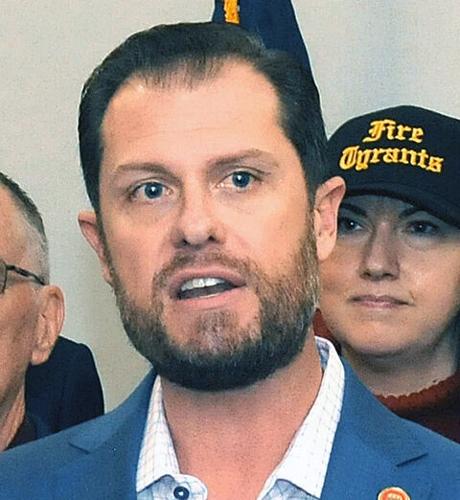
"This lets voters tell those districts, 'No, no, no, we want our children to have a funded classroom. We want our children to get a well-paid teacher who is highly qualified to teach those kids,' '' said Queen Creek Republican Sen. Jake Hoffman, sponsor of the measure to put the issue on the ballot, SCR 1032. The proposal now goes to the House.

Sen. Jake Hoffman
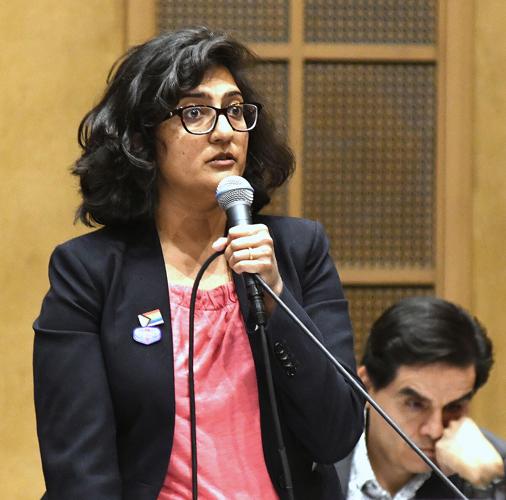
But Senate Minority Leader Priya Sundareshan argued there are not enough state dollars allocated to K-12 education to pay more to teachers and fund everything else schools are required to do.
The Tucson Democrat pointed out that a judge ruled earlier this year that lawmakers are not meeting their constitutional obligation to pay for things like building construction and repairs as well as other expenses ranging from desks to computers. The judge gave them until November to fix the problem.
"We have underfunded the school facilities needs of our district schools,'' Sundareshan said. That's forcing schools to use the dollars they do get — including for teacher salaries — for those other needs, she said.

Sen. Priya Sundareshan
But she noted that Republican legislative leaders decided to appeal the ruling rather than comply and provide what the judge said is legally required funding.
"So, yes, it is absolutely the Legislature and its Republican leaders that have chosen to underfund district schools,'' Sundareshan said.
Referring to the proposed ballot measure, she said, "Doing something like this that sets the arbitrary spending amounts will not solve the problem.
"Funding the schools will," she said.
Schools' spending
Hoffman claimed there is administrative "bloat.''
On one hand, the report from the Auditor General's Office showed that, overall, Arizona schools spend a smaller percentage of each dollar on administration as the rest of the country.
Also true, however, is that while year-over-year classroom spending in Arizona is up 0.5%, administrative spending increased by 2.7%.
But this isn't just about administrative costs, which cover everything from superintendents and principals to staff to handle clerical and purchasing services.
Tempe Democratic Sen. Lauren Kuby said what's missing from the debate — and from the category of classroom spending that Hoffman wants to take to 60% — are other services she said are necessary for students to learn and that schools are legally required to provide. Those include counselors, audiologists and nurses.
That formula also ignores the high costs of teaching students with special needs, Kuby said.
In fact, the Auditor General's report said that while the overall number of students in public schools is declining, the number of students receiving special education services has increased, particularly for autism. That can cause a cost increase in the category of instructional support — something that doesn't count toward that 60% goal for instruction — because it includes those counselors, audiologists, speech pathologists, nurses and social workers, the report said.
Differences between Senate, House plans
The Senate vote is not the last word, as the Arizona House has yet to act on a similar measure being pushed by Rep. Matt Gress, a Phoenix Republican.
There are some differences between the plans.
Most notably, what the Senate approved would apply only to public schools in Pima, Pinal and Maricopa counties — and only to school districts of at least 7,500 students within those counties.
That change came after Mark Barnes, representing the Rural Arizona School Coalition, told lawmakers that small, rural districts, with certain fixed expenses including fuel costs and insurance, would have trouble ever reaching the 60% goal.
By contrast, the Gress proposal would apply to any district with at least 200 students.
Whatever becomes the final plan from the Republican-controlled Legislature will not be subject to review by Democratic Gov. Katie Hobbs but instead would go directly to voters in November.
Local control
Much of the debate over either plan is whether there should be, as Hoffman wants, a state law that dictates to schools how much of each dollar they get must go into classrooms.
Tempe Democratic Sen. Mitzi Epstein pointed out that each school district has its own locally elected governing board. Those board members look at the issues in their district and what the residents want, she said.
"As a school board member, I have spent years listening to the people talk about what they want their district to do,'' she said. "And this bill comes in and says, 'Wham, bam, you can't do it because this senator wants you to do something else.' ''
Hoffman countered he's not imposing anything on anyone. He said all his measure would do is send the question to voters to get the last word.
That last word, however, would be on a statewide basis, with no opportunity for a local school district or board to opt out if the measure is approved.
Teachers' pay
Part of the debate — and question of the need for state intervention — is where the money has gone.
In 2000, voters approved a 0.6-cent increase in the state sales tax, to 5.6%, with the measure saying the additional cash was to target teacher salary increases, performance pay and classroom improvements. Originally supposed to last 20 years, that "classroom site fund'' was extended in 2018 to run through 2041.
A separate measure approved by the Legislature in 2018 set up a system to raise teacher pay by 20% over a four-year period through 2021.
But the Auditor General found that the average increase was less than that.
In both cases, Hoffman said, many districts found ways to use the extra funds to supplant what they already were paying teachers, allowing the districts to divert the dollars for other priorities. He said that goes against what voters want.
"They want teachers who are actually compensated and given classroom supply budgets,'' he said. "They want teachers who are supported so that they can focus on delivering a world-class education.
"And what we've seen," Hoffman continued, "is districts have instead prioritized grant writers, they've prioritized district office staff, they have prioritized everything else, all of the bloat in the administrative side of education.''
The legislation would direct schools that are below the 60% figure to raise what they spend in classrooms by half a percentage point each year until they get to the target.
Those that did not would run the risk of losing part or all of their classroom site funds, though there are provisions to allow the state schools chief to issue any district up to two waivers in any 10-year period.
Separate debate over education funding
All of this comes amid a separate debate about the renewal of Proposition 123.
Approved by voters in 2015, it raised more than $300 million a year by tapping into a special trust account for education — money raised from the sale or lease of the nearly 10 million acres of land Arizona was given by the federal government when it became a state in 1912.
That authorization expired last year. Now the debate is whether to ask voters to renew it in some form.
Part of that fight is tied up with unrelated issues, like a demand by some Republicans that it be linked to putting a provision in the Arizona Constitution guaranteeing the right of parents to get vouchers of state funds to send their children to private or parochial schools or to homeschool them. While that is current law, without a constitutional amendment, it remains subject to change by a future legislature.
But there's a separate fight over how to allocate the funds.
The Republican plan would earmark all of the dollars to classroom teachers, enough, they say, to provide $4,000 raises.
Hobbs, however, wants to use only part of that for educator compensation, with the rest of the money for support staff, general school funding, and investing in safety and security improvements.
Negotiations on that have stalled along with parallel talks about adopting a new state budget for the fiscal year that begins July 1.