


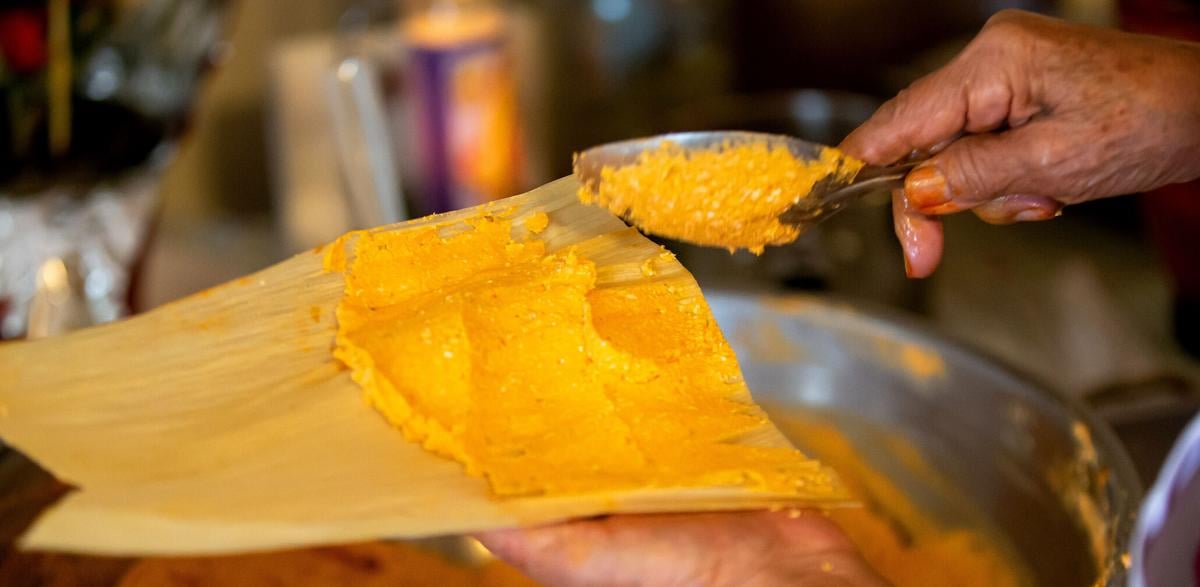
PHOENIX — A measure to legalize the already common practice of people selling home-made tamales and similar foods cleared its first hurdle Wednesday.
The House Committee on Regulatory Affairs gave unanimous approval to House Bill 2042. It would expand the list of items that can be legally sold after being made in home kitchens, now largely limited to cakes and cookies, to include items with meat and those that have to be prepared and kept at a certain temperature.
Rep. Kevin Payne, R-Peoria, went along even though he owns a food truck.
“These people are in direct competition with me,’’ he said. “They have a lot less rules to contend with.’’
But Payne said there’s a simple way of dealing with it. “I don’t want to add rules to them,’’ he said. “I want to take them away from me.’’
The legislation still has challenges to overcome.
One involves changes sought by the Arizona Restaurant Association, which has so far withheld support. Lobbyist Dan Bogert said his organization first wants some changes on things such as who would have to be registered with the Arizona Department of Health Services in order to sell the homecooked foods.
The big unknown, though, is Democratic Gov. Katie Hobbs’ position.
She vetoed a nearly identical measure last year, saying it would “significantly increase the risk of food-borne illnesses.’’ Hobbs drew particular ire from Rep. Alma Hernandez, D-Tucson, who supported that version, for her comments that the measure would open the door to items being cooked in home kitchens with “rodent or insect infestation.’’
“I would be glad to put up my nana’s kitchen or my mom’s kitchen up against anyone else,’’ Hernandez said at the time.
And now? The governor remains noncommittal.
“I think that we’re working with the sponsor and the Legislature to get a bill that I can sign,’’ she told Capitol Media Services last month.
“I don’t know that there’s a hard-and-fast line,’’ Hobbs said. “I think there’s room for negotiation there.’’
This year’s measure, sponsored by Rep. Travis Grantham, R-Gilbert, is based on two principles for what are known in state law as “cottage foods.’’
One is his argument that there should be no more regulation than necessary to protect public health.
The more immediate consideration, he said, is the fact that the practice of selling tamales, pupusas and other home-cooked items in grocery store parking lots and elsewhere is going on right now — illegally.
“People already do this,’’ Grantham told colleagues. “Some people, unfortunately, who do this to supplement their income are doing it illegally because state law has not properly addressed this. This shouldn’t be a crime. Cooking dinner should not be a crime.’’
Still, he said he recognizes it makes no sense to simply reintroduce what Hobbs vetoed last year. While that measure passed with a broad bipartisan majority, a bid to override the veto failed after several Democrats who supported the original bill refused to go along.
Hernandez agreed a revised version is necessary. “I don’t want to have to relive everything that we did last year,’’ she said.
So there are changes.
One is that the revised measure now contains a definition of a “home kitchen.’’ It spells out that this kitchen cannot exceed 1,000 square feet, a move designed to preclude large commercial operations from claiming they, too, are exempt from the rules that apply to restaurants and other food-preparation services.
Labeling requirements also are being beefed up. They would not only include a list of ingredients and the name of the person preparing the food — all in the original 2023 legislation vetoed by Hobbs — but also a disclaimer that the item may have been prepared in a kitchen that could contain allergens, including pet allergens.
The labels also would have to include notification of where customers can report food-borne illnesses and how to confirm that the person is properly registered with the state.
“(It) gives the agency a little bit of strength when it comes to enforcement and the permitting process,’’ Grantham said of the health department.
“I have no problem with folks being notified their product may have caused an issue,’’ he said. “I have no problem with those folks being held accountable.’’
But he added: “We’re not subjecting home-based kitchens, cottage-food producers to surprise inspections, arrest warrants, whatever else you can dream up that criminalizes this practice,’’ he said. “That’s not the intention here.’’
Hernandez said the issue is personal for her.
“The only reason I’m here and have made it so far in life is because of the support of my parents and how hard they worked to get me where I am now,’’ she said.
In her case, Hernandez said, it was her mother baking cakes.
“We sold them out of our house to be able to make a living so that we all had an opportunity,’’ she said. “I don’t forget where I come from.’’
That leaves the Arizona Restaurant Association’s requests.
While now officially neutral, the group’s yet-to-be-offered support could prove crucial to get the measure not only through the legislative process but also the necessary signature of the governor. Hernandez said that may involve changes that provide the industry with some regulatory relief.
“The more that we can allow Arizonans to be able to succeed and be able to work and provide for their families, we should all be working toward that, not making it more difficult for people,” she said.
As it turns out, though, Bogert wants lawmakers to remove a provision in the existing bill that precludes anything prepared in a home kitchen from being used in what is served in a restaurant.
He told lawmakers he heard from one supporter of the measure who said his home kitchen produces salsa.
“It sounds like that would be a great product to be able to include in some of our dishes at our restaurants,’’ Bogert said. “And we’d very much like the opportunity to do that.’’
The measure must be debated and approved by the full House before it can go to the Senate and, if it survives that process, eventually to Hobbs.
Get your morning recap of today's local news and read the full stories here: tucne.ws/morning

