

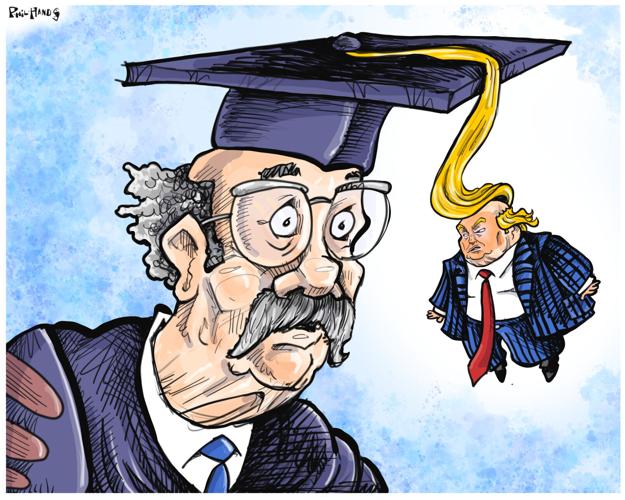

American universities are at a crossroads.

Inez Stepman
Their business model, which is overwhelmingly dependent on the twin pillars of federal grants and taxpayer-backed student loans, is failing in the face of declining public trust, financial malfeasance, a looming demographic cliff and discrimination.
The Trump administration recently sent a contract to a select few universities offering reforms. This would require universities to rein in escalating costs, primarily serve American students and follow the law.
They would be wise to take the olive branch, even if most of the universities are rejecting it.
The first reason taking the Trump deal makes sense is simple: universities are guilty of what the administration is accusing them of doing. They are wrongly using racial preferences in admissions and hiring. They also are flouting Title IX and Title VI requirements that protect the opportunities of women in sports and religious minorities on campus, respectively.
Donald Trump's demands would cripple American universities | James Rosen
They may be able to put up a temporary administrative fight and delay federal investigations. Still, the outcomes are ultimately not going to favor institutions that have embraced racial quotas, which have been illegal in hiring since 1964, in the name of “racial reckoning.” That is why high-profile Ivy League schools such as Harvard and Columbia have settled disputes with the Trump administration and are looking to downsize departments. They also raise higher endowment taxes in the "One Big Beautiful Bill" approved by Congress.
Some of the provisions of the Trump contract he's offering universities merely enforce obligations universities already have under federal law. So universities have a simple choice: Affirmatively accept the provisions of this contract or wait their turn to be sued.
Other provisions in the Trump contract are eminently reasonable. For example, the administration asks universities to freeze runaway tuition for several years, cap foreign student enrollment at 15% and instruct foreign students on American civic values to help them conduct themselves appropriately while guests in the United States.
The contract demands that universities uphold their already existing obligation to respect the First Amendment and ensure that campuses are physically safe for conservative students and ideas to be debated.

In light of conservative activist Charlie Kirk’s murder on university grounds in Utah, this provision should be updated to demand that universities pay for all necessary security for speakers invited to campus, rather than use security costs as a smokescreen for censorship.
Some have argued that the contract is an incursion on academic freedom. Writing in the Chronicle of Higher Education, liberal and conservative scholars express concern about the autonomy of universities to maintain their truth-seeking mission.
But this is laughable. Elite American universities are not free-market entities unaccountable to the democratic process. And the idea they’re engaged in “truth seeking” doesn't pass the smell test.
Instead, universities have used massive investment from taxpayers to advance their gatekeeping position at the start of pipelines to the elite. They also have failed typical Americans with outrageous prices, far-left activism and fewer slots for their children. Voters are now asserting that this formula isn’t remotely worth the investment. If this is the model universities want to keep, they can do it without billions in loans and grants from the federal government.
But if they want to keep their privileged position, one way or another they will have to submit to reforms such as those in Trump’s contract. They need to offer a better deal to the American people who foot their bills.
Elite universities are going to be held accountable. They would be smart to accept Trump's olive branch and change their ways before they are forced into reform by lawsuits, budget cuts and popular opinion.

