


When it comes to rights, the U.S. giveth, and the U.S. taketh away.
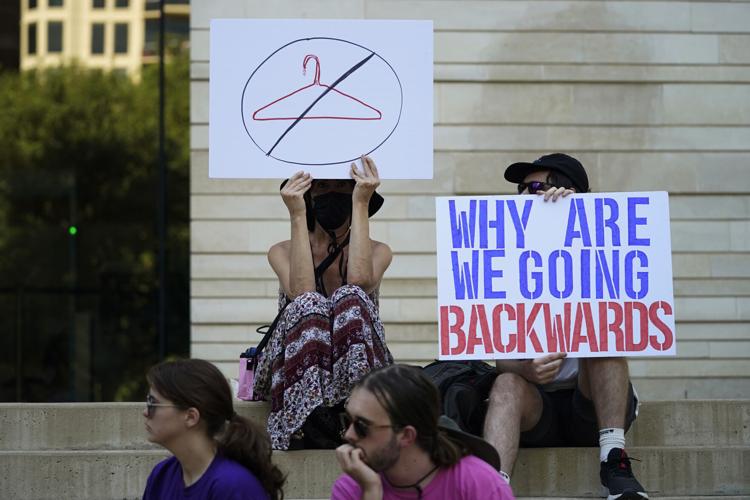
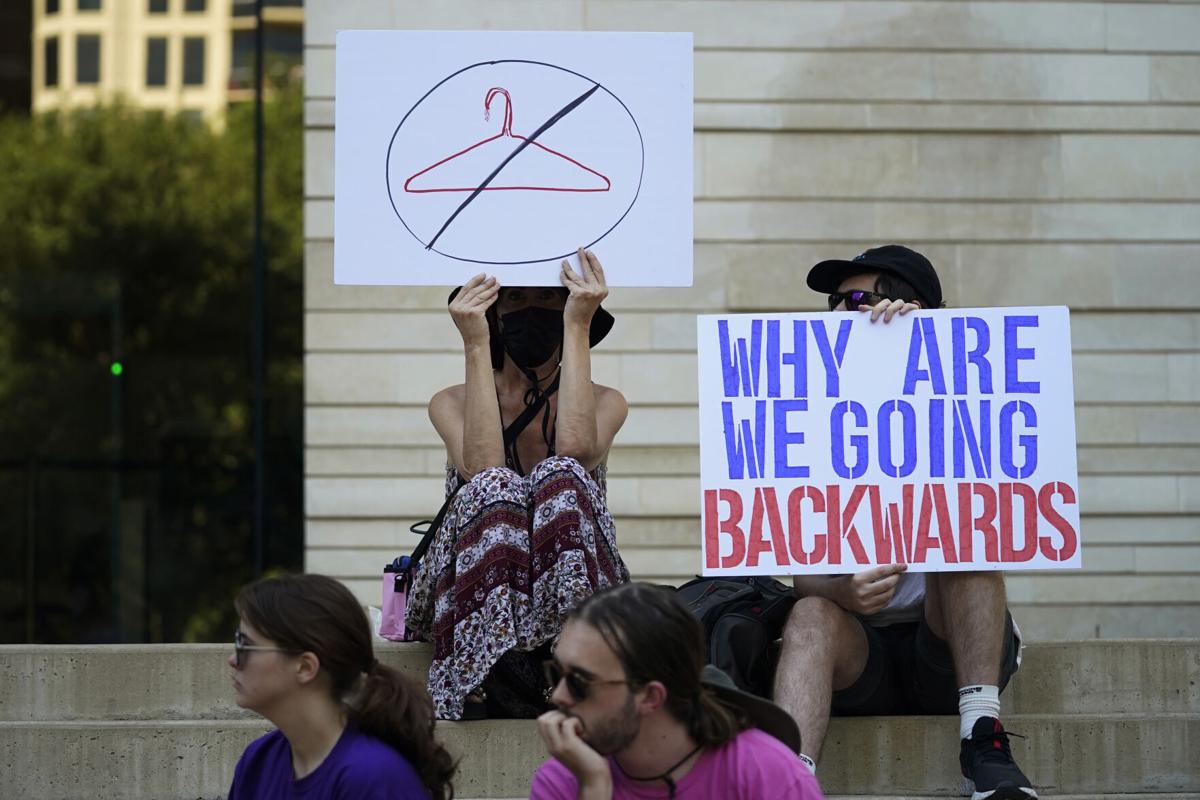
The erosion of a woman’s bodily autonomy by the U.S. Supreme Court in its Dobbs v. Jackson Women’s Health Organization ruling Friday is not the first time the high court, and the nation, contracted a right after expanding it. For many of us, our rights aren’t a given. Same as it ever was.
Supreme Court Justice Clarence Thomas said the quiet part out loud in his concurring opinion. Having curtailed abortion rights, Thomas wrote that “in future cases, we should reconsider all of this Court’s substantive due process precedents,” including the right to contraception, same-sex intimate relationships and same-sex marriage.
Could LGBTQ rights now be in the crosshairs of the court?
“Well, the short answer is yes,” said Ravi Perry, chair of the political science department at Howard University. In a democratic republic, “rights are not sacrosanct in a way that they can’t be overturned.”

Perry
And then, Perry, formerly of Virginia Commonwealth University, ticked off a list of cases in which the nation took a step forward, then a step backward.
On March 9, 1841, the Supreme Court ruled that the Africans who had mutinied aboard the Spanish schooner Amistad had been illegally enslaved and had a right to fight to be free. But a mere 16 years later, in the case of Dred Scott, Chief Justice Roger Taney wrote in his majority opinion that the enslaved Black man suing for his freedom “had no rights which the white man was bound to respect.”
In 1868, the 14th Amendment affirmed citizenship and equal protection under the law for Black Americans. But the 1877 compromise between deadlocked presidential candidates Rutherford B. Hayes and Samuel Tilden resulted in a Hayes victory, on the condition that he pull federal troops from the South. This politically expedient sellout of Black citizens signaled the end of Reconstruction and a new reign of terror in the South and presaged the Supreme Court’s 1896 Plessy v. Ferguson decision upholding the constitutionality of “separate but equal” segregation by race.
“Every 15 years, the status of Black people changed according to the Supreme Court,” Perry said. “Our rights are as firm as the people who vote to protect them.”
All these years later, you can detect the lingering stench of the Scott and Plessy decisions, which have not aged well in the dustbin of history. The Dobbs ruling will soon have the same putrid smell. Our nation of laws looks more like a partisan theocracy.
The six to three ruling ends the constitutional right to abortion in the U.S.
Today, the Supreme Court is dominated by so-called originalists who ardently view the Constitution as frozen in a time in which women, Indigenous people and Black people were subordinate to the framers. Rulings like Dobbs suggest that they still are.
The backsliding of the 19th century continues in the 21st. The Supreme Court gutted the 1965 Voting Rights Act in its 2013 Shelby v. Holder decision eliminating the pre-clearance requirement for jurisdictions with a history of voter suppression. Chief Justice John Roberts blithely cited racial progress since the establishment of the Voting Rights Act as reason to water it down — a bit of strange logic that would have him tossing his umbrella in the trash once the rain stops.
Perry, a gay man, is absolutely convinced that the Supreme Court will come after marriage equality next.
“Clarence Thomas let the cat out of the bag, so to speak,” he said. Not surprisingly, Thomas did not threaten the original marriage equality case: 1967’s Loving v. Virginia decision invalidating laws against interracial marriage. His wife, Ginni Thomas, is white.
Roe came six years after Loving. The Supreme Court, in 2003’s Texas v. Lawrence case, established the right of consensual intercourse between two adults of the same sex, striking down a Texas sodomy law as unconstitutional. The 2015 Obergefell v. Hodges decision established marriage equality as the law of the land.
These cases had become so ingrained in the fabric of America that their reversal would be as disruptive as Roe promises to be on so many levels.
We can talk about tearing down the system and starting all over again. But as Jan. 6, 2021, punctuated, folks are already at work doing that. At the moment, the system we have is all we have to work with. That requires an engaged and motivated citizenry, in the streets and at the ballot box.
The expansion of rights in America has been not so much an uninterrupted continuum as a constant struggle. Don’t give up the fight.



