



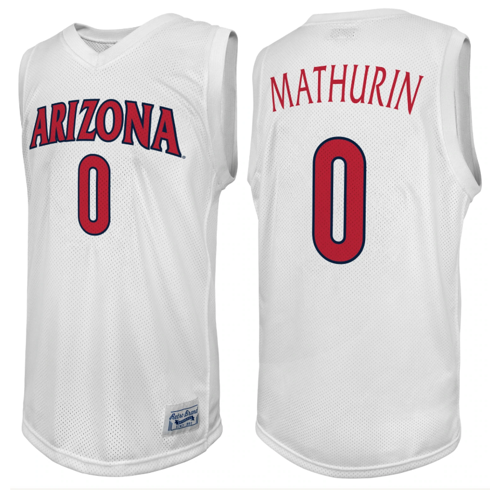
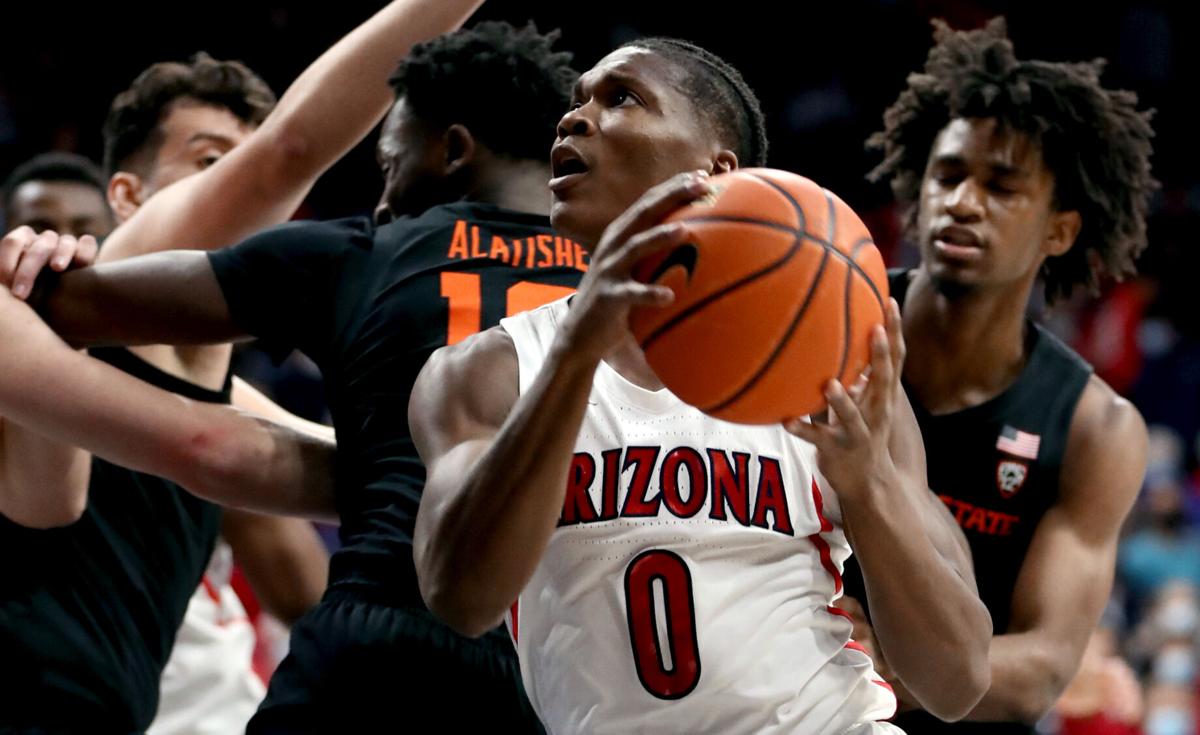
Not long after Congolese-born star Oscar Tshiebwe of Kentucky announced that he was “open for business” in February, jerseys with the names of Arizona’s best international basketball players went on sale and Canadian wing Bennedict Mathurin was scheduling paid autograph sessions.
It was the sort of activity to suggest that the Name, Image and Likeness floodgates finally had opened for international athletes, who have been largely unable to join the American-born players who can now be paid for endorsing products.
But the student visa restrictions that severely limit employment have not changed.
The U.S. Immigration and Customs Enforcement (ICE) office said it has no update to its statement last summer, when the NCAA began allowing NIL activity, that it “continues to assess” NIL possibilities for student-athletes on F and M (vocational school) visas.
What has changed: Without any formal governmental guidance or law to follow, schools, agents, immigration agents and international athletes have simply begun carving up the massive gray area as they see fit — and wondering what each other is really doing.
“This is a confusing situation,” says Braly Keller, an NIL specialist for Opendorse, which works with college athletes on NIL activities. “There’s a lot of headlines out there where you can be misled by certain articles or announcements that are made.”
Approaches differ
Kentucky and Tshiebwe may have suggested there’s a way for international players to join the NIL game. The UA, which has an unusually high proportion of its top athletes coming from outside the United States, has trumpeted its Arizona Edge NIL program. The program is meant to inform and assist its athletes, who ultimately make their own decisions.
“Certainly we want to find ways for our international students to take part in NIL opportunities,” Arizona athletic director Dave Heeke said.
Some schools play it conservatively, advising their international athletes to do nothing for fear of violating immigration law.
Other school officials, lawyers and agents try to compare notes. Heeke said “there’s a lot of dialogue” about opportunities and interpretations, while several experts contacted by the Star said Tshiebwe’s precedent-setting situation has generated considerable discussion.
But there is no-clear cut way to go.
Typically, international athletes seeking NIL clearance consult with the “Designated School Officials” (DSOs) inside a school’s international student services offices, and sometimes also work immigration lawyers and athletic department compliance officers.
Through that team, a set of recommendations can be made.
“You have some (schools) who are risk-averse and some are not,” says Lyle Adams, a former Wake Forest soccer player who founded Spry, which works with schools and athletes on NIL compliance. “Some will opt to say, ‘Hey, don’t do this.’ Some will say, ‘Hey, you can do this and ask for forgiveness later.’ Because without guidelines, there’s no what you can and cannot do. It makes it kind of challenging.”
The first item of confusion: That it’s not about the NCAA, but ICE. Not about competition or recruiting rules, but about immigration rules.
The risk is not suspension, but deportation.
“F-1 students have limited work authorization, on and off campus,” wrote San Francisco-based immigration attorney Leigh Cole, in a post for legal publishing service JD Supra, “and violating the employment rules can have devastating consequences.”

Kentucky forward Oscar Tshiebwe declared that he was "open for business" in February.
Government guidance unclear
When the NCAA told international athletes they are eligible to participate in NIL in an online Q&A last summer, it did also caution them to consult with their schools for guidance on immigration and tax implications, or to contact the U.S. Student and Exchange Visitor Program (which is regulated by ICE under the Department of Homeland Security).
That’s where the real confusion begins. The ICE website lists a number of strict conditions for both on-campus and off-campus work for students on F-1 visas, such as allowing on-campus work only if it provides services to students and off-campus work after the first year in the case of “severe economic hardship.” Some work is allowed if it involves training for a field of study.
There is no mention of where endorsements, autograph signings or apparel sales fit in.
“The critical question that has to be analyzed is, ‘What exactly does name, image and likeness mean?’” says Robert Law, director of regulatory affairs and policy for the Center for Immigration Studies, a research organization focusing on the impacts of immigration. “Is it employment? Is it profiting through a soft passive thing, just the mere existence of you showing up in an ad, or signing a jersey that has your name or number on it?
“However you define it, does that fit within the current law for foreign students or not?”
Employment restrictions also differ depending on the nature of the visa. While most international college athletes are on F-1 student visas, Arizona has some who aren’t. Some college athletes also could be the children of a H-1 (nonimmigrant work) visa holder, in which they would not be able to work. Those who are green-card holders (permanent residents) or DACA (Deferred Action for Childhood Arrivals) beneficiaries are allowed to work.
International students can also seek a hardship waiver allowing work, but those are narrowly issued to only those who have unforeseen financial difficulties, such as major changes to the student’s source of support or a substantial devaluation in the currency used to pay for a student’s studies.
According to a February story in The Athletic, Tshwiebwe — the Kentucky star — filed for a hardship waiver but had not received a ruling. Tshiebwe’s agent, Nate Conley, told The Athletic that “we’ve found some work-arounds to allow Oscar to benefit.”
That’s a scary place to wade into, according to agent Tay Hawker, a native of New Zealand who played rugby at Missouri’s Lindenwood University and received a masters degree at ASU.
“I’m really, really nervous for him because it’s way too gray,” Hawker said. “I feel like the Department of Homeland Security is going to try to make an example out of someone, and maybe him. I would hate that to happen to an innocent student-athlete that’s just been given poor counsel.”
Ultimately, a school’s DSOs are required by law to terminate a student’s F-1 visa if they determine that student has violated visa regulations, wrote Cole, who declined additional comment to the Star.
“DSOs … are required to take their responsibilities for ICE very seriously, to protect their school’s F-1 international student program,” Cole wrote. “So it’s vital for F-1 international students to work closely with their school’s DSOs, to avoid any employment that a DSO would view as unauthorized.”
But DSOs, lawyers and athletes alike would have an easier time of it, NIL and immigration experts say, if ICE or Congress had issued some sort of clarity since the NCAA started allowing NIL activity last July.
“Something like this is such low-hanging fruit that it really could be resolved very quickly,” Law said. “There were just not very many people (saying, ‘Well, hang on a second. Some of these student athletes are not U.S. citizens. And what does that mean? This is a brand new area, right? This is a new frontier.’
“I think they were caught flat-footed. They’re probably researching it now. But it really shouldn’t take this long.”
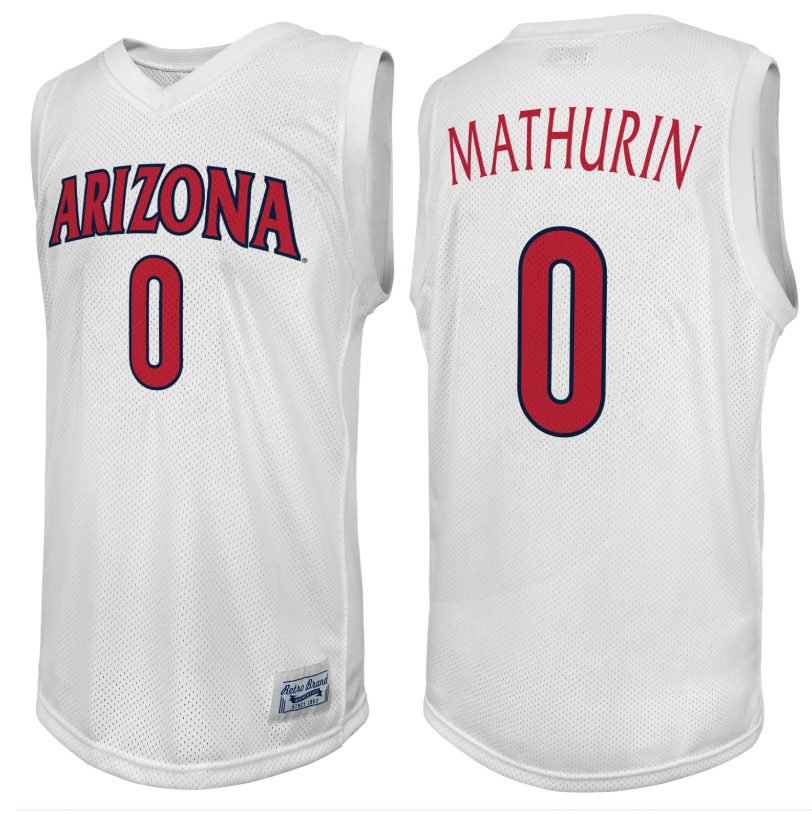
Original Retro Brand is selling a Bennedict Mathurin jersey for between $95 and $100.
‘Passive income’ and ‘downstream consequences’
For now, several NIL and immigration experts say the safest activities are the ones that produce passive income, since it may not be easily classified as work.
While trying to scrape together a living as an international student-athlete, Hawker said he did a “ton of research” and found earnings from investments handled by a manager, or a shop run by somebody else, could be considered passive. He said an athlete showing up for a photoshoot or autograph signing might not be.
“It has to be extremely passive to the point that you can’t lift a finger in order to generate that income,” Hawker says.
Because there hasn’t been much public detail about Tshwiebe’s activities, it’s unclear if they could be considered passive. Kentucky officials did not respond to requests for comment. Based on their actions, however, the school may be signaling to international recruits that NIL money is possible there.
“We feel like we kind of cracked the code a little bit,” Kentucky player development director T.J. Beisner told The Athletic, “and found some opportunities for a great young man who deserves it — and, honestly, for the next international student who comes to Kentucky and needs help navigating this.”
The sales of jerseys with names of international athletes on them appears to be passive income. While the Wildcats’ athletes’ share of the proceeds is not public, and an official with manufacturer Retro Brand did not return a message, UA athletes do not sign or appear with the jersey. They are sold for $100 via UA’s online bookstore and $95 at the Retro Brand website.
Autograph signings could be a different story. Mathurin and U.S.-born teammate Dalen Terry showed up on March 27 for at a “Meet & Autograph Signing” at Showtime Cards; both of their signatures went for $50. Mathurin was also scheduled to appear on Friday in a Showtime Cards event featuring $25 autographs.
If Mathurin has an F-1 visa, he probably won’t need it for long: He is a projected NBA lottery draft pick who isn’t expected to return to school next year.
Still, Law said the potential for “downstream consequences” with immigration violations are so severe that, until there are clearer guidelines, he’d advise all international athletes to stay away from NIL activity.
“If you’re signing jerseys at the campus bookstore, or you’re going to the local car dealership and cutting an ad, if the government subsequently comes out and says this stuff is not permissible, you have you have violated your immigration status,” Law said. “You are very likely then will lose the ability to stay involved in school.
“There’s so much at stake, which is why I think it’s so it’s critical that either the Department of Homeland Security comes out with guidance and interprets it one way or the other or Congress” issues a law.
Law said DHS guidance could be as simple as saying that NIL income is not permissible under the current legal and regulatory structure — and that if such a statement were made, Congress “would probably very quickly step in and act.”
Failing that, precedent might lead to a road map.
“If one of these internationals do something NIL-adjacent and are then denied an immigration benefit, it will become the necessary legal precedent,” said Matthew La Corte, government affairs manager for immigration policy at the Niskanen Center, a Washington think tank. “That will either force the hand of the administration to issue guidance or provide the signal that internationals can’t profit from NIL.”
But for now, none of that is happening. So international college athletes, with advice from their schools and/or lawyers, can choose to charge ahead, tiptoe carefully in the NIL world or steer clear entirely.
It’s about individual interpretation and risk tolerance.
For now, and maybe for quite a while.
Maybe long after Tshwiebwe and Mathurin have turned pro.
“The Department Homeland Security is doing a great disservice to international student athletes by failing to provide any level of guidance,” Law said. There are “updates that basically say, ‘We’re looking into this’ and then then a few months later, ‘We’re still looking into this.’ …. Now it’s been almost a year. And there’s nothing.”

