




For much of its 45 years, the Pac-12 was a bit like “Cheers.’’ Everybody knew your name.
Former Commissioner Tom Hansen didn’t sit on the front row at the league’s basketball tournament with some high-roller from Silicon Valley. He often sat in the media room, munching free hot dogs. There was more spontaneity, less pretense.
From Seattle to Tucson, it was a big frat party. Adversarial relationships were uncommon.

is the longtime sports columnist for the
Arizona Daily Starand
Tucson.com.
After Stanford rose to power as Arizona’s lead basketball villain in the ‘90s, I phoned the Stanford basketball office hoping to schedule an interview with coach Mike Montgomery.
“Stanford basketball, this is Mike,’’ a voice said. We talked for a half hour, unscripted, unscheduled.
The Pac-12 has become a high roll. Monty would never answer the office phone today.
Oh, how I miss the good old days of the Pac-10, pre-2009, before anyone on any campus in the Pac-10 had any idea who Larry Scott was. That’s when a league-wide welcome mat was replaced by an “off-limits’’ mentality.

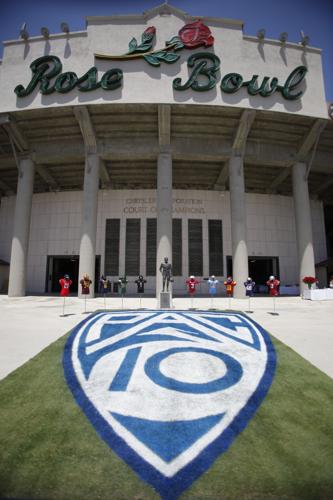
Holding Pac-10 football media day at the Rose Bowl in 2010 at least connected one of the conference's longest-standing traditions to the event. But in later years, going Hollywood (literally) may have changed things just too much as the Pac-10 grew into the Pac-12.
Hollywood-themed football media days were soon held in, well, Hollywood — that type of decision becoming the norm instead of at a more convenient and much cheaper hotel at LAX, when it wasn’t unusual for Oregon basketball coach Don Monson to invite everyone to Happy Hour at the hotel bar.
Big business rules today. Gone are the days of being given access to the office of Cal Bears sports information director Kevin Reneau, who would reach into a small fridge and produce two cans of Coors beer.
“Sit,’’ he’d say. “Who do you want to talk to?’’.
Now, unless you work for the Pac-12 Network, a one-on-one interview, or any type of interview on any Pac-12 campus, almost requires Presidential clearance.
I hope this doesn’t come off as a colossal whine. It’s just that as the Pac-12 fades into the sunset, I have a greater appreciation of what the league used to be.
In 1979, traveling with the Oregon State basketball team for a series at UCLA and USC, I phoned then-Bruins assistant coach Jim Harrick — an acquaintance from my college days at Utah State — in an attempt to get some insight into the mighty Bruins.

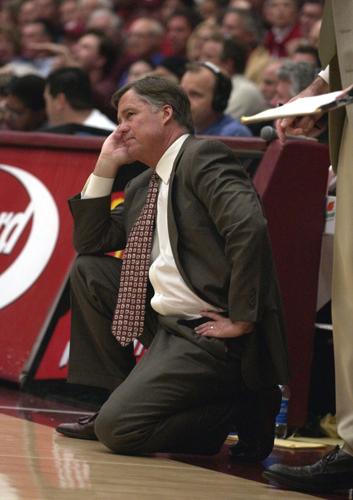
Stanford coach Mike Montgomery (pictured in 2003 during a Cardinal home game against Arizona) seemed for a while to be the one guy, coaching the one team, that could run with Arizona with consistency. Yet he was also just as likely to answer a random phone call in the Stanford basketball office himself. It's the little things like that that made the Pac-10 of yesteryear what it was.
“What hotel are you at?’’ Harrick said. “If you’re free Friday night, I’ll pick you up and we can have dinner with (UCLA head coach) Gary Cunningham.’’
And so he did.
On the Pac-10 Skywriters Tour in 1987, about 30 of the league’s journalists arrived at Husky Stadium in Seattle, free to interview Huskies football players and coaches for several hours. UW athletic director Mike Lude introduced himself and asked if I wanted a tour of the school’s newly renovated football facilities.
Lude then led a few other reporters up a ladder to the cantilevered steel roof covering the north side bleachers.
“Let’s go,’’ he said, crawling out onto the roof, seemingly as high as Mount Rainier, nodding to the panoramic view of metro Seattle. Five scared-to-heaven sportswriters tip-toed, following Lude, wondering if this might be their last day on earth.
That night, Lude hosted us on a luxury boat in Lake Washington, laughing about the tentative expressions on the faces of the visiting Skywriters. Today, decades later, I remain close friends with Lude, who lives in Tucson and is a lively 101 years young.

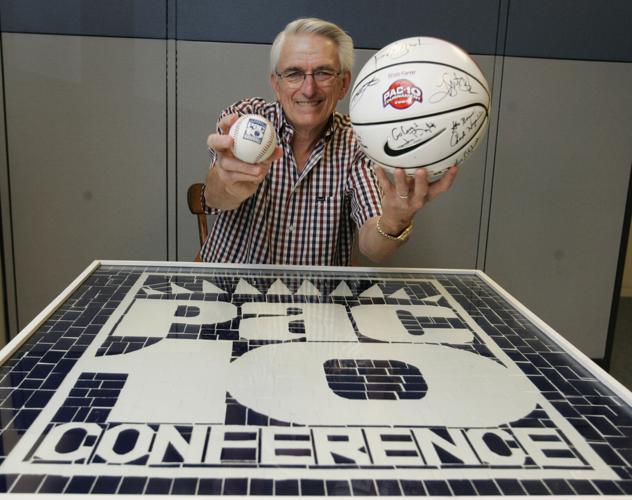
Former Pac-10 commissioner Tom Hansen (pictured in the conference’s old office in Walnut Creek, California, in 2009) was just as likely to be munching a free hot dog in the media room than as his successors have been to sit courtside with a Silicon Valley high roller. “More spontaneity, less pretense,” says Star sports columnist Greg Hansen.
The Pac-10 was a special place, which is missed.
In 1992, USC basketball coach George Raveling invited me to his office a day before the colossal Arizona-USC showdown, No. 2 Arizona vs. No. 10 USC. I followed him through an underground tunnel that led from the ‘SC campus to Julie’s Restaurant, the meeting place of USC sports dignitaries since the John McKay days.
While at lunch, Elgin Baylor stopped at our table and took a seat. Yes, Elgin Baylor. He paid the tab with a $100 bill.
A night later, after USC beat Arizona 70-69 in a buzzer-beater, Raveling began his Q&A session by saying, “Hey, Hansen, do you think Elgin could’ve made that shot?’’
The good, old days.
The Pac-10 was so chummy that almost all basketball travel partners spent their Oregon-OSU weekends at Eugene’s Valley River Inn. Arizona and ASU often shared hallways. One year, Sun Devil coach Bill Frieder challenged a group of Tucson reporters to a game of pool in the hotel’s bar.

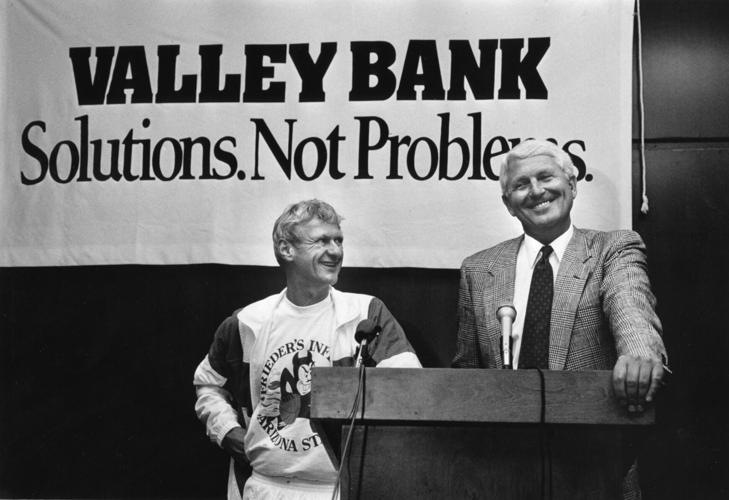
The Pac-10 was so chummy back then that even "rivals" like Arizona State head coach Bill Frieder, left, and Arizona head coach Lute Olson appeared in several funny commercials for Valley National Bank and Bank One.
“I’ve got to win your money,’’ said Frieder, “someone stole $1,500 cash from my room today.’’
I think Frieder got $20 from my wallet that night.
It wasn’t always fun, fun, fun. On the 1987 Skywriters Tour, a few writers convened in the bar at the Palo Alto Hyatt House, guests of Stanford athletic director Andy Geiger, who was enjoying some wine.
After a round or two, Geiger took offense to a question from Washington beat writer Don Borst. Geiger stood and dumped his wine over Borst’s head, then stomped out of the bar.
Unlike today, there were no headlines, no lawsuit, no one lost their jobs.
I enjoyed everything about the Pac-10. The long, icy drive from Spokane to Pullman, often in thick fog for a November football game? Bring it, even though I got a speeding ticket en route, as did many of my colleagues through the years.
In the 1986 Arizona-WSU football game in Pullman, the coldest UA football game I’ve ever covered, I shivered in the open-air press box that didn’t have central heating. Midway through the first half, WSU sports information director Rod Commons asked if I had anything more than the light-weight hoodie I was wearing.

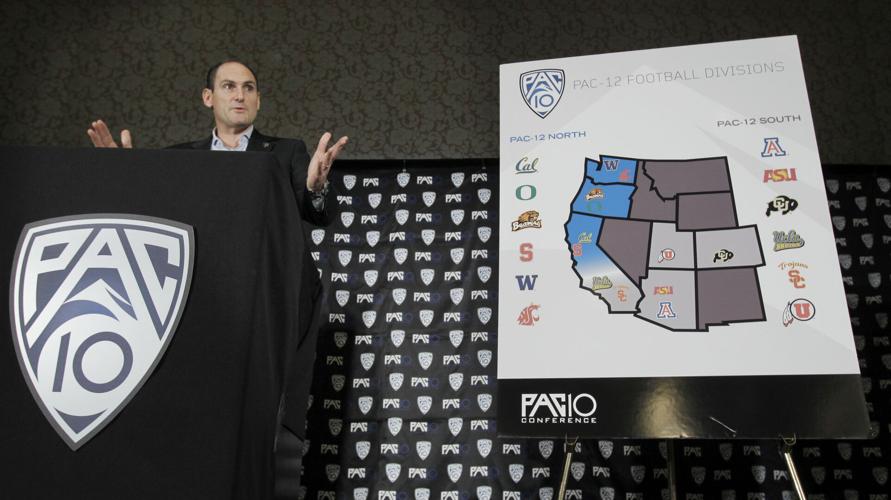
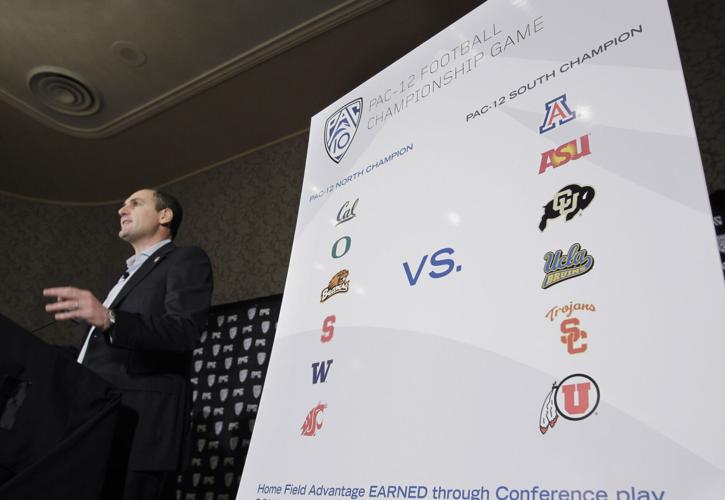
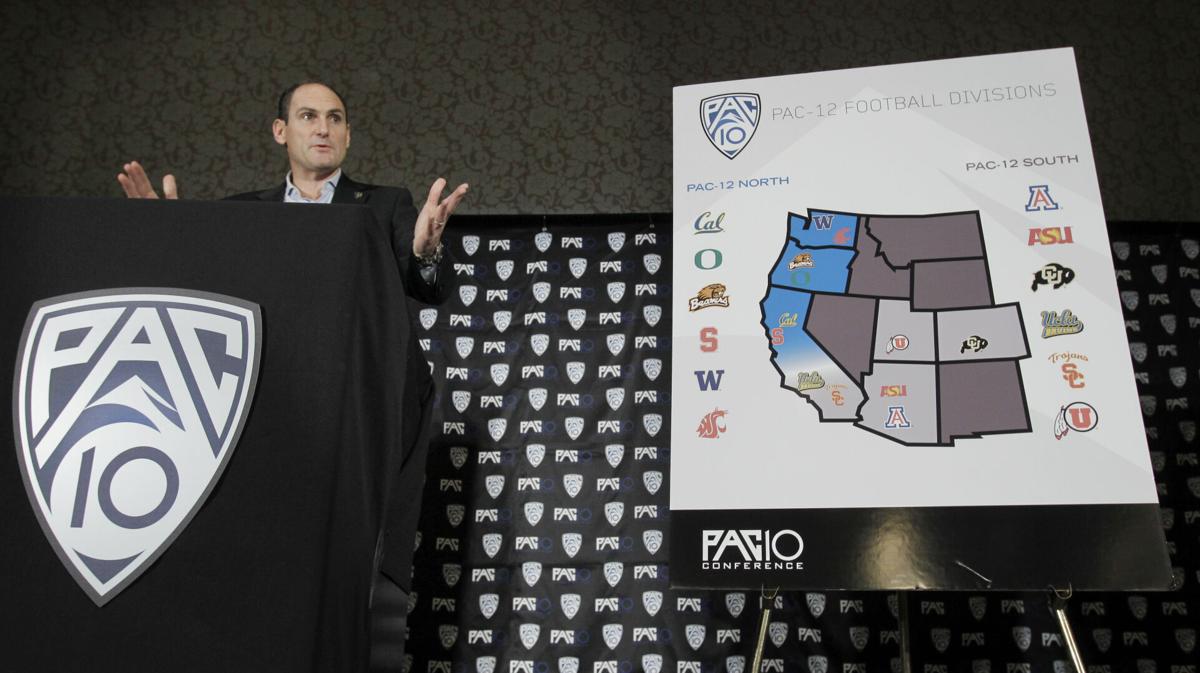
The biggest changes in the then-Pac-10's style and overall culture came upon the hiring of Larry Scott (pictured as the conference announces its plan to jump from 10 teams to 12 in 2010) as commissioner, succeeding outgoing Tom Hansen, in 2009. From that point on, a "league-wide welcome mat was replaced by an 'off-limits' mentality,' says Star sports columnist Greg Hansen.
“This is it,’’ I said.
A few minutes later, Commons returned with a WSU-issued crimson ski parka with a Cougar logo. “Here,’’ he said. “And remember, no cheering in the press box.’’
In 2009, the cheering stopped. Strangers took charge. Money trumped friendships. And next spring, the Pac-12 will cease to exist. It's the end of the innocence.
VIDEO: Arizona's Lute Olson goes toe-to-toe with ASU's Bill Frieder in classic commercial battles of the 90s

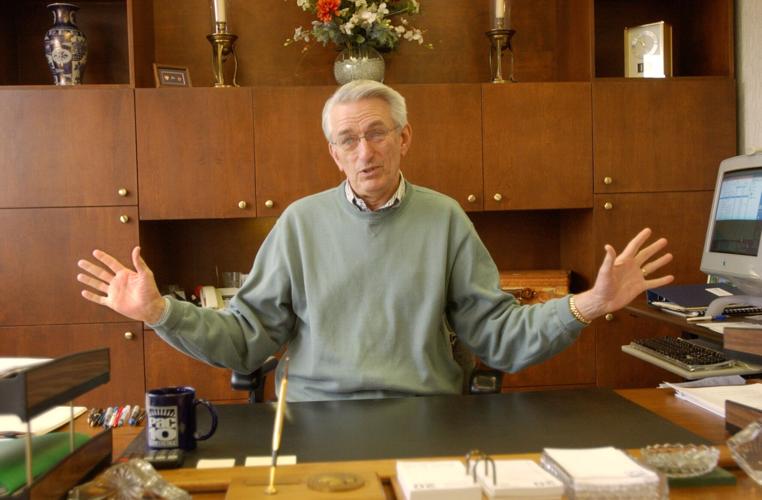
Former Pac-10 commissioner Tom Hansen (pictured in the conference's old office in Walnut Creek, California, in 2004) was just as likely to be munching a free hot dog in the media room than as his successors have been to sit courtside with a Silicon Valley high roller. "More spontaneity, less pretense," says Star sports columnist Greg Hansen.

