


Arizona water officials and others agreed to a $100 million plan Thursday — including $30 million in state tax revenues — designed to deal with the inevitability that the state will have less Colorado River water in 2020.
The drought contingency plan, which still requires approval by lawmakers and others, would pay to have water previously stored underground pumped out to be used to meet at least some the needs of farmers and others who otherwise would find themselves going without. It also involves paying some cash to tribes and others to buy some of the water rights they have.
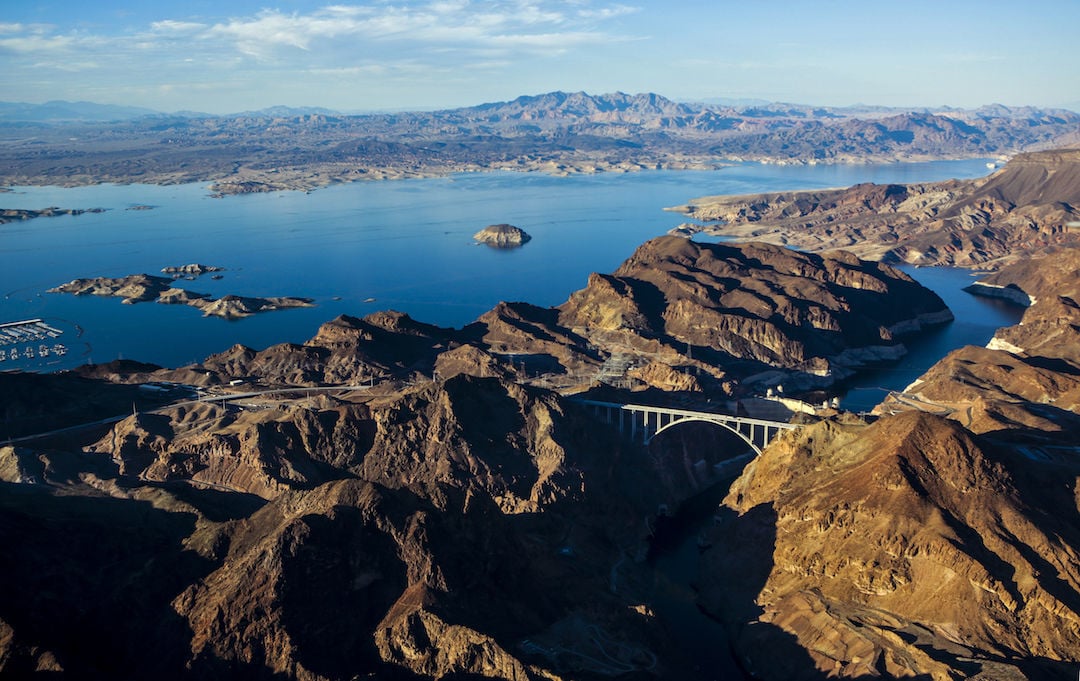
But what’s really involved, according to Tom Buschatzke, director of Arizona’s Department of Water Resources, is finding ways to leave more water in Lake Mead.
None of that, he said, will prevent a Tier 1 shortage in 2020, which will be triggered as the level of the lake is expected to drop below 1,075 feet. In fact, there are estimates that by midsummer it actually will be at 1,056 feet.
That Tier 1 shortage means that Arizona, which has the lowest priority among Colorado River water users, won’t be able to take as much. The drought contingency plan addresses how to deal with that fact.
But Buschatzke figures that if Arizona leaves 400,000 acre feet of what it is entitled to in the lake each year, that should prevent even bigger problems — and lost water rights for the state — in future years.
That 400,000 acre-feet is generally considered enough to serve, on average, about 800,000 homes.
“The (drought contingency plan) will reduce the probability that we’re going to go into Tier 2,” — a more severe shortage with deeper cuts, he said, though Buschatzke says that depends on “Mother Nature.”
“We might not be able to achieve that outcome,” Buschatzke said. But he said there is reason to believe that cutbacks now will avoid some even deeper pain later — like a Tier 3 where the state’s share would be cut even more.
“What the DCP shows is if you bounce into Tier 3, with all the actions being taken, we’ll bounce out of it next year,” he said.
About $60 million of the cost will be paid for by the Central Arizona Water Conservation District — or, specifically, by the farmers and cities who get CAP water.
Arizona Gov. Doug Ducey has promised to come up with another $30 million from the Legislature.
And Buschatzke said private groups, like the Walton Foundation and others, are expected to come up with another $8 million.
There’s another key piece of the plan: Getting something like $30 million in a federal grant to help Pinal County farmers drill more wells to be able to pump more groundwater in exchange for some of the CAP water they will not be getting.
The reason Arizona’s rights to the Colorado River water are junior to the other lower basin states of California and Nevada — and Arizona takes the first and largest cuts — is that the state agreed to that in exchange for federal approval to build the Central Arizona Project.

