



The federal Bureau of Reclamation commissioner threatened Thursday to take over some crucial Colorado River management decisions if Arizona and California don’t quickly approve drought plans.
Commissioner Brenda Burman said she would take unspecified actions to protect Lakes Mead and Powell and the river itself if the states don’t approve drought contingency plans by the end of January. Acknowledging that both states are close to approving plans, she emphasized, “almost is not done.”
While it’s unclear what she would ultimately do, officials of the basin states have long speculated that Reclamation would order specific cuts in river supplies to individual states to keep the reservoirs from crashing.
The states have their own legal allocations to water supplies from the river due to the 1922 Colorado River compact, which all basin states have signed. But given federal control over management of the entire river basin, state water officials have long feared such federal intervention if they couldn’t come up with their own drought plans to adapt to river flows that have steadily declined since 2000.
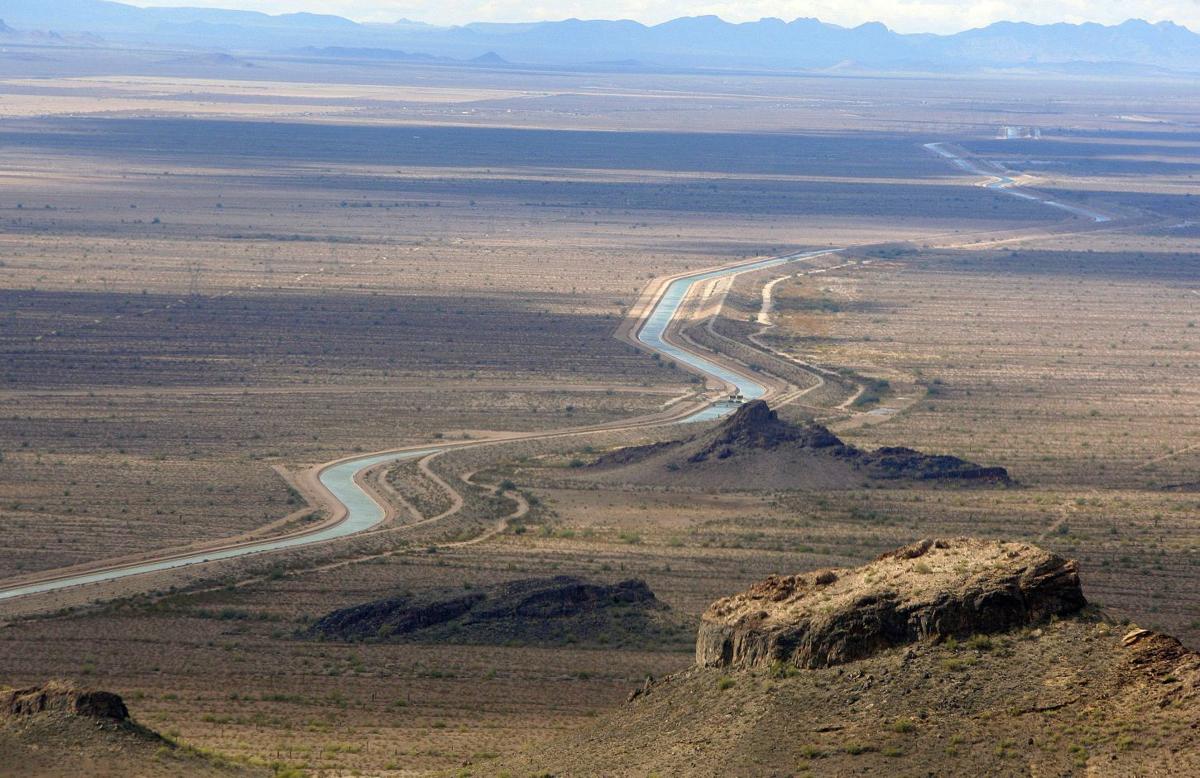
Burman’s statement and a subsequent talk she gave Thursday at a Colorado River conference in Las Vegas focused on the ailing reservoirs, Lakes Mead and Powell. They store drinking water and generate electric power for the basin states. Mead stores water for the Central Arizona Project that is Tucson’s main source of drinking water.
Burman noted that Colorado, New Mexico, Utah, Wyoming and Nevada have all adopted drought contingency plans although Arizona and California have not.
“This is not the (Reclamation) department’s preferred course of action, but action must be taken to protect the basin,” said Burman, who received a University of Arizona law degree and worked in the past for Sen. Jon Kyl of Arizona and for the Phoenix-based Salt River Project.
Reaction to Burman’s warning was very favorable from many Arizona water officials, experts and activists.
“Right on Commissioner Burman! That’s what she should be doing — keeping the pressure on,” said former Arizona Department of Water Resources director Kathy Ferris.
This isn’t the first time the feds have threatened a takeover of river management to prod the states into action on drought plans. But Burman’s threat is more specific and more imminent than those made during the George W. Bush and Barack Obama administrations.
Her warning comes a year after she challenged the seven states to complete drought contingency plans by the end of this year.
The Arizona Department of Water Resources, the Central Arizona Project and Gov. Doug Ducey have all signed off on an Arizona plan.
But a 40-member committee representing the state’s key water interest groups — cities, farms, tribes, developers and ranchers — has yet to approve the plan. More discussions are necessary to work out remaining details. The Legislature, which convenes in January, also must adopt the plan.
Given “sobering” hydrology on the river, with Lakes Mead and Powell 46 percent full, “the risk to the basin is too great to wait any longer,” Burman said at the Colorado River Water Users Association conference.
She said 2018 turned out to be the Colorado River’s fourth-driest year on record.
Now, “anyone who is hoping that a wet year would bring us around needs to step back and realize that’s not the thing that’s going to help us here,” Burman said.
The forecast is for Lake Mead to be below 1,050 feet by September 2020, Burman said.
The bureau has already predicted a 57 percent chance of the river’s first shortage in 2020. That would cut river deliveries to Arizona by 320,000 acre-feet without a drought plan and 512,000 acre-feet with a drought plan. That shortage will occur if Mead, now at about 1,079 feet, drops below 1,075 feet at the end of 2019. (One acre-foot is enough water to serve four Tucson households for a year.)
But if Mead drops to between 1,050 and 1,045 feet at the end of a year, the river will hit the second level of shortage, cutting deliveries to Arizona by much more: 400,000 acre-feet without a drought plan and 592,000 acre-feet with a plan. The latter figure is nearly 40 percent of CAP’s annual supply.
“It is time for us to pay attention. We are quickly running out of time,” Burman said. “Today’s risk is unacceptable and the chance for crisis is far too high.”
Tucson Water Director Tim Thomure was at the conference.
“I characterize the commissioner’s deadline as firm, but fair,” he said. “All states have made progress, including Arizona.
“In Arizona, we have a proposal on the table that is a remarkable balance between many competing interests and has fairness, respect for the existing priority system and protection of Lake Mead as its core tenets. It also has broad support, including the support of Tucson’s mayor and council. It is a good deal for Tucson,” Thomure said.
With a few weeks left to smooth out the plan’s “rough edges” and work with the Legislature, “I am confident that Arizona will meet Burman’s deadline,” Thomure said.
Arizona Department of Water Resources Director Tom Buschatzke said at the conference: “I think it’s important for the Department of Interior to send that message that they will act. It’s important for our stakeholders to hear that something will happen.”
Interior is Reclamation’s parent agency.
“I think it is very possible that we can get it done within the time frame and through the Legislature,” Buschatzke said later.
CAP General Manager Ted Cooke also said he’s confident of meeting Burman’s deadline.
Ducey has said he doesn’t want Arizona’s 90 legislators, and the interests they variously represent, from tinkering with the plan, and he has threatened a veto if they do. The annual legislative session typically lasts into May, long after Burman’s Jan. 31 deadline.
The commissioner said if Arizona and California don’t meet the deadline, she would seek formal recommendations from all seven river states before taking final action in August.

