




PHOENIX — A proposed Colorado River drought plan that will cost well over $100 million is just the beginning of what’s needed to protect the over-allocated river, says Bruce Babbitt, the former governor who rammed through Arizona’s last big water legislation nearly four decades ago.
After Gov. Doug Ducey urged legislators to “do the heavy lifting” and pass the proposed drought-contingency plan for the Colorado, Babbitt said Monday that authorities will have to start discussing a much longer-term plan immediately after it’s approved.
“If you look at the projections for the river’s flow, modified by, exacerbated by climate change, it’s perfectly clear that DCP is just an interim solution,” Babbitt, who is also a former U.S. Interior secretary, told reporters Monday after Ducey finished his State of the State speech.
Nearly 40 years ago, then-Gov. Babbitt helped push through the pioneering Arizona Groundwater Management Act by muscling a bipartisan group of legislators to approve it after years of inaction. That law set a 2025 deadline for Arizona’s largest cities to balance the pumping of groundwater with the recharge of rainfall and runoff into the aquifer.
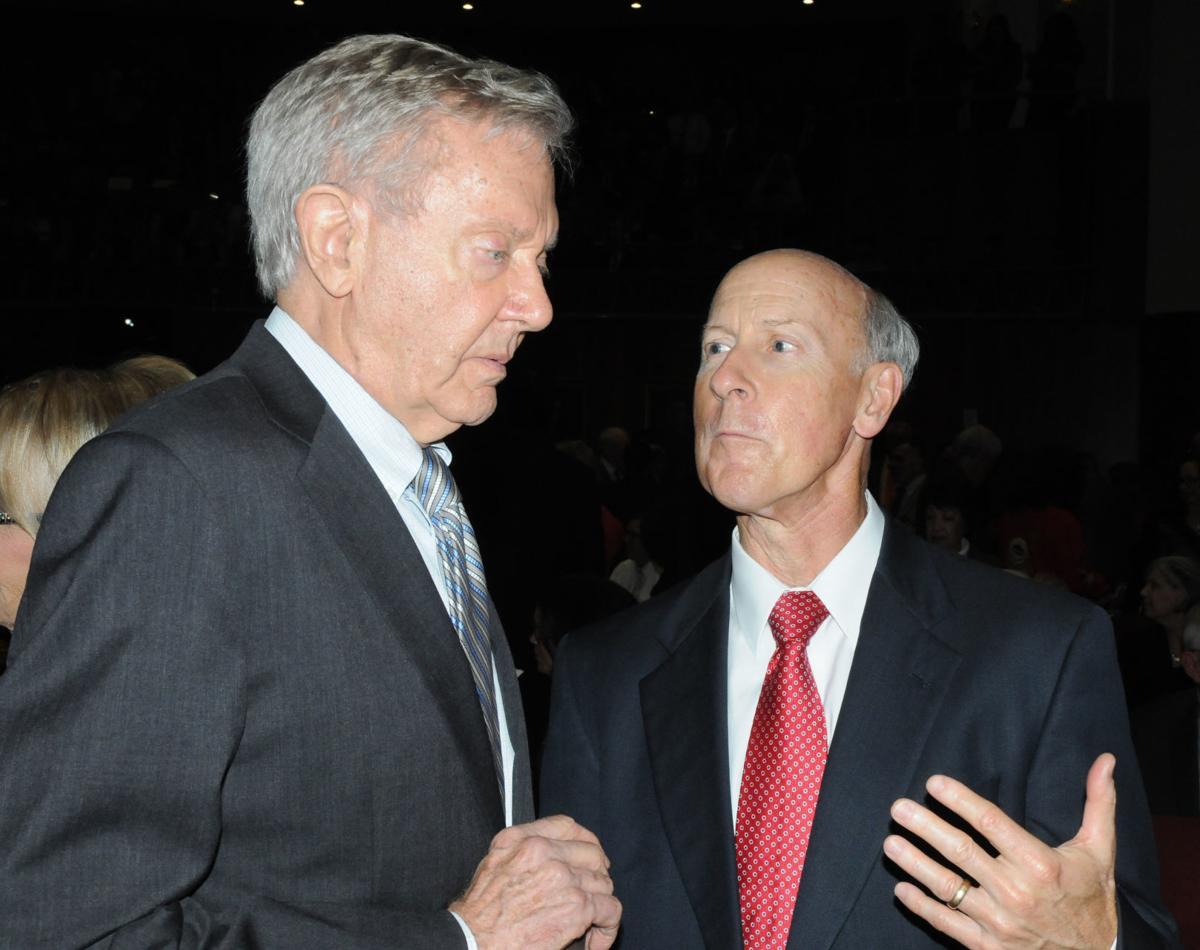
Monday, he and former U.S. Sen. Jon Kyl sat in the front row of the State House chambers as Ducey exhorted legislators to pass the drought plan in time to meet a Jan. 31 federal deadline. U.S. Reclamation Commissioner Brenda Burman has warned she’ll move to take over management of the Colorado River if Arizona and other states don’t approve drought plans by that date.
Babbitt said he was there at Ducey’s invitation. The Republican governor told legislators that Democrat Babbitt and Republican Kyl were examples of how you can succeed with water issues by “working with others, setting aside differences and putting our state and the greater good first.”
Babbitt said he saw clear parallels between the passage of the 1980 groundwater law and the current struggle to pass the drought plan. That year, the Legislature enacted the law only after then-Interior Secretary Cecil Andrus threatened to halt work on the Central Arizona Project if it didn’t — a threat Babbitt has since admitted having secretly orchestrated with Andrus.
“The parallel is that you reach a point at which you’re out of time and something must happen” Babbitt said. “That has an awakening effect on people.”
Now, however, the seven river basin states face “a very difficult pathway” — a continued future of declining river supplies and increasing demand fueled by continued population growth, Babbitt said.
The drought plan, which calls on Arizona to reduce its take from the river by nearly half by 2026, is designed to last until that year. That’s when guidelines used by the states since 2007 to manage the river expire. Basin states’ officials have said they plan to start negotiating a longer-term agreement starting next year.
While officials of Arizona and the other six river basin states have been working on the proposed drought plan for more than three years, “There will be a much more complex discussion to follow,” Babbitt said.
“This time, we left the (major) discussion to the last moment. Next time, we can’t do that,” Babbitt said, referring indirectly to the Arizona Legislature’s failure to pass legislation last year to get the drought plan moving. “It’s going to be a lot more difficult to get to the balance we all have to find.”
The lengthy debate over the drought plan is a proxy for the much bigger questions about the dynamics between the river’s upper and lower basins, Babbitt said.
“We’re taking more than our share” in the Lower Basin, while the Upper Basin hasn’t started taking all the water it’s entitled to use, he said.
But he declined to discuss if the state can continue growing in population and economically in the face of decreasing flows on the Colorado. It supplies 40 percent of Arizona’s total water supply.
“That’s a subject for another lengthy discussion,” after this drought plan is approved, Babbitt said.
“There’s so many things that can be done on that front, and I’m not going to get into it, it doesn’t make sense to get into it, until we learn precisely what our (water) resource is and what its inherent limitations are,” Babbitt said.
Babbitt said he’s increasingly confident that the drought plan will pass the Legislature, given that it’s become “front and center” in both the governor and legislators’ public statements.
“Everybody can sketch out a different picture of what ought to be, but there comes a time when you simply need to shut it down,” Babbitt said of the debate over the drought plan. “It’s now time to cut to the chase and get it done.”
Babbitt was working for California Gov. Jerry Brown, who just left office, to try to help solve longstanding disputes over that state’s Sacramento River delta. He said he’s not involved in the Arizona dispute on anyone’s side.
“I’m just here for the fun,” he joked, adding, “I’m a free agent. I’m here to say — get a deal, get it done.”

