




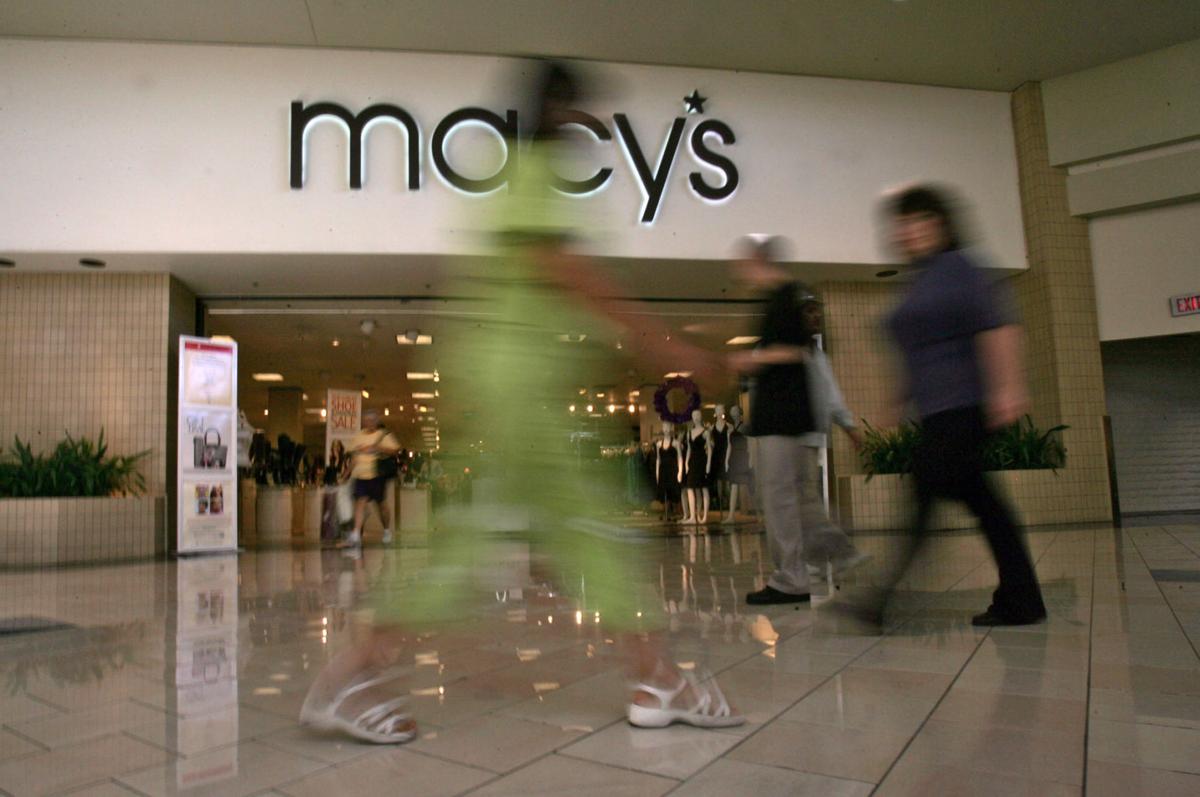
Tucson Mall is expected to lose Macy’s next year as the company struggles with slow sales and online retail competition.
The company announced earlier this year its plan to close 100 stores across the country and Morningstar Credit Ratings LLC identified the Tucson Mall location as one of the 28 most vulnerable to closure.
Macy’s has a second location at Park Place.
Whether Tucson Mall can survive a loss of Macy’s depends on how owner General Growth Partners plans to fill such a void, said Paul Schloss, broker and developer with Schloss/Castle Advisors.
“The challenge is to replace the traffic they once generated,” he said. “Maybe they reinvent it as a recreation and entertainment venue with more restaurants, a movie theater or a bowling alley.
“It’s unfortunate for the mall and city of Tucson sales tax revenues if they’re not ready with new ideas,” Schloss said. “It’s a great story if Macy’s departs allowing an opportunity for fresh ideas and something exciting comes in.”
Messages left for General Growth officials were not returned, nor were messages to Macy’s corporate office.
Morningstar reports that losing an anchor tenant isn’t always a death knell for a mall.
“However, if a mall is hit by two or more anchor closures, that’s typically the beginning of a downward spiral,” the nationally recognized statistical rating organization said. “Further dampening cash flow and increasing losses, it’s common for non-anchor tenants at anchored or shadow-anchored retail centers to have the right to terminate their leases or reduce rent if an anchor or shadow-anchor tenant vacates.”
Morningstar placed the Tucson Mall location on a list of 28 stores with reported sales that were less than the company’s 2014 national average.
National retail experts say consumers should be on the lookout for deep discounts on housewares and clothing through the end of the year.
Nancy McClure, first vice president of CBRE Tucson, said she could not comment specifically on Macy’s, but said a mall that loses a major tenant is presented an opportunity.
“With a parking garage and ample parking, empty department store space could lend itself to attract some entertainment tenants — that is a big trend with malls to attract experiential tenants to offer something that online shopping cannot offer,” she said. “Experiential tenants will draw customers to come to a center to do something they cannot do at their computer screen, and often will give the malls additional per hours spent at a center, and sometimes more frequent visits from customers.”
Tucson Mall, on North Oracle Road at Wetmore Road, opened in 1982 and is the largest indoor shopping mall in the city.
Current owner General Growth bought the mall in 2001 for $180 million. The company also owns Park Place. Combined, the two malls are the biggest sales-tax generators in the city.

