



If your spooky side is longing for something Halloween-esque in the midst of summer, Colossal Cave has you covered.
Once a month, the cave offers ghost-hunting tours and paranormal investigations. The events are hosted by the Haunted Historians, an organization that conducts haunted tours all over Arizona.
“If you’re open to the idea that spirits exist, this is a rich experience for that,” Mike Holmes, Colossal Cave Mountain Park general manager, says. “Doing something like this has always been in the back of our minds, but we didn’t have the expertise to do it. When Haunted Historians reached out to us, it was an immediate yes.”
With more than 1,000 years of life surrounding the cave and another 100 years of tourism alone, Holmes says it makes sense that many people have experienced haunted encounters.
Colossal Cave currently offers two rounds of hour-long ghost hunting tours, followed by a separate 3-hour-long paranormal investigation in and outside of the cave.
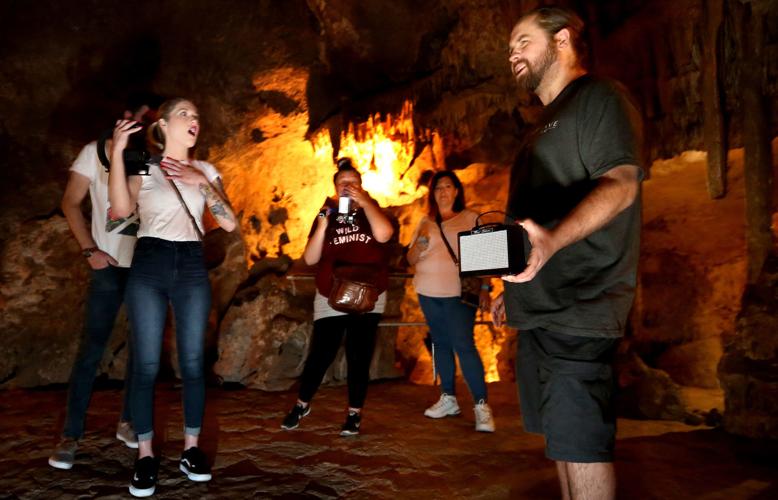
During the hour-long cave tour, visitors are able to walk through the cave after dark and, hopefully, communicate with spirits. John Albrecht, Colossal Cave’s designated investigator from the Haunted Historians, provides each visitor with ghostly gadgets such as night vision cameras, audio recorders, a ghost box to help hear the voices of spirits, and K2 meters which spot waves in electromagnetic energy.
According to Holmes, many people in earlier decades are said to have died on the park grounds. Specifically, there is evidence showing the deaths of two Indian boys inside the cave. He says that many people also feel the presence of Frank Schmidt, who is said to have saved the cave and spent a lot of time inside of it.
The ghost tours at Colossal Cave officially began in April, but Albrecht has been conducting ghost tours for 17 years. Prior to the investigations at Colossal Cave, he says he’s never done tours in a cave—though he’s always wanted to.
Additionally, Albrecht says that one reason why the cave tours work is because experts believe that limestone — which Colossal Cave is — helps signal paranormal activity.
As for the haunted encounters that people have experienced, Albrecht says that he’s experienced “phantom smells of the spirit” during previous tours at Colossal Cave. For example, he says that he has smelled the scent of pipe tobacco smoke—which is something that Schmidt loved.
In fact, Holmes says that longtime Colossal Cave employees have all smelled that scent of tobacco at some point—when no one in the vicinity had been smoking.
Other times, orbs are caught on camera. To some, orbs can be an indication of roaming spirits.

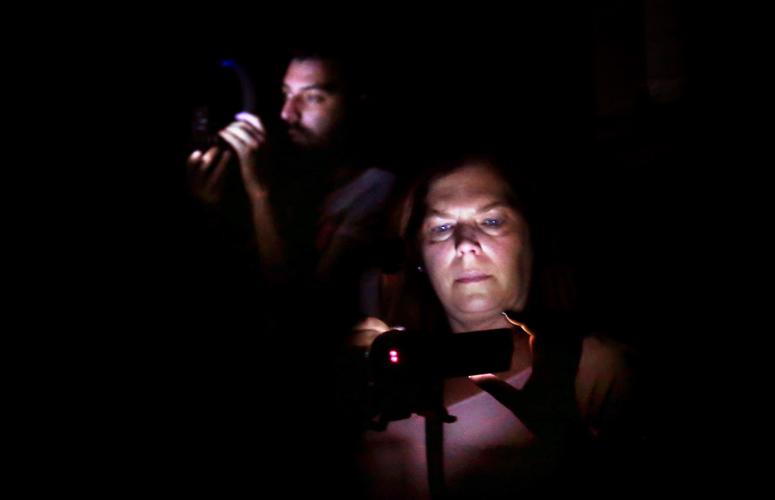
Richard Milbauer, top and Heather Shearer uses night vision modified video cameras to record the Haunted Historians tour of Colossal Cave and the park grounds east of Tucson on May 5, 2018.
One of the employees at Colossal Cave said that she’s had her own haunted experiences in the cave. She described a time in which she saw a man in an off-limits area, and when instructing him to get out of the forbidden space, he didn’t listen. But with a blink of an eye, he disappeared.
Holmes also had a spooky experience when giving a cave tour to a family. After a young girl took a photo of a passageway inside the cave, she looked back at the photo and said she saw a face in the picture. When taking another picture of the same spot, the face wasn’t there, and the first photograph had disappeared entirely.
Coincidentally (or not), both of those experiences happened in the exact spot where one of the Indian boys is said to have died.
During a recent tour, a group of aspiring ghost hunters shimmied into a smaller crevice of the cave. They all held up their ghost-hunting tools and waited in silence for something — anything — to happen.
“You’re going to want to talk to them,” Albrecht told the visitors. “Tell them that if they touch your devices, they’ll light up like Christmas lights.”
When a woman made the conscious decision to step forward, her device blinked a colorful light, just as Albrecht had said.
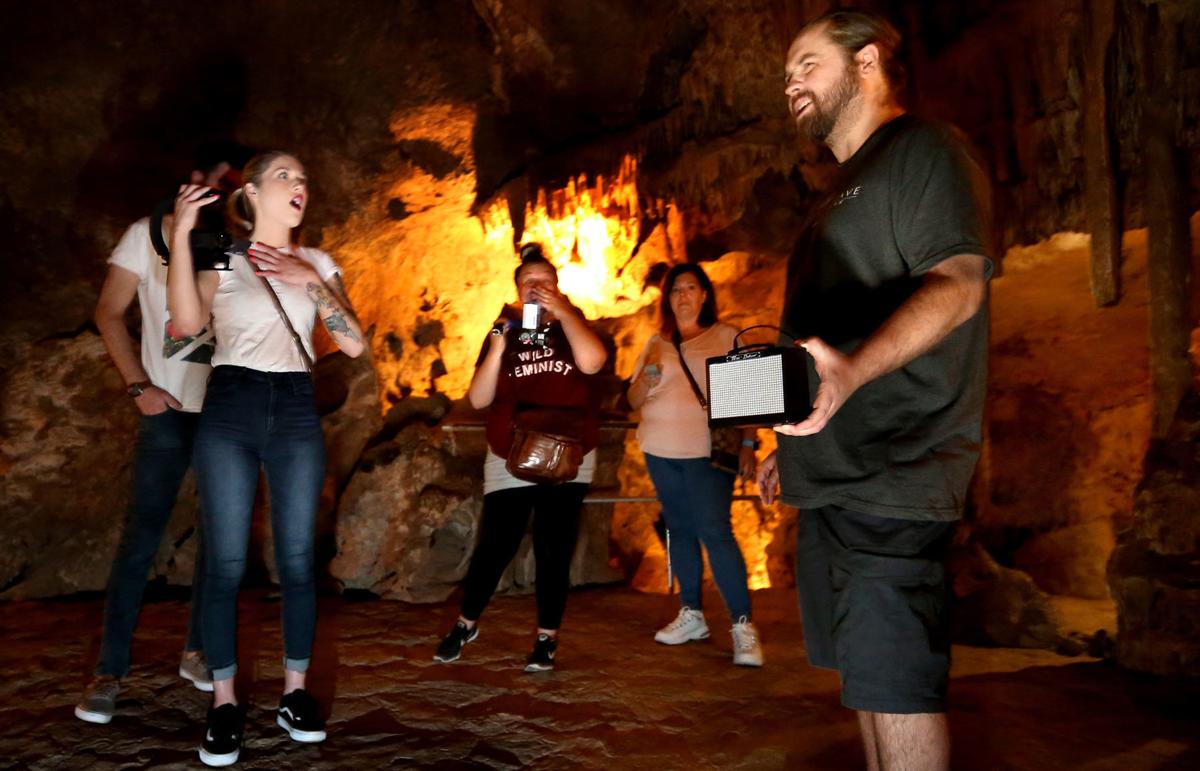
Later, Albrecht brought out the ghost box—a radio-like machine that produces loud static. But sometimes, after shouting out questions to potential spirits, the machine will produce a word or phrase through the static. It’s said to be a way to communicate with the spirits.
Albrecht shouted, “My name is John. You can tell us your name. Don’t be afraid.”
He also asked the spirit to read one of the words on his Colossal Cave T-Shirt. Through the static and in faint vocals, the visitors said they heard a voice say “cave.”
Later, Albrecht asked, “Frank, is that you?” And the crowd swore they heard a voice saying “Frank.” A series of other questions quickly convinced the crowd that they were, in fact, talking to the spirit of Schmidt.
At the end of the tour, Holmes said, “I can honestly say I heard some things tonight that I can’t explain.” Many of the visitors agreed.
The paranormal investigation is offered later in the evening and takes visitors through the cave and around different areas of the park.
Holmes says that paranormal activity has been picked up many times inside the cave, but that the activity is a lot more spooky on the park grounds — usually around and under the gift shop area.
In the most recent paranormal investigation, visitors said they felt the presence of Joe Maierhauser, who managed the park for several years before passing away in 2007.
“Whether you believe in ghosts or not, the tours are a lot of fun,” Holmes says.
Photos: Colossal Cave from construction by CCC in 1930s to today

People posing outside the then-uncovered entrance to Colossal Cave southeast of Tucson in the mid-1930s.

The Civilian Conservation Corps constructing the road for Colossal Cave southeast of Tucson in the mid-1930s.

Tent camp. Civilian Conservation Corps construction of Colossal Cave Mountain Park in the 1930s.

Barracks camp. Civilian Conservation Corps construction of Colossal Cave Mountain Park in the 1930s.

Government vehicles at the Civilian Conservation Corps camp at La Posta Quemada Ranch, Colossal Cave southeast of Tucson in the mid-1930s.

The Civilian Conservation Corps constructing the road for Colossal Cave southeast of Tucson in the mid-1930s.

A worker checks the engine on a government pickup truck on a service ramp near Colossal Cave southeast of Tucson in the mid-1930s.

The Civilian Conservation Corps constructing the road for Colossal Cave southeast of Tucson in the mid-1930s.

Adobe Camp office, today the CCC Museum. Civilian Conservation Corps construction of Colossal Cave Mountain Park in the 1930s.

Enrollees with Camp sign. Civilian Conservation Corps construction of Colossal Cave Mountain Park in the 1930s.

Civilian Conservation Corp (CCC) workers at Colossal Cave pose for a photograph on the steps pf a CCC barracks. Photo was taken 1937.

Blacksmith shop: the CCC made everything by hand: furniture, shutters, hardware. Civilian Conservation Corps construction of Colossal Cave Mountain Park in the 1930s.

The Civilian Conservation Corps constructing the buildings for Colossal Cave southeast of Tucson in the mid-1930s.

The Civilian Conservation Corps constructing the buildings for Colossal Cave southeast of Tucson in the mid-1930s.

Work on the retaining wall. Civilian Conservation Corps construction of Colossal Cave Mountain Park in the 1930s.

The Civilian Conservation Corps constructing the buildings for Colossal Cave southeast of Tucson in the mid-1930s.

The Civilian Conservation Corps workers at the entrance to Colossal Cave southeast of Tucson in the mid-1930s.

The Civilian Conservation Corps constructed the road and buildings for Colossal Cave southeast of Tucson in the mid-1930s.

The Civilian Conservation Corps constructed the road and buildings for Colossal Cave southeast of Tucson in the mid-1930s.

The Civilian Conservation Corps constructed the road and buildings for Colossal Cave southeast of Tucson in the mid-1930s.
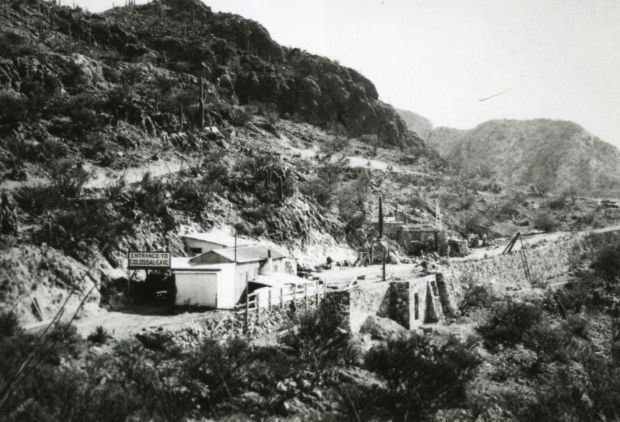
The park’s retaining wall was being worked on by the Civilian Construction Corps in the 1930s.

The completed buildings. Civilian Conservation Corps construction of Colossal Cave Mountain Park in the 1930s.
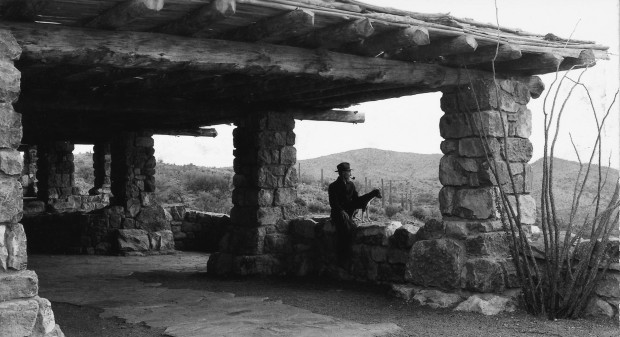
Ramada with Frank Schmidt. Civilian Conservation Corps construction of Colossal Cave Mountain Park in the 1930s.
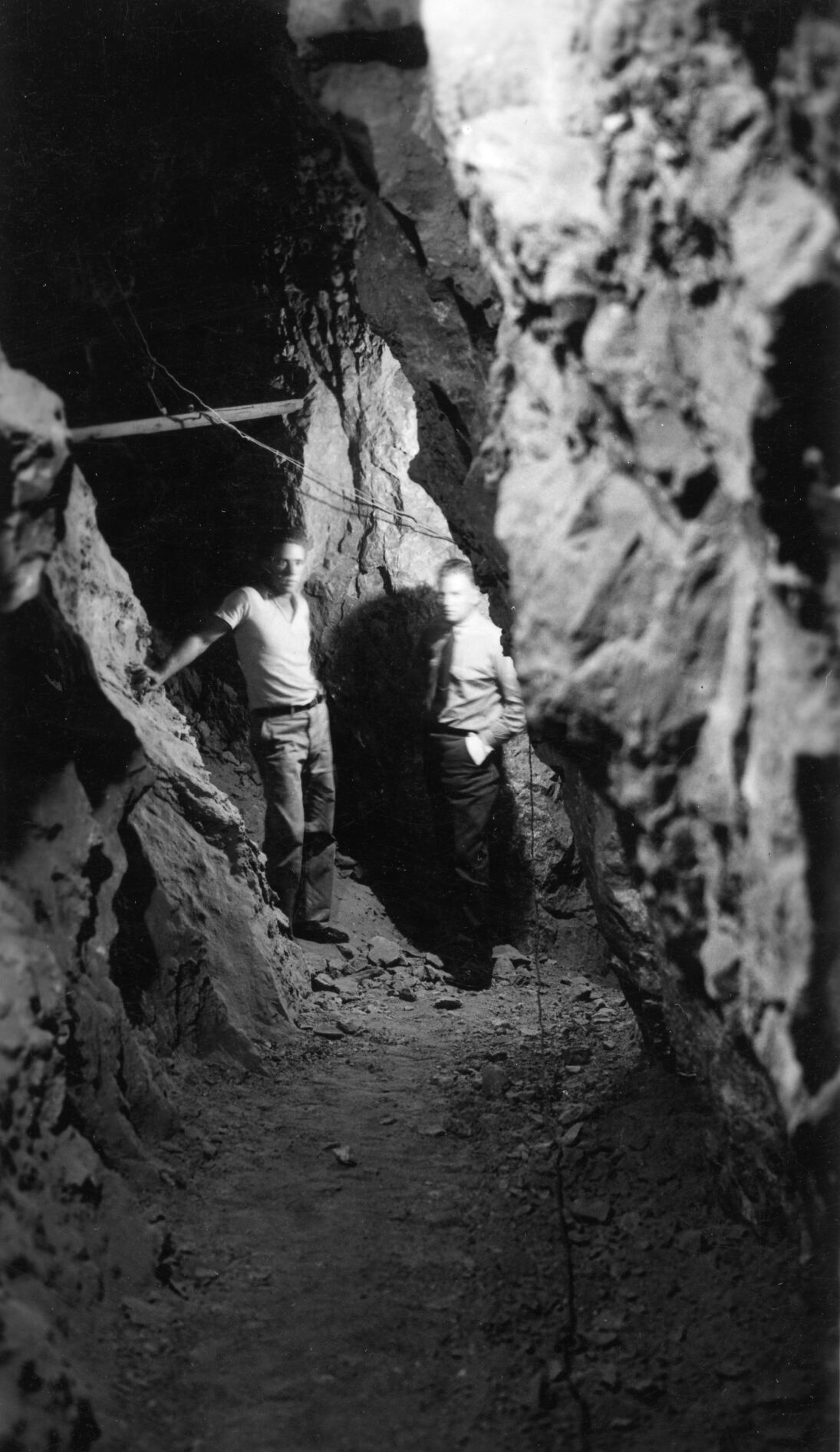
Two men inside the cave entrance during the time when Civilian Conservation Corps constructed the road and buildings for Colossal Cave southeast of Tucson in the mid-1930s.
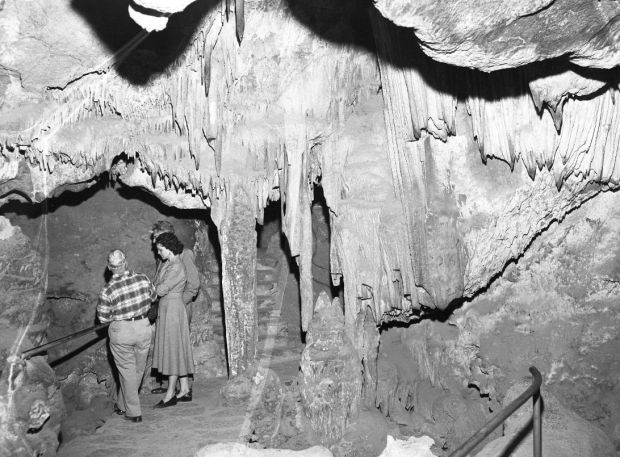
Visitors explored Colossal Cave in January 1954.

Colossal Cave — 1956
Joe Maierhauser found himself in a tight spot at Colossal Cave in April 1956.
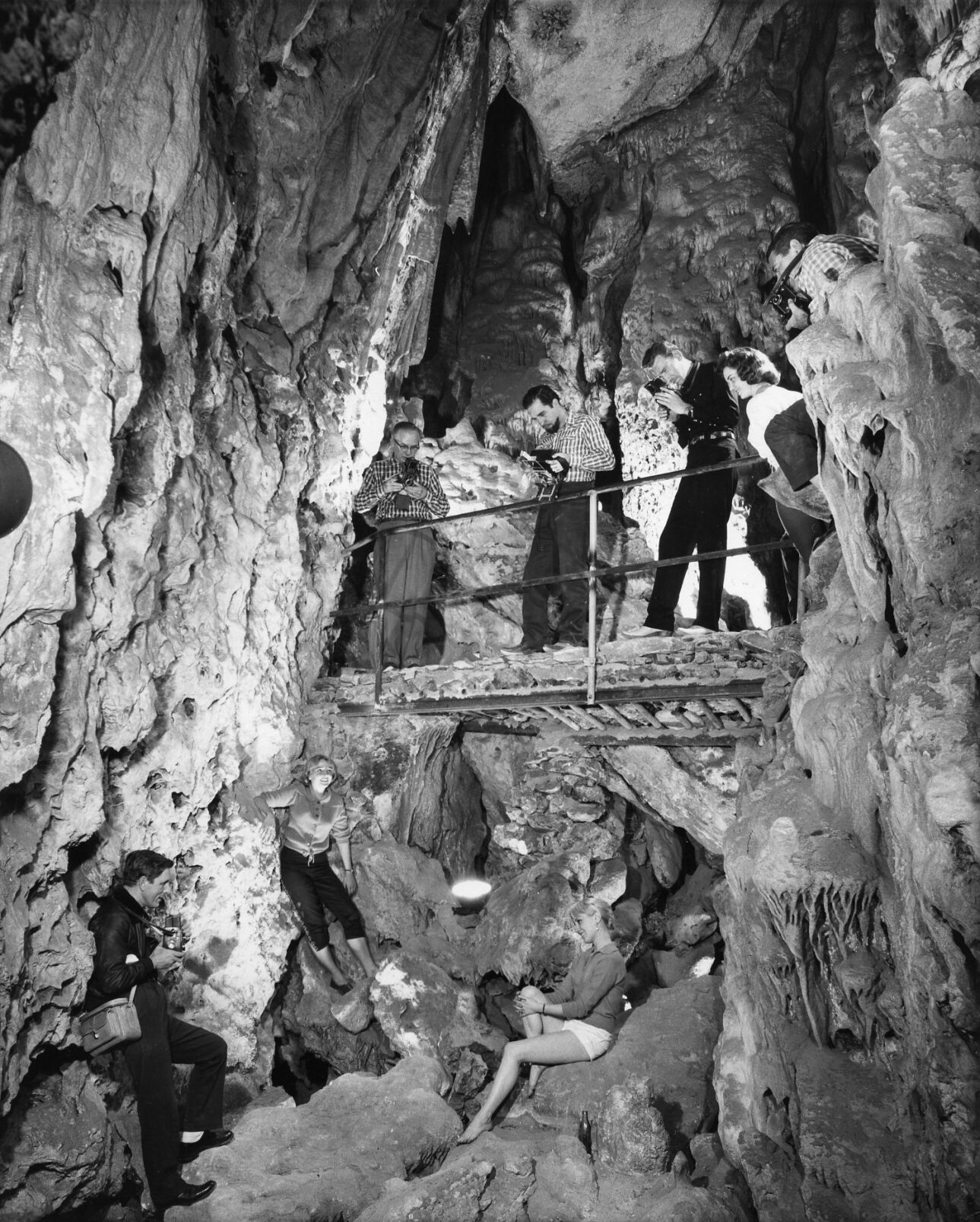
Members of the Tucson Professional Photographers Association focus their cameras on models in a dry riverbed about 250 feet underground, inside Colossal Cave during a photo contest in February, 1959. Models of Nancy Stewar, Sandra Sutton and Charlsey Garrison.

Canisters with drinking water inside Colossal Cave, which were deposited there in the 1960s in event of nuclear war.

A television crew films an episode of the "Trails to Adventure" TV series inside Colossal Cave southeast of Tucson in March, 1968. It was one of 39 stops at points of interest in the West. The crew was also at the Arizona-Sonora Desert Museum.

A television crew prepares lights for an episode of the "Trails to Adventure" TV series inside Colossal Cave southeast of Tucson in March, 1968.
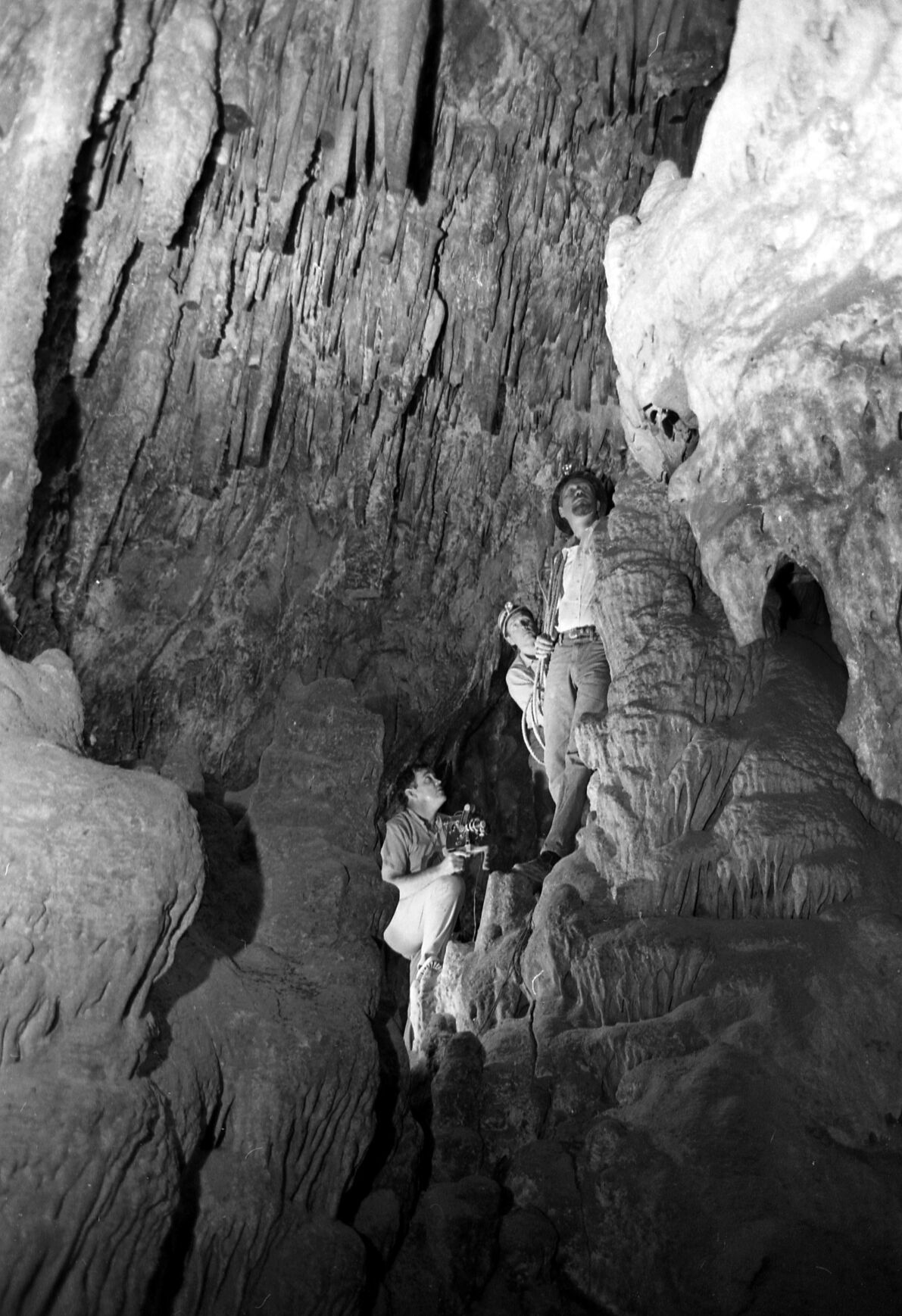
A television crew films an episode of the "Trails to Adventure" TV series inside Colossal Cave southeast of Tucson in March, 1968. Cave manager Joe Maierhauser showed the routes once used by robbers and local Indian tribes that used the cave as a hideout.

A television crew films an episode of the "Trails to Adventure" TV series inside Colossal Cave southeast of Tucson in March, 1968. The show was hosted by Jack Smith, known by TV audiences for "You Asked For It."

A television crew films an episode of the "Trails to Adventure" TV series inside Colossal Cave southeast of Tucson in March, 1968. The suit jacket was a little over the top. But sneakers were a good idea.

Formations in "The Drapery Room" at Colossal Cave Mountain Park.

Ken, right, and Linda Sparks, visiting from Wyoming, walk through the "Crystal Forest" formations on a tour at Colossal Cave Mountain Park.

Stalactite formations in the "Crystal Forest" at Colossal Cave Mountain Park.

Tour guide Nick Pisciotta identifies formations at Colossal Cave Mountain Park.

Formations dubbed the "Kingdom of the Elves" at Colossal Cave Mountain Park.

The Civilian Conservation Corps helped build the walking path at Colossal Cave Mountain Park.

Steven Plyler, 4, marvels at the gems uncovered in the sluice with mom Ashley Plyler at Colossal Cave Mountain Park.

Tour guide Sean Raley goes over the dos and don'ts before leading a tour at Colossal Cave Mountain Park.

Tour guide Dana Fox, center left, shows out-of-town visitors cell phone photos of area wildlife after their tour. (Front) Ken, left, and Linda Sparks of Wyoming. (Back) Colleen, left, and Hal Hartmann of Washington.

The entrance to Colossal Cave Mountain Park.

A National Register of Historic Places marker.
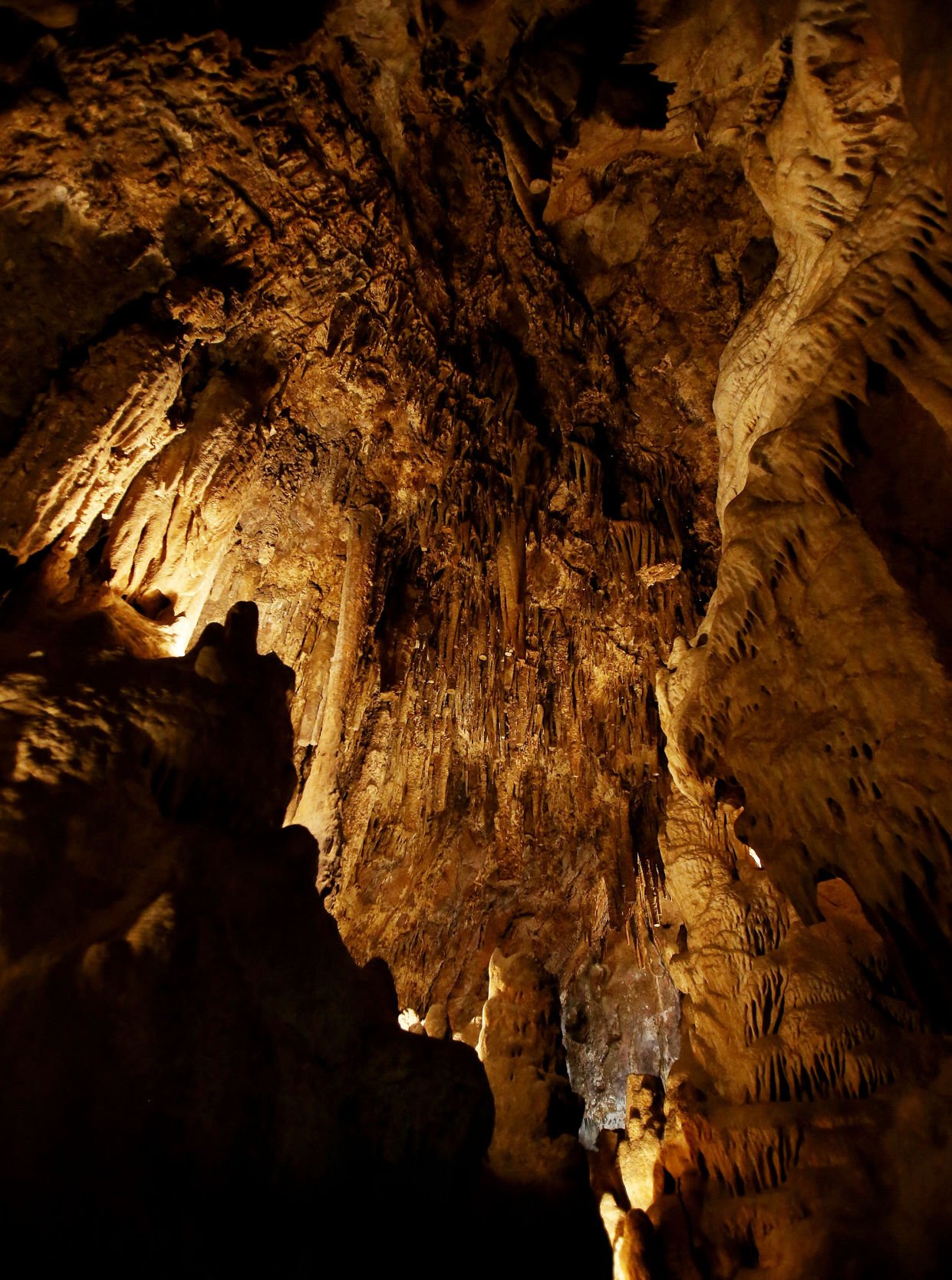
Formations in the "Crystal Forest" at Colossal Cave Mountain Park.

Tour guide Nick Pisciotta poses for an environmental portrait at Colossal Cave Mountain Park.

Examples of the tools used by early explorers, including Frank Schmidt, the early 1900s.

The walking path leads through formations.

Souvenir colorful hard hats for sale in the gift shop.

Apparel for sale in the gift shop.

Colossal Cave Mountain Park, 16721 E. Old Spanish Trail, nestled in the foothills of the Rincon Mountains.

Stalactite formations in the "Grotto of Lost Treasures" at Colossal Cave Mountain Park.

An access shaft used by the Civilian Conservation Corps during path construction.

