

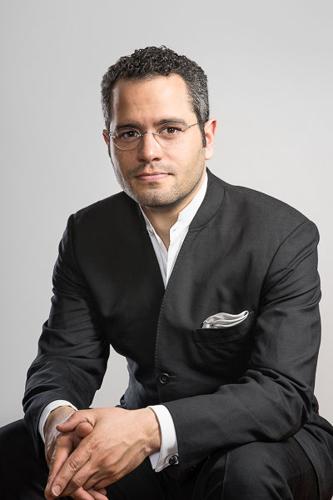


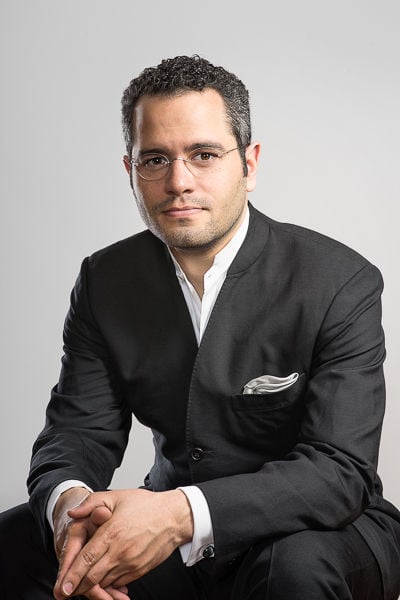
Pianist William Wolfram had just gotten off an eight-plus-hour flight from Stockholm, Sweden, to New York City last Friday.
He’d picked up a cold in Sweden and was exhausted. But once he slung into his favorite chair at his New York home, administered an insulin shot for his cat and mixed himself a martini, he was somewhat ready to talk about his appearance this weekend with the Tucson Symphony Orchestra.
“I’m going to warn you, this interview could get incoherent fast. Good luck,” he joked.
Wolfram, making his first Tucson appearance in years, is performing Brahms Second Piano Concerto, a piece deep in his repertoire. We wanted to know what’s so special about the Brahms 2 that demands our attention. And he gave us several reasons to ditch the homemade martini and grab a seat at the Tucson Music Hall when he and the orchestra will perform the work twice: at 7:30 p.m. Friday, Nov. 11, and 2 p.m. Sunday, Nov. 13.
Life-altering experience: “It’s a huge experience. It’s deep; it’s long. The piece is actually close to an hour, so that could be off-putting; sorry, that’s the reality. There’s four movements. It’s a huge life experience. It has one of the most beautiful slow movements in history, starting with the famous cello solo. The gamut of emotions it runs and circles through in this huge titanic symphonic work is formidable. And that’s why it’s so amazing.”
An emotional masterpiece: “It’s almost like a life journey. Lots of emotions get tapped into a piece that’s close to an hour. ... It’s curious in a certain way because the first movement is the longest and very beautiful. One of the most beautiful beginnings of any piece, actually. But it’s very full-bodied and heaven-storming. The second movement is a real fiery scherzo. Then this incredibly beautiful slow movement. And then he ends — and this is the way Mozart used to do things — he ends with a somewhat lighter finale.”
Vexing finale: “I love the finale, but this has been a source for some people of frustration. When you have a monumental piece that has so much fire in it, and your story ends in a kinder and gentler way, I honestly think it’s fantastic. His first concerto ends in a fireball; he doesn’t end this piece in a fireball. That’s been something that people have found vexing.”
Staying focused: “You play a massive first movement and it’s very physical, and the next movement is almost even more physical and you play it for quite a bit of time. And then it changes to one of the most beautiful intimate movements ever, but you don’t play for a long time. And I’ve always had trouble sitting out for a long time. It’s almost like an intermission that’s too long. And when I’m not playing in the second movement, the cello solo is so divine … I used to almost get completely lost in it. I’m much better at it now.”
Pre-concert workout: “I don’t run because my knees are shot, but I work out a lot. I couldn’t exist if I didn’t. I do cardio and crazy push-ups and I do weights. What very often gets you through it is nerves. … It might feel like a negative, but it gives you energy and it can corral your concentration, unless it goes over the top and you dissolve.”

