

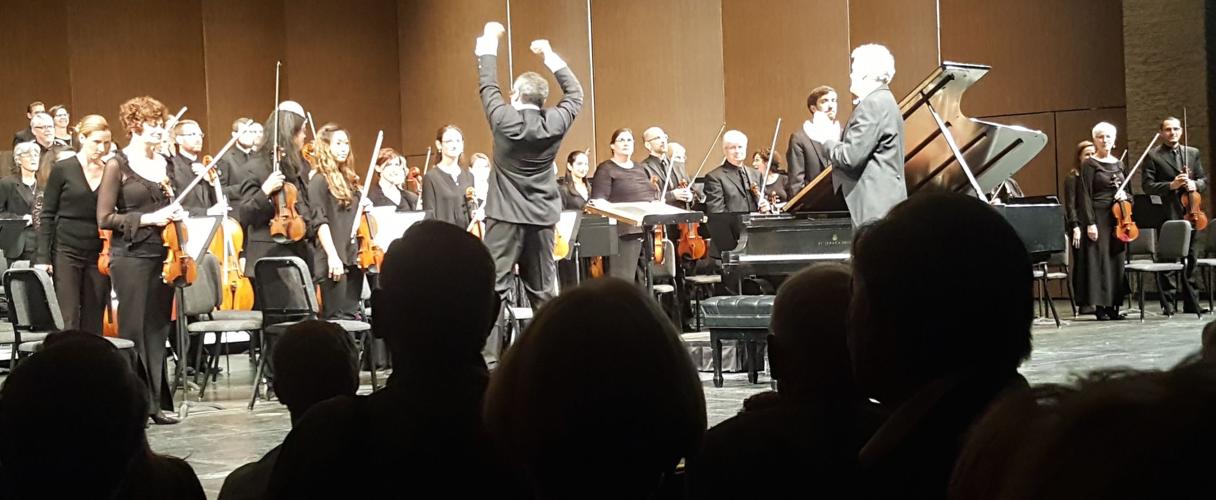

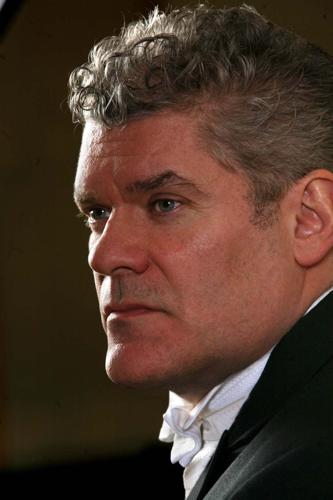



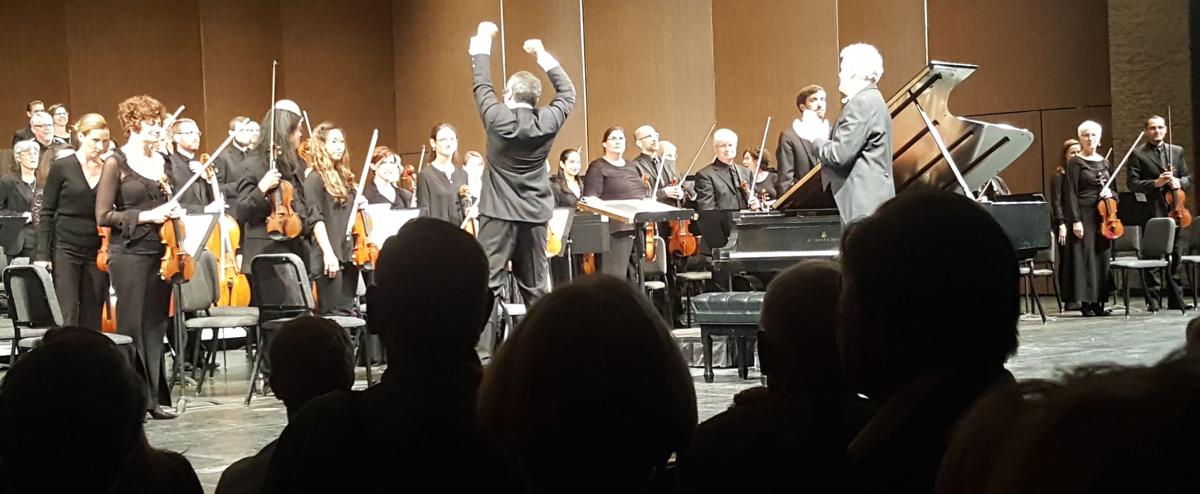
Pianist William Wolfram and conductor Andrew Grams had taken their second bows of the night when Wolfram wandered over to the piano.
The audience of 1,100 at Tucson Music Hall Friday night promptly took their seats — they had been standing the past several minutes in full-throttled ovation mode — anticipating an encore from the guest soloist.
Wolfram grabbed his bottle of water and a piece of paper from the instrument and turned to leave.
"I was just getting my stuff," he told the Tucson Symphony Orchestra crowd, and a quiet chuckle filled the hall.
Grams, making his fifth guest appearance with the orchestra, looked at Wolfram and then the audience and then plopped onto the piano bench. How do you play this? he asked, then proceeded to pound out chopsticks as the audience and Wolfram laughed along.
Wolfram, egged on by the display, sat back at the bench and tapped out a short burst of chords that sounded like a concerto grand finale before once again rising up, taking a final bow and leaving the stage.
Frankly, Wolfram could have sat there and played "Mary Had A Little Lamb" a dozen times over and smart money says hardly any one in the audience would have left before he was finished.
Wolfram's performance of Brahms' Piano Concerto No. 2 — the centerpiece of the TSO's third classical concert of the season — was simply fantastic. For nearly an hour — the four-movement Brahms Concerto plays more like a symphony — Wolfram took us on an emotional journey. He was the conductor and driver of the train, expertly balancing Brahms mixed emotions of angst, somber reflection and giddiness.
His playing is commanding and measured; in the opening and closing movements, where the tempo revs up to lightening speed, Wolfram's hands danced along the keys with precision and abandon. He built suspense in the second movement, allowing the drama to rise and fall as Grams coaxed equal measure of calm from the lushly played strings.
As the cello solo took the spotlight in the third movement, Wolfram sat back admiring the sound coming at him. The crushing finale was the biggest test of the piece. It's a bruising rampage that starts out deceivingly slow and tranquil, then builds to this thunderous resolve that Wolfram punctuated with convincing control and abandon.
Friday night's concert started off with Franz List's Hungarian Rhapsody No. 2, a piece that opens with a gentle boom. Liszt's Hungarian has the potential to go off the rails with its crashing percussion and devilishly tricky strings. But Grams looked deeper into the score, bringing out warm color intertwined with smooth-around-the-edges thunder. The string section, divided in two groups on either side of the stage, sounded crisp, with notes sticking in the air like punctuation marks. The brass players, set up in front of the vibrant and dynamic percussionists, extended commanding notes high above the spot in the Music Hall where the combined voices of trumpet and trombone often get lost in the hall's acoustic challenges.
In the middle of the Liszt and Brahms was Witold Lutoslawski's Concerto for Orchestra. It's a contemporary piece, penned in the early 1950s, and it plays like a traditional symphony. Grams went bold and razor sharp on the percussion intro, then teased loud dissonance in the strings. Horns and the trumpet blasted incongruous melodies that fit uncomfortably with the more defined themes coming from the strings.
Grams will lead the TSO in one more performance of Brahms Concerto No. 2 at 2 p.m. Sunday, Nov. 13 at the Music Hall, 260 S. Church Ave. Click here for tickets.

