

The demand for outdoor living spaces has hit new highs. When it comes to outdoor living it seems that the sky is the limit.
Question: We like the idea of having an outdoor living area. How would we go about getting started creating a space?
Answer: We find that the best way to start is with shade!
The most comfortable months for eating and entertaining outside on the desert floor are typically from February to late May and October thru November. But even the hottest part of year, May 28-Sept. 19, can be made comfortable with the addition of shade.
Q: What is the fastest way to get shade?
A: Trees are an excellent source of shade of course, but if you don’t have a mature tree like a pine, Chilean mesquite, or Texas ebony, consider creating shade with structures like patio covers, extensions, ramadas and cantilevers.
Q: What is the difference between the types of structures.
A: Here are the most common structures we see.
Ramada
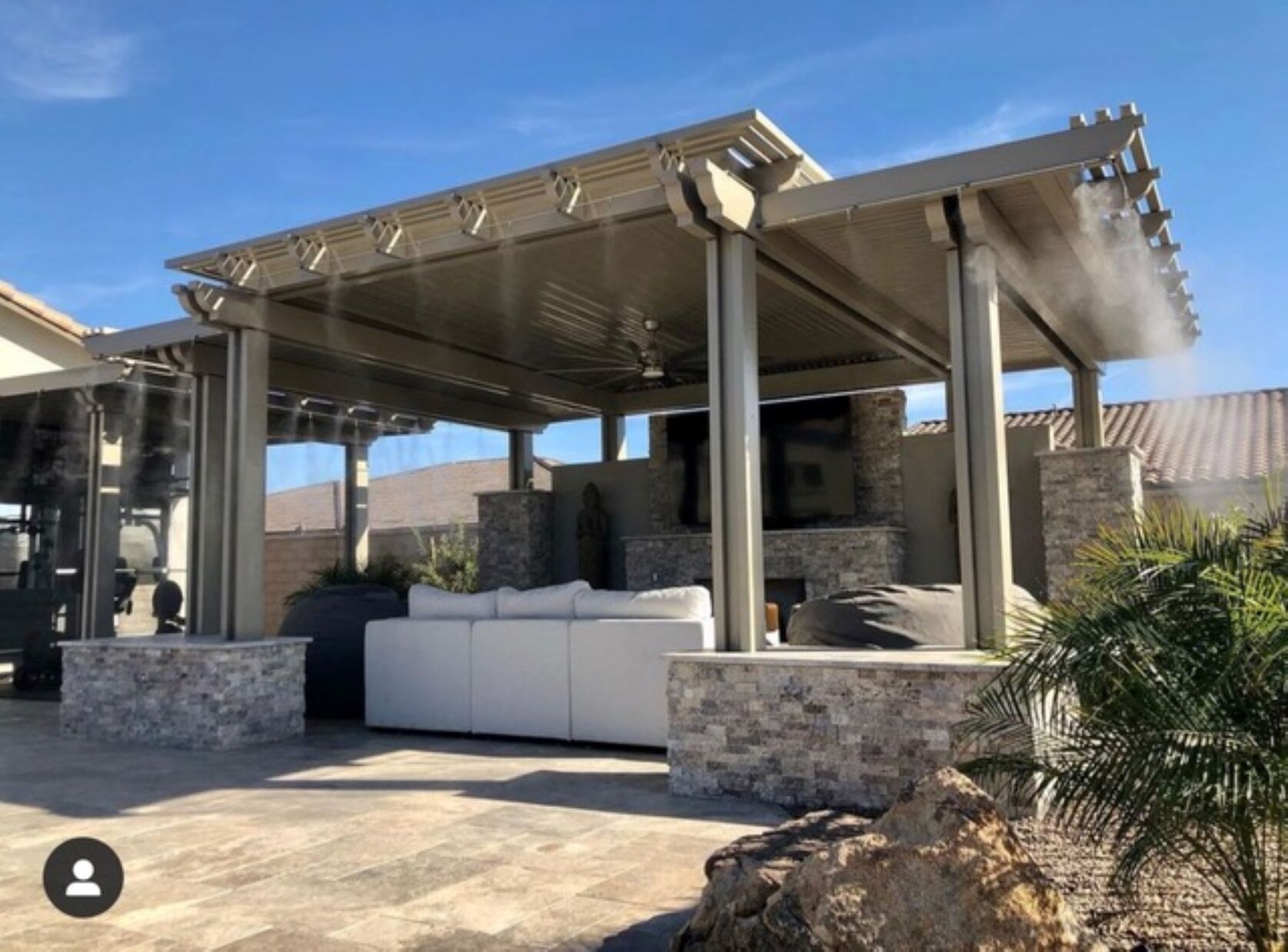
A ramada is a free-standing unit with four posts.
Weatherwood is a product we like. Structures made with Weatherwood are made of a heavy gauge, rolled aluminum. Unlike wood it never needs to be sanded or painted and is available in different colors and textures. The best options for the roof are a lattice cover, allowing filtered light onto the surface below, or a solid foam core roof.
Porch cove
rs
Customers who don’t have a porch cover can consider installing a cover that is directly tied into the structure of the home.
If a home has an existing patio cover, and it does not supply sufficient shade, it is common for homeowners to extend shade cover with a shade structure that starts at the end of the patio. The shade can be customized to follow the line of the porch giving it a coherent look.
Like the ramada, the roof of the cover can be solid or a latticed cover as preferred.
Cantilevers
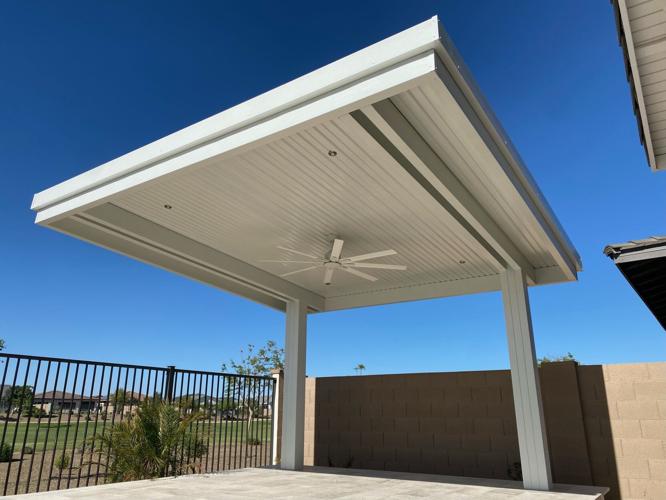
The cantilever is a cover that is engineered with just two legs. This look is a great choice for those who have mid-century modern or modern architecture. Cantilevers can be stand-alone units or tied into the structure of the home. The 4K Aluminum product is a handsome choice. The design allows for a better view of your surroundings. Cantilevers are very popular and make a statement with their unique construction.
The cost of patio products like these ranges from $25 to $100 per square foot. Common additions include low voltage lighting and overhead fans and misting systems.
Other shade options:
Closed in porches
A closed in sunroom can be added to the house with non-removable screens. This makes a great Arizona room.
Homeowners who are gone for long periods of time sometimes prefer glass to enclose the room to keep the dust out. The addition of a mini split for heating and cooling could be a consideration here.
Privacy walls
Privacy walls are made of the same aluminum material as the porch covers. Slats are hung in a frame that is placed in the ground with footings. The slats are positioned so that neighbors and others cannot see through to your outdoor space. These walls are especially popular in neighborhoods where there are no block walls between houses.
Q: Which one is right for you?
A: To narrow down your choices, start by thinking about how you use your outdoor space now and what you would like to be able to do going forward. Consider what limits you from spending time in your backyard space and what would it take to encourage you to spend more time there?
If it is the sun that prohibits you, observe what times of day direct sun chases you away and think through where a shade structure would make the most sense.
Patio products are an investment, and it is important to put time and thought into the design. It is also a good idea to invest in a quality product that can stand up to the Arizona sun and wind year after year.
Q: Is this a DIY project?
A: An onsite visit from a professional is the best place to start and recommends a licensed and bonded contractor. Be sure to check out Rosie’s How to Choose a Contractor Guide. It will give you steps to ensure you choose a qualified company!
Next, check the companies reviews for customer service and then observe how the company operates. Do they communicate well? Does the sales representative listen to you or is he more interested in selling to you. Is he knowledgeable about his product? Does he show up on time? Does he keep his commitments when he says he will do something? Remember, this is the dating phase and likely as good as it gets. If a contractor is not on his game when he is courting you, it is doubtful he will improve as the project goes on.
A qualified patio expert will be able to:
Walk you through the choices you have. He or she will ask lots of questions and have suggestions based on how you want to use the space and the orientation of the property to the sun.
Access your cities code and establish parameters for where a ramada can be placed. Often the setbacks for auxiliary buildings are 3 ft at the back of the yard ad 5 ft on the side. There is generally a height restriction between 9 and 10 feet. Remember, each city has its own set of codes and restrictions.
Determine whether a permit is needed. In many municipalities, a structure under 200 sq ft does not need a permit. A permit is also not required for low voltage lighting.
Offer design ideas that reflect that he/she was listening and can contribute to the conversation.
An investment in a shade structure can greatly enhance your outdoor living experience enabling you to do more activities for longer hours of the day and more weeks or months of the year. Shade can make you feel 10- 15 degrees cooler as the sun is not hitting you and warming your body. Shade can also keep you from the full force of the UV rays from the sun.
Shade is a win-win, and we love the practicality and look of ramadas, and porch covers.

