




Yodel-ay-hee … what?! Those famed yodeling calls that for centuries echoed through the Alps, and more recently morphed into popular song and folk music, could soon reap a response — from faraway Paris.
Switzerland's government is looking for a shout-out from U.N. cultural agency UNESCO, based in the French capital, to include the tradition of yodeling on its list of intangible cultural heritage. A decision is expected by the end of the year.
Modern-day promoters emphasize that the yodel is far more than the mountain cries of yesteryear bellowed by male herders in suspenders who intone alongside giant alphorn instruments atop verdant hillsides. It's now a popular form of singing.
Over the last century, yodeling clubs sprouted up in Switzerland, building on the tradition and broadening its appeal — with its tones, techniques and tremolos finding their way deeper into the musical lexicon internationally in classical, jazz and folk. U.S. country crooners prominently blended yodels into their songs in the late 1920s and '30s.
Teaching the art
About seven years ago, the Lucerne University of Applied Sciences and Arts became the first Swiss university to teach yodeling.
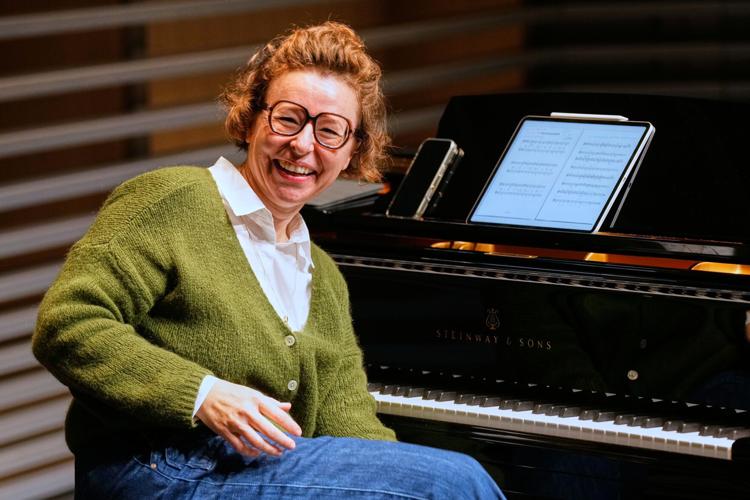
"For me, actually, in Switzerland we have four languages," said Nadja Räss, a professor at the university, alluding to the country's official German, French, Italian and Romansh languages, "but I think really we have five languages. We have a fifth: The yodel."
Yodeling exists in neighboring Austria, Germany and Italy, but Swiss yodeling is distinctive because of its vocal technique, she said.
In its early days, yodeling involved chants of wordless vowel sounds, or "natural yodeling," with melodies but no lyrics. More recently, "yodeling song" included verses and a refrain.
The Swiss government says at least 12,000 yodelers take part through about 780 groups of the Swiss Yodeling Association.
In Switzerland, Räss said, yodeling is built on the "sound colors of the voice" and features two types: one centering on the head — with a "u" sound — and one emanating from deeper down in the chest — with an "o" sound.
Even within Switzerland, styles vary: Yodeling in the northern region near Appenzell is more "melancholic, slower," while in the country's central regions, the sounds are "more intense and shorter," she said.
Evolving with time
What began as mostly a male activity now draws more women in a country that adopted universal suffrage in 1971. The Appenzell-Innerrhoden region only gave equal voting rights to women in local elections in 1990, following a high court ruling.
Julien Vuilleumier, a scientific adviser for the Federal Office of Culture who spearheaded the Swiss request, said it's tough to trace the origins of yodeling, which factors into the imagery of the Swiss Alps.
"Some say it's a means of communication between valleys, using these very distinctive sounds that can carry a long way. Others believe it's a form of singing," he said. "What we know is that … yodeling has always been transformed and updated."
UNESCO's government-level committee for Intangible Heritage will decide in mid-December in New Delhi. The classification aims to raise public awareness of arts, craftsmanship, rituals, knowledge and traditions that are passed down over generations.
Also among the 68 total nominations this year are traditions like Thanakha face powder in Myanmar; Ghanaian highlife music; the fermented Kyrgyz beverage Maksym; and the El Joropo music and dance tradition in Venezuela.
The list is different from the UNESCO World Heritage List, which enshrines protections for physical sites considered important to humanity, like the Pyramids of Giza in Egypt.
Last year sake, Japan's famed rice wine, was one of more than 60 honorees in the intangible heritage list, alongside things like the Nowruz spring festival in parts of central Asia, and the skills and knowledge of zinc roofers in Paris.
Räss says candidates for the intangible heritage list are asked to specify the future prospects of cultural traditions.
"We figured out some projects to bring it to the future. And one of those is that we bring the yodel to the primary school," said Räss, alluding to work along with the Swiss Yodeling Association and a folk music center known as the Roothus Gonten. She said 20 Swiss school teachers know how to yodel and are trying it with their classes.
"One of my life goals is that when I will die, in Switzerland every school child will be in contact with yodeling during their primary school time," she said. "I think it's a very good chance for the future of the yodel to be on that (UNESCO) list."

