


Question: I’m thinking of remodeling. I don’t know what to do first. Can you help?
Answer: You bet. Before you go trotting down to your favorite design studio, it is important to understand what is involved in a remodel.
Get buy-in
Remodeling is like steering a two-person kayak. Both people must row in the same direction at the same time, otherwise they will be going in circles, or moving along very slowly while the one rowing gets exhausted and angry. The whole ordeal will be a disaster.
During a remodel, all the people in the household (or at least those holding the purse strings) need to agree with the process, design and budget.
So, let’s go step by step through the process of a remodel.
Make a plan
Decide on what is going to be remodeled. If remodeling multiple rooms, prioritize where you want to start.
“A lot of people don’t think enough about the planning phase before they take a hammer to anything,” says Bruce Stumbo, project manager and sales consultant of Rosie Right: Design. Build. Remodel. “Planning is very important when remodeling. Getting all the plans, permits and finalizing the design are all a part of that. The more time that is spent in the design process making good decisions, the less headaches later. “
Build a budget
Remodeling is not an inexpensive project, regardless of whether you are doing the work yourself or hiring a professional contractor.
“Another challenge right now is that material costs are increasing weekly,” says Stumbo. “For example, our electrician is now having to purchase wire at an increase of more than 100% of what it was a year ago.”
So, what happens to your estimate if, by the time the project is done, the costs have risen? Will those costs be passed on to you? That is going to depend on some factors. If you’ve just received a rough budget estimate from a contractor and are not in a construction agreement with them, then yes, your costs are going to go up. If you’re in a contract, then the answer is maybe. A standard construction agreement is going to include wording that addresses the ability of the contractor to pass along material cost increases to the customer. Some contractors will absorb minor material cost increases without passing the cost along to the customer. However, large increases cannot typically be absorbed in the budget and the contractor may ask their client to cover the increased material costs.
Don’t know how to budget for a remodeling project? Remodeling Magazine’s annual Cost vs. Value Report projects average job costs (remodeling.hw.net/cost-vs-value/2020/). Pad that budget with an extra 10 to 20% for unexpected costs.
Hire a contractor
Use a contractor who is licensed by the Arizona Registrar of Contractors. Rosie’s How To Hire A Contractor Consumer Guide will help you along. Visit tucne.ws/rosiecontractors.
Insurance
Contact your insurance agent before and after your project to ensure you have the proper amount of coverage. Because the renovation could raise your home’s value, you may need to increase your coverage limits. It is also critical that your contractor has proper insurance before you sign the contract and start the project.
Secure permits, order materials
Permits are required in most jurisdictions. They are critical to issues that could affect your project. Make sure your contractor checks the building department’s latest regulations in your area. Once the permits are secured, the materials such as lumber, drywall, new windows and doors, and appliances can be ordered.
Important: It is not only the materials and appliances that cost more, they are taking longer to be delivered. Be sure to account for delivery times in the planning step.
“Making sure the materials will show up on time is important,” says Stumbo. “Their delay can alter the project’s schedule. A good contractor will be able to manage that with minimum impact to the project schedule.”
Demolition
Demolition can start once all the materials arrive on site and have been inspected. You don’t want to be left with exposed areas because a wall was removed before the new framing and drywall arrived.
Behind the scenes
The work behind walls, below floors, and above ceilings including rough electrical, plumbing, gas piping, heating and air conditioning, subfloors and insulation take place in this stage.
Inspections
“Inspections happen throughout the process, depending on the scope of the project,” says Stumbo. “Many homeowners just assume that they are being done, but a good contractor will tell the client when the inspections are scheduled and when they have passed.”
Paint, flooring
“We prefer to prime and paint before working on the floor,” says Stumbo. “But sometimes we have to install the flooring first depending on materials and contractor schedules.”
Install cabinetry
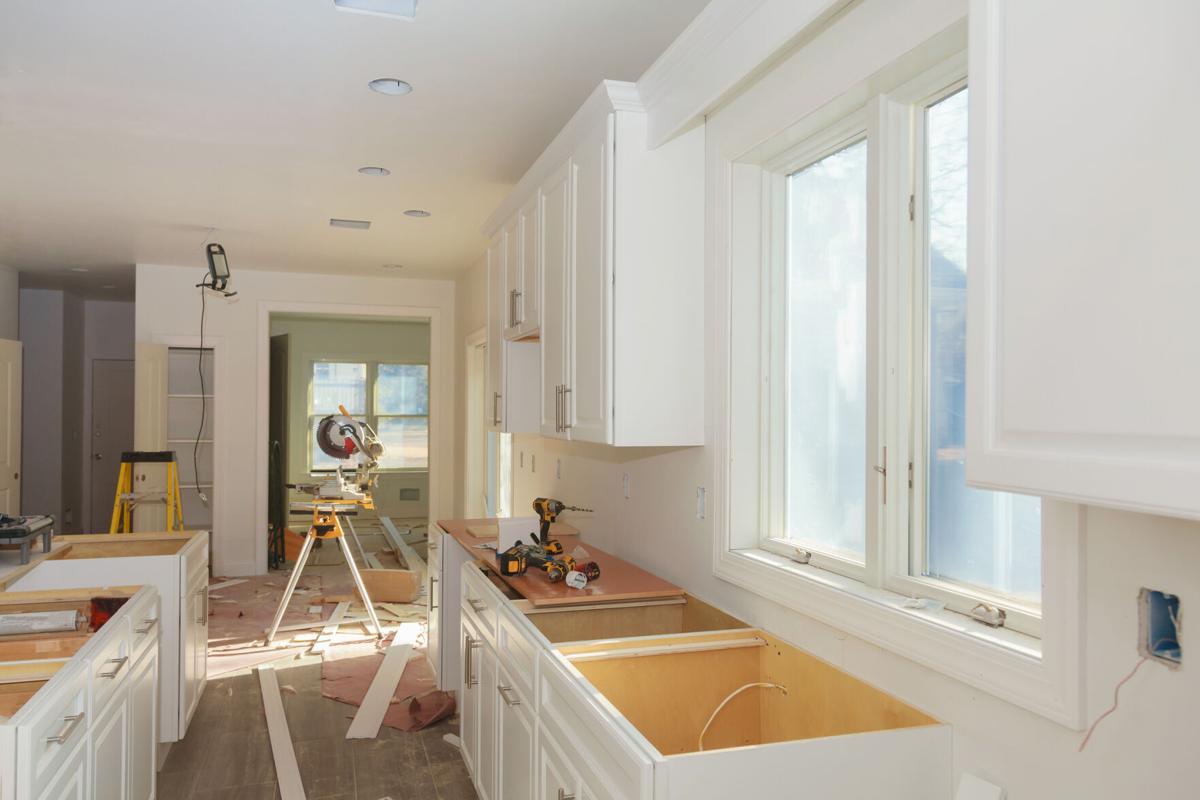
Time for the cabinets. The upper cabinets are installed before the lower ones. Once the cabinets have been installed, the countertops can be templated, manufactured, and then installed. The countertop process typically takes around 10 working days.
Finishing touches
Final painting, touch-ups, backsplashes, floor sealing, light fixtures, and hardware all happen here; followed by the fun part – décor.
For every day spent in the proper planning of your remodel project, you could be saving weeks of construction time. Knowing what you want the outcome to be helps with planning each step along the way. Making design and product selections during the course of construction, in our experience, will greatly increase the anxiety level for all involved. Plan ahead and pick your team carefully.

