


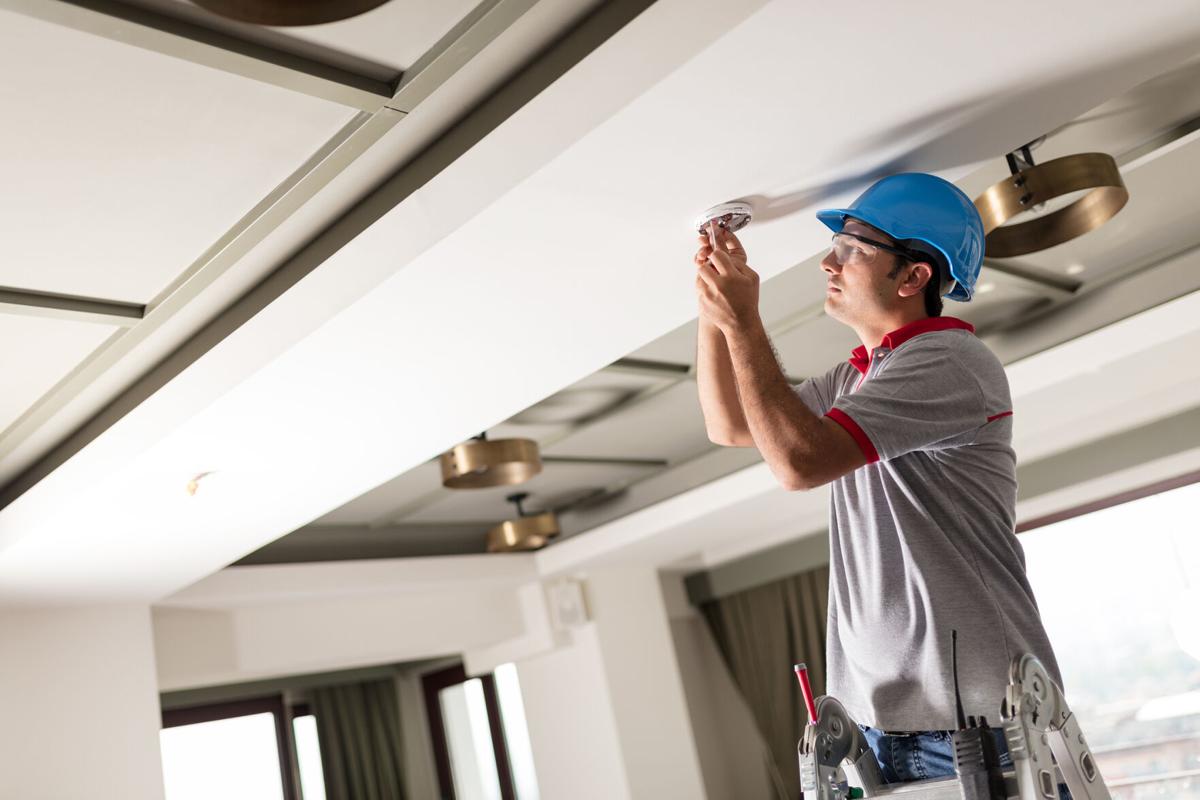
Fire Prevention Week is observed each year during the week of Oct. 9 in commemoration of the Great Chicago Fire, which began on Oct. 8, 1871, and ended on the 10th.
The fire destroyed 17,500 buildings and 73 miles of street. Ninety thousand people — one in three Chicago residents — were left homeless by the fire. It is estimated that 300 people died in the blaze.
Question: What fire safety devices are available for the hearing impaired?
Answer: There are smoke alarms and devices that alert people who are deaf or hard of hearing. The National Fire Protection Association suggests devices with strobe lights that flash to alert people when the smoke alarm sounds. Pillow or bed shakers designed to work with your smoke alarm can also be purchased and installed. These work by shaking the pillow or bed when the smoke alarm sounds. These products can be found online and in stores that sell smoke and carbon monoxide alarms.
Choose smoke alarms and accessories designed for the hearing impaired and tested by a qualified testing laboratory. Sleep with your mobile phone and your hearing aids or implants close to your bed.
Make sure your smoke and carbon monoxide alarms meet the needs of all your family members, including those with sensory or physical disabilities.
Q: What’s the difference between smoke alarms and carbon monoxide (CO) alarms? Why do I need both?
A: Smoke alarms sense smoke well before you can, alerting you to danger. In the event of fire, you may have as little as two minutes to escape safely, which is why smoke alarms need to be in every bedroom, outside of the sleeping areas (like a hallway), and on each level (including the basement). Do not put smoke alarms in your kitchen or bathrooms.
Carbon monoxide is an odorless, colorless gas that displaces oxygen in your body and brain and can render you unconscious before you even realize something is happening to you. Without vital oxygen, you are at risk of death from carbon monoxide poisoning in a short time. CO alarms detect the presence of carbon monoxide and alert you so you can get out immediately, call 9-1-1, and let the professionals check your home.
Q: How do I know which smoke and CO alarm to choose for my home?
A: Choose an alarm that is listed with a testing laboratory and has met its standards for protection. Select a unit that requires yearly changing of batteries, or a 10-year unit that you change out at the end of the 10 years. Either will provide protection.
CO alarms also have a battery backup, like this one from First Alert (tucne.ws/coalarm). Choose one that is listed with a testing laboratory. For the best protection, use combination smoke and carbon monoxide alarms that are interconnected throughout the home. These can be installed by a qualified electrician so that when one sounds, they all sound. This ensures you can hear the alarm no matter where in your home the alarm originates.
Q: What fire safety devices are available for the visually impaired?
A: Frank Vance, director of rehabilitation services for the Arizona Center for the Blind and Visually Impaired, offers these tips.
• Be sure the person is aware of organizations that teach visually impaired people skills that keep them safe from accidental fires, such as the Arizona Center for the Blind and Visually Impaired.
• Label flammable products in an adaptive manner and any information or knowledge that is needed is accessible, as instructed by a service organization. It is vital products are used properly and not mixed with other products that might react with one another.
• Eliminate fire hazards by:
- Not wearing long sleeves, especially when using the stove or oven
- Not setting items down on or near flammable things, such as a stove, oven, fireplace or candle
- Keeping the stovetop and oven clean so grease fires are less likely
- Marking appliances so that the person is using the correct temperature. Add an adapted timer so cooking is set for the right amount of time.
- Learning basic kitchen safety such as how to extinguish grease fires by covering with a lid — not throwing water on the flame
- Having a fire extinguisher readily available and knowing how to operate it
- Contact your neighborhood fire station. Ask if they will show you how to correctly use your fire extinguisher.

