


November 2 is All Souls’ Day in the Roman Catholic church — the day on which the dead are remembered and prayed for. November 1 is All Saints’ Day, which honors those who, by virtue of their exemplary religious devotion, are believed to have already entered heaven.
In Mexico, November 2 is known as El Día de los Muertos — the Day of the Dead. But Mexican popular culture thrives on elaboration, and I have been told that October 30 is for people who die accidental deaths, October 31 for unbaptized children, and November 1 for angelitos and angelitas. These are baptized children who die while still at the age of innocence and are therefore in the presence of God with the saints. November 2 is for everyone else.
In central and southern Mexico, the day of the dead involves the making and use of candy skulls and playful representations of skeletons doing everyday activities. The celebration in Arizona and Sonora is a bit different. Most Mexican families up here see the Day of the Dead as a time to clean and decorate the family graves, to visit together, and to remember those who have gone before.
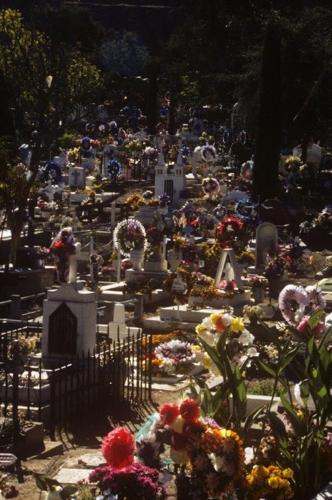
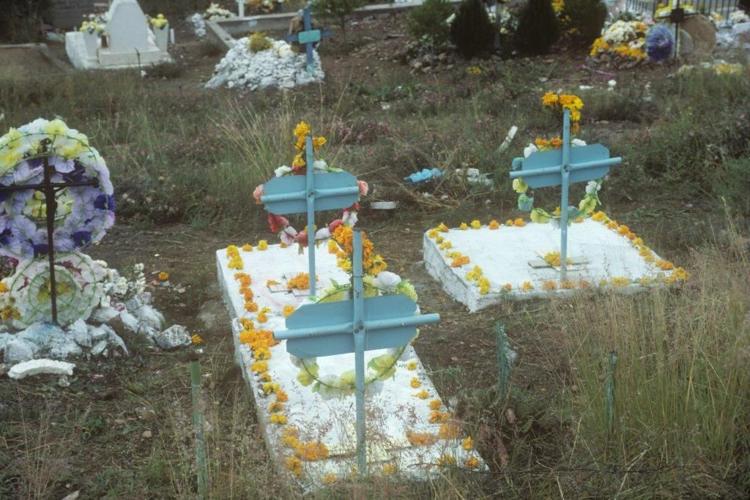
The local celebration of this religious holiday creates its own kind of beauty. Families sweep and wash their graves, repaint or even replace old grave markers, and decorate their relatives’ resting places with quantities of real and artificial flowers. The cemeteries become places of color and beauty, as you can see by looking at the photo essay that appeared on this blog last year.
This scene is duplicated on both sides of the border, but its most spectacular occurrence takes place in Nogales, Sonora’s National Cemetery, or Panteón Nacional. To reach this, cross the border at the Mariposa crossing west of town (don’t forget your passport!), and take a sharp left downhill at the Mexican inspection station. You’ll find yourself driving through the middle of a huge cemetery. Stop and walk around; it’s lovely.
If you can, make your visit right after November 2, so the flowers have not had time to wilt or fade. You can also visit any one of the bare-earth cemeteries in southern Arizona’s older rural communities. Not as spectacular, perhaps, but just as lovely and moving.

