



“The essence of Speedway never really changes, does it?” local author Leo W. Banks said in a 2020 interview.
“Kids still cruise and go too fast and all the rest. Except now they’re zipping past computer stores and CBD joints. But it’s still stuck in the 1950s, Happy Days and all that. I doubt it will ever be different.
“I think Speedway has become more of a Tucson icon than Sabino Canyon, Old Main, Mount Lemmon, Gates Pass or the Catalinas. It might even be up there with the saguaro. I still today refer to it as a ‘neon kingdom.’”
In 1983, Banks had written a history of Speedway in the Arizona Daily Star, noting that on Saturday nights in the 1950s, college students drove it east to Wilmot Road for beer bashes in the desert, dancing in the arroyo now occupied by Monterey Village Shopping Center.
And yet, while Speedway’s teen-enticing essence and nostalgic character may endure — what the headline on Banks’ ’83 story called “Tucson’s lane for the fast life” — there were many attempts to change the street’s appearance over the decades, until certain improvements finally did take hold.
Seven years after a July 1970 national magazine article calling Speedway the nation’s “ugliest” street, the City Council finally decided to do something about the sign code.
That year, Mark Kimble, a Tucson Daily Citizen writer, wrote that the code allowed “huge, loosely regulated signs to be placed almost anywhere along both sides of the street.”
The City Council spent the next two years debating what should be done, with Councilman George Miller (namesake of the Miller-Golf Links Library) leading the way for a new sign code.
In the end, Mayor Lew Murphy (namesake of the Murphy-Wilmot Library) and Councilman Chuck Ford (namesake of Chuck Ford Lakeside Park) unsuccessfully opposed it.
In February 1980, the council passed a new code that was more restrictive in some ways and less restrictive in others, likely to please both community beautification activists on one side and small businessmen and women on the other side.
For example, it allowed billboards to be bigger than before, but the size of the billboards determined how close they could be to each other. The larger the billboards, the farther apart they had to be. This helped fix the issue of some signs on Speedway being too close together, but added bigger signs to the street. One step forward, two steps back.
The following year, Thom Walker, a Citizen writer, scribed, “The street once dubbed ‘the ugliest street in the world’ is today one of the angriest streets in Tucson.” The comment was related to a city proposal that would ban all left turns along parts of East Speedway, which expectedly brought outcries from small businesses and appears to have gone nowhere.
In 1985, five years after the new sign code took effect, one reader wrote to the Arizona Daily Star to complain: “The present standards used to regulate size, content and location of billboards in Tucson are completely inadequate, given the fact that any placement is as desirable as a toxic waste dump. In the past six months, the rash of enormous, garish and brilliantly lit billboards that has erupted on Speedway makes me itch to move from my neighborhood, which is within spitting distance.”
Around the same time, voters passed a sign code referendum that banned all new billboards within Tucson city limits, which covered most, if not all, of Speedway.
That same year, Councilman Tom Volgy (namesake of the Thomas Volgy Underpass at Speedway and Warren Avenue) created the Community Resource Bank, a nonprofit citizens organization meant to provide “additional assistance — beyond the city’s resources — to help with economic development, quality of life issues, etc.”
In 1986, the Community Resource Bank sponsored a design competition aimed at improving Speedway’s appearance, with the winner taking home $500. The winning plan by the Pima County Urban Design Commission Streets Subcommittee included “distinctive trees at intersections, red-painted pedestrian crosswalks and the closing of side streets for parks and parking ... coordinated bus stops and crosswalks, distinctive signs, the use of public and private art on street medians, landscaping at wash crossings and distinctive shopping centers.”
It’s believed that only the landscaping part — if anything — of the plan was ever carried out.
In February 1990, the Los Angeles Times ran a story about a new arts festival in Tucson christened the “Festival in the Sun.” The article described the city this way: “Much of Tucson is generic suburb — the San Fernando Valley with cactus. Home of Speedway Boulevard, long and widely touted as ‘the ugliest street in America.’”
It seems possible, even likely, that this mention — the umpteenth of that moniker — in such a widely read newspaper finally led city fathers to action, as this was the year a huge improvement project began on the boulevard, utilizing money that had been earmarked six years earlier.
In 1994, Speedway faced its first real threat to its title. Johnson-Brittian & Associates Inc., designers of a renovation of the thoroughfare from Tucson Boulevard to Alvernon Way, were awarded a commendation from the Arizona Society of Professional Engineers for its beauty.
“Johnson-Brittian apparently feels no shame,” wrote Paul Allen, a Citizen columnist, tongue in cheek, “at having spoiled Speedway’s image of ugliness and happily accepted the Outstanding Engineering Project of the Year award at the Society’s annual meeting.”
Speedway’s swan song as the ugliest came soon after when city officials gathered at El Rancho Center, 3360 E. Speedway, for a ribbon-cutting ceremony to celebrate the end of a four-year, $50 million widening and beautification project from Euclid Avenue to Alvernon Way.
“It’s the biggest locally funded and administrated street-widening project Tucson has ever had,” said Benny J. Young, director of transportation for the city. “No federal funds were spent. The project was funded by local bond money and state gasoline taxes.”
The thoroughfare was expanded to six lanes, with landscaped medians; dual left-turn lanes at Country Club Road and at Alvernon Way; bicycle lanes; extra-wide sidewalks with shade trees; improved bus shelters; and bus pull-through lanes.
Several of the billboards that dominated the strip were eliminated, but the project managed to save a few historical homes, including the Prof. G.E.P. Smith house and the Cannon/Douglass abode, named for botanist William Cannon and tree-ring expert Andrew Douglass.
City officials were so proud of the improvements to the route, according to a Star article, that they contacted Life magazine to inform the editors.
While our ugly duckling never became a beautiful swan as happens in fairy tales, Speedway still reigns as the Queen of Tucson Streets.
Photos: Speedway Boulevard in Tucson through the years
Speedway Boulevard in Tucson
Updated
Once dubbed America’s “ugliest street” by Life magazine is Speedway Boulevard looking east from Alvernon Way . photo taken by: Jose Galvez December 15, 1977.
Speedway Boulevard in Tucson
Updated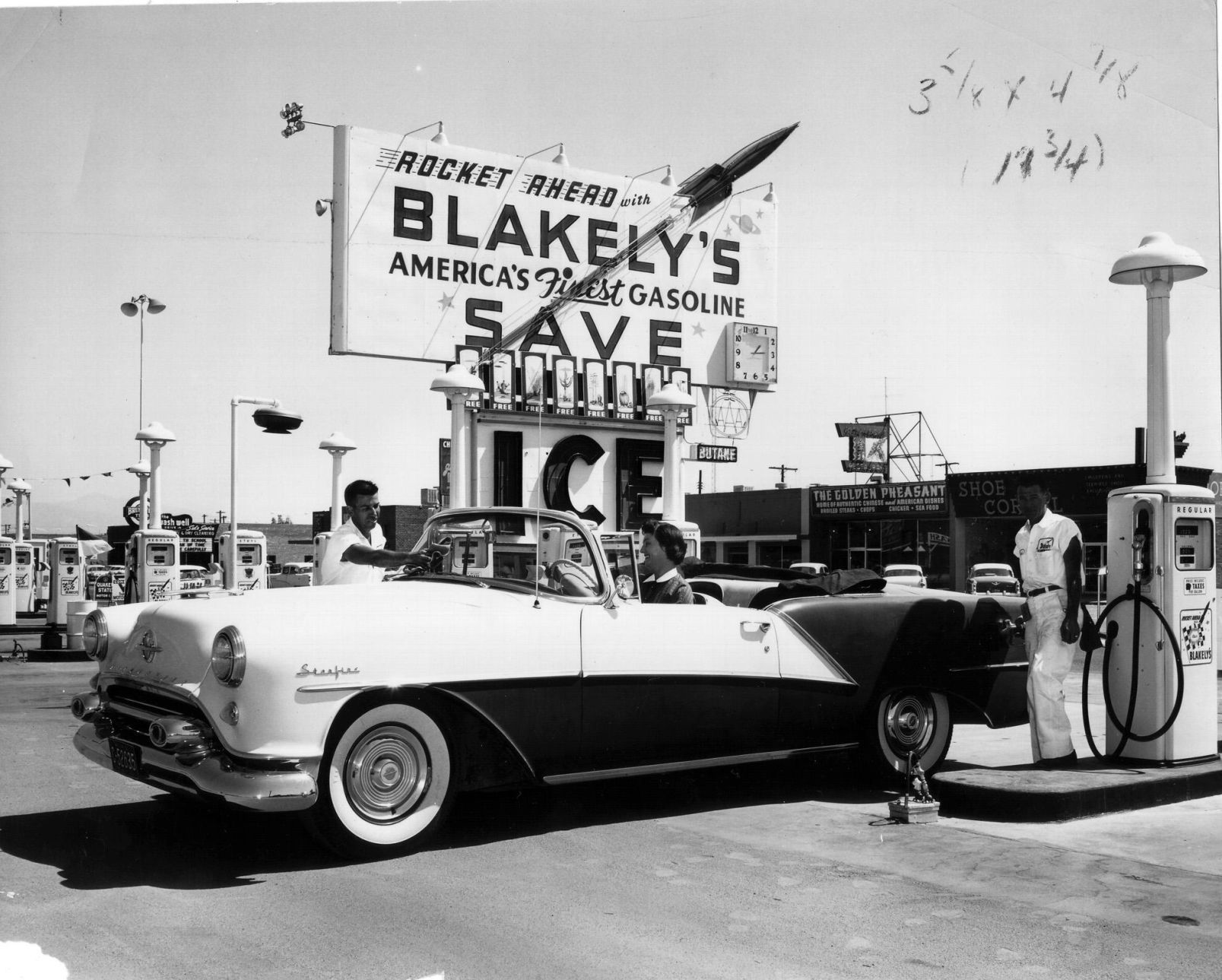
Sitting in the Oldsmobile is Beverly Smith Hansen (McClung), a 41 year-old, mother, model and artist. This Blakely's Service Station was on East Speedway near Kiddyland Amusement Park. The photo was used for an advertisement in the late 1950s.
Speedway Boulevard in Tucson
Updated
What is that contraption at the counter? It's called a cash register in this Sept. 1982 photo inside the McDonald's Restaurant at Speedway and Campbell.
Speedway Boulevard in Tucson
Updated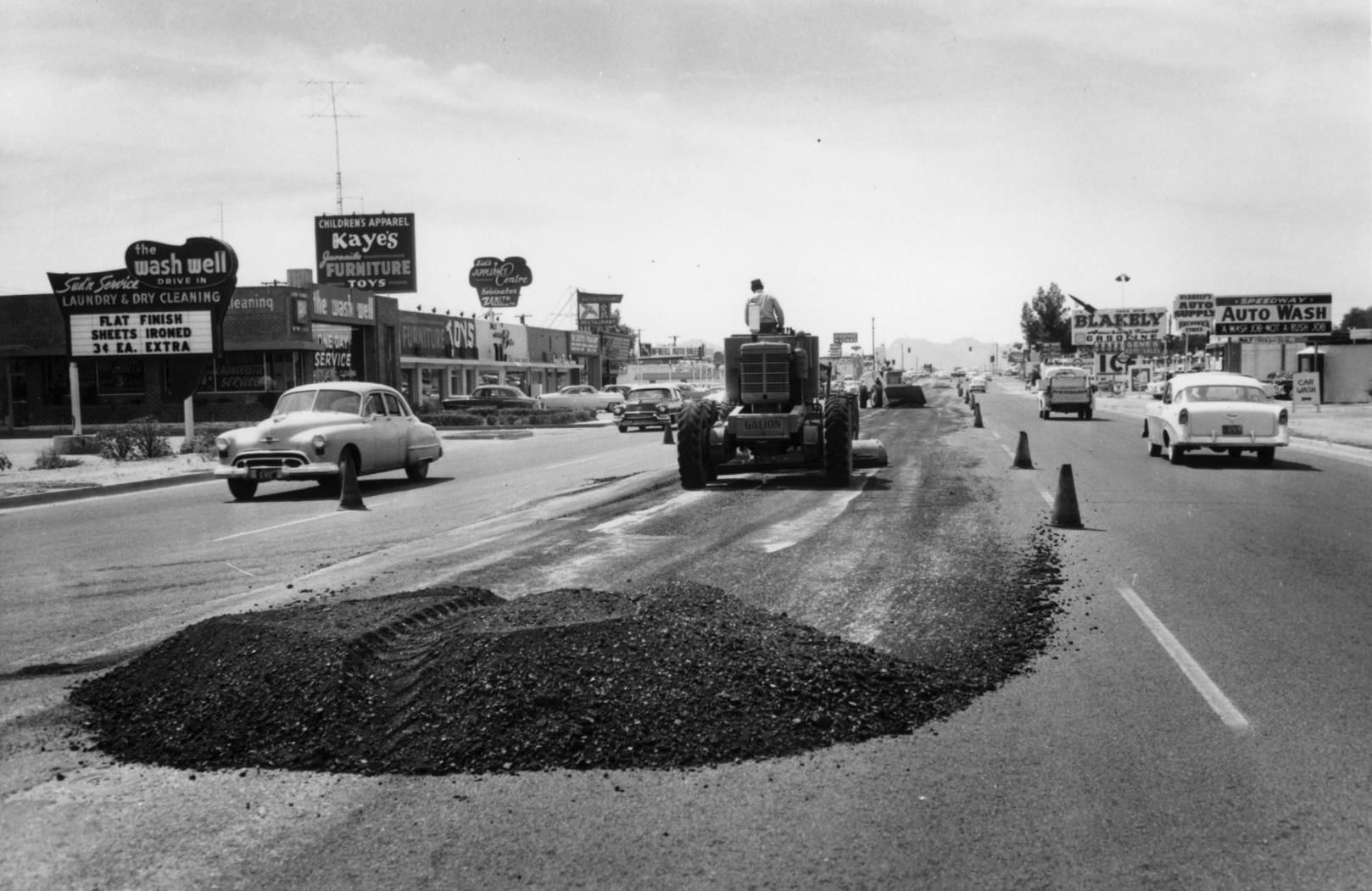
Work crews remove the infamous "hump" from the middle of Speedway Blvd., on September 12, 1957.
Speedway Boulevard in Tucson
Updated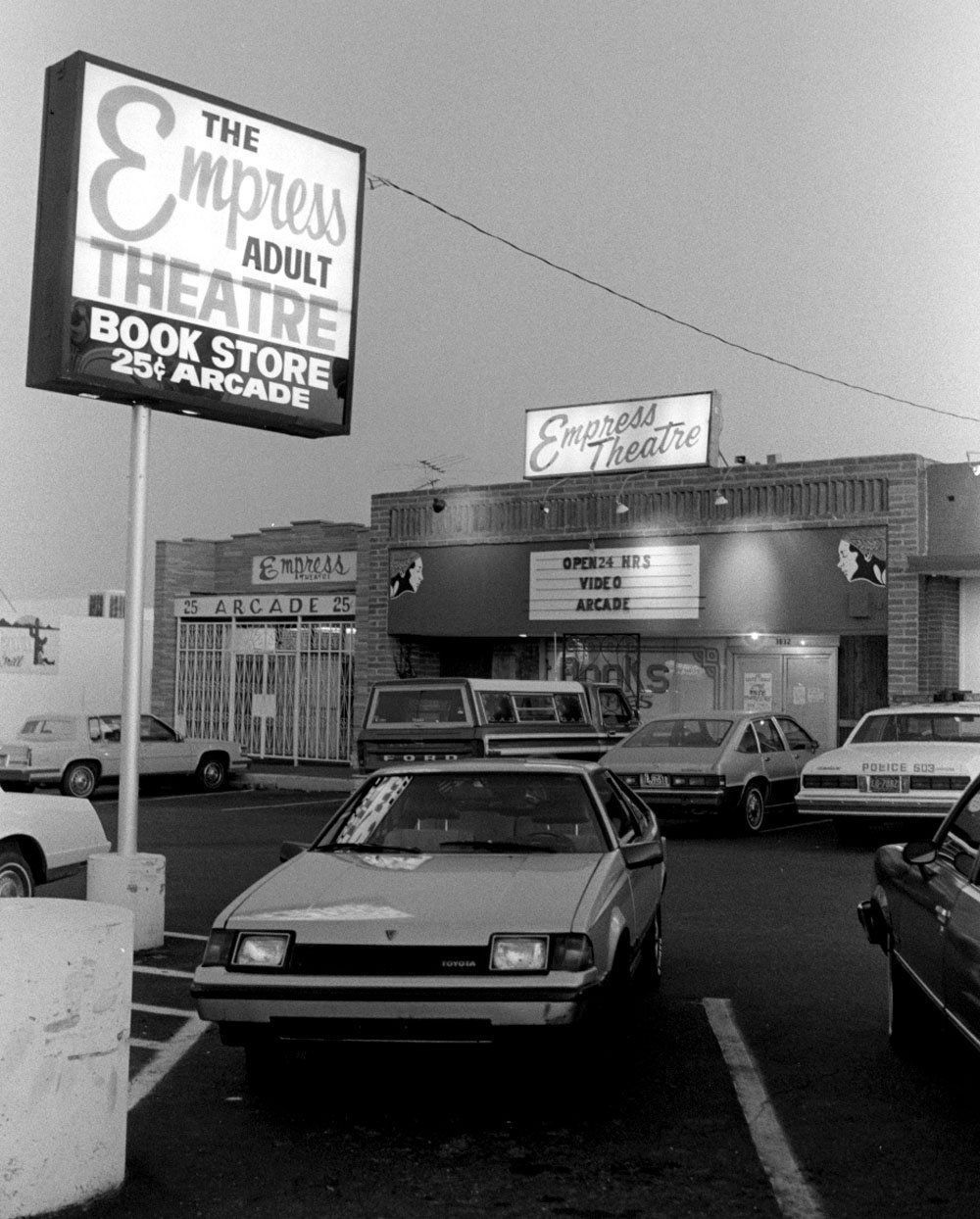
The Empress, 3832 E. Speedway, shown in 1988, had been in operation since 1971 and was Tucson's longest-operating adult store.
Speedway Boulevard in Tucson
Updated
Bill Rauh Sr. owned Wilson's Bakery at the northwest corner of East Speedway and North Park Ave. in the early 1950s. Bill at one time made a promotional cake for Pet Milk, canned milked, and Softasilk, a brand of flour, as they tried to break the record for the world's largest cake Wilson's was one of three bakeries in Tucson at the time. Bill made wedding cakes for all six of his kids.
Speedway Boulevard in Tucson
Updated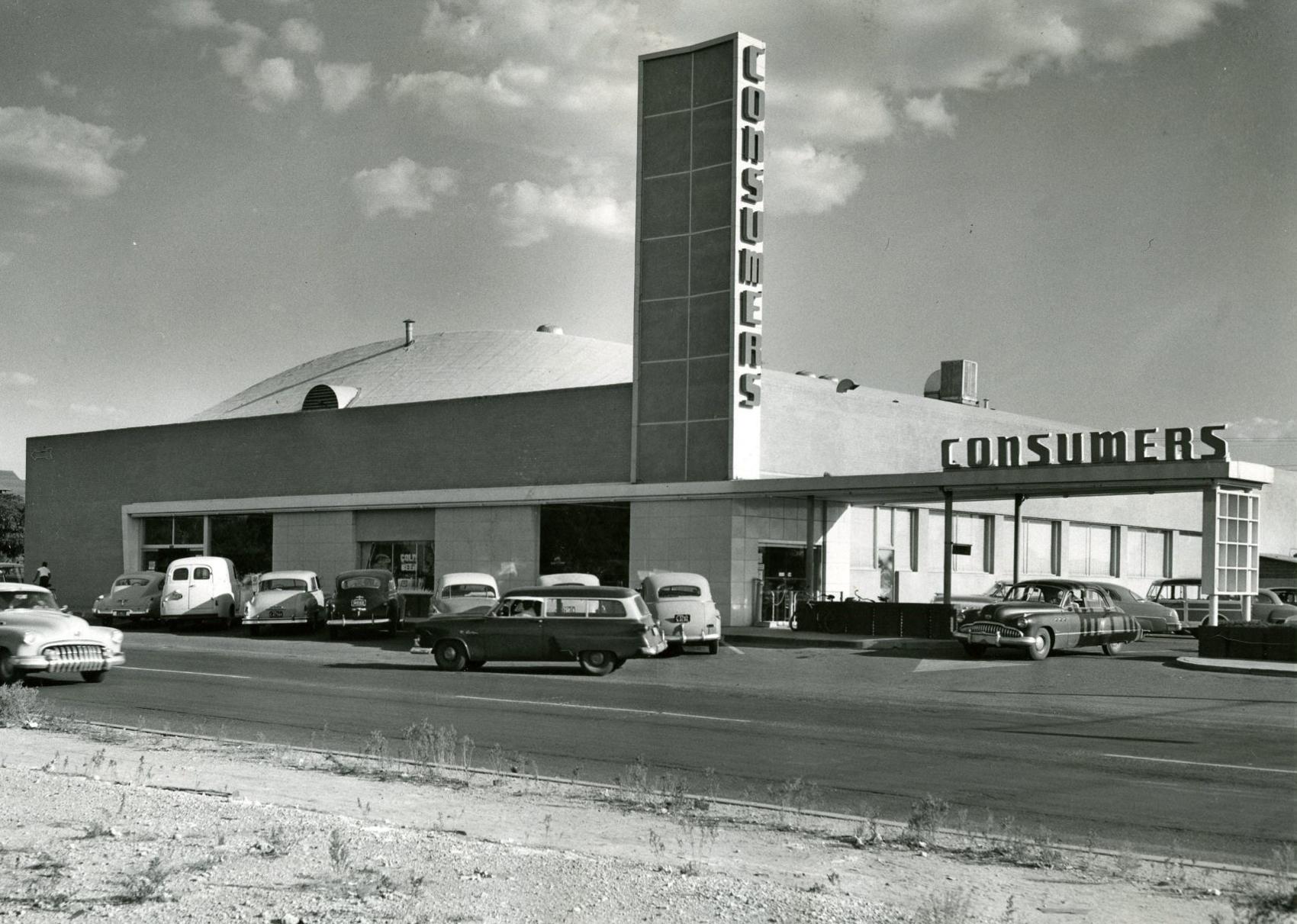
Consumers East Speedway Market. 1953
Speedway Boulevard in Tucson
Updated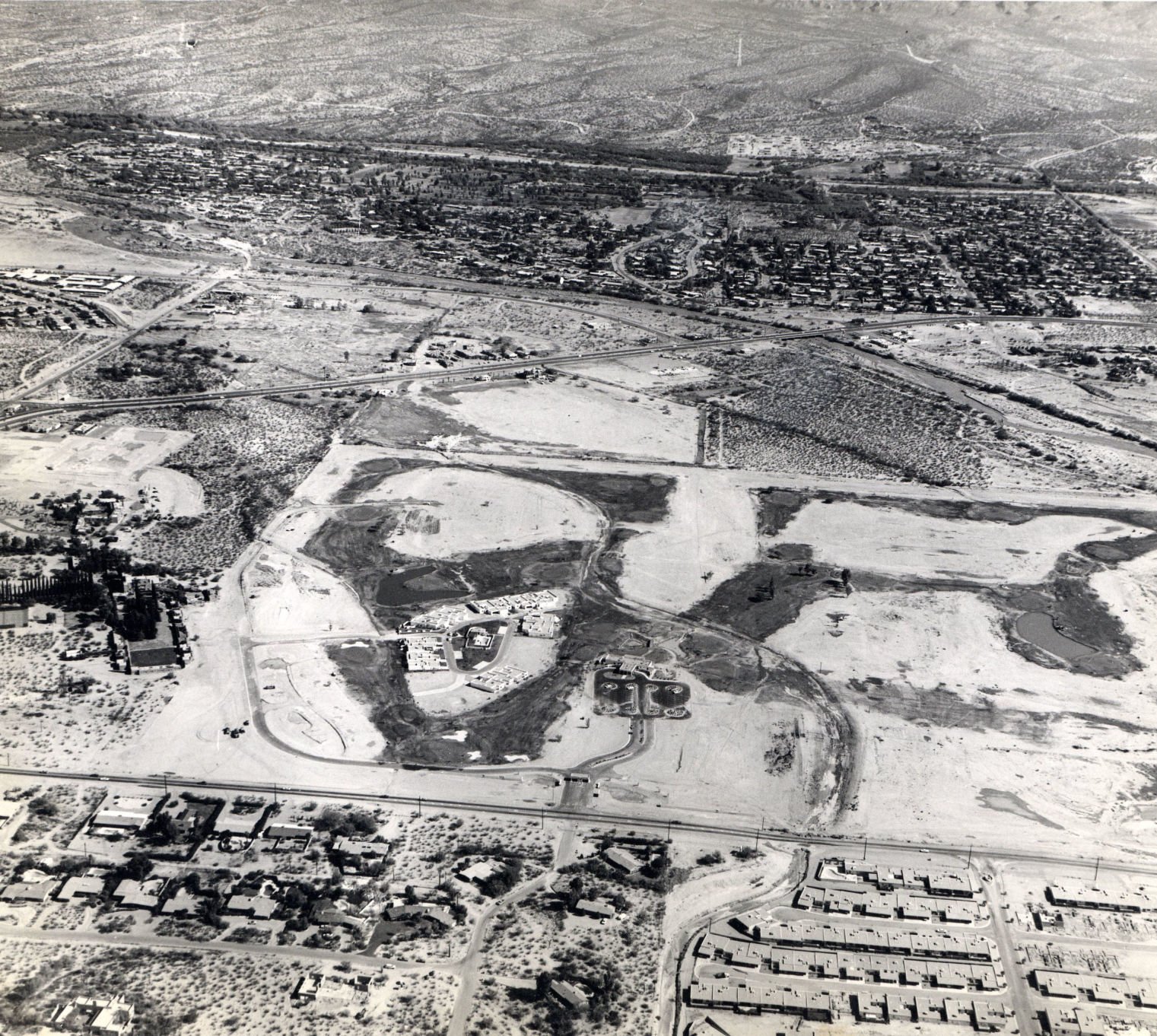
An undated photo of the Dorado Country Club on East Speedway, east of Wilmot Road while under construction. Tanque Verde Road cuts diagonally across the photo towards the Pantano Wash. The 18 hole executive length course was originally designed by Ted Robinson, ASGCA, the Dorado golf course opened in 1970.
Speedway Boulevard in Tucson
Updated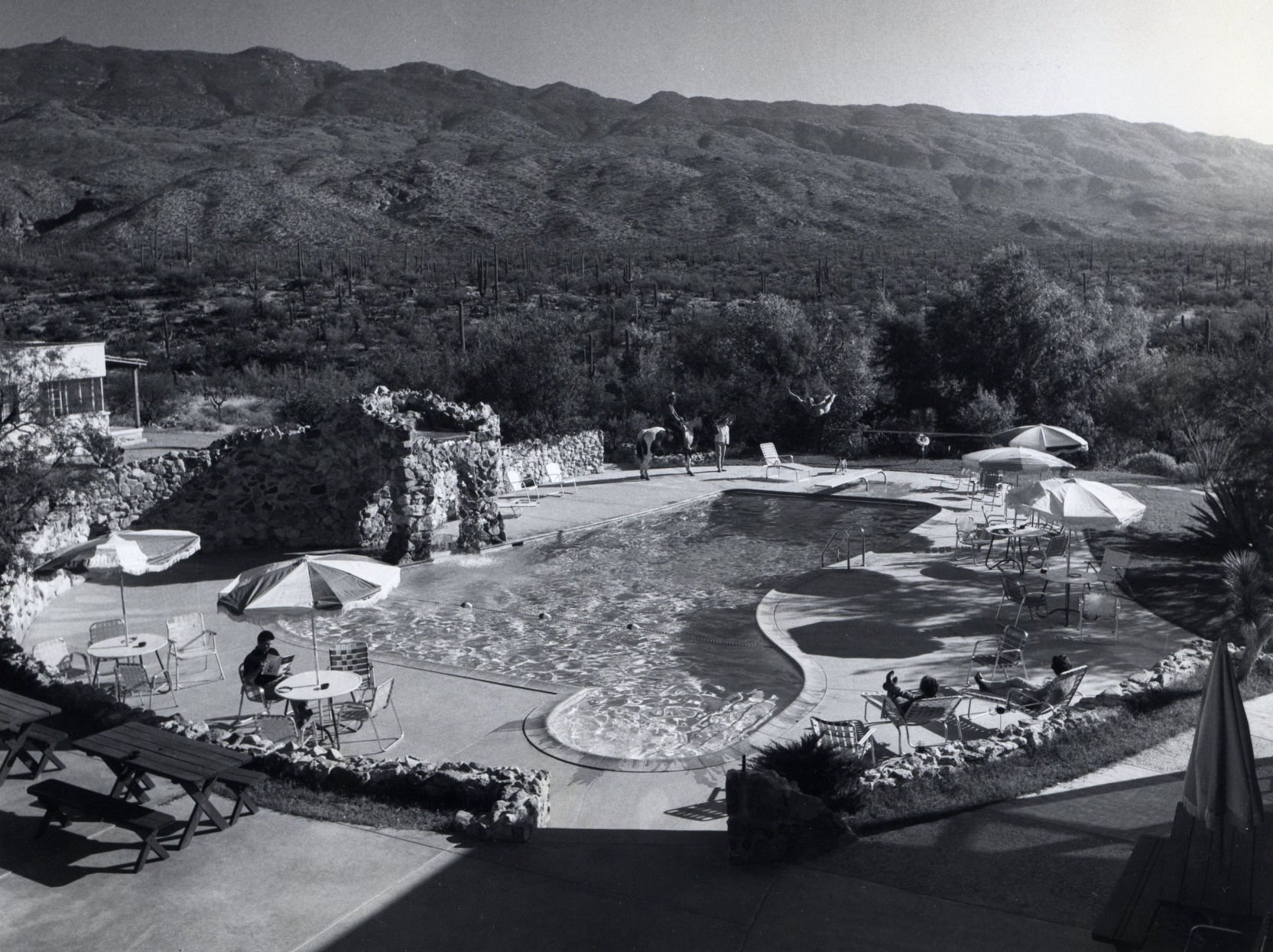
Swank western layouts like this one at Tanque Verde Guest Ranch (now Tanque Verde Ranch) at the end of East Speedway Blvd. were a big magnet for winter visitors in 1965.
Speedway Boulevard in Tucson
Updated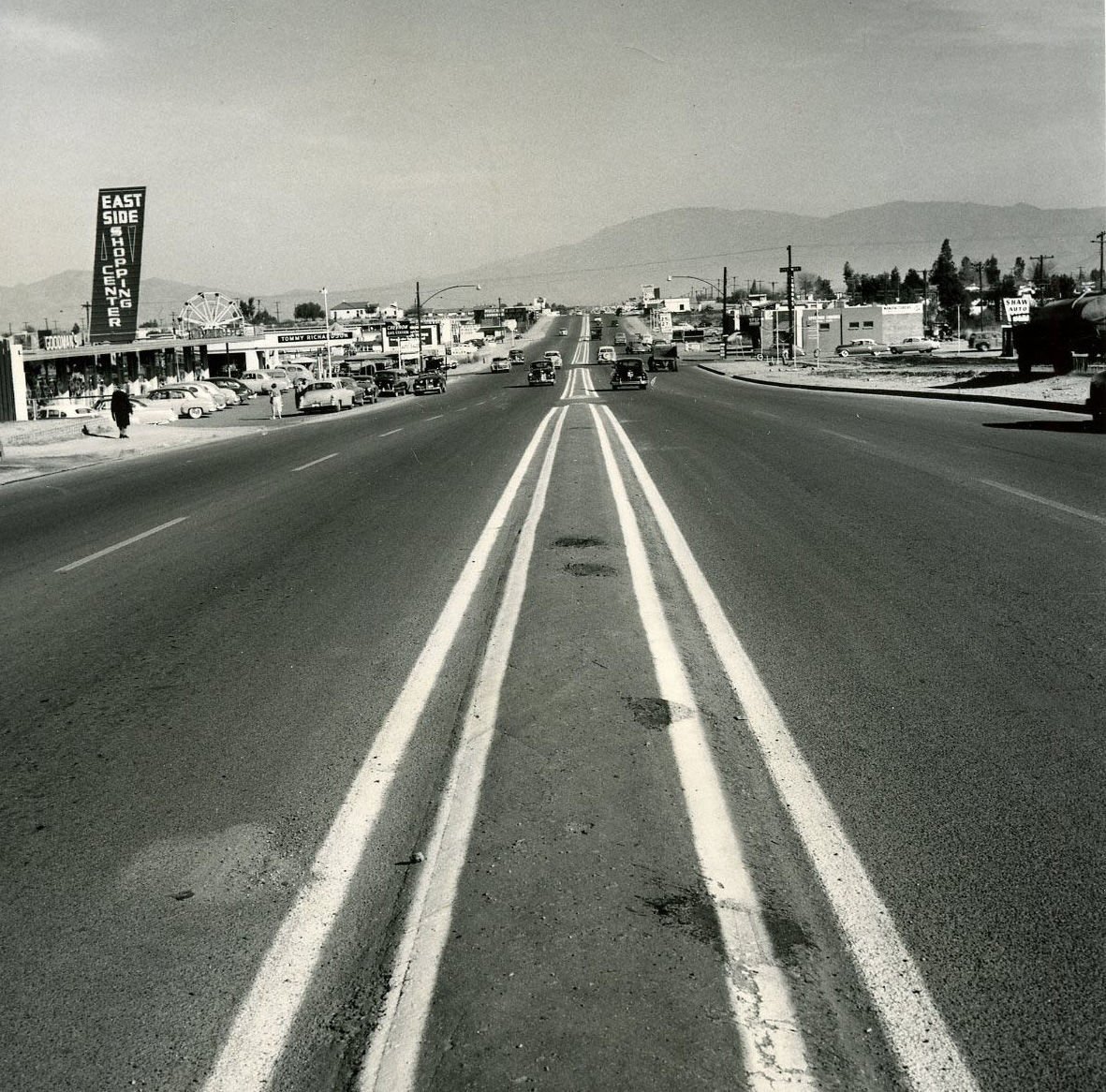
The Speedway Blvd "Hump" in 1953.
Speedway Boulevard in Tucson
Updated
The $1 million in bond funds recommended for street lighting would put lights like these on East Speedway on about 20 miles more of busy arterial streets in 1965.
Speedway Boulevard in Tucson
Updated
This 1922 photo shows the empty desert stretches out beyond the 40-acre University of Arizona campus. The buildings identified are (1) Engineering College, built in 1919; (2) Old Main, built in 1891; and (3) Cochise Hall, a dormitory built in 1922. Today the campus has expanded to 180 acres from Park Avenue area to Campbell Avenue. Speedway cuts diagonally across the pictures. The intersection of Speedway and Campbell is marked.
Speedway Boulevard in Tucson
Updated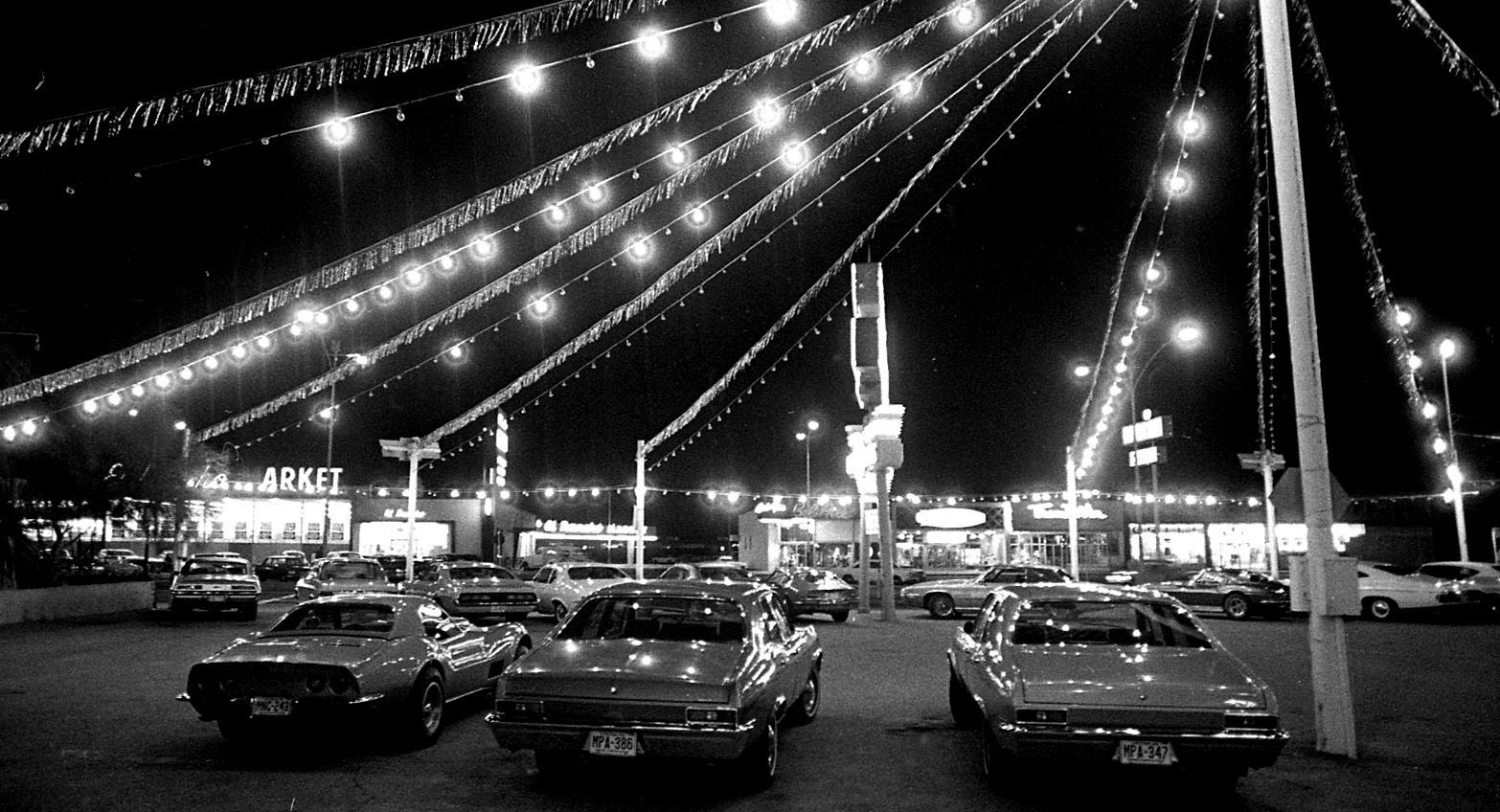
The Orielly Chevrolet Used Car lot, on 3313 E Speedway Blvd., had plenty of lights to display their vehicles on July 31, 1972. El Rancho Market grocery store and the Thom McAn shoe store is visible in the background.
Speedway Boulevard in Tucson
Updated
Children bite the ice at Iceland, 5515 E. Speedway Blvd., in 1985.
Speedway Boulevard in Tucson
Updated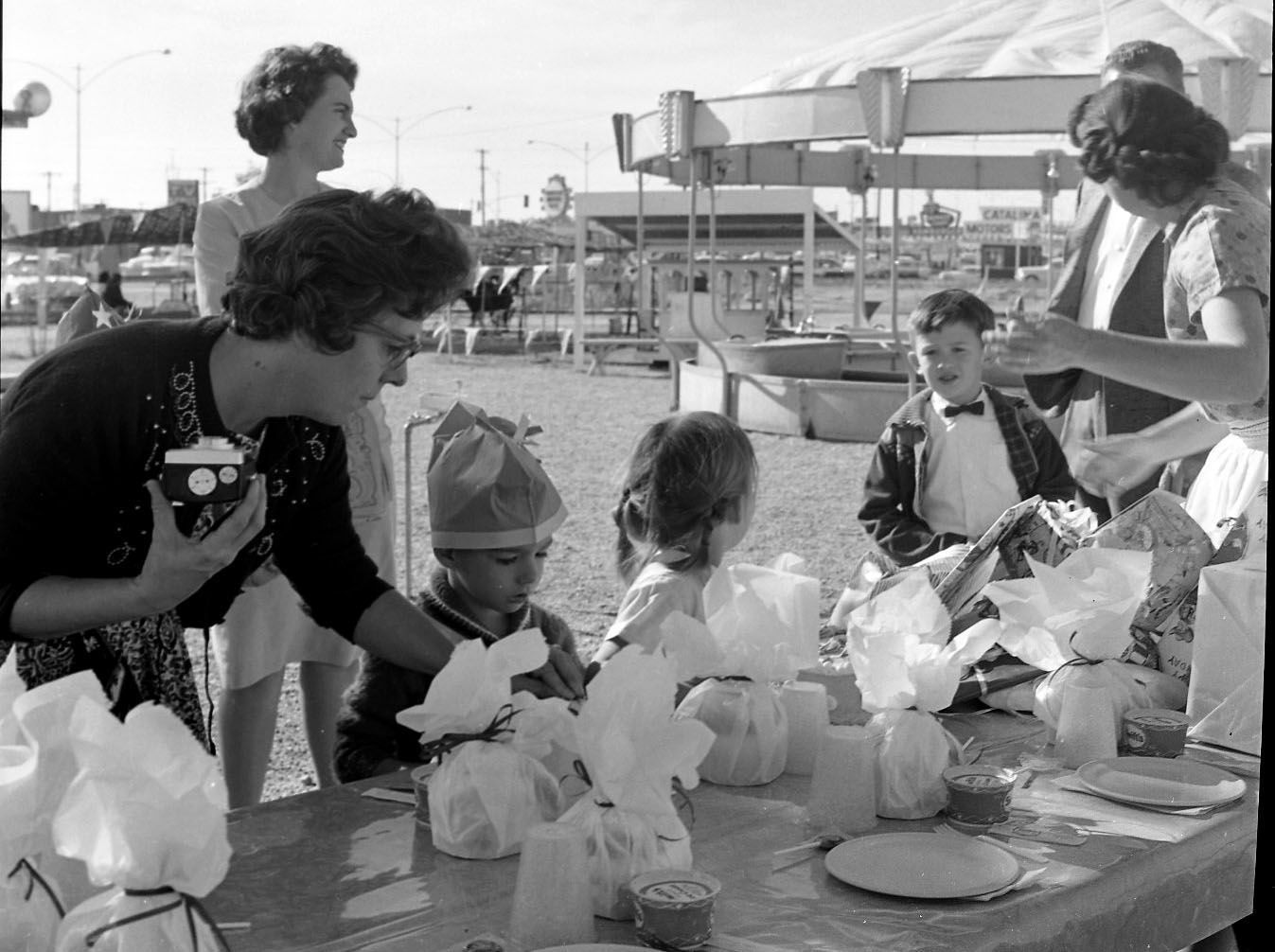
A birthday appears to be underway at Kiddyland, 3943 E Speedway near Alvernon on Dec 1962. In the era before television Sam and Ruth Cohen opened Kiddyland in 1949 and operated the playland for children until 1958. They had a Ferris wheel, roller coaster, train, cars on two-and-a-half acres. By 1962, Luverne Hicks took over the operation and had 10 mechanical rides and for a flat rate of $11.85 a birthday party of eight could be entertained with cake, ice cream, party favors, and eight rides apiece. At the time of the 1962 article, Hicks had hoped to move the operation to what was then, Randolph Park. Apparently, it did not work out.
Speedway Boulevard in Tucson
Updated
The 150-room Plaza International Hotel on the corner of North Campbell Avenue and East Speedway Boulevard, close to the University of Arizona, nears completion on March 18, 1971.
Speedway Boulevard in Tucson
Updated
The new Gil's Chevron Service Station at 203 E Speedway on the northeast corner at North Sixth Avenue was open for business in March 1968. The photo is looking toward the southeast.
Speedway Boulevard in Tucson
Updated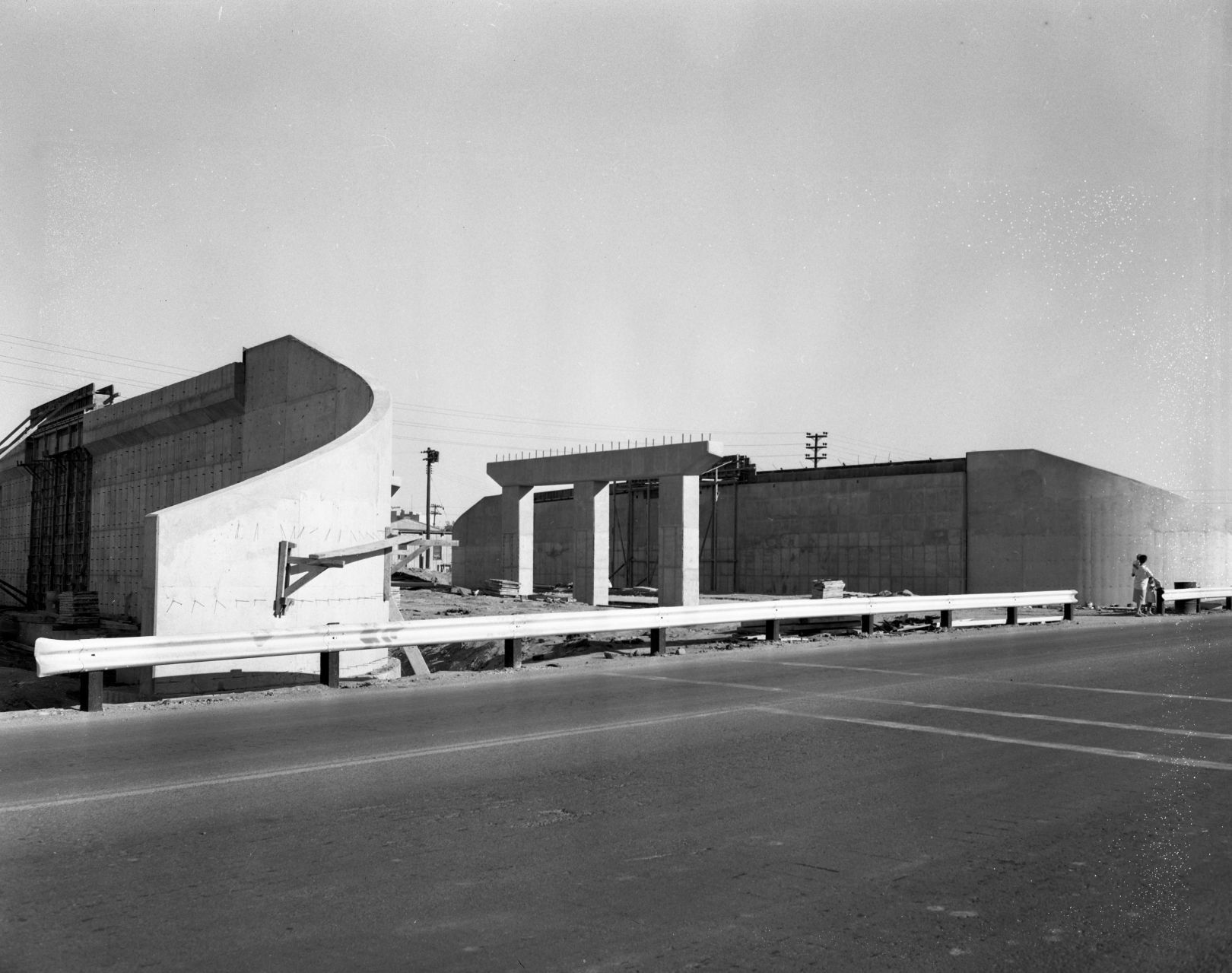
Interstate 10 under construction at Speedway Blvd. in October, 1958.
Speedway Boulevard in Tucson
Updated
Speedway Blvd looking east from Alvernon Way in Tucson, ca. 1980. Note the Showcase Cinema at left. It's now The Loft Cinema.
Speedway Boulevard in Tucson
Updated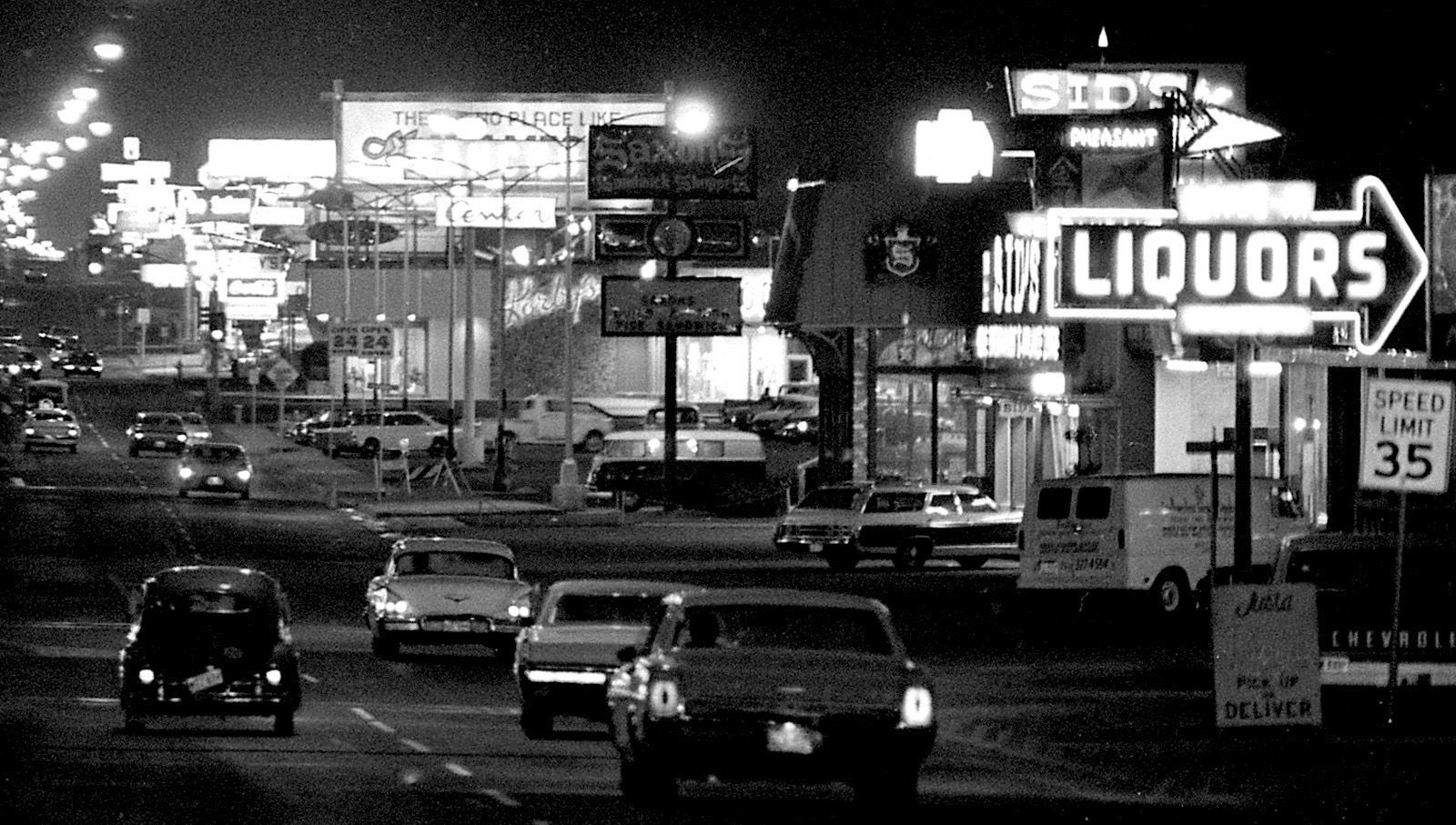
Night traffic along East Speedway east of North Country Club looking east on July 31, 1972.
Speedway Boulevard in Tucson
Updated
Speedway Boulevard, Tucson, looking east from near County Club Road in December, 1957. Note the Ryan-Evans Drugs on the corner, at right, originally owned by the Martin family. George A. Martin Sr. established a pharmacy inside the walls of the Tucson Presidio in the 1880s. His sons expanded the business to cover Tucson.
Speedway Boulevard in Tucson
Updated
Pedestrian underpass under construction under Speedway and Warren on the University of Arizona campus on Sep. 11, 1990
Speedway Boulevard in Tucson
Updated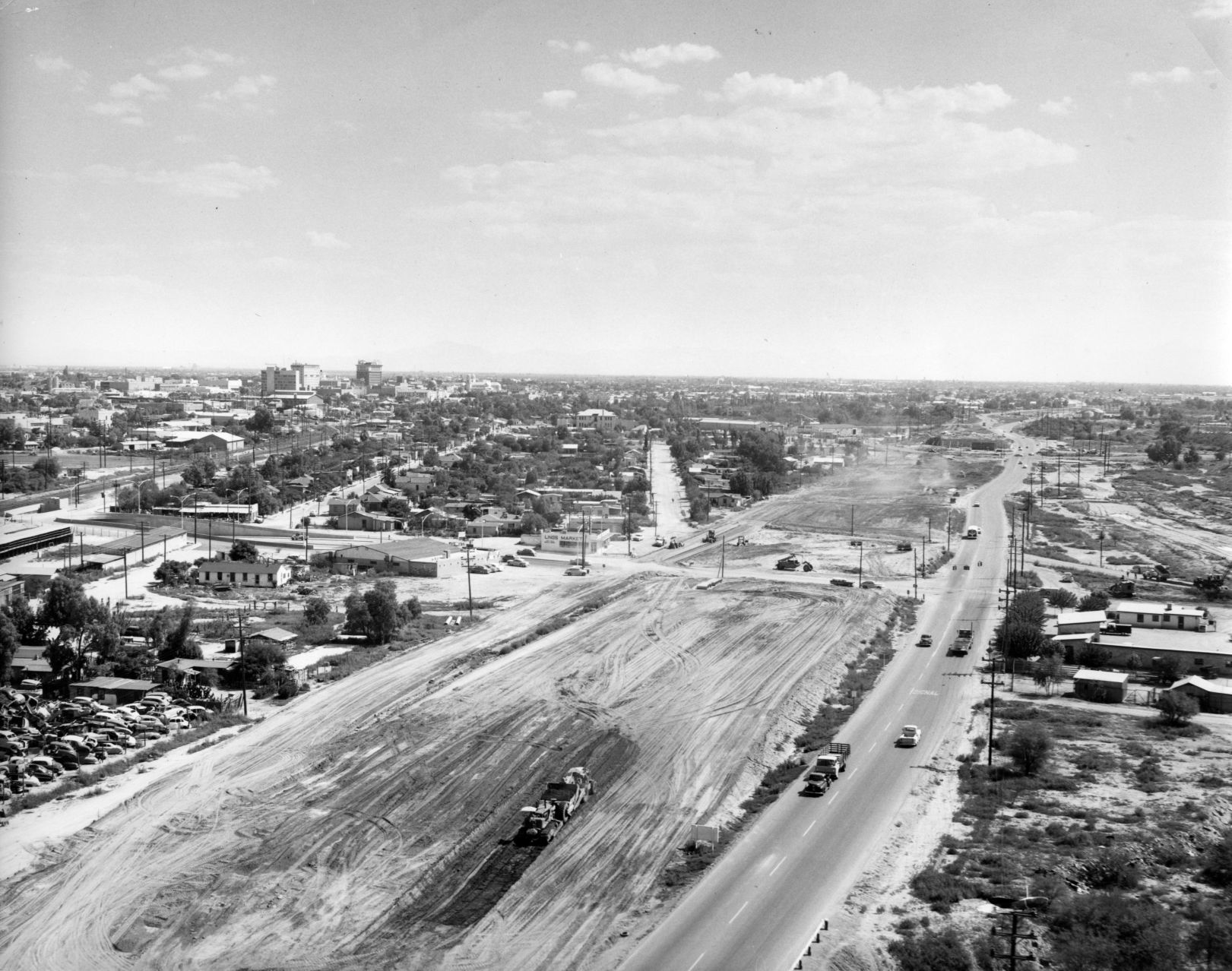
Interstate 10 (reffered to as the "Tucson freeway" in newspapers at the time) under construction at Speedway Blvd. in the early 1960s. By Summer 1962, completed freeway sections allowed travelers to go from Prince Road to 6th Ave. The non-stop trip to Phoenix was still a few years away.
Speedway Boulevard in Tucson
Updated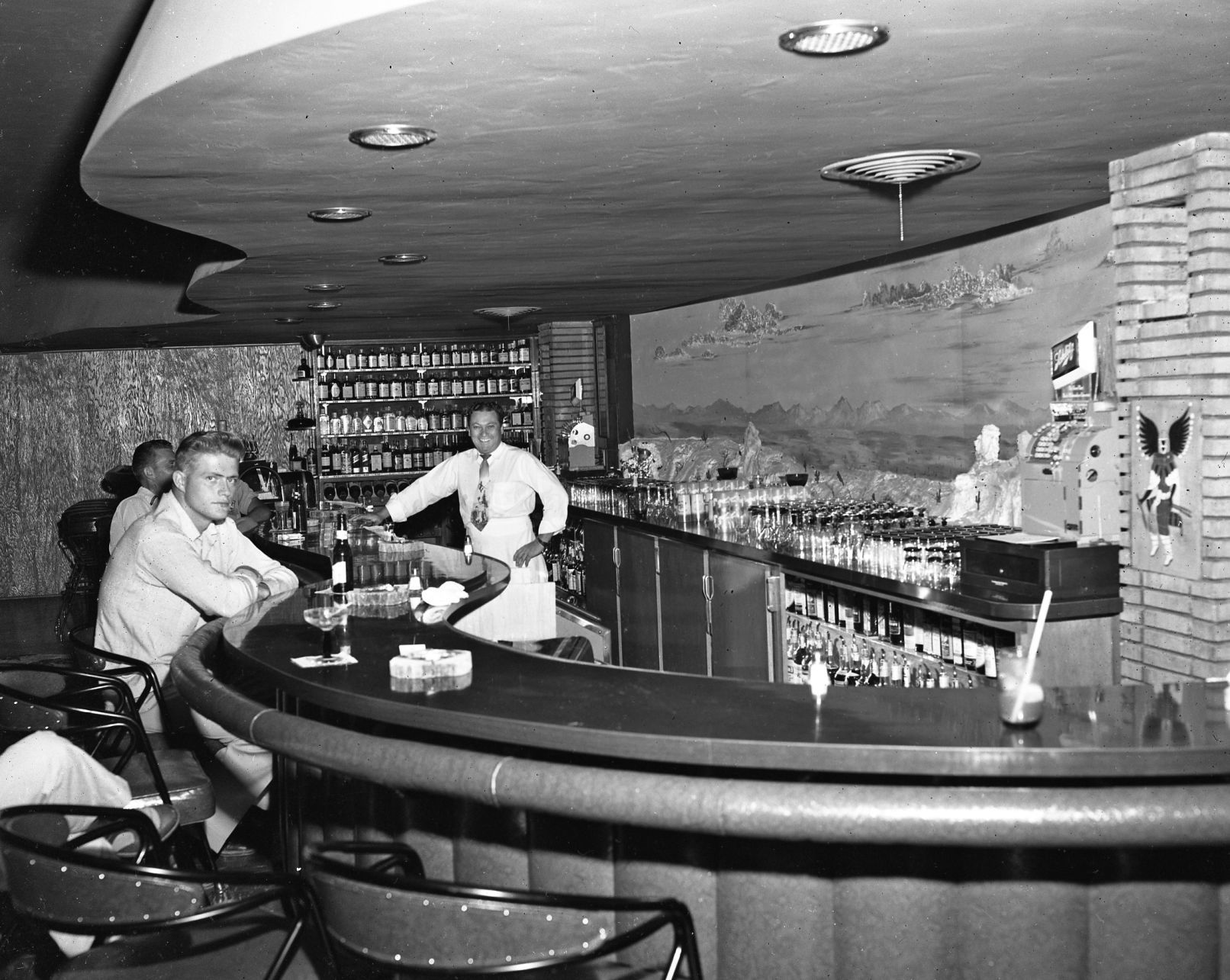
The bar at the Twin Flames, 5150 E. Speedway, in Oct. 1955, which featured a landscape painting behind the bar and what looks to be a pretty good selection of liquor. It's now a car wash.

