


I didn’t wait for I.K. Bruto to call me. This time I called him.
“Did you hear the interviews?” I said to my old imaginary friend who pops into my columns from time to time.
I could feel him grin. “Dude, I was waiting for your call,” he bellowed as his grin morphed into a sarcastic smile. Then Bruto went off.
“I heard them and what I heard is that the velodrome is gonna get built, regardless if you and your west-side neighbors don’t want it,” he said. “Deal with it.”
That’s how the radio interviews sounded to me.
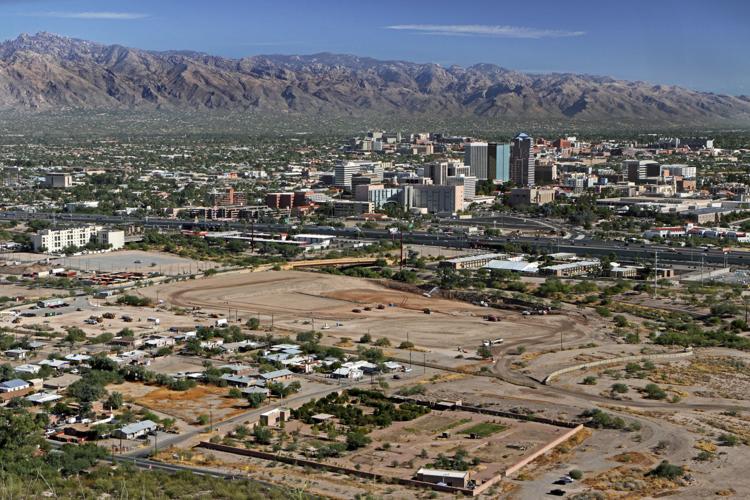
Last month Damion Alexander, the developer of the proposed “A” Mountain velodrome, a bicycle racing track, and a recreational park with bike and walking paths, touted his plan on “Life Along the Streetcar” on Downtown Radio, a low-power station. He was joined by Gene Einfrank, president of the Menlo Park Neighborhood Association, and both were interviewed by Tom Heath. It was a two-part program focusing on Alexander’s proposal to develop about 40 vacant acres atop the old city landfill at the foot of Sentinel Peak, considered Tucson’s birthplace.
The site is more than the original European colony that was established in the late 1600s. The land along the Santa Cruz River has been inhabited for some 4,000 years and the Tohono O’odham, the descendants of the original inhabitants, have begun discussions with the Rio Nuevo district, which controls the land, about taking it back.
Alexander and Einfrank talked about paying homage to the past, respecting the neighborhoods’ concerns over traffic and gentrification, and creating a project that everyone would be happy with. “Except you,” Bruto said. “You sound like a NIMBY guy from the Foothills.”
Bruto knows better, of course. I’m a Menlo Park resident with a passion about preserving what little remains of Tucson’s physical history.
While Alexander and Einfrank said the “right things,” they also implied that opponents are not willing to compromise on a plan that would have major implications and effects on the west side, and that there are some opponents who would rather leave the land fallow. Moreover, while nearby residents should have “a loud voice” on the proposal, Alexander said, “I have thousands of people who think this is the greatest idea.”
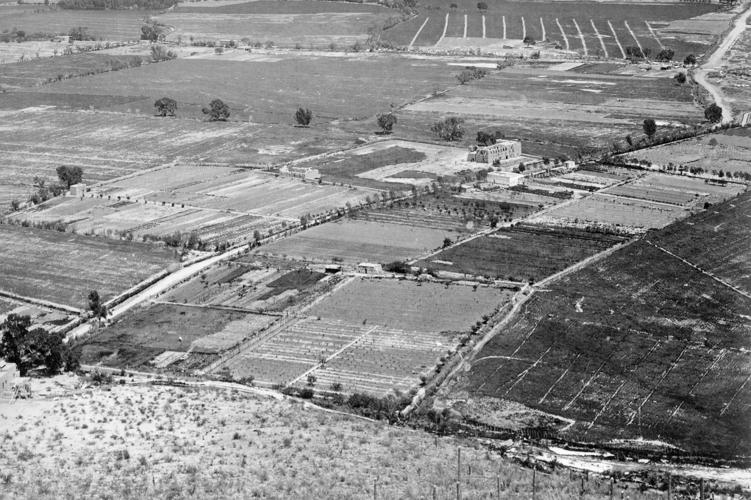
Here we go again. Fifty years ago “thousands of people” thought it was the greatest idea to rip out the old, neglected downtown barrio and forcibly relocate generations-old families and businesses to build a modern community center and retail space. The neglected but proud Mexican-black-Chinese barrio embarrassed city and business leaders who believed the barrio and its residents were not fit for a modern Sun Belt community.
Today we have another can’t-miss, let’s-make-Tucson-great proposal.
Alexander, a real estate agent and avid cyclist, said Arizona doesn’t have a professional-grade velodrome and that building one would attract cyclists from Tucson and elsewhere to train here. He claims that the high-spending cyclists would inject $18 million to $20 million into Tucson’s economy. He said it would equal El Tour de Tucson.
“It’s not a cheap sport,” he said. “It’s expensive.”
Although the placement of a velodrome on the old landfill would not directly displace any residents, it would have the strong potential to do so. The velodrome would be a continuation of the rapid changes reshaping downtown and the west side.
Caterpillar is building a new regional corporate office; Mercado San Agustín is expanding its retail center; new housing is going up on West Congress Street. This and future development is propelling property values and rents, forcing longtime residents to leave to make room for new younger residents who can afford to live on the west side.
Alexander downplays the velodrome in his plan. He said the bulk of his plan would be devoted to recreational bike activity, development of a Sonoran Desert park and to pay respects to Tucson’s past.
“It will be the true Tucson Origins’ Heritage Park,” he said, co-opting what historical preservationists have long championed and a major component of Rio Nuevo’s original mission that Tucson voters adopted in 1999.
But Alexander’s plan doesn’t exist without the velodrome. The velodrome would be a commercial venture run by a lessee, for a profit, with a clubhouse, lights for nighttime events, loudspeakers, 250 parking spaces and food booths. All shoehorned in a tight space with one street accessing it.
“If anyone could come up with a plan that brings in money, we can talk about a common plan,” Alexander said, throwing down the gauntlet.
Making money is what Rio Nuevo is here to do, he said.
Bruto coughed into the phone. “Look. It’s all about the money — who has it and who doesn’t,” he said. “Just like the urban renewal from half a century ago, the city had the coin to do what it wanted. That’s Tucson’s history.”
And as Bruto hung up the phone, his words faded: “The velodrome, with support of Rio Nuevo’s public wallet, will have the cash. And you and your posse won’t.”

