

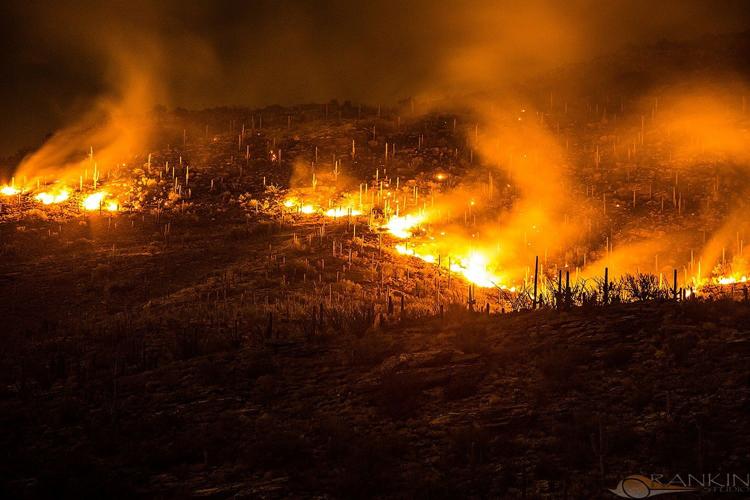


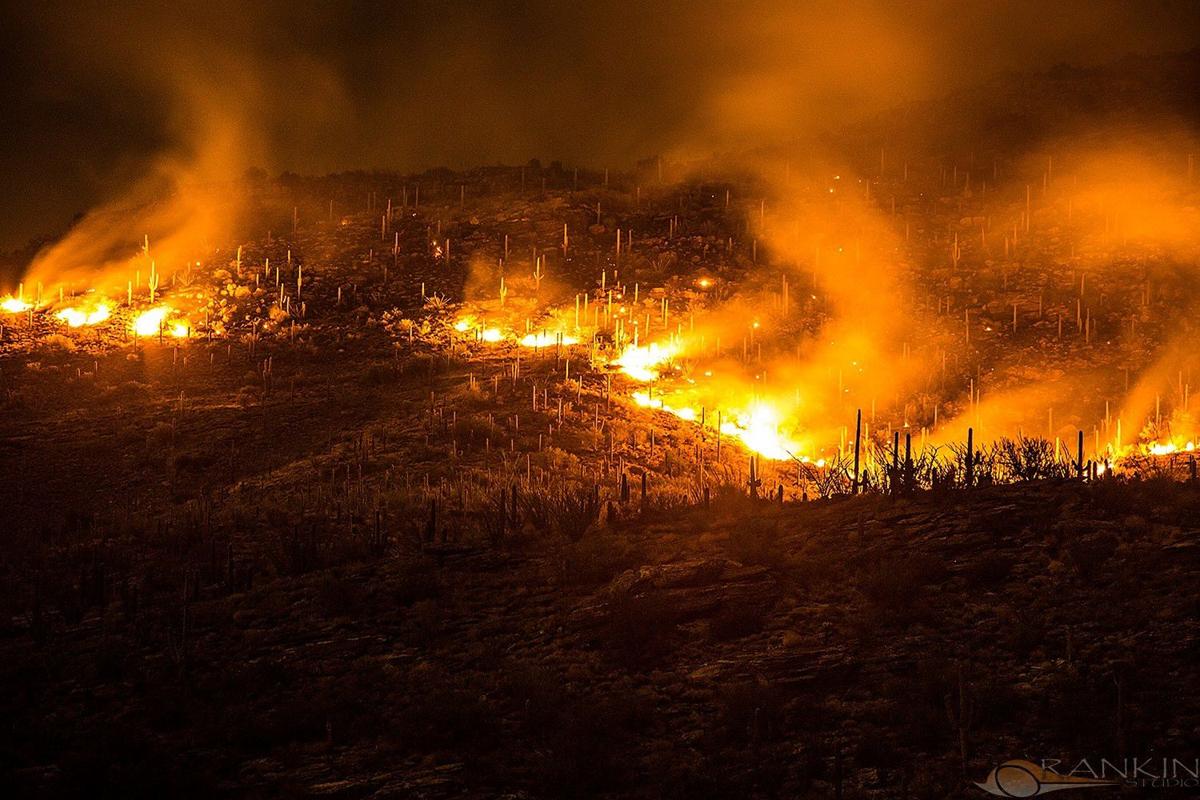
It was the fire desert ecologists have been warning about for years, and they say it won’t be the last.
Dozens of saguaros burned late last week in a lightning-sparked blaze that scorched about 25 acres in the Santa Catalina Mountains.
According to U.S. Forest Service officials, it was the first known fire in the Catalinas primarily fueled by buffelgrass, an invasive plant that has taken hold across the range and throughout Southern Arizona.
“It’s a harbinger of things to come up there, unfortunately,” said Ben Wilder, director of the University of Arizona’s Desert Laboratory on Tumamoc Hill. “We’re facing the complete unhinging of the Sonoran Desert ecosystem.”
Buffelgrass is native to Africa and Asia, where it populates savannas that burn frequently as part of the natural ecological process. The U.S. Soil Conservation Service introduced the grass to the Southwest starting the 1930s for cattle grazing and erosion control because of its high seed production and tolerance to drought.
Now it is considered a noxious weed. According to the Arizona-Sonora Desert Museum, the spread of buffelgrass “rivals climate change and water scarcity as our region’s most pressing environmental issue.”
Buffelgrass grows in dense clumps and spreads even in dry years, crowding out native plants and covering the usually patchy desert floor with an uninterrupted carpet of wildfire fuel.
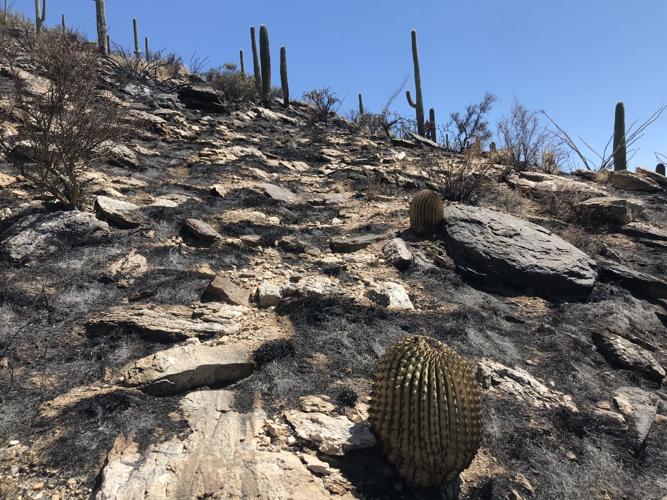
When an area burns, the flames kill off the saguaros, palo verde trees and other vulnerable native plants, leaving the fire-adapted buffelgrass to survive and thrive.
“Once it burns it comes back even stronger. It wants to be burned,” Wilder said.
The Mercer Fire broke out Thursday night in the Pusch Ridge Wilderness, about half a mile west of where Catalina Highway crosses into the Coronado National Forest.
About 30 firefighters from several agencies battled the blaze with the help of a reconnaissance airplane.
Forest Service spokeswoman Heidi Schewel said a nearby road allowed firefighters to more easily reach the fire, and relatively high humidity over the weekend also helped keep the flames from spreading.

Aerial spraying to combat buffelgrass took place at Saguaro National Park West in 2015.
The blaze was completely contained by about 4:30 p.m. Sunday.
Desert Museum imaging scientist Aaryn Olsson visited the burned area Tuesday to survey the damage with two other researchers. He was struck by how quickly it all happened and what conditions were like when it did.
“The desert doesn’t burn, and it certainly doesn’t burn at 75 percent humidity,” said Olsson, whose doctoral work focused on buffelgrass. “It’s the first of many of the events that we predicted, and it was over in a flash.”
Wilder hopes the fire will serve as a call to action.
“We can do something about this grass,” he said.
Both the Desert Museum and Saguaro National Park have aggressive treatment programs for buffelgrass, and Schewel said the Forest Service has been pulling out the plants or spraying them with herbicide in parts of the Catalinas for more than a decade.
Meanwhile, the lab on Tumamoc Hill is locked in its own battle with the botanical invader.
A survey of the hill in the late 1980s turned up just a few dozen of the plants, Wilder said, but by the late 1990s it covered about 100 continuous acres on Tumamoc.
Since then, the infestation has grown to more than 190 acres, though a campaign to pull or spray the plants appears to be working.
Wilder said crews just finished treating roughly 100 acres, up from 84 acres last year. It takes multiple treatments over several years to kill off the seed bank and eradicate the plant completely.
Wilder isn’t wild about spraying more glyphosate — the active ingredient in Roundup — into the environment, but he doesn’t see any other choice.
“We have to decide if we want burning slopes of saguaro or do we want to manage this problem,” he said. “We’ve seen what happens when we just let it go. ... The cost of not doing anything is very predictable.”
Asked how much funding is needed to make a serious dent in the local buffelgrass problem, Wilder said $15 million would be “a game-changer.”
With that kind of money, he said, he could treat “20 Tumamoc Hills.”
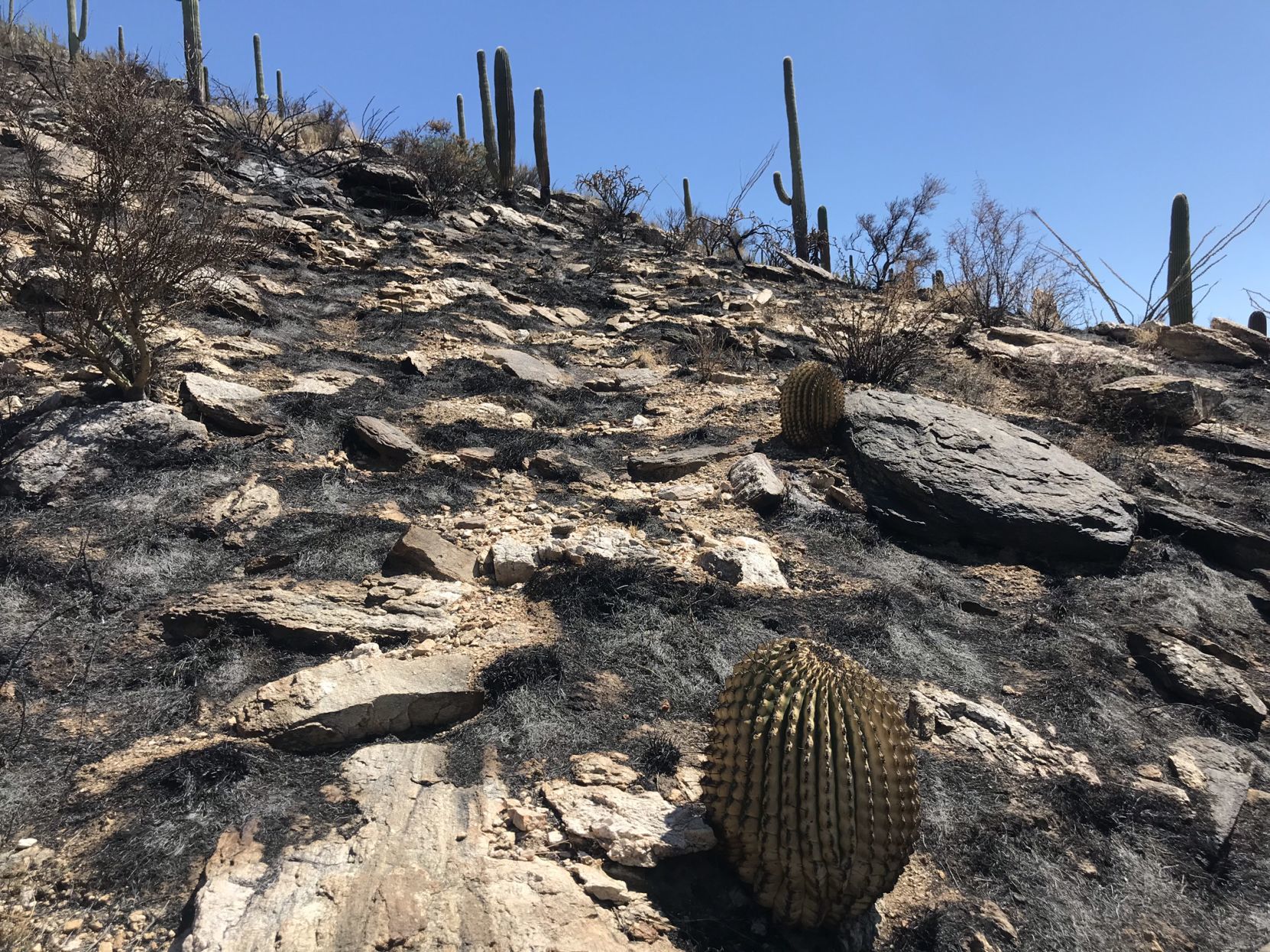
Scorched buffelgrass and burned cactus cover the slope of the Santa Catalina Mountains above Tucson Tuesday at the site of a lightning-sparked wildfire from late last week.
26 photos of Tucson's quirkiest saguaros
Tucson's quirky saguaros
Updated
You can find this crested saguaro near the entrance to the Arizona-Sonora Desert Museum.
Tucson's quirky saguaros
Updated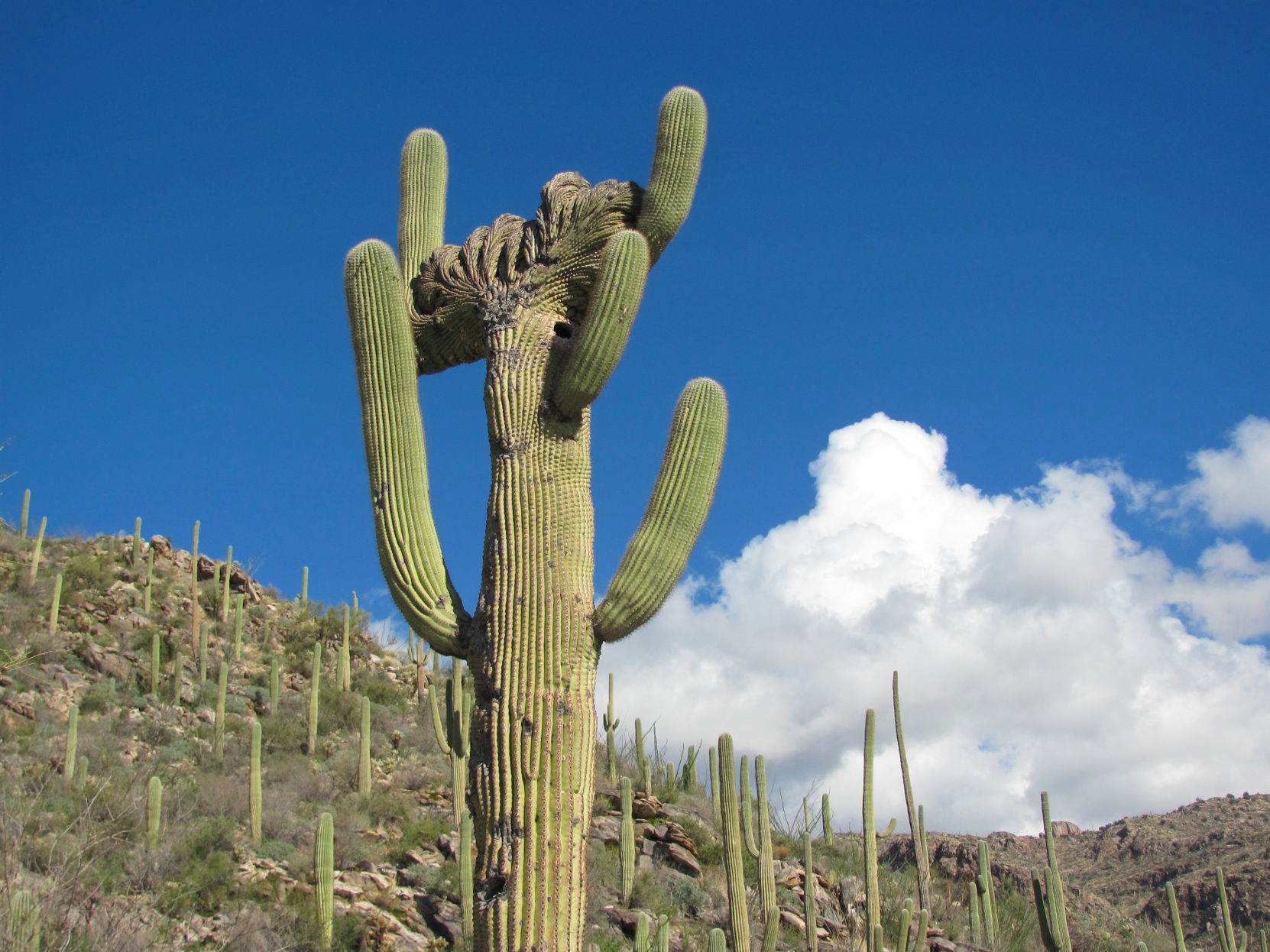
A rare crested saguaro stands on a slope above the Pima Canyon Trail.
Tucson's quirky saguaros
Updated
This crested saguaro beside Old Main on the University of Arizona campus appears to be signaling a touchdown.
Tucson's quirky saguaros
Updated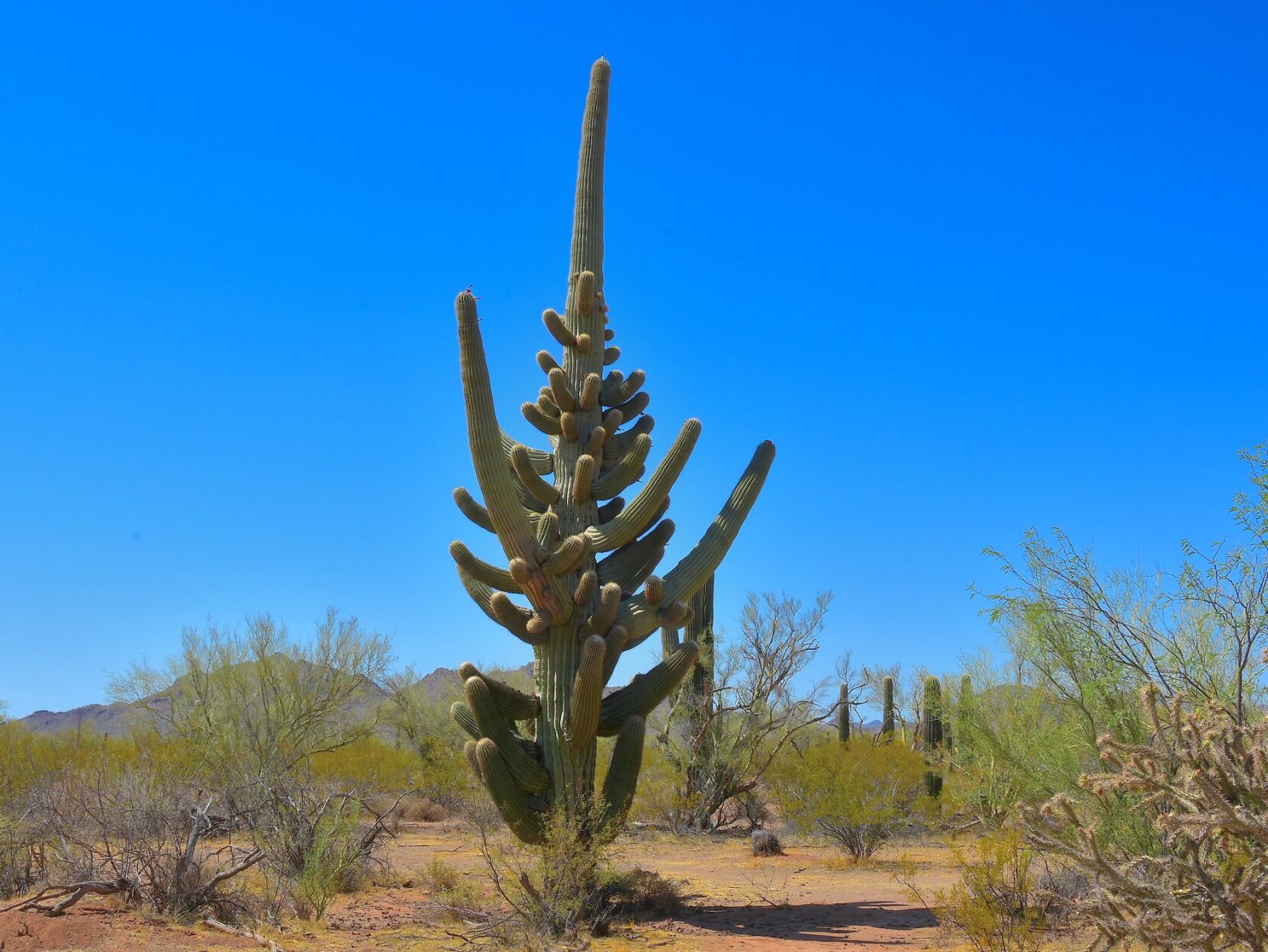
This photo was taken in Ironwood Forest National Monument, west of Marana.
Tucson's quirky saguaros
Updated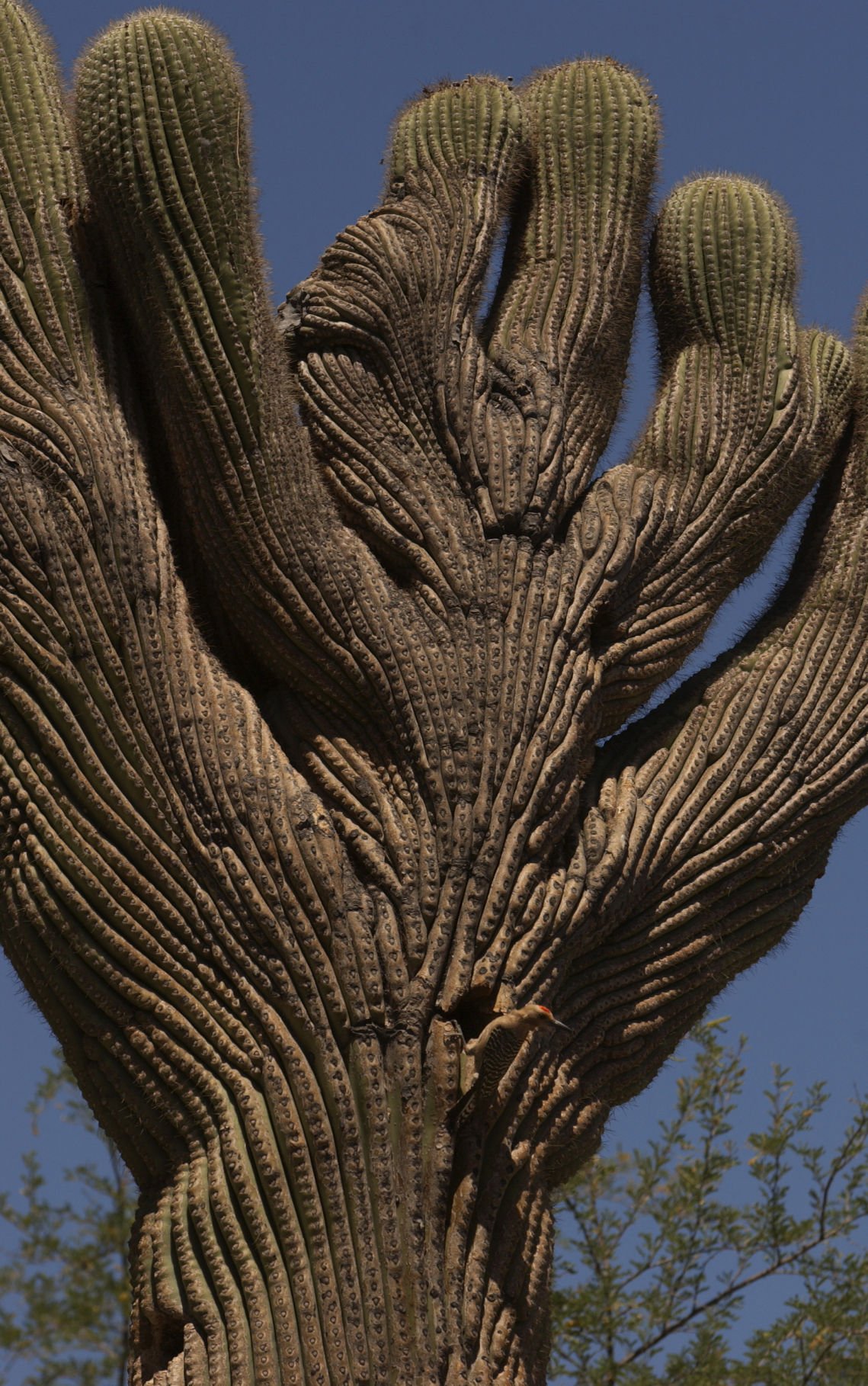
A Gila woodpecker prepares to pop into its nest on a crested saguaro at Tucson Botanical Gardens, Tuesday, June 1, 2004.
Tucson's quirky saguaros
Updated
This cactus was spotted west of Green Valley.
Tucson's quirky saguaros
Updated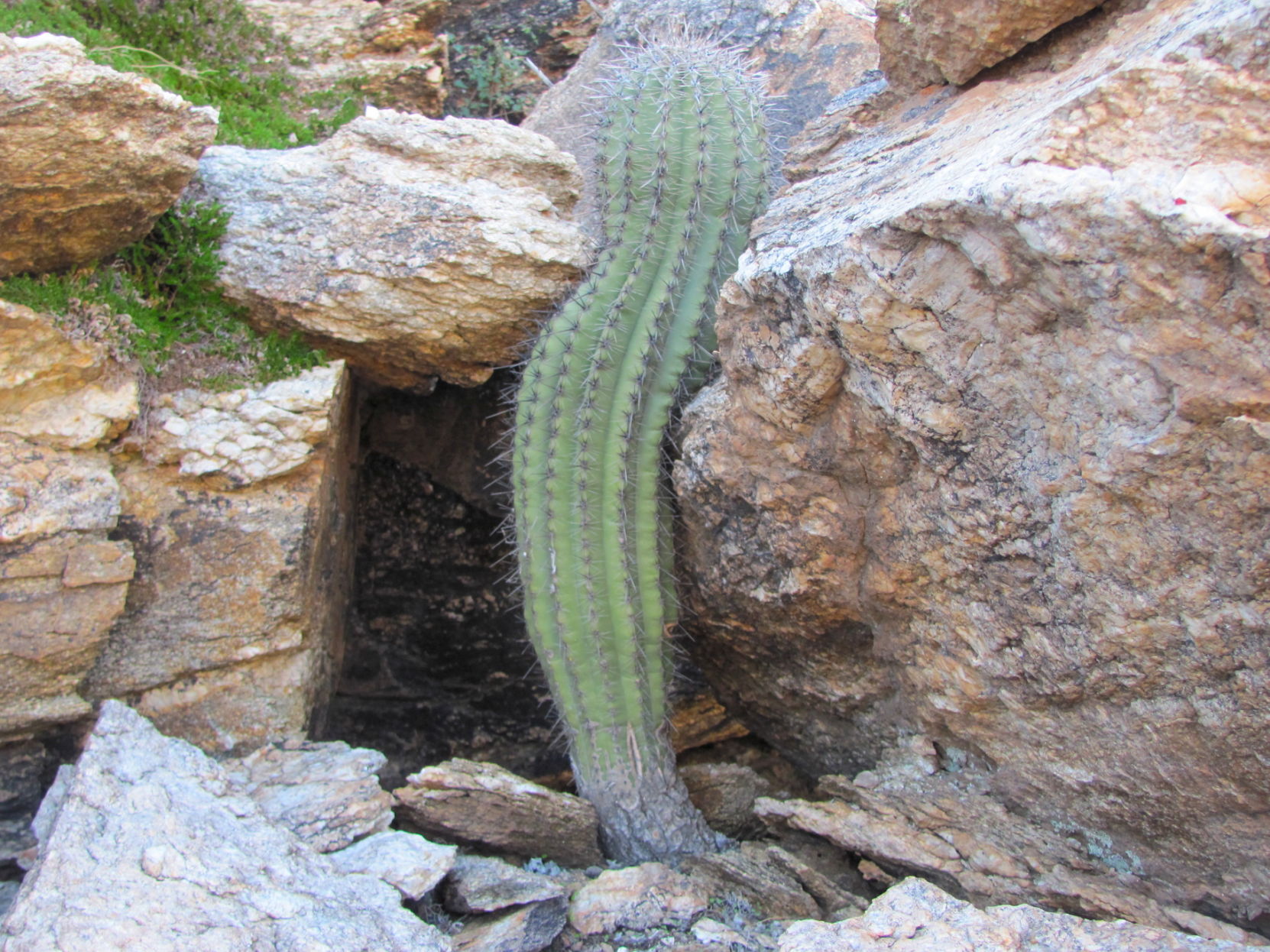
A little saguaro has found its niche between a rock and a hard place along the Esperero Trail in Sabino Canyon.
Tucson's quirky saguaros
Updated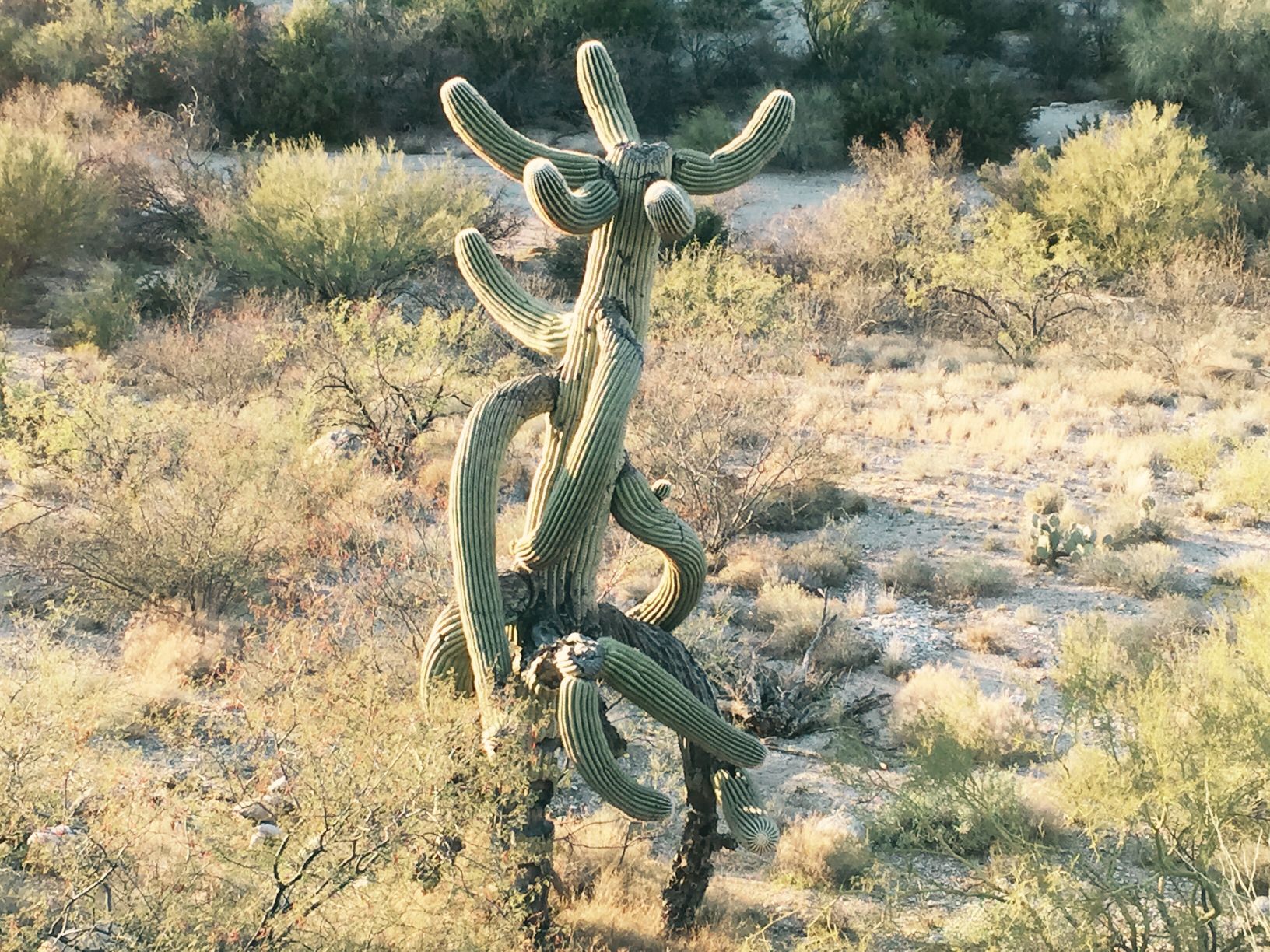
Many saguaros make a big thing of symmetry and perfect form. And then there's this one.
Tucson's quirky saguaros
Updated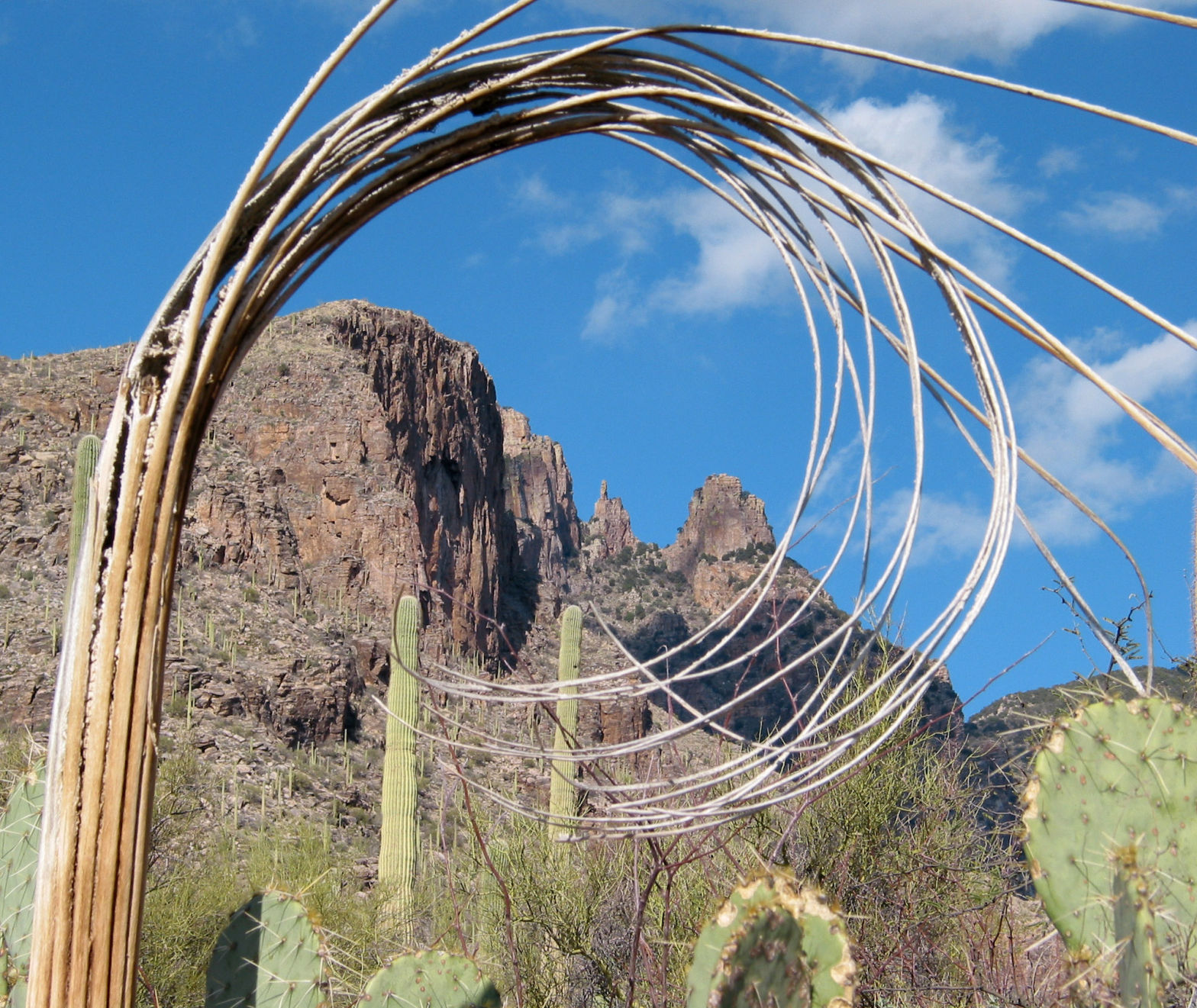
Distant finger rock is framed by the almost circular strands of a dead saguaro.
Tucson's quirky saguaros
Updated
A Saguaro the looks like a dinosaur (Tyrannosaurus Rex) near Ridgeside Drive near Sediment Drive on Jan. 21, 2013.
Tucson's quirky saguaros
Updated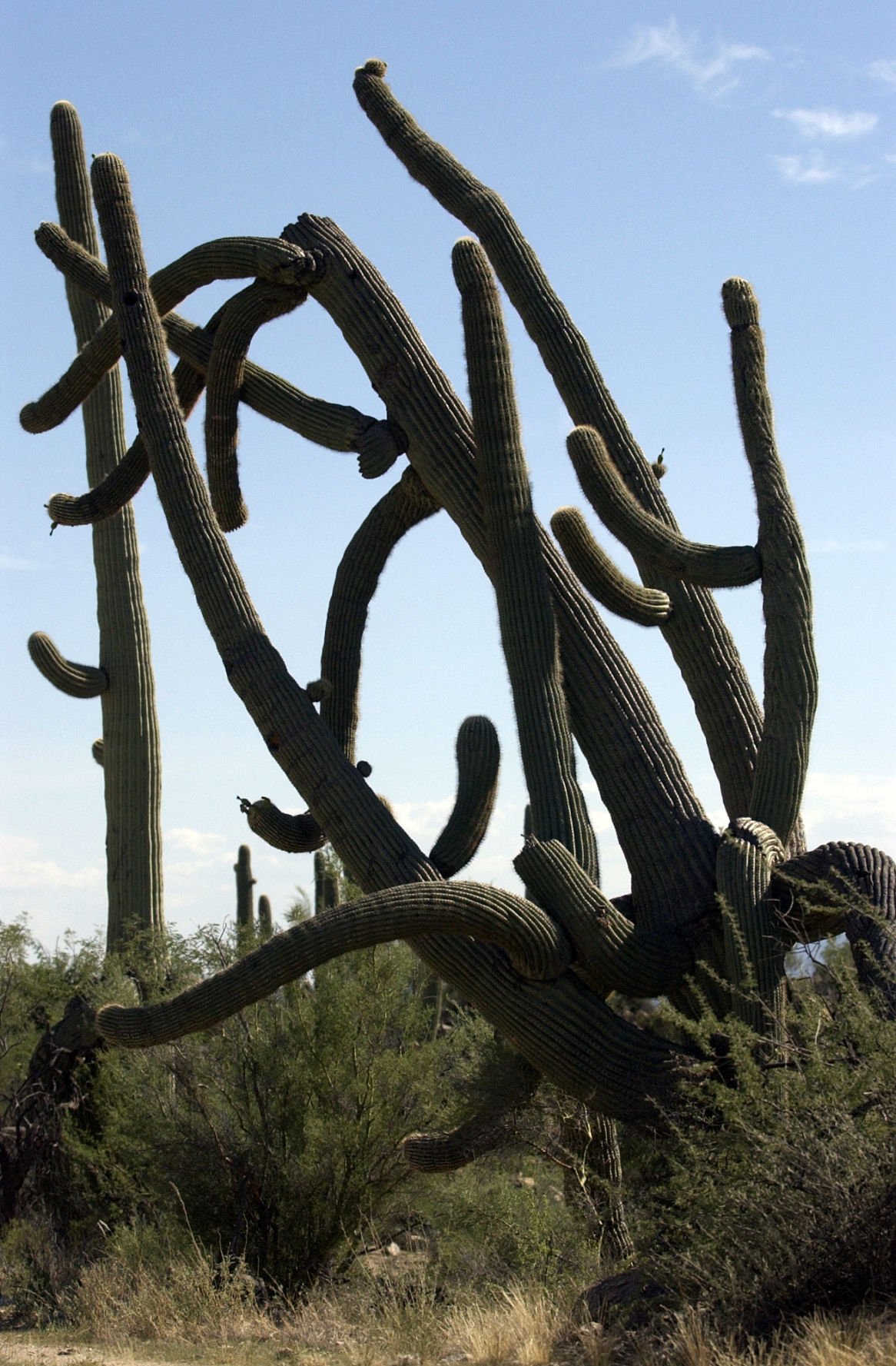
An old multiple arm saguaro appears to ready to topple over Friday, Sept. 10, 2004 near Teal Blue Trail and Moore Roads.
Tucson's quirky saguaros
Updated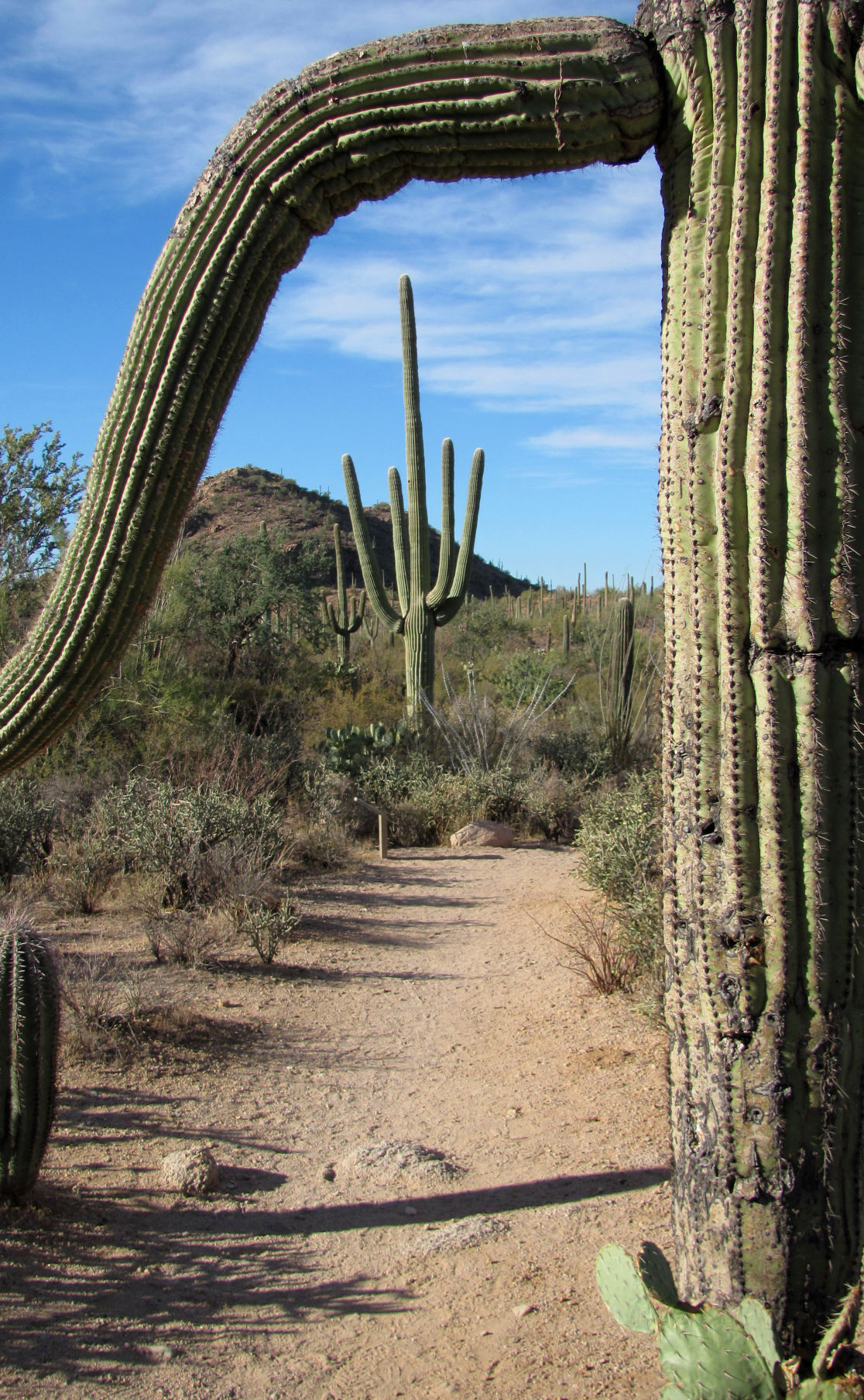
Scenery along the Valley View Overlook Trail at Saguaro National Park West on Dec. 15, 2010.
Tucson's quirky saguaros
Updated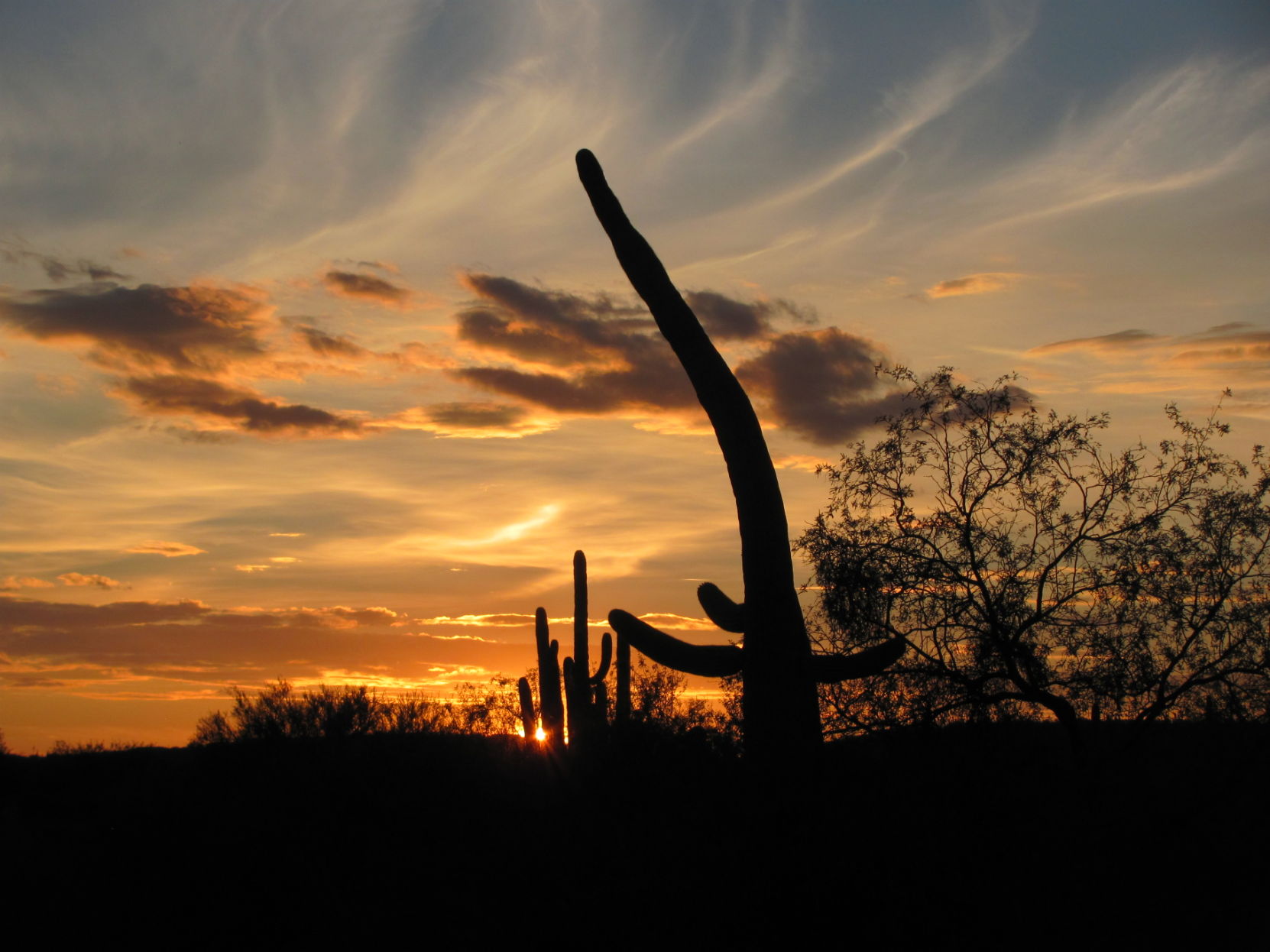
A saguaro appears to embrace the sunset in Sabino Canyon along the final stretch of a hike on the Phoneline Trail. Photo taken January 10, 2015. Doug Kreutz / Arizona Daily Star
Tucson's quirky saguaros
Updated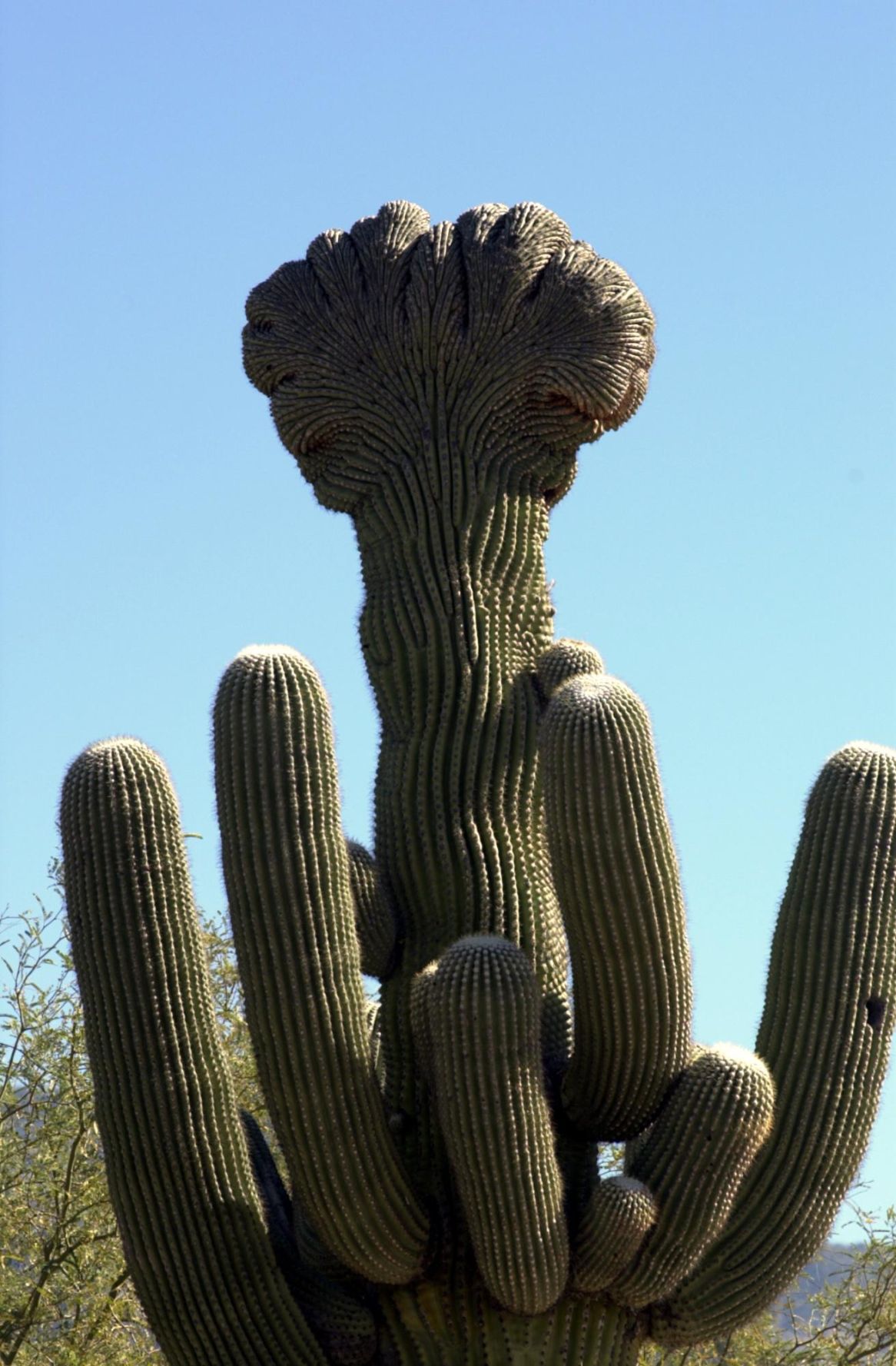
A crested saguaro with numerous arms soaks up the sun on the city's northwest side. Crested saguaros are quite rare happening only 1 in 10,000.
Tucson's quirky saguaros
Updated
This saguaro, along the Mica View Trail at Saguaro National Park east of Tucson, was leaning at a precarious angle before it fell to the ground in early 2015. Photo by Doug Kreutz / Arizona Daily Star
Tucson's quirky saguaros
Updated
This cristate, or crested, saguaro in Sabino Canyon near Tucson is putting on a good bloom. Photo taken June 3, 2014. Photo by Doug Kreutz / Arizona Daily Star
Tucson's quirky saguaros
Updated
A rare crested saguaro in Sabino Canyon near Tucson has plenty of blooms and buds this spring. Photo taken June 3, 2014.
Tucson's quirky saguaros
Updated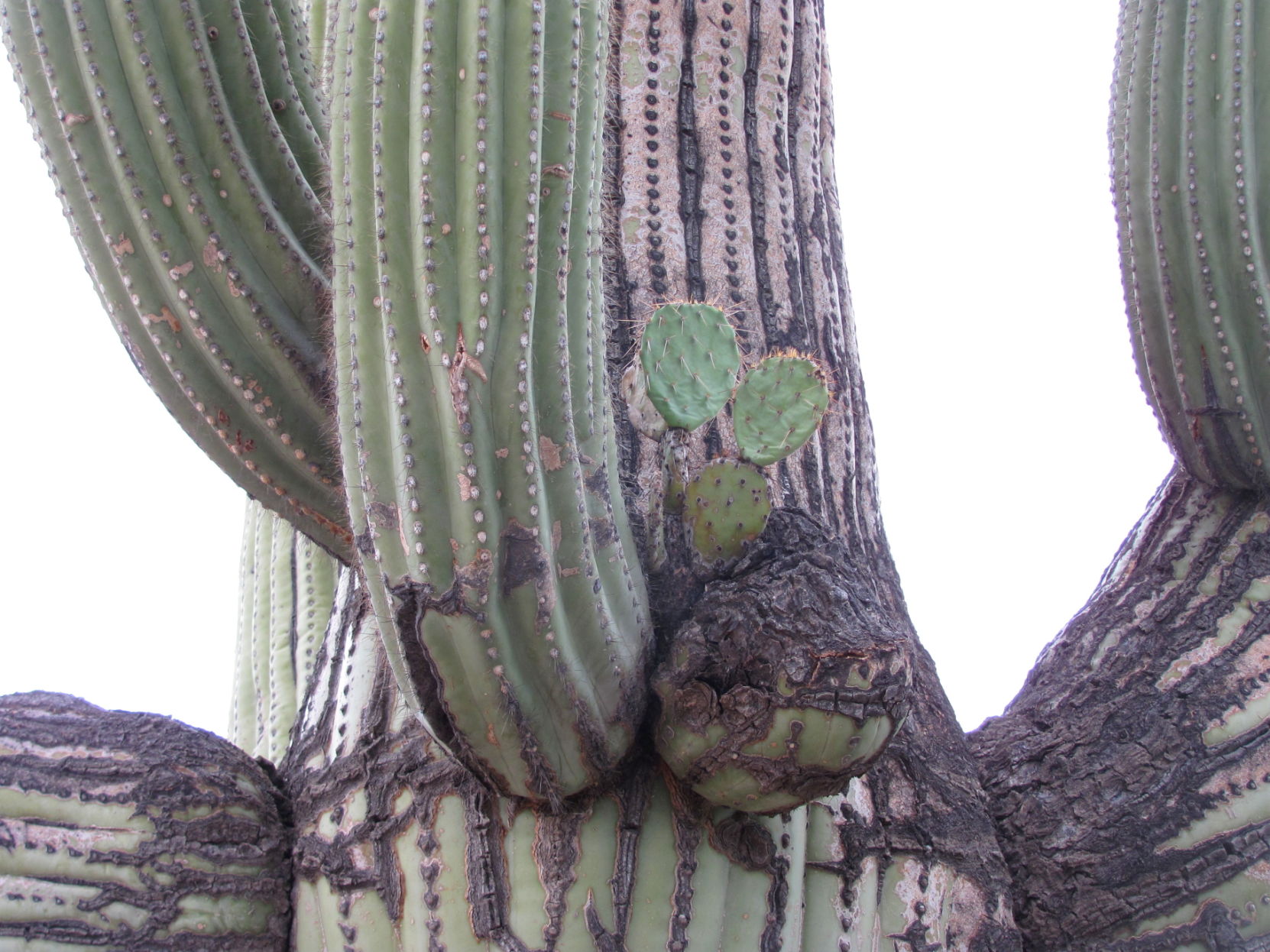
A prickly pear cactus is growing out of a saguaro in the Desert Garden area along the Bajada Loop Nature Trail in Sabino Canyon northeast of Tucson.
Tucson's quirky saguaros
Updated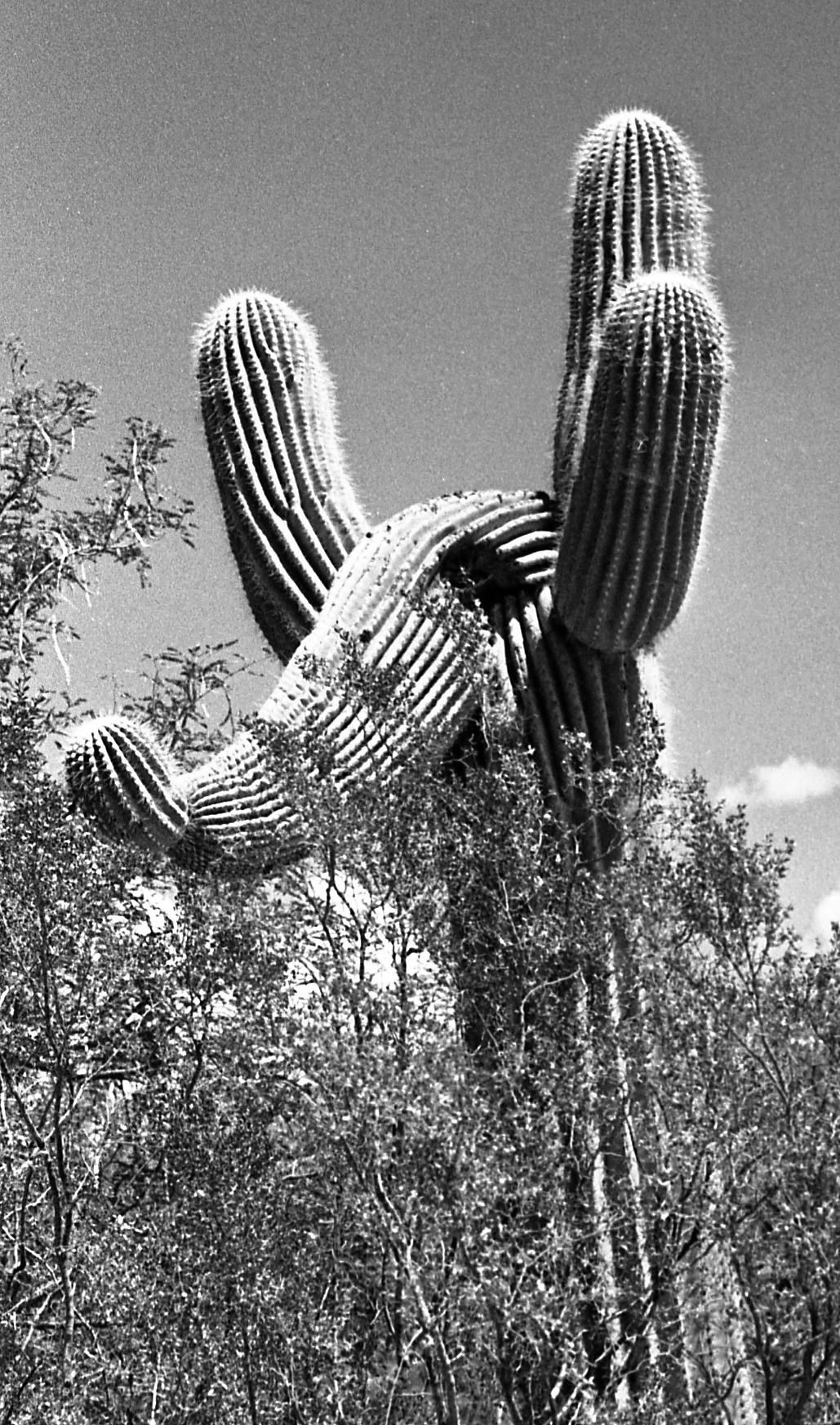
A Saguaro cactus on Soldiers Trail Road that looks like an elephant in 1973. The Tucson Citizen called it a "Saguarontosaurus." "This spiny antecedent of the ponderous pachyderm stalks the desert east of town," the newspaper wrote. Tucson Citizen file
Tucson's quirky saguaros
Updated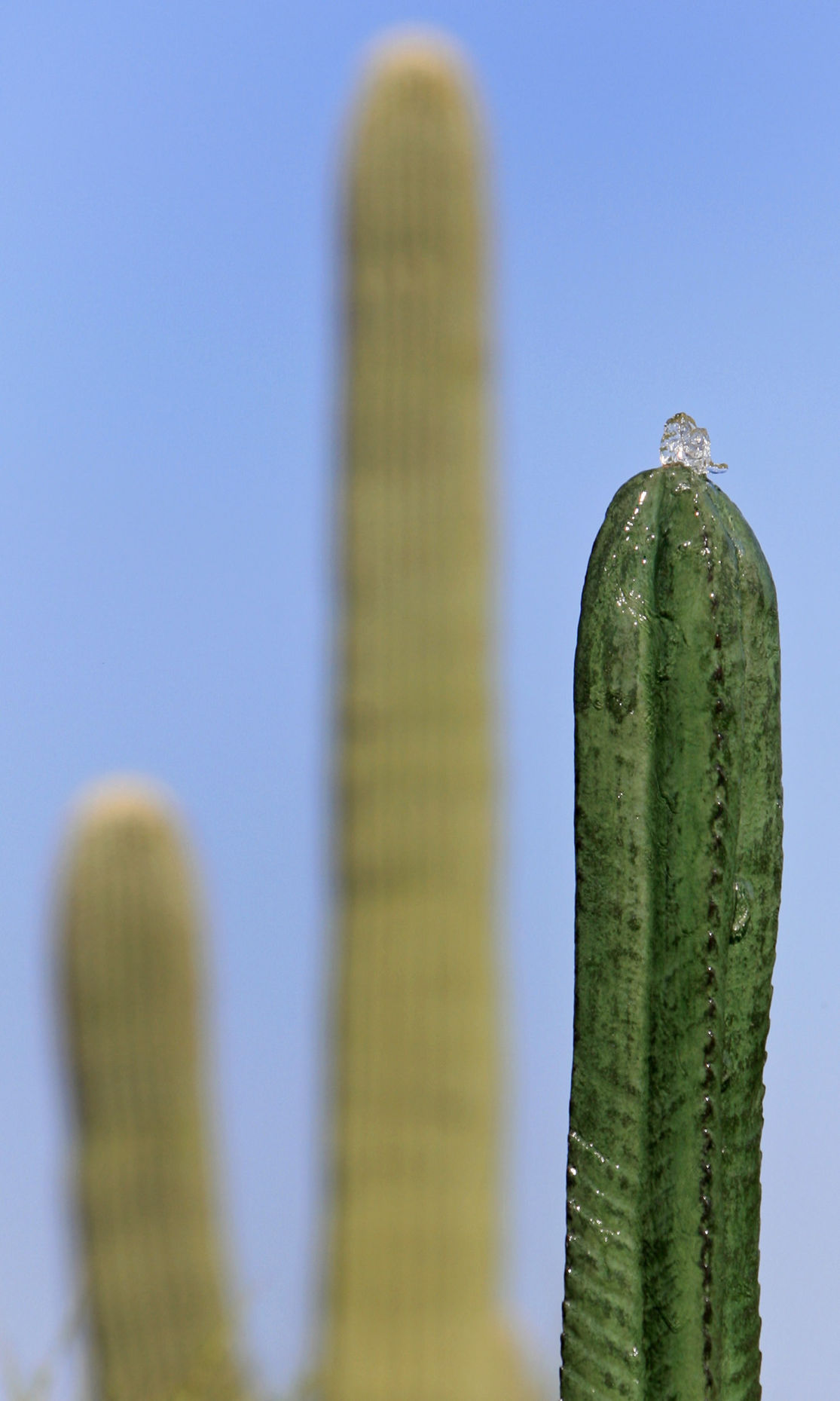
A fountain shaped like a saguaro cactus stands in front of a real cactus at a home in Dove Mountain on Aug. 31, 2010.
Tucson's quirky saguaros
Updated
Saguaros stand against a sky of patchy clouds Thursday afternoon on July 31, 2003 at Saguaro National Park near Tucson, Ariz.
Tucson's quirky saguaros
Updated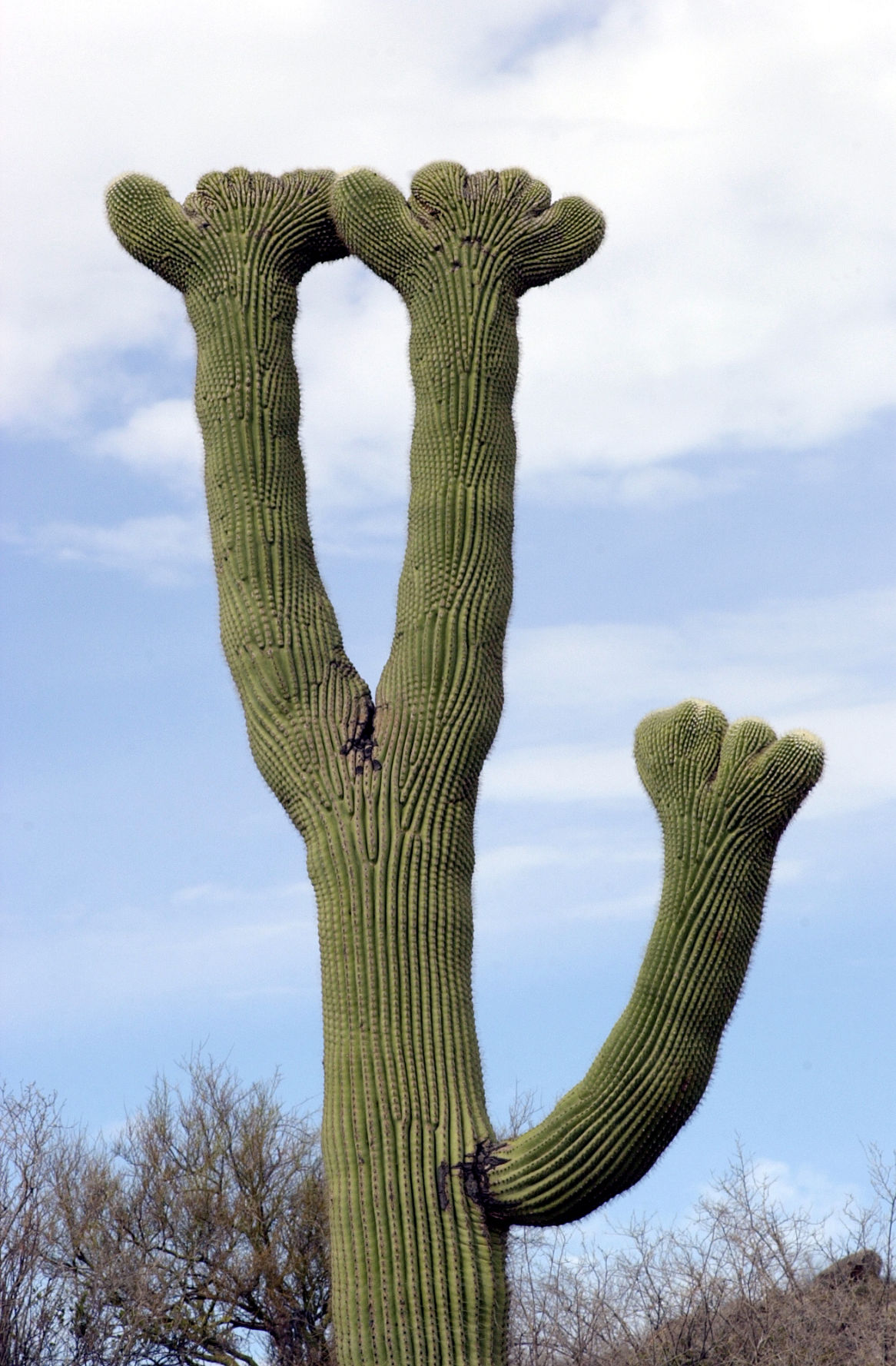
A rare tri-crested saguaro seems to be waving in the Tortolita Mountains on Jan. 3, 2002.
Tucson's quirky saguaros
Updated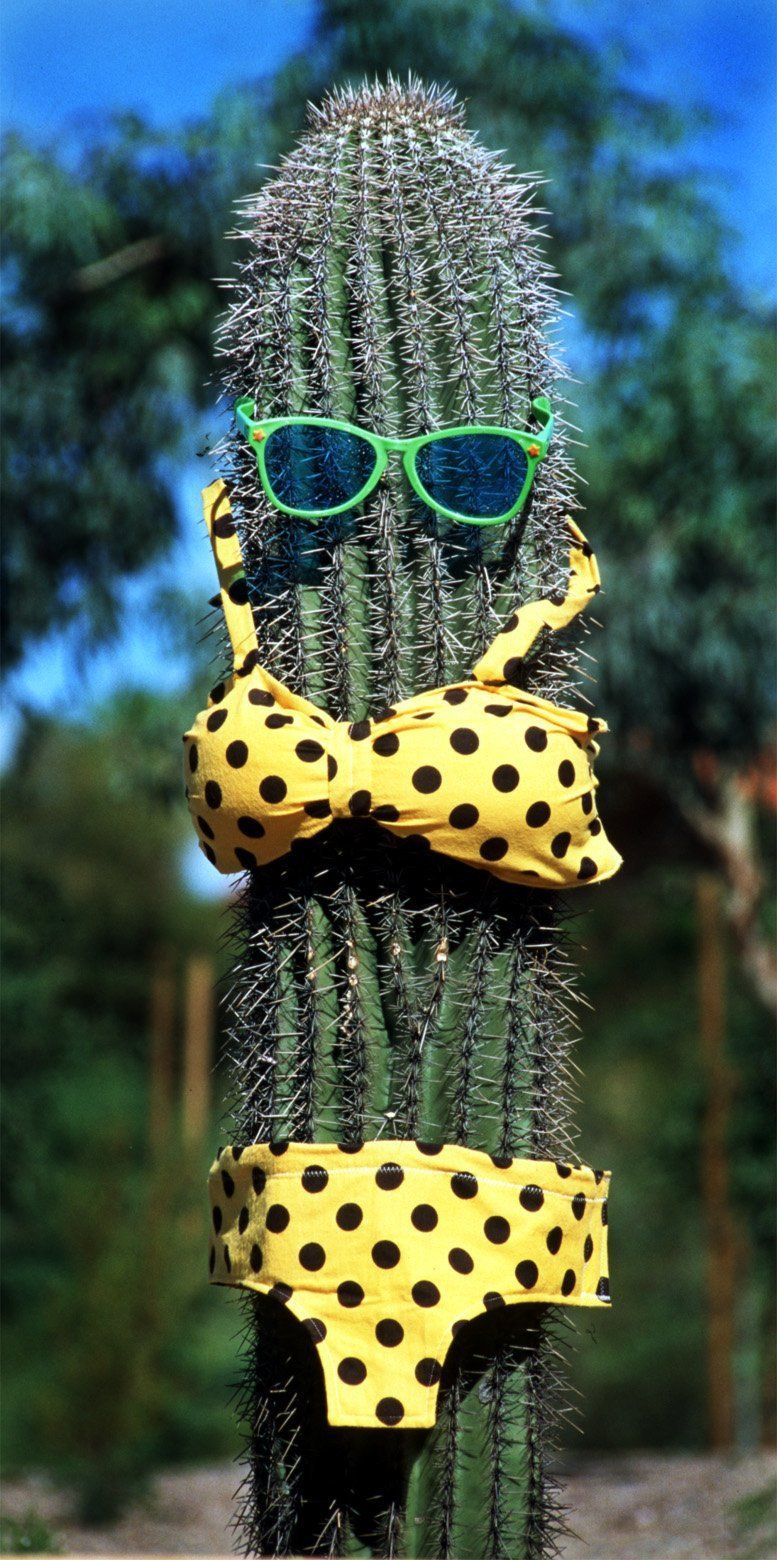
A saguaro wears a bikini outside a Pizza Hut at East Sunrise Drive and Swan Road June 17, 1997.
Tucson's quirky saguaros
Updated
This rider has a cute little Saguaro cactus with a golf ball hat on his helmet during El Tour de Tucson on Saturday November 19, 2011, in Tucson, Ariz.
Tucson's quirky saguaros
Updated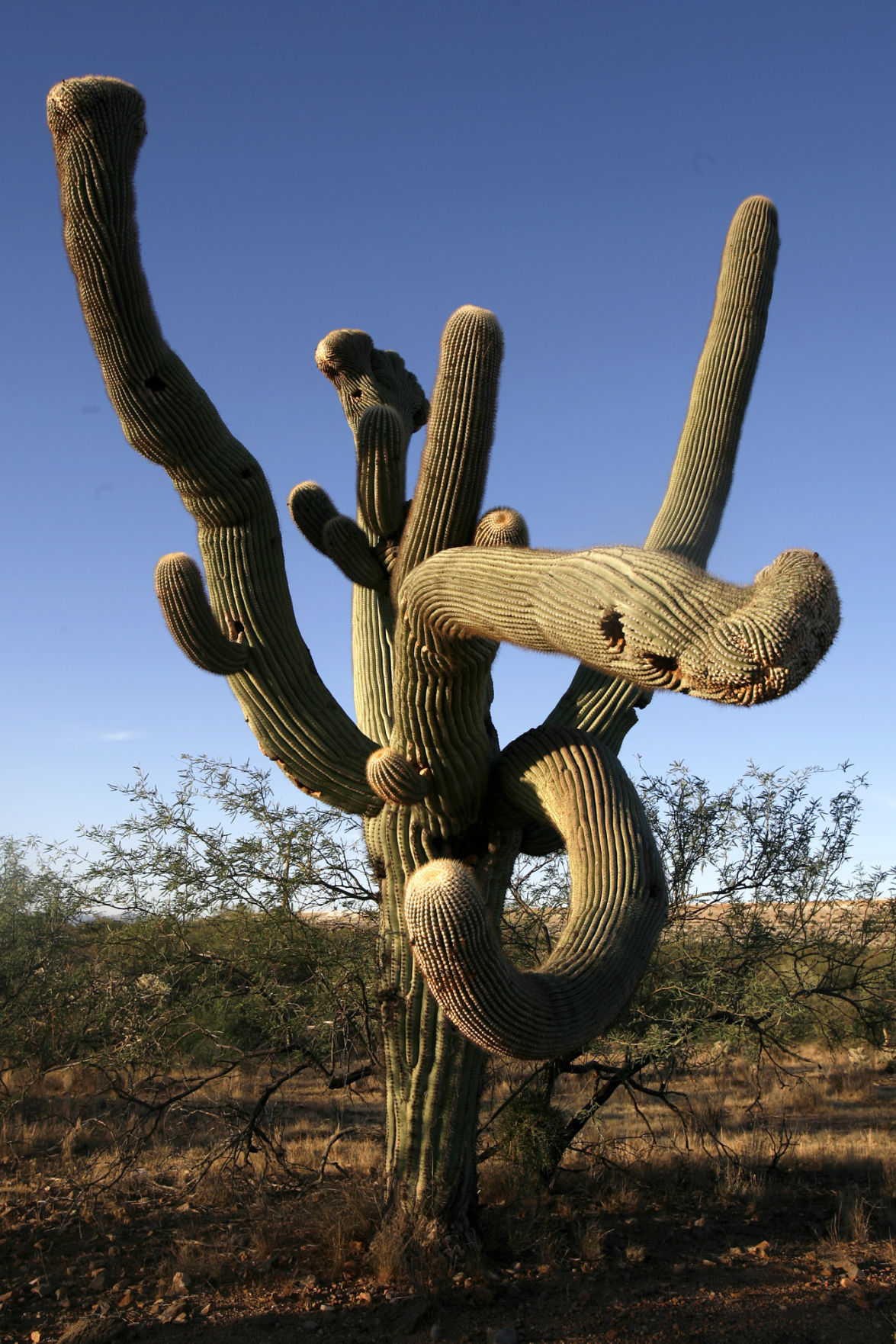
A rare crested saguaro cactus stands on the land of the 2,073-acre Green Valley preserve Oct. 7, 2007 in Green Valley, Ariz.
Tucson's quirky saguaros
Updated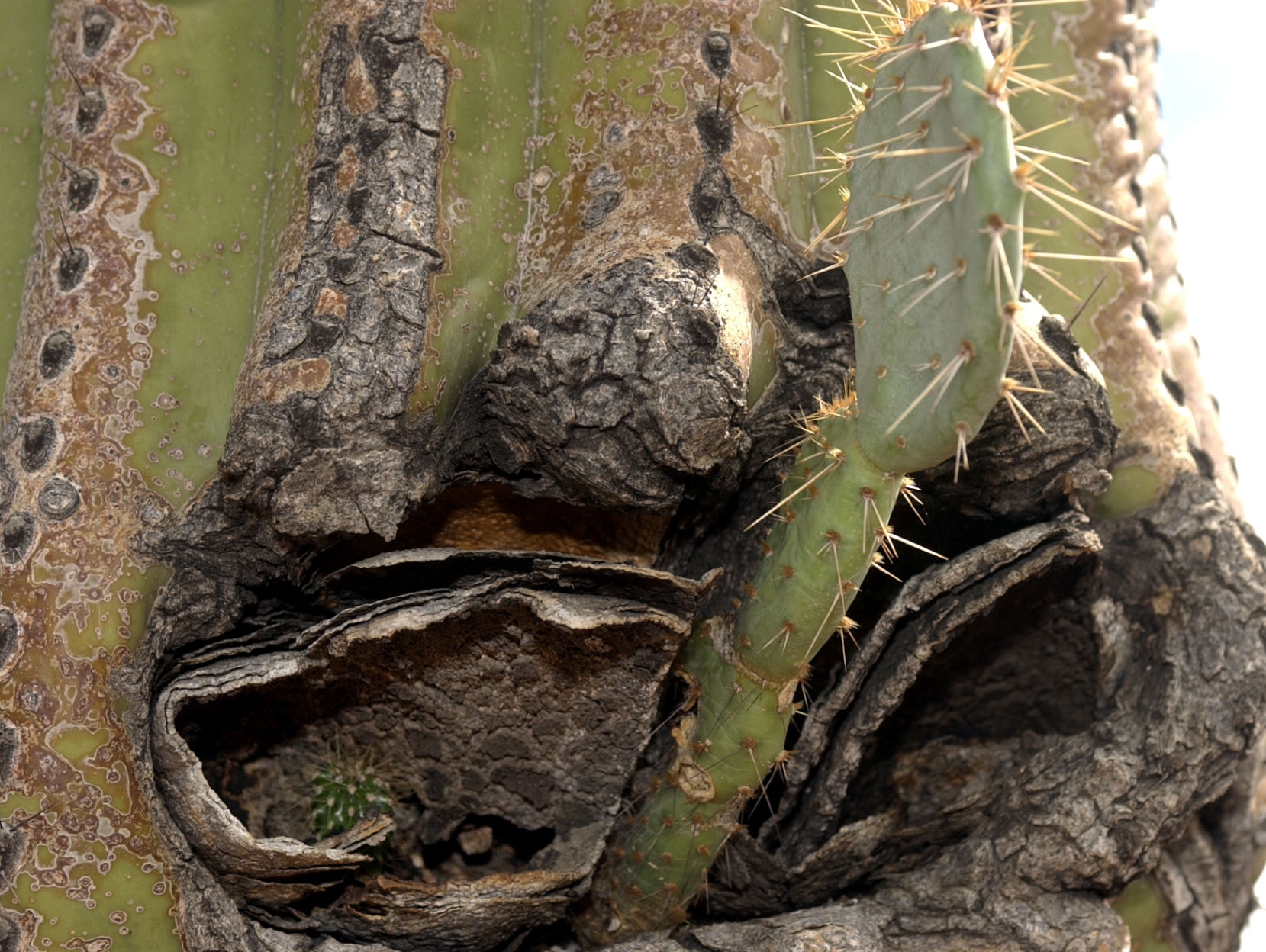
A prickly pear cactus and another cactus grow out of one of the scars on the side of the transplanted saguaro Monday Sept. 9, 2002.

