


A Tucson cultural organization has landed a $750,000 grant from the Mellon Foundation to help restore the historic Sosa-Carrillo House downtown.
Los Descendientes de Tucson announced the two-year grant on Monday, though the money was awarded in late November through the foundation’s Humanities in Place program.
Los Descendientes operates the Mexican American Heritage and History Museum at the Soso-Carrillo House. The nonprofit group’s president, Rikki Riojas, said the grant will be used to improve and expand the kitchen and restrooms, so the late-19th-century building can host more community events.
“It means so much,” said Riojas, a native Tucsonan who also serves as the museum’s first paid, full-time executive director. “Really for such a long time it just seemed like a dream” that the renovations would get done someday.
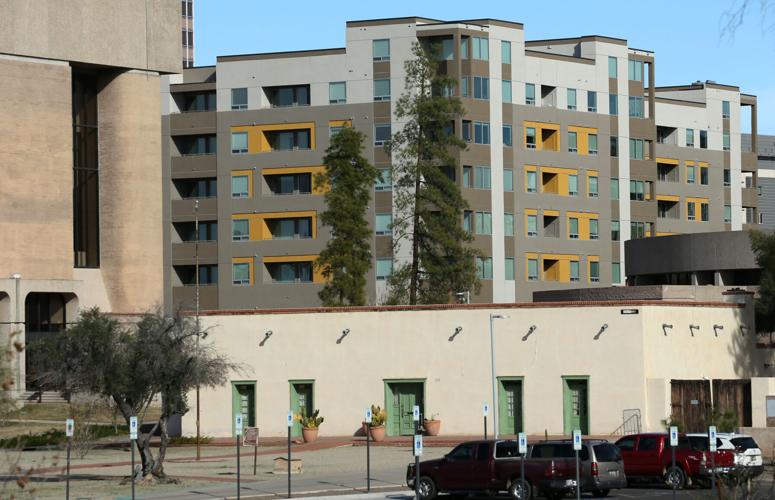
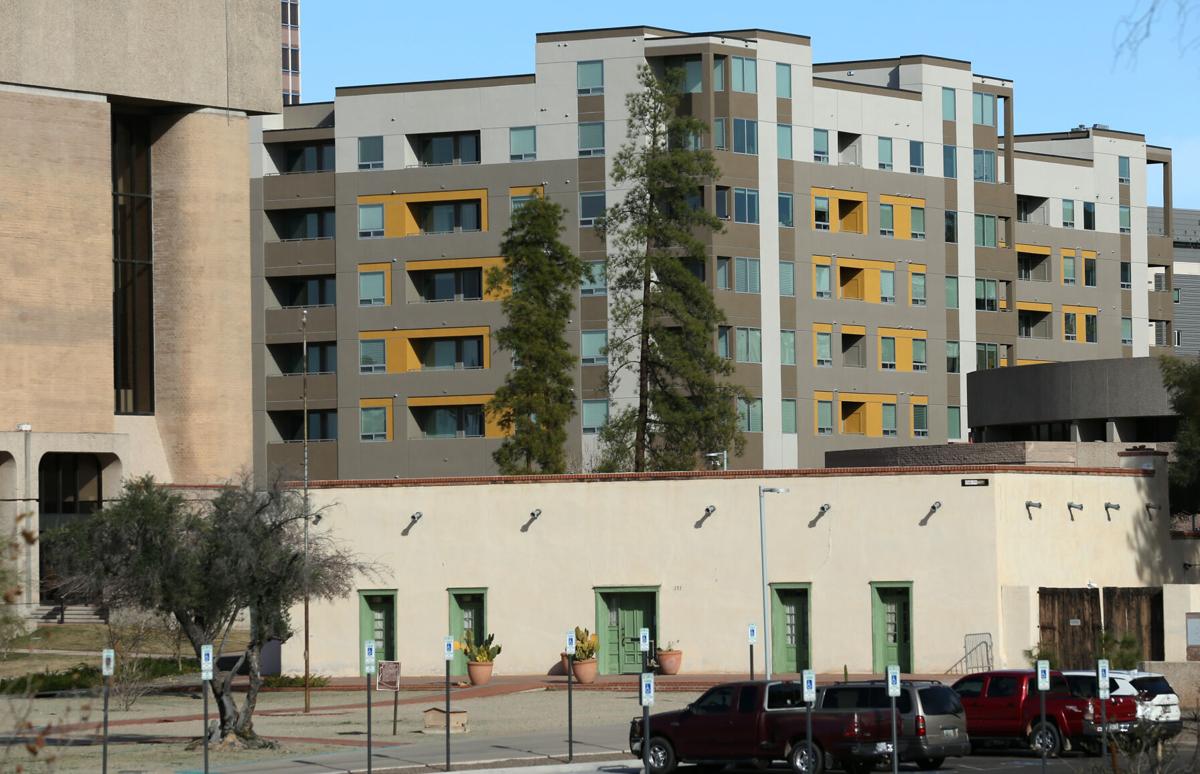
The Sonoran-style, adobe row house was one of only a handful of buildings saved when an 80-acre swath of Tucson’s oldest Mexican-American barrio was razed — and about 700 residents were displaced — to make way for construction of the Tucson Convention Center in the 1960s.
The Sosa-Carrillo House is now owned by Rio Nuevo, the tax-supported urban improvement district that also oversees the TCC.

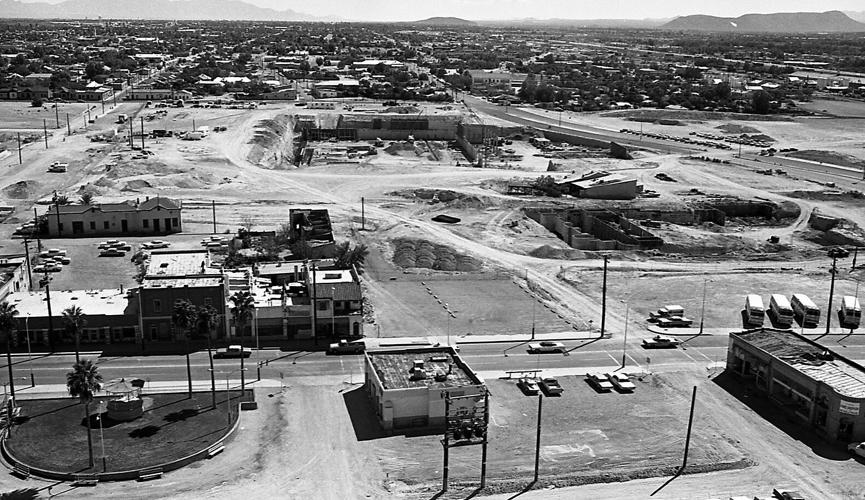
In a photo from Sept. 17, 1969, work progresses on the Tucson Convention Center arena and exhibition hall, top center, and the music hall, right, as the historic Sosa-Carrillo House awaits renovations between the two construction sites. Roughly 250 homes and businesses in Tucson's oldest barrio were demolished to make way for the TCC complex.
Rio Nuevo bought the building from the Arizona Historical Society early last year under a deal designed to preserve it as a cultural site and pay for a long list of needed repairs.
Riojas said the improvement district has already committed roughly $1.3 million to the first phase of that work, which includes replacing the heating and air conditioning system, repairing the roof and restoring the building’s adobe and plaster.
On top of that, Rio Nuevo has agreed to match the Mellon Foundation grant with an additional $500,000 to fully fund improvements to the kitchen, bathrooms and walled patio.
“We were happy to match that grant,” said Rio Nuevo board chairman Fletcher McCusker. “We’re honored to help save that property.”
At the request of the Mellon Foundation, Rio Nuevo also extended the $1-per-year leases for the Sosa-Carrillo House’s three nonprofit tenants — the museum, Los Descendientes and Borderlands Theater — for another 10 years, McCusker said.
According to Riojas, the foundation invited Los Descendientes to apply for a Humanities in Place grant last spring, after Mellon officials visited the Sosa-Carrillo House during a regional tour of border communities.
“They asked us, ‘How can we help you,’” she said.
The renovations will protect an important piece of Tucson history while allowing the building to accommodate a full slate of exhibits and cultural programming, Riojas said. To accommodate the work, the Sosa-Carrillo House is slated to be closed for 6 to 8 months starting in June.
Riojas said they plan to throw a farewell party at the museum before shutting down and a grand reopening once the renovations are done.
By then, she said, they hope to have new history exhibits in place on the Sosa and Carrillo families and on the house’s place in Tucson’s tangled story of mid-20th century urban renewal.

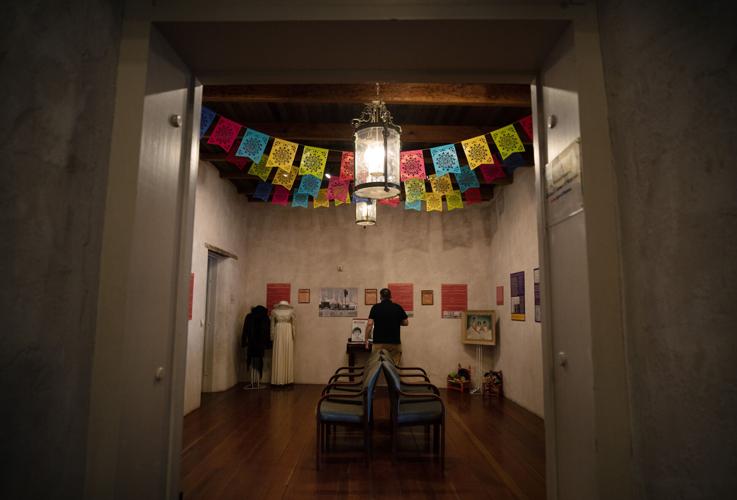
An exhibit on the life of columnist and activist Alva Torres is featured at the Mexican American Heritage and History Museum inside the historic Sosa-Carrillo House in Tucson.
In addition to the building improvements, the Mellon Foundation grant is helping to fund two paid administrative positions for Los Descendientes and cover the cost of a series of community meetings, beginning in February, to gather input on future programming and improvements at the historic building.
The house was built in 1880 by prominent local businessman Leopoldo Carrillo on land previously owned by the frontier family of José María Sosa, an ensign posted to the Spanish presidios of Tucson and Tubac in the 1770s.
The residence was passed down through the Carrillo family until 1968, when the city of Tucson took the property by eminent domain.
Roughly 250 homes and businesses ended up being bulldozed to make way for the convention center complex, but the house at 151 S. Granada Ave. was spared — and added to the National Register of Historic Places — not for its link to two pioneering Hispanic families but for a tenuous connection to 19th century military leader and Arizona territorial governor John C. Frémont.
Ultimately, Riojas said, the goal of all this work is to turn the Sosa-Carrillo House into a community center of sorts “in a place that was really taken away from the community in the ‘60s.”
Once the building upgrades are finished, Los Descendientes will shift its attention to the area in front of the house. Ideas so far include a native plant garden and gathering space along a brick recreation of the main street that once ran directly in front of the old barrio address.
“I’m just so excited for the whole community,” Riojas said.
Walking tour of the historic Barrio Viejo neighborhood south of downtown Tucson. Text by Bobbie Jo Buel. Photos by Mamta Popat. Produced by Rick Wiley / Arizona Daily Star 2020

