


Syrian national Kamel Maklad has been held in immigration detention in Arizona for more than two years. But last month, he spent about 30 minutes in a Venezuelan airport, after the U.S. put him on a deportation flight with almost 200 Venezuelans, he said.
Although he previously lived there, Maklad has no legal status in Venezuela and was quickly flown back to the U.S., he said, speaking on a video call from the Eloy Detention Center.
Confused Venezuelan officials told Maklad he didn’t have valid paperwork and they’d never agreed to receive him, he said.
“They told me, ‘You’re not Venezuelan. Tell immigration (authorities) in America that we can’t do what they want. We’ve had no communication,’” he said. He was first returned to a Texas detention facility before being transferred back to Eloy.
For Maklad, the head-spinning flights have compounded his despair after 25 months in detention, despite having won protection against deportation to his home country nearly one year ago.
“I have no energy anymore. I have no desire to fight,” said Maklad, who is 38. “I feel finished. They stole my time, my life.”
Maklad has been detained by Immigration and Customs Enforcement since September 2023, when he crossed the southern border with a group of migrants near Lukeville, Arizona, and surrendered to border agents to request asylum.
The failed Sept. 19 deportation to Venezuela comes as U.S. immigration officials have spent nearly a year trying to find a third country to accept Maklad as a deportee, after an immigration judge granted him “withholding of removal” to Syria in November 2024, as well as protection under the Convention Against Torture.
In granting withholding of removal, the judge agreed that Maklad’s life or freedom would most likely be threatened if he returned to his home country.
Under previous administrations, those granted withholding of removal — a more limited form of protection than asylum — would usually be released from detention and secure temporary work permits, with requirements such as routine ICE check-ins.
But the Trump administration has mounted an aggressive campaign to convince more countries to accept deportees from the U.S. who aren’t their citizens, approaching nations including Uganda, Ghana, South Sudan and other places with humanitarian crises or violent conflicts of their own.
Immigrants should not face indefinite detention, legal experts say. Every 90 days, ICE detainees should get a custody review of whether it’s likely they can be deported in the near future, and if not, they should be released after six months.
“The government shouldn’t be able to hold someone, a noncriminal, potentially for the rest of their lives simply because it couldn’t find another country to take them,” said immigration attorney Luis Campos, whom Maklad retained in October.
Maklad said he previously lived and worked legally in Venezuela for about 10 years, after fleeing the Syrian civil war in 2011. When his Venezuelan residency and work permit expired, the process to renew them dragged on for 18 months, due to the political crisis in Venezuela, he said.
Without legal status, he faced extortion and threats from local authorities, so eventually, he left Venezuela to seek protection in the U.S., he said, speaking in Spanish, which he learned in Venezuela.
An ICE officer told Maklad in August he would be deported to Venezuela and asked if he had fear of being returned there, he said. Initially, he said yes, due to his lack of legal status and the risk of being threatened by local police.

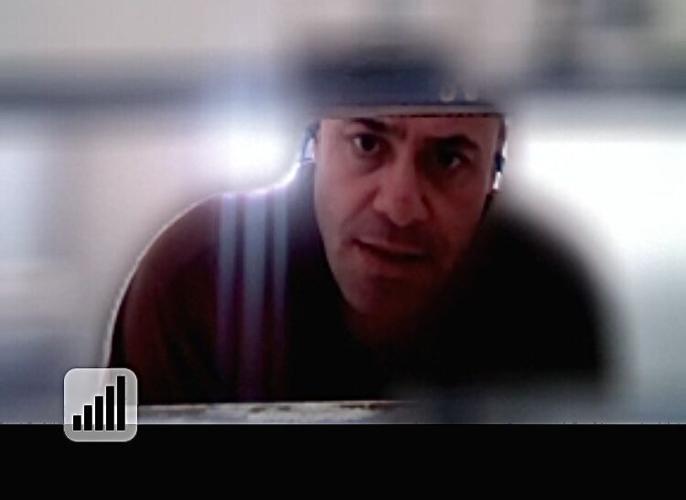
Kamel Maklad, 38, has been held in immigration detention, mostly at Eloy Detention Center, for more than two years, despite a judge granting him “withholding of removal” to his home country of Syria in November 2024. Speaking to the Arizona Daily Star on a video call through a prison-messaging app, Maklad said he’s gotten no answers from ICE about his continued detention and is desperate for his freedom. Maklad is pictured here in a screenshot from an Oct. 21 video call with the Star.
But the officer said Venezuela would accept him and give him new documents, Maklad said. He now believes that assurance was “a lie.”
“I escaped and left Syria in 2011 because I was afraid of being in prison,” he said. “I came looking for my freedom in another country, and they imprisoned me. ... I’m 38 years old. I have never, never in my life been imprisoned. I have never known jail, neither in Syria nor in Venezuela. I know it here. What are they doing with me?”
Immigration detention is civil detention; it’s not intended as punishment for any crime, which would be handled by the criminal justice system. But for those detained, the experience is indistinguishable from criminal incarceration, advocates say.
DHS allegation ‘completely new’
Since Oct. 15, the U.S. Department of Homeland Security and ICE have not responded to the Arizona Daily Star’s questions about the attempt to deport Maklad to Venezuela.
But in an Oct. 21 emailed statement DHS alleged, without providing evidence, that he’s a “suspected terrorist” and “serious public safety risk.”
The agency has not raised the issue of Maklad being a “suspected terrorist” before now, according to his current immigration lawyer, Campos, and two other lawyers who previously represented him.
DHS has not responded to the Star’s questions about why DHS intends to release a “suspected terrorist” into another country, rather than prosecute him criminally, nor did it explain why DHS didn’t raise the allegation in any of Maklad’s immigration court hearings.
“He has remained in ICE custody given his serious public safety risk,” said the DHS statement, attributed to DHS Assistant Secretary Tricia McLaughlin. “One thing is for certain this suspected terrorist will not be allowed to remain in the U.S. We will find a third country to accept him.”
Campos also questioned why DHS’s attorney didn’t raise the issue during Maklad’s immigration court proceedings.
Under U.S. immigration law, terrorist activity would be a legal bar to granting withholding of removal, according to guidance from the Executive Office of Immigration Review, the Department of Justice agency that oversees U.S. immigration courts.
Biometric screening conducted at the time would have revealed if he were on a watch list or had other concerning history, Campos said.
“This is the first time anyone has heard of this accusation,” Campos said. “They had the opportunity in court to bring this accusation up, and they did not. ... They could have made the argument, provided the evidence and he would not have been given the relief by the judge that he was requesting.”
ICE also didn’t raise the issue in any of its custody reviews that evaluated whether Maklad could be released, said attorney Pattilyn Bermudez Solano, who has been involved in Maklad’s case since July.
ICE’s explanation for denying his release referenced Maklad’s crossing the border illegally as the reason why he could be a danger, because it showed “a disregard for immigration law,” she said.
“Never, ever, ever did they mention that he was a suspected terrorist,” she said. “I really don’t get it. No criminal history, no nothing, and still they treat him like the worst of the worst. ... It’s just a systematic abuse of power.”
DHS declines to explain
On Oct. 22, DHS Assistant Secretary McLaughlin called a Star reporter directly, but said she wouldn’t talk about Maklad on the record — only on “deep background,” or off the record.
The Star did not agree to talk off the record, which would mean the information shared can’t be published, nor on background, which usually means the information could be published, but without attribution to the source.
In the call, McLaughlin said DHS would share its own “story” on social media, rather than provide on-the-record responses to the Star’s questions for this article.
“This is terrorism and there’s litigation, so I can’t go into it on the record,” McLaughlin said.
As of Oct. 24, Maklad is not named in any litigation recorded by the electronic filing system PACER, which provides public access to federal court records.
If DHS believes Maklad is a suspected terrorist and public safety threat, then the attempt to deport him to Venezuela makes little sense, said Anwen Hughes, an attorney and director of legal strategy for refugee programs at the nonprofit Human Rights First.
Tensions are rising with Venezuela, amid the U.S.’s recent deadly strikes against alleged Venezuelan “drug boats” in the Caribbean Sea. Legal experts have called the pre-emptive attacks illegal, extra-judicial killings.
“Why would you deport someone in this extraordinarily negligent and careless manner, if you thought he actually posed a security risk?” Hughes said. “And why would you send him to a country that the U.S. is acting as if it’s at war with? None of this makes any sense.”
The Star offered to extend its deadline if DHS needed more time to respond to the Star’s questions. DHS’s McLaughlin declined.
‘Deteriorating rapidly’
Maklad was the provider for his sister and mother back home, as his brother is raising his own family. Maklad says he didn’t flee his homeland seeking the “American dream”; back in Syria, he owned a hardware store, had a decent house and a car, and dreamed of having his own children. Then the war broke out.
If he’d stayed in Syria, Maklad said he would have been forcibly drafted into the Syrian army and if he resisted, due to his religious beliefs, he would have been sent to the front lines or imprisoned, he told a U.S. asylum officer in November 2023. According to a transcript of the reasonable-fear interview, shared by Campos, the asylum officer agreed this constituted “reasonable fear of persecution.”
“I didn’t need the American dream. I fled seeking peace,” Maklad told the Star in a video call. Now, “I need help. In truth, I’m broken in every way. Not just emotionally, but financially. ... I need to get out of here. I need to get my life back, I need to get myself back.”
The new allegations from DHS are shocking, Maklad said in an Oct. 23 video call. He said he hadn’t slept at all the night before, after learning about DHS’s accusation. He questioned how he could have been granted withholding of removal, if it were true.

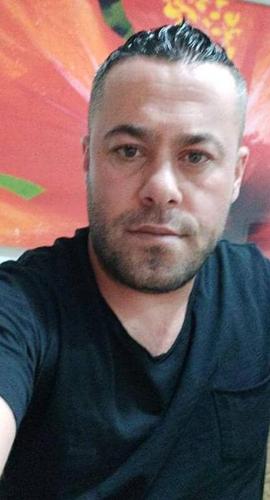
Kamel Maklad is pictured in 2023, sometime before he crossed the U.S.-Mexico border into Arizona, according to his sister, who shared the photo with the Star.
“Why didn’t they (DHS) appeal the judge’s decision?” he said in Spanish. “I presented myself seven times before the judge, and they never said that. ... I don’t know what to say. They’re accusing me of something I would never do. ... I don’t even have a traffic ticket.”
Bertha Zuniga, the attorney who helped Maklad win withholding of removal last year, also affirmed that DHS didn’t previously allege terrorist activity.
“If there had been any allegation of suspected terrorist, the Judge would have NOT granted him withholding of removal,” she said in a Thursday email.
Tucson resident Cecilia Valenzuela is a long-time member of a volunteer group that regularly visits detained immigrants at Eloy. She began visiting with Maklad in December 2024. The previous Eloy warden, who was supportive of the program, once told the group that suicide attempts were basically nonexistent for the detainees they visited, she said.
“It’s a ministry of presence,” she said, accompanying detained immigrants to “mitigate their isolation, to give them some services, friendship, listening.”
But Valenzuela told the Star she’s become worried about Maklad.
“The lack of justice, the lack of response, the fact that he’s being treated like a criminal when he has never committed any crime, is eating him alive inside,” she said. “Before, he could withstand it, but now his emotional state is deteriorating rapidly.”
Third-country removals challenged
Maklad was ineligible for asylum due to the Biden-era “Circumvention of Lawful Pathways” rule which largely denied the protection to asylum seekers who didn’t use the CBP One scheduling app to enter the U.S.
Advocates say the rule resulted in more asylum seekers with only “withholding of removal,” leaving them vulnerable to removal to a third country.
Under previous administrations, third-country removals happened rarely and with consideration of individual circumstances, said Dara Lind, senior fellow with the American Immigration Council. But the Trump administration has directed DHS to carry out third-country removals within as little as 24 hours, violating due process law, the Washington Post reported.
Under Trump, “they see third-country removals as a systemic solution,” Lind said. “There is this broader context of this administration being really aggressive, both in trying to get people (removed) to wherever they can, and in pressuring other countries to accept more people.”
During an April cabinet meeting, Secretary of State Marco Rubio said the U.S. is “actively searching” for more third countries to accept deportees.
“We are working with other countries to say, we want to send you some of the most despicable human beings to your countries,” Rubio said. “Will you do that as a favor to us, and the further away from America, the better, so they can’t come back across the border.”
DHS’s chaotic attempts to remove noncitizens to often-unstable third countries have raised critical due process and human rights concerns, said Hughes of Human Rights First. The nonprofit is leading a legal challenge against DHS’s practice of third-country removals without first providing noncitizens with notice and an opportunity to contest removal, due to a fear of persecution, torture, and even death in the third country.
The lawsuit also challenges a February directive instructing DHS to review cases of noncitizens already released from detention, including those who complied with the terms of their release for years, for re-detention and removal to a third country.
The U.S. has not announced any third-country removal agreement with Venezuela, with whom relations are hostile, Hughes said, but theoretically the country could still agree to accept non-Venezuelan deportees from the U.S. on an individual basis.
That does not appear to have happened in Maklad’s case, as he reported arriving without any travel documents or visa.
The Star was unable to reach Venezuela’s migration agency, SAIME, whose listed email address wasn’t operational, to inquire about Maklad’s arrival there. The Venezuelan delegation to the United Nations did not respond to the Star’s calls or emails last week.
Part of an authoritarian government, Venezuela’s immigration agency doesn’t share reliable information, and researchers rely on reports from the news media to keep tabs on deportations there, said Laura Dib, director for Venezuela at the Washington Office on Latin America, a research and advocacy group promoting human rights.
‘Just want to leave here’
Campos said he’s concerned DHS could deport Maklad to an unsafe third country where he could be in danger, or at risk of being sent back to Syria, despite the judge’s granting of withholding of removal there.
He also worries about the potential for retaliation against Maklad: As it did with pro-Palestinian activist and green card holder Mahmoud Khalil, DHS could transfer Maklad to a remote immigration detention center, such as one in Louisiana, disconnecting him from his legal counsel, Campos said.
Advocates say Maklad’s case in some ways echoes that of Kilmar Abrego Garcia, whom the U.S. wrongly deported to a notorious prison in his home country of El Salvador, despite a judge having awarded him withholding of removal there in 2019. DHS later said the deportation was an “administrative error,” but has continued trying to deport him. Uganda, Eswatini and Ghana have all refused.
A former DOJ lawyer says he lost his job for refusing to repeat unsubstantiated allegations about Abrego Garcia in court.
The lawyer, Erez Reuveni, recently told “60 Minutes” that in April, his superiors ordered him to argue against Abrego Garcia’s return from El Salvador by telling a judge that Abrego Garcia was a MS-13 gang member and a terrorist, despite a lack of evidence supporting the claims.
“That is not factually correct. ... That is a lie and I cannot sign my name to that brief,” Reuveni recalled telling superiors. He was fired by the DOJ soon afterwards.
On Friday, the Trump administration said Libera has agreed to accept Abrego Garcia and he could be deported to the African country as soon as Oct. 31.
Stuck in Eloy, Maklad, meanwhile, said he fears for his sister, Shorouq, and his mother, who are still in Syria, “living in war.” Two months ago, their homes and cars were burned, and family members and friends were killed, amid political instability since the fall of former president Bashar al-Assad’s totalitarian regime last year.
Shorouq confirmed those details to the Star, and shared photos of Maklad, in messages sent through WhatsApp.
More than anything, the indefinite nature of his detention is unbearable, Maklad said. At this point, he said he’d rather be jailed, or dead, in Syria because at least he’d be where his family is.
“I can’t take it anymore. I can’t go on,” he said on a video call. “I want them to do something with me, for better or worse. I just want to leave here.”

