


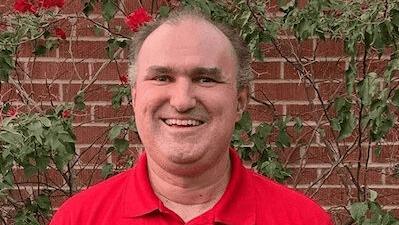


A former University of Arizona graduate student who shot and killed a professor on campus in October 2022 was sentenced Monday to a life in prison.
Murad Dervish, 48, showed little emotion at his sentencing before Pima County Superior Court Judge Howard Fell. Handcuffed and dressed in a bright orange jail uniform, Dervish broke his silence and said Monday that he did what he could to avoid the shooting.
On May 21, it took jurors about two hours to convict Dervish of first degree murder and other charges in the on-campus killing of Thomas Meixner, 52, a UA professor who was the head of the school’s Department of Hydrology and Atmospheric Sciences.
In addition to the natural life sentence, Dervish was sentenced to an additional 14 years in prison for aggravated assault, burglary, possession of a deadly weapon by a prohibited possessor and endangerment, according to the Pima County Attorney’s Office.
“With the jury’s guilty verdict, justice was finally accomplished,” said Margaret Meixner, his one of the professor’s three sisters who made victim statements at Monday’s sentencing hearing. Meixner’s widow, Kathleen, son Sean, and Celina Ramirez, the UA’s vice president of initiatives and policy also gave statements in court.
Dervish, who had been banned from the UA campus, was armed with a Ruger 9mm handgun when he walked into the John Harshbarger building on Oct. 5, 2022. He waited until classes ended and then confronted Meixner in a hallway. He chased and fired 11 shots at Meixner, according to testimony in the trial that lasted through much of May.
In the days leading up to the attack, Dervish had been living in his van, prosecutors said at trial as they argued the attack was premeditated. Defense lawyers sought a “guilty except insane” verdict, arguing that Dervish was so severely mentally ill at the time of the shooting that he did not know what he was doing.
At the trial, Dervish’s mother, Patricia Grace, testified that her son once pulled a knife on a babysitter as a child.
Grace testified that Dervish called and left a voicemail on her phone after the shooting, admitting to having killed Meixner.
“Mom? I gotta talk to you. I shot that guy. I hope he’s dead. I guess I have to kill myself now. All right,” Grace said, recalling the voicemail.
Dervish fled after the shooting. He was arrested hours later by Arizona state troopers who stopped his car near Gila Bend, about 120 miles northwest of Tucson.
In his closing arguments, Leo Masursky, the defense attorney, summarized the myriad mental health issues which had been cited throughout the trial in reference to Dervish — psychosis, autism with schizoid features, clinical depression. He told jurors Dervish wasn’t in the right state of mind the day of the fatal shooting.
“On a daily basis, you’re living a nightmare and thinking, ‘How is this even possible?’ ” said Kathleen Meixner in her victim statement, who was wearing a t-shirt from the UA department her late husband oversaw to honor his memory.
“When I learned that his last words were, ‘I knew you were gonna do this,’ I was destroyed,” she said at the hearing. “I tried to distract myself from the pain by keeping busy, but I (encounter) moments of recognition of the void, the profound lack of his presence, and I feel so nauseous. We miss him tremendously.”
Meixner’s elder son, Sean Meixner, said that unlike his father, who would not have wanted Dervish to be sentenced to death because he opposed it, he’d advocate for it was an option.
“I hate him with every atom in my body,” he said.
“My world has not and will never be the same since October,” said Sean Meixner. “I’ve learned that there is a significant difference between wanting to live and simply not wanting to die. Often, I feel as though I’m waiting to die just so I can hold my father again and be free of the agony of living in his absence.”
The hearing came to an end with Dervish, who did not testify at his trial, making a statement just prior to the sentence being delivered.
Dervish said he was upset the shooting had been called a murder on the evening news by Meixner’s family attorneys before the trial started. “There’s no murder until a trial takes place,” Dervish said Monday.
Judge Fell remained stoic as he listened to Dervish. People in the courtroom, filled with Meixner’s loved ones, friends and the UA community, shook their heads as Dervish spoke.

