



After the week we just had, some of us could really use a drink.
Apparently, the residents of territorial Tucson were no different.
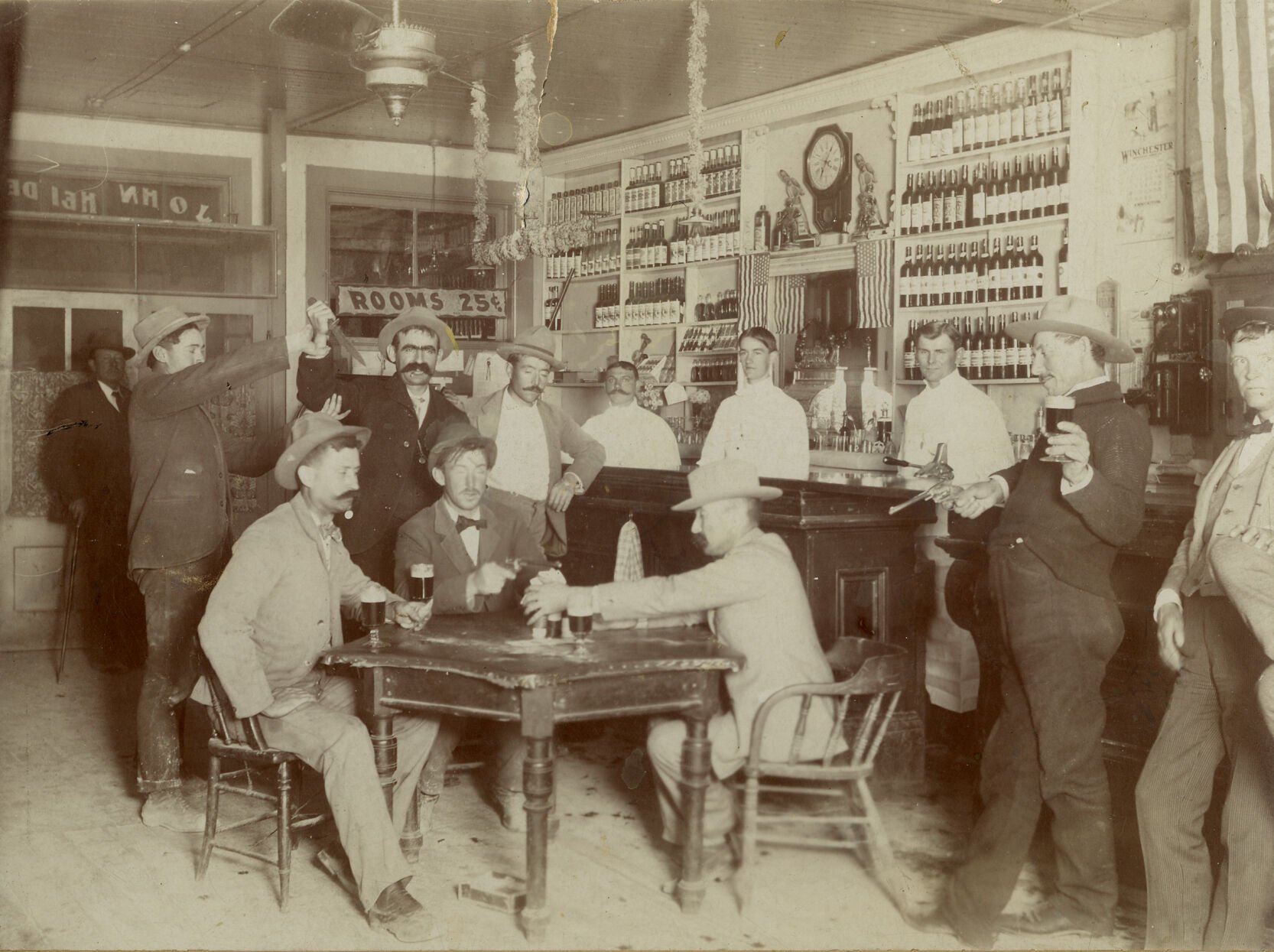
Well over 200 saloons came and went in the Old Pueblo during the half-century leading up to statehood in 1912 and statewide prohibition in 1915, according to a new book on the subject.
At the peak of the early booze business, sometime around 1890, Tucson was home to more than 30 drinking establishments, serving a population of fewer than 8,000 residents.
“The reason there were so many bars in Tucson is there weren’t a lot of things to do for single men,” said Homer Thiel, a historical archaeologist with the Tucson-based consulting firm Desert Archaeology.
Thiel has just authored a comprehensive history of local watering holes during the late 19th and early 20th centuries. “Territorial Saloons of Tucson” spans the period from March 1856, when the Mexican military withdrew from post-Gadsden Purchase Arizona, to Jan. 1, 1915, the start of the state’s 18-year ban on alcohol.

Historical archaeologist Homer Thiel leans on the bar next to a late-19th-century liquor bottle at Hotel Congress in Tucson on Thursday. Thiel just published a comprehensive history of territorial saloons in Tucson between 1856 and 1915.
Thiel uses census records, newspaper accounts and other source material from that time to chronicle 247 different saloons.
He said none of those businesses survived Prohibition, and the buildings that once housed them are long gone, too — lost to newer construction and urban renewal in what is now downtown Tucson.
Digging for clues
The idea for the book sprang from a 2005 archaeological dig Thiel took part in at the site of the Cactus Saloon, which operated from 1884 to 1910 across Toole Avenue from the Southern Pacific Railroad depot.
The city of Tucson hired Desert Archaeology to excavate the property before an underground parking garage was built there. But it wasn’t exactly glamorous work. Nearly all of the historic clues Thiel and company found were unearthed from outhouse pits where the saloon and its customers used to dump their trash more than a century ago.
Artifacts included various alcoholic beverage bottles, shot glasses, beer steins, fragments of an embossed Anheuser-Busch mirror and pieces of window glass with hand-painted lettering that once spelled words like “food” and “saloon.”
Based on maker’s marks and the types of glass used, most of the items tossed in the trash pits dated to between the 1880s and early 1900s.
Thiel said the Cactus Saloon was one of several watering holes and other businesses positioned near the tracks to take advantage of the arrival of the railroad in 1880. People passing through town could get off the train to get a meal, a haircut or a drink before returning to the station.
Old photos of the Cactus show a jaguar pelt draped over a picture hanging above the bar. Apparently, customers could also have their shoes shined there, Thiel said, “because we found lots of shoe-shine bottles.”

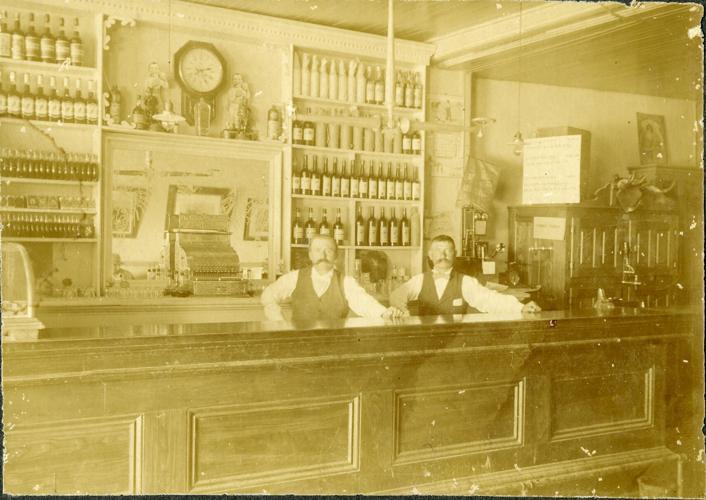
Bartenders pose for a photo, circa 1900, at the Cactus Saloon, which operated until 1910 across Toole Avenue from the Southern Pacific Railroad depot in Tucson.
To help inform the archaeological dig, he poured over microfilm of old Tucson newspapers to learn more about the Cactus Saloon and other establishments from territorial times.
He started to expand on that research years later during the COVID-19 pandemic, when he was stuck at home and looking for something to do. “You can only put together so many puzzles,” Thiel said.
Boom and backlash
The resulting book features a detailed look at what saloons of the era looked like and a short history of alcohol consumption in Tucson, from O’odham ceremonial wine made with the fermented syrup of saguaro fruit to the sacramental wine kept by Catholic priests and the bottles of liquor hoarded by soldiers at the Presidio.
The book also includes biographies of 74 saloon proprietors and employees whose stories Thiel was able to piece together from public records, newspaper archives and at least one surviving diary.
The 1860 federal census counted just two brewers and no saloonkeepers or bartenders in Tucson. The first evidence Thiel can find of a saloon operating here comes in the form of an 1865 ledger from proprietor Solomon Warner, who reported charging 25 cents for a drink or a cigar, 50 cents for a game of billiards, and between $3 and $6 for a bottle of liquor or champagne.
By 1869, a few other Tucson saloons had begun to advertise in The Weekly Arizonian newspaper.
Any type of alcohol that wasn’t made here had to be brought in on freight wagons until 1880, when the arrival of the railroad made life far easier for saloon operators.
City directory listings from 1883 show 54 Tucsonans employed at saloons or in other liquor industry jobs. According to Thiel, that number increased to 66 in 1897 and topped out at 164 in 1899.
As the bar business grew more competitive, establishments sought to lure in customers by offering free food with the purchase of a beer or other drink. At Thanksgiving, some places would give away a whole dinner with all the fixings in hopes of selling more drinks, Thiel said.
Meanwhile, a backlash was building. Starting in the late 1870s, some civic leaders began trying to rein in Tucson’s saloon culture and tame the community’s rough-and-tumble image. New ordinances were gradually enacted restricting hours of operation, barring loitering and alcohol consumption by children under the age of 16 and outlawing gambling and prostitution at drinking establishments. Saloons were even prohibited from staging musical performances featuring women.
Eventually, under the guise of widening Congress Street, the city razed the bars and brothels in an area known as the Wedge, at the present-day location of Veinte de Agosto Park, home of Tucson’s infamous Pancho Villa statue.
But enforcement of the new rules proved to be disturbingly selective at times, Thiel said. In the early 1900s, for example, authorities conducted frequent raids at the Arcade Social Club, an unlicensed drinking establishment that was for a time the only club in Tucson catering almost exclusively to Black people.
End of an era
The growing temperance movement in the young state of Arizona ultimately led to a 1914 ballot question aimed at prohibiting alcohol statewide. Though Pima County voters soundly rejected the measure, it passed anyway thanks to heavy support in — you guessed it — Maricopa County.
Several local saloons marked their final hours in a “wet” jurisdiction with elaborate farewell parties on Dec. 31, 1914. According to a report in the Tucson Citizen, a restaurant and bar called Rossi’s at the corner of Congress and Stone Avenue brought in cabaret dancers from San Francisco to perform while the patrons drank the place dry.
That was the last day alcohol could be legally sold in Arizona, so that’s where Thiel’s historical pub crawl ends.

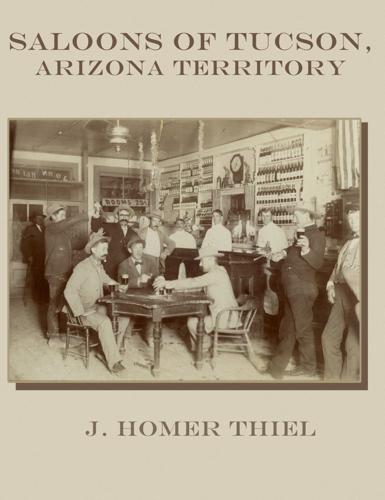
The cover of Homer Thiel’s new book on the Old Pueblo’s old saloons.
But as extensive as his 374-page volume is, he said dozens of territorial-era drinking establishments did not make it into the book — places largely lost to history because they were overlooked in their own time by the community’s English-language newspapers of the day.
“I am really interested in the Mexican-owned bars,” Thiel said, but there doesn’t seem to be much surviving documentation of them.
Some evidence suggests there might have been just as many cantinas operating in Barrio Libre as there were white-owned saloons elsewhere in Tucson. All Thiel could find, though, were brief references to such businesses in a few surviving Spanish-language newspaper clippings.
“This is as much as I could possibly do,” he said.
Tucson Landmarks: Hotel Congress, 311 E. Congress St., opened in 1919 as a luxurious mainstay for visitors arriving in the Old Pueblo.
The downtown landmark has kept much of its history alive in the past century, while also bringing modern amenities to Tucson natives and tourists.
Video by Riley Brown / For the Arizona Daily Star

