


Thanksgiving is a lousy time to be a turkey, with one notable local exception.
The sky island mountain ranges of Arizona are home to a subspecies of wild turkey that actually has a lot to be thankful for.
A century ago, the Gould’s turkey had been hunted to near extinction at the northern fringes of its native range in southeastern Arizona and southwestern New Mexico. But the birds have staged a major comeback, thanks to a reintroduction campaign by wildlife officials and big-game conservationists that began more than 40 years ago with wild turkeys imported from Mexico.
“They were darn near gone, and we’ve brought them back across most of their range,” said Kirby Bristow, a regional terrestrial wildlife program manager for the Arizona Game and Fish Department in Tucson.
“It’s one of the coolest success stories,” added Jim Heffelfinger, wildlife science coordinator for the department.
And who better to talk turkey with than these two guys?
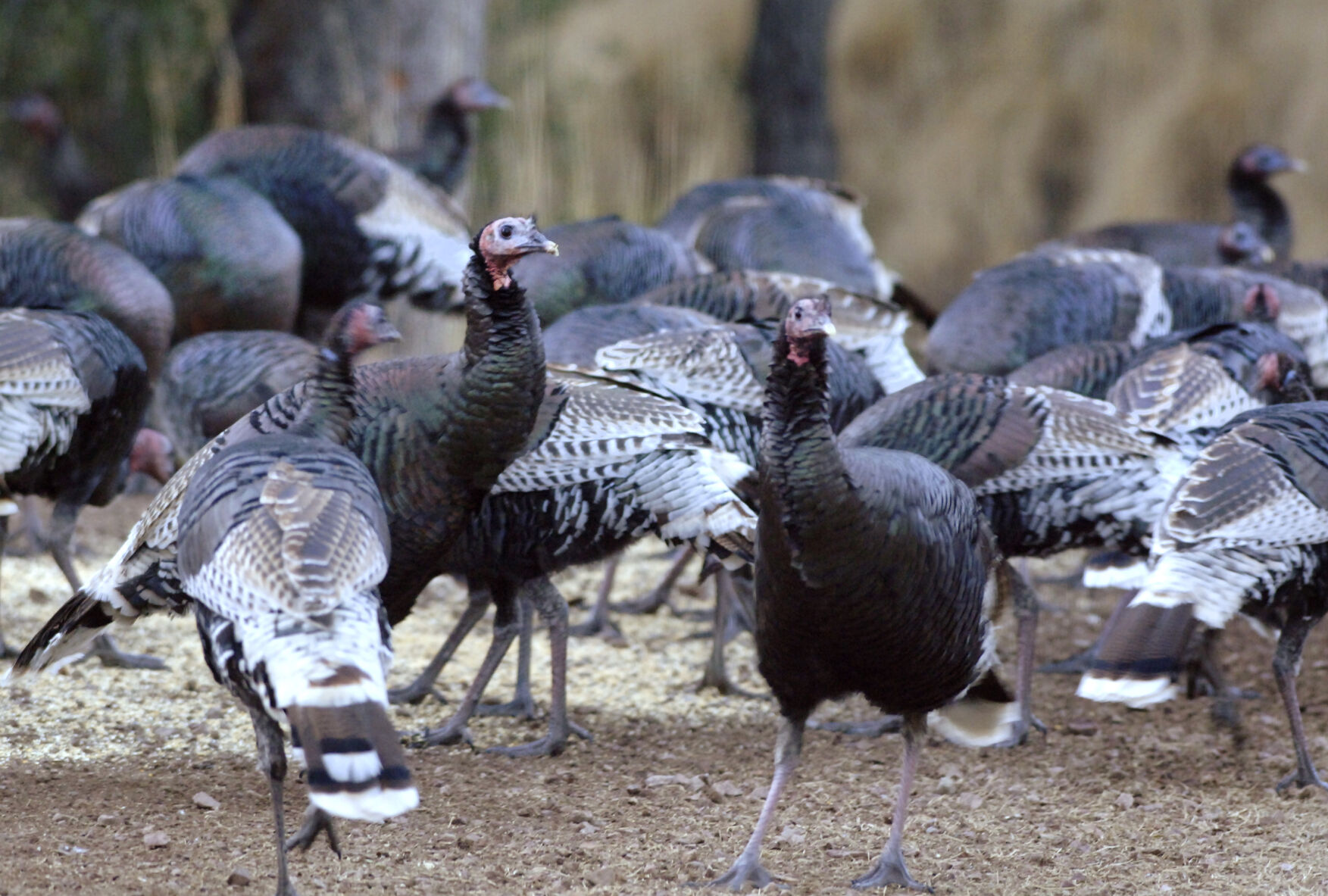
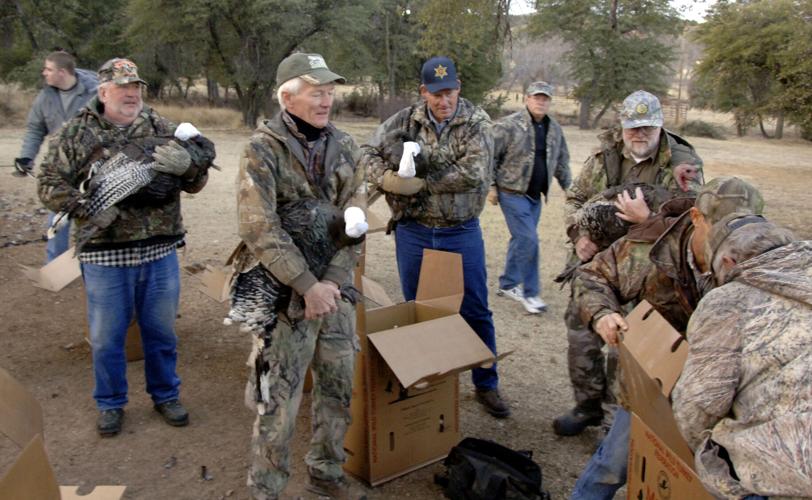
Gould’s turkeys are baited with corn before being captured and relocated by the Arizona Game and Fish Department in 2009. Over the past 30 years, the subspecies of wild turkey has been successfully reintroduced to sky island mountain ranges across Southern Arizona.
Heffelfinger and Bristow have been with Game and Fish for a combined 63 years (Heffelfinger for 32 years, Bristow for 31), and both of them have taken part in numerous turkey translocations.
That includes the early days of the effort, when the only sure place to get more Gould’s was from their core habitat in the Sierra Madre Occidental, some 250 miles south of the border.
“Way back when, I was helping trap turkeys and bring them up from Mexico,” Bristow said.
Poultry passage
During one of the first such trips in January 1994, state wildlife officials received advanced clearance to bring the wild birds into the U.S. without the usual 30-day quarantine period that had proven to be hard on turkeys — even fatal — in the past.
But a last-minute bureaucratic snag kept the truckload of feathered migrants and their human handlers from quickly crossing back into the U.S. as planned.
“I was stuck at the border with those turkeys all day,” Heffelfinger recalled. “We had kids on the Mexican side coming up to us and asking if they could buy the turkeys from us.”

Wild turkeys, some of them with tube socks over their heads to keep them calm, are gathered to be relocated by the Arizona Game and Fish Department in 2009.
Those 21 birds were eventually set free in the Galiuros, the first of four releases over eight years in the remote mountain range northeast of the Santa Catalinas in Graham and Pinal counties.
The reintroduction effort was expanded in 2003, thanks to a partnership among wildlife and agriculture authorities in the U.S. and Mexico and the South Carolina-based National Wild Turkey Foundation, a self-described “hunting heritage” nonprofit dedicated to turkey conservation.
Under what came to be known as the “Go for the Gould’s” project, the once-native turkeys were set free in another half-dozen mountain ranges from the Chiricahuas to the Catalinas.
“The populations have really done well since then,” Bristow said.
Gould’s can now be found in at least nine Southern Arizona ranges, including three of the four that ring the Old Pueblo (sorry, Tucson Mountains).
If you’ve been to Madera Canyon in the Santa Rita Mountains or Ramsey Canyon in the Huachuca Mountains lately, chances are you have seen a turkey.

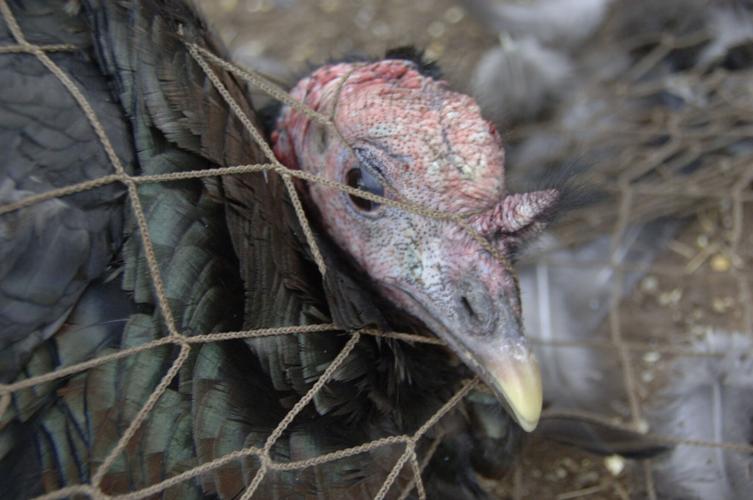
A Gould’s turkey is caught in a net during a 2009 relocation operation by the Arizona Game and Fish Department.
The distinctive birds also venture in from the wild from time to time, turning up in such places as an RV park in Vail, the campus at Biosphere 2 and in the backyards of homes in the Catalina Foothills.
Made in Mexico
The Gould’s is the largest of six subspecies of wild turkey, with bigger feet, taller legs and longer central tail feathers than their other North American cousins.
Famed English ornithologist John Gould first described the bird for science after collecting a specimen in Mexico in 1856.
Historically, the turkeys have been found from the high country of northern Mexico, where they are abundant, to the isolated mountain ranges along the U.S. side of the border.
The number of places named after the birds speaks to how prevalent they once were in Southern Arizona. “There’s a turkey creek in just about every mountain range,” Bristow said.

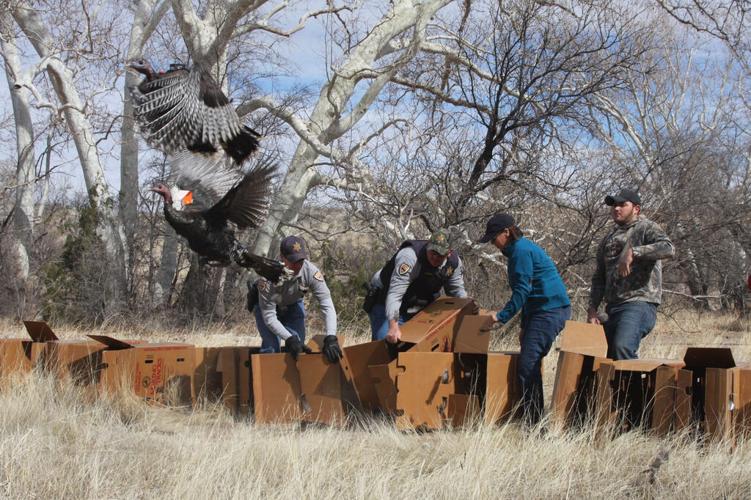
Two Gould’s turkeys are set free in the Rincon Mountains in 2012 as part of the Arizona Game and Fish Department’s first-ever release of the birds into the range east of Tucson.
In the 1950s, state wildlife officials launched an aggressive program aimed at restocking the sky islands with turkeys, but they chose Arizona’s other native subspecies, the Merriam’s turkey. Those birds, from the cooler, wetter Ponderosa pine forests of northern Arizona, gradually died out in the drier mountains at the southern end of the state, Bristow said.
The first Gould’s transplant in the U.S. occurred in 1983, when nine birds from Mexico were released into the mountains at Fort Huachuca, the Army base in Sierra Vista, 75 miles southeast of Tucson.
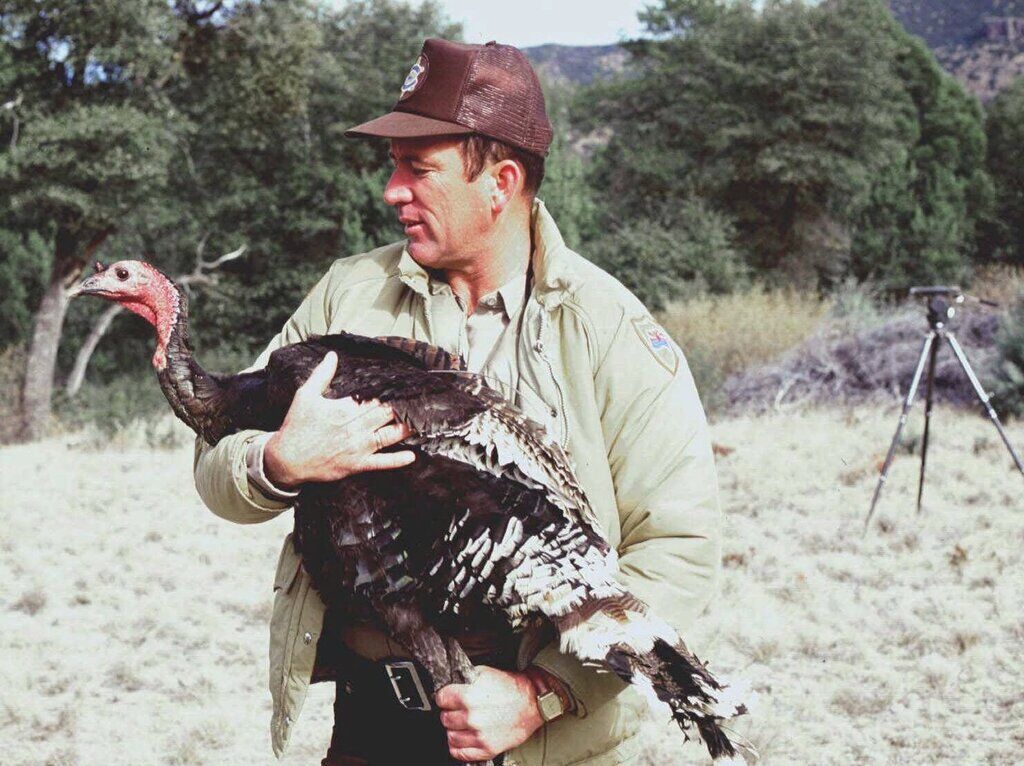
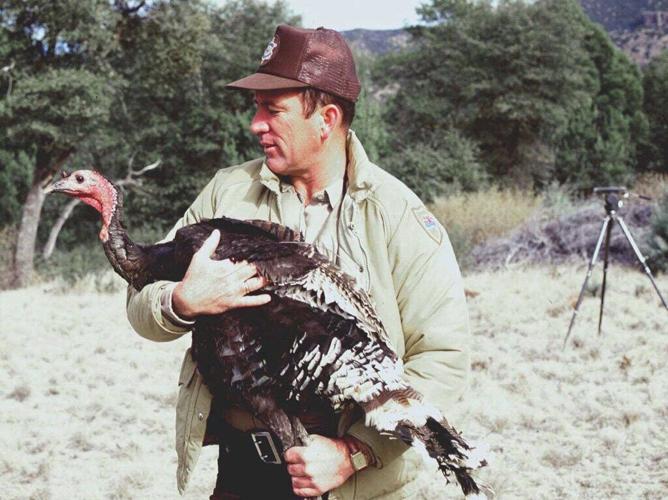
Gerry Perry with the Arizona Game and Fish Department prepares to release a Gould’s turkey captured in Mexico into a Southern Arizona mountain range in 1994.
A dozen more imported turkeys were added to the flock there in 1987, and there have been Gould’s in the Huachuca Mountains ever since.
The birds have done so well there that they have become the primary source population for establishing new flocks in other mountain ranges, reducing the need to bring in birds of Mexico.
Heffelfinger said the department has also gotten surplus turkeys for the reintroduction program from the Chiricahua Mountains and a few other spots in Southern Arizona over the years, including the home of a woman in the Patagonia Mountains who grew tired of having the birds hanging around all the time.
“We trapped a lot of birds out of her front yard,” he said.
Catch and release
Those captures generally went something like this: First the turkeys would be lured into the open with “a pile of corn” so they could be caught all at once beneath a startlingly loud, rocket-propelled net, Heffelfinger said.
Then, before the smoke had even cleared, a team of Game and Fish staff members and volunteers would rush over to secure the netted birds before they could get away.
The trick to subduing a 15-20-pound wild turkey is to put a plain white tube sock over its head, Heffelfinger said. “It looks pretty funny, but it calms them down.”
After that, each captive would be marked with a numbered wing tag and undergo a blood draw for genetic testing. Some of them were also fitted with tracking devices.
The turkeys were then loaded into individual cardboard boxes, stacked in the back of a truck or a horse trailer and hauled to their new home.
Once at the release site, Heffelfinger said, the boxes would be lined up in a row and opened all at once, so the birds could fly off together in search of food, water and a suitable place to roost.
“They’re pretty resilient,” he said.
More than 725 Gould’s turkeys have been released across Southern Arizona over the past 40 years. Today they can be found in just about every Southern Arizona mountain range with the habitat to support them, Bristow said.
In a few cases, the birds expanded into new territory on their own. “We’ve got turkeys in the Whetstone Mountains that we didn’t move there,” he said.
The only wildlife restoration effort in Arizona that rivals the turkey’s success is the reintroduction of desert bighorn sheep.
“One of the most rewarding things you can do as a wildlife biologist is returning a species to a place where it used to live,” Heffelfinger said.
Hunted again
There are probably somewhere between 600 and 1,000 Gould’s turkeys currently living in Arizona, though Bristow called that “a very crude estimate.” As you can imagine, the birds are extremely difficult to count in the wild.
By day, the turkeys forage through fields and forest floors for acorns, pine nuts and other seeds, as well as forbs and insects. By night, they roost in tall trees to avoid predators.
Bristow said Gould’s tend to winter together in large flocks and then break up into smaller groups in the spring, as the toms begin to gobble and strut in search of mates.
There are now enough Gould’s turkeys in Southern Arizona to allow for limited hunting of the birds.
Bristow said the tags are “highly sought after” because so few are offered each year, and it’s the only place in the U.S. where Gould’s turkeys can be found, let alone hunted. A hunter might wait years for his or her only chance to bag one of the birds.
Game and Fish issued just 60 tags for this year’s hunt, which took place over about three weeks in May and was restricted to male birds only, to preserve the overall population.
It might seem counterintuitive to allow the killing of animals you just spent decades reintroducing to the region, but Heffelfinger said wildlife agencies rely on hunting not only to manage populations but to help pay for projects like this one.
“The passion from hunters really drives a lot of money for conservation,” he said.
No additional Gould’s turkey releases are currently planned in Southern Arizona. Bristow said one of the only spots left where it might make sense to put them someday is in the Pajarito Mountains, along the U.S.-Mexico border west of Nogales, assuming the birds aren’t already there.
“(Reintroduction) may be unnecessary at this point,” he said. “The turkeys may have beaten us to it.”




