




Jaws dropped around Tucson when the announcement came out Tuesday afternoon: Tucson Electric Power is seeking a 14% rate increase.
The surprise didn’t just come from the big number, though that was a punch in the gut, coming from a company that won a 10% increase just two years ago.
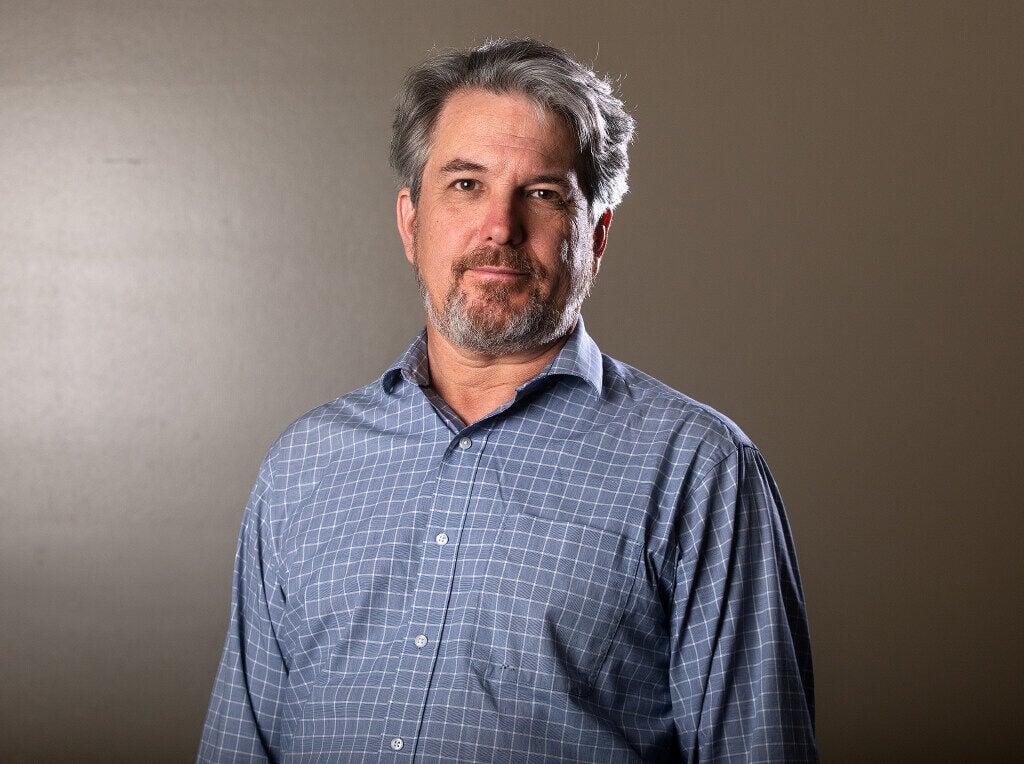
Arizona Daily Star columnist Tim Steller
It was also the timing: The Pima County Board of Supervisors had hours before voted 3-2 to approve a plan for a huge data-center complex that could potentially become TEP’s biggest single customer.
The timing gave the impression that the utility waited for the win from the Pima County Board of Supervisors to happen before dropping bad news that could have potentially influenced the board’s vote. TEP says the timing was a coincidence, essentially the result of the left hand not knowing what the right hand was doing.
It almost doesn’t matter. Tucson’s electric utility has been under heavy scrutiny in town lately, especially from people wanting the city of Tucson to form its own public electric utility or in other ways break away from TEP’s monopoly hold. The way the week played out, the utility seemed to be snatching defeat from the jaws of victory, undermining the declining faith of officeholders and customers.
A supervisor who had voted for the data-center sale and plan, Matt Heinz, immediately asked for a reconsideration when he heard of the proposed rate increase. Then, in a separate meeting, Tucson’s mayor and City Council members lambasted the utility for the lack of progress on negotiations with the city and for TEP having no one present at the city’s meeting.

Tucson Electric Power’s request for a 14% rate increase stunned Tucsonans last week due to its size and its timing.
“They called us today to tell us they had other important things to do,” Mayor Regina Romero said. “I’m not going to tolerate this type of attitude from someone pretending to be a good partner to our community and to this mayor and council.”
“I’m not sure if TEP can (afford to) spend the little goodwill they have from this community or this mayor and council.”
‘Timing was coincidental’
Tucson Electric Power realized they had a problem and sent out a press release Wednesday as well as a letter to Pima County Administrator Jan Lesher. In both communications, the company emphasized that the requested rate increase is justified by past company expenses, not by any future ones related to the Project Blue data center complex.
“We regret that the timing of our rate application and the press release announcing it created concern,” CEO Susan Gray said in the letter to Lesher. “The timing was coincidental. I can assure you that Project Blue in no way influenced our decision to request new rates.”
But that isn’t what made my jaw drop when I saw the news. I thought they waited until after the positive vote on Project Blue to deliver negative news that could potentially have influenced the supervisors’ decision.
Again, the company says it was all just a coincidence, that they didn’t intentionally wait till after the vote. In fact, Joe Salkowski, who is in charge of public affairs and communications at the company, was at a company meeting in Toronto with other communication officials when all this was going on.
TEP is owned by Fortis Inc., a utility conglomerate with operations in the United States and Canada, and based in St. John’s, Newfoundland and Labrador. So, Tuesday’s stumbles could have resulted in part from a scheduling conflict as communicators talked in Toronto.
‘Unfair and inaccurate’
Erik Bakken, TEP’s senior vice president and chief administrative officer, attended the Pima County Board of Supervisors meeting and answered some questions. He told the board that TEP has the capacity to accommodate this big new data center complex and, perhaps more importantly, it will benefit other users because its steady, heavy use of electricity will defray costs for others.
Many of the questions people want answers to — for example, how much power will this data center complex consume? — went unanswered, though, due to a confidentiality agreement.
No TEP representative was present at a Tucson City Council meeting Tuesday afternoon, something the utility attributed to not being asked. That deepened discontent that has already been brewing among the mayor and council members.
The council was scheduled to discuss a new franchise agreement for Tucson Electric Power as well as three other agreements under negotiation between the city and utility, including an energy collaboration agreement. They didn’t like the utility’s response.
“I feel especially aggravated, because I feel like TEP is dragging their feet,” Mayor Romero said. “Yes they’ve come to the table. I don’t think we have done any real work on an energy collaboration agreement. In my view, in my eyes, they have turned their backs on the energy collaboration agreement.”
Council member Kevin Dahl accused TEP of lying about how much renewable energy its customers use, an accusation the utility strongly disputes. He agreed with Council Member Paul Cunningham, who said the situation renews his interest in breaking away from TEP to form a public utility.
The strong comments seemed to catch the utility by surprise.
“They are unfair and inaccurate,” Salkowski told my colleague Tony Davis. “We have been fully engaged in active negotiations with city staff, and we have made significant progress toward potential agreements.”
Lack of information
A lack of information about Project Blue rightfully has motivated some of the recent criticism. It’s surprising to me that the board would vote to approve the development plan and land sale for the data center complex without knowing the details, such as how much water or electricity the project will use.
In the end, they relied on vague assurances from TEP and Tucson Water in approving the plan.
Dahl, the Tucson council member, told me he will not vote to annex the Project Blue site — a required move for the project to proceed — without knowing these details first. Other council members are likely to feel the same.
While frustration with progress in a variety of negotiations is causing serious friction with the city, perhaps the root of all the consternation is the constantly increasing cost of electricity. When you combine that with irritations that come along, such as the relatively slow conversion to renewables, people get angry.
TEP won rate increases of 6% in 2021 and 10% in 2023. Asking for 14% on top of that feels brazen, especially when you consider that TEP is a monopoly that is virtually guaranteed to make a nearly 10% profit for its shareholders, as long as the corporation commission plays along.
Losing credibility
None of this means Pima County will overturn its Tuesday decision to approve the land sale or development plan for Project Blue. Heinz told me Friday that he’s learned the board is not permitted to reconsider a contract such as the land sale, and reconsidering the development plan could theoretically expose the county to a lawsuit from the developers.
Of course, if they change course at the next meeting July 1, the developers can hardly ask for much in damages for suffering two weeks’ worth of disappointment.
Heinz said now he is “looking for a resolution asking TEP to reconsider this (rate increase), encouraging the Arizona Corporation Commission not to approve it or getting them before the board.”
None of this is a good sign for the company, though it can take solace from the fact that the current corporation commission looks favorably upon utilities’ requests, and the federal government, too, is in a friendly posture.
TEP won a key victory Tuesday but is losing what may be more valuable over the long run — credibility with the key government entities in the area it serves, and the faith of consumers that this monopoly utility really serves us best.

