


Imagine your employer telling you that you won’t be paid for two or three months.
“But don’t worry,” they say. “We’ll pay you in full after that.”
You check your savings account, your credit card balance, your line of credit to see how you can make it. You sigh and consider your options.
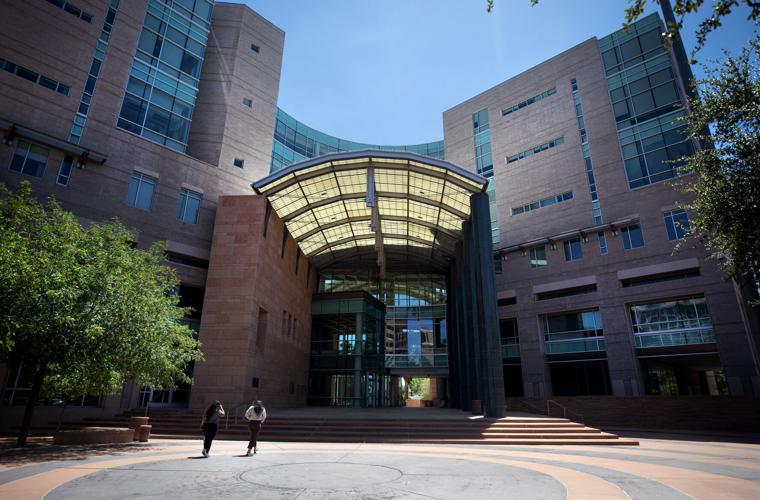
It’s the conundrum facing about 120 attorneys who are essential to justice being carried out at U.S. District Court in Tucson, and at federal courts all over the country.
The temporary spending bill Congress passed earlier this year didn’t increase funding for the services of attorneys appointed under the Criminal Justice Act. As a result, the funding is expected to run out by mid-July. After that, these attorneys can’t expect to be paid until the new federal fiscal year begins Oct. 1.
The “CJA panel,” as this list of attorneys is known, represents indigent defendants not represented by the Federal Public Defender’s office due to overcapacity, conflicts of interests, or other reasons. They’re always in demand in Tucson, taking on many of the border-related cases brought to the court.
Over the years, there has been so much demand for these attorneys’ services that some got most of their business this way, although many just take a case now and then.
To make matters harder for them, there happens to be a 2-3 week outage in the billing system happening right now. So attorneys will have a short window in late June and early July till the real shutdown in payments happens, due to federal funding being used up.
“You’re representing clients, you’re reporting your bills, you’re recording your time, and you’re waiting months and months and months to get paid,” said Corey Simon, who represents the 120 attorneys on the Criminal Justice Act list at Tucson’s federal court.
“It’s not simply an inconvenience,” Simon said. “We’re talking multiple months of not getting paid for legitimate hard legal work we’ll all doing.”
From 'flip flops' to murders
In Tucson’s court, you’ll find attorneys like Natalie Haywood cycling in and out of huge morning sessions every day, advising defendants who have crossed the border illegally, or brought someone across illegally, many taking a quick misdemeanor guilty plea offered by the government in deals known as “flip-flops.”
She and the other CJA attorneys see these clients one week in court. Then they go to prison for a visit, then they return the next week for the guilty plea, Haywood said. Deportation will usually happen after the sentence, 30 days in many cases, is served.
You’ll also find these attorneys representing defendants in long-awaited trials, as longtime local attorney Thomas Hartzell was on the sixth floor of U.S. District Court Tuesday. Hartzell has been working on the case for about a year and has received one interim payment, he said, but will be able to submit for additional payment when the case ends.
Simon said he has been assigned everything from simple illegal re-entry cases to bank fraud and murder conspiracy cases.
Haywood noted that the impending suspension of payments is coming at the same time pressure for deportations is building.
“They want mass deportations, but they can’t pay the lawyers who make those deportations legal,” she said. “You can’t demand efficiency and constitutionality on one hand and defund the people making that possible on the other.”
More plea bargains
Chief Judge Jennifer Zipps noted in a May letter to the attorneys that they play an “essential” role and assured them they will get paid.
“There is no precedent for the Court failing to pay attorneys or their retained experts for work performed at the behest of the Court due to a budget shortfall. The law requires payment of these services,” she wrote.
But the practice was already becoming less lucrative under the Trump administration for some attorneys. Whereas in the past, significant felony cases came in daily, now many of the lesser felony cases are pled out quickly as misdemeanors to move the process faster.
“We’d get a couple of felonies a day,” Haywood recalled. “Lots of drug smuggling, alien smuggling. (Now) those are pretty few and far between.”
For someone like Haywood, a sole practitioner, it’s already a grind. She has two children. She has an employee. She already got a contract with Pima County Justice Court as a backup.
“I have a legal assistant I have to pay. I have bills. I have my own house bills,” she said. “It’s such a financial burden on many of us.”
She added, “But more importantly it’s a direct threat to the criminal justice system.”
Delays in payment could lead to less willingness to take cases, to delays in cases, and to expert witnesses being unwilling to get involved.
Of course, Haywood said, “we love what we do.” Another CJA panel attorney, Sam Washington, noted he tries to keep 3-4 months of income on hand in case of interruptions like government shutdowns.
Leaving the big second-floor courtroom filled with orange-suited prisoners, he said, “I’d be doing this even if I wasn’t going to get paid.”

