



Disclaimers dot the nine pages of HB 2867, denying its likely impacts.
“This section does not diminish or infringe on any right protected under the Constitution of Arizona or the First Amendment to the Constitution of the United States,” one such phrase says.
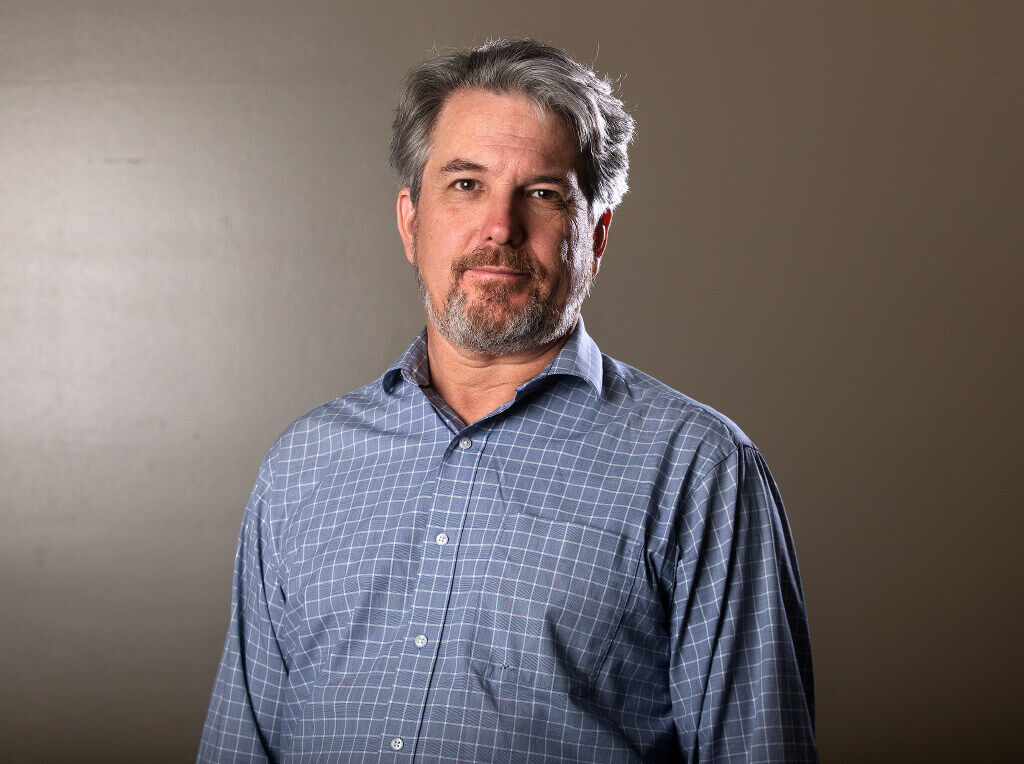
Arizona Daily Star columnist Tim Steller
Of course, you can tell that’s not true. If someone repeatedly declares they’re not infringing on your First Amendment rights, they probably are.
These disclaimers appear in a bill passed by the Legislature Wednesday that Gov. Katie Hobbs must decide whether to sign or veto by Tuesday. HB 2867 was sold as a bill to combat antisemitism in schools and universities by setting up a system to discipline school teachers or university faculty who engage in it.
It even establishes a right to sue teachers personally over such allegations, meaning these modestly paid people could lose their homes over it.
While the sponsors and the language of the bill describe it as being about antisemitism, it’s fundamentally about Israel. It amounts to another effort to curb criticism of Israel by labeling it “antisemitism.”
Just consider the example that Rep. Alma Hernandez, a Tucson Democrat who co-sponsored the bill, reached for when defending the bill on the House floor Wednesday. She said that someone put up a Palestinian flag in the window of a Tucson Unified School District classroom across the street from her home.
“That flag is not the flag of a country,” Hernandez said. “It is a political statement, which should not be allowed in our public schools.”

Arizona Governor Katie Hobbs
“I would love to know what was being taught in the classroom.”
She did not allege that any students were harassed, that antisemitism occurred in the classroom, or that a hostile environment resulted. The assumption was that if a Palestinian flag were posted, antisemitism occurred.
Even the Tucson Jewish Museum and Holocaust Center signed off on a letter, along with a dozen other organizations, asking the governor to veto the bill.
“It claims to protect Jewish students, but it’s actually risking weakening one of the most powerful tools we have to combat antisemitism, which is Holocaust education,” said the museum’s director, Lori Shepherd, in an interview Friday. “For this bill, the language of what is antisemitism is vague, and the other side is so punitive, that it really risks teachers saying ‘I’m not going to teach the Holocaust.’ “
‘Antisemitism’ ill-defined
One of the bill’s key dangers is that it relies on the International Holocaust Remembrance Alliance definition of antisemitism, which includes ambiguities and speech-suppressing protections for Israel. In fact, seven of the 11 examples IHRA uses to explain its definition involve the state of Israel.
One of the examples of antisemitism in their definition is: “Denying the Jewish people their right to self-determination, e.g., by claiming that the existence of a State of Israel is a racist endeavor.”
Now, remember that this bill applies not just to K-12 schools but to the state’s universities. No rigorous university should be banned from discussing the existence of, or racism in, Israel or any other state, including the United States. These are grown-up topics.
But university classes discussing, for example, the reports by Human Rights Watch and Amnesty International that conclude Israel is an apartheid state would likely lead to lawsuits for antisemitism under this bill.
In October, a federal judge in Texas ruled that use of the IHRA definition in university speech codes violates the First Amendment. Even the lead drafter of this definition, Kenneth Stern, has decried how groups have used the definition to suppress free speech in the United States.
“I’m worried administrators will now have a strong motivation to suppress, or at least condemn, political speech for fear of litigation,” Stern wrote.
That was in 2019 — long before the Oct. 7, 2023, massacre by Hamas unleashed a new war in Gaza and new protests of Israel’s military actions. Since then, the pressure to narrow what is acceptable to say about Israel has only grown.
In December, Sen. John Kavanagh temporarily blocked the University of Arizona’s bonding requests because a museum on campus displayed a student painting bearing the slogan “From the river to the sea.” This year, Hernandez sponsored a bill, signed into law by Hobbs, that prohibits protest camps on Arizona’s university campuses.
Pres. Trump’s administration has also taken sweeping actions to defund universities, justifying it by saying they haven’t done enough to combat “antisemitism” in pro-Palestinian activities.
Alleged infiltration
The antisemitism bill Hobbs is considering was authored by a Republican representative from Queen Creek, Michael Way. He said during the first hearing on the bill, before the House education committee Feb. 18, that he was inspired by a constituent couple, Michael and Dr. Beverly Goldstein.
“Michael explained that he and his wife had been studying Islamic and antisemitic infiltration into American schools, both K-12 and higher education, and indoctrination of American students for many years,” Way said.
At the hearing, Goldstein traced this alleged infiltration back to the founding of the Muslim Brotherhood in 1928 and the establishment of a Muslim Student Association at the University of Illinois in 1963. The logic is conspiratorial and denies the possibility that protesting students are sincerely responding to present-day events.
The resulting bill bans a variety of activities by teachers and others at K-12 schools and universities, including:
- Teaching, instructing or training students in antisemitism or anti-Semitic conduct
- Requiring a student to advocate for an anti-Semitic point of view or to promote anti-Semitic conduct to receive credit for coursework or graduation
- Calling for genocide of any group or persons or for the murder of members of a particular group
This last prohibition would likely make any discussion of the slogan “From the river to the sea, Palestine will be free” subject to litigation. The meaning of the slogan is contested but ought to be open to discussion.
The bill also lays out steps for discipline and establishes a right to sue teachers personally if they engage in any of these activities. That is likely to squelch productive discussion of the Holocaust, Shepherd of the Holocaust Museum said.
“We want students to confront moral ambiguity,” she said. “We want students to want to go deep and understand how things like propaganda, nationalism, apathy — how did all those things coupled with fascism lead to genocide?”
“Those aren’t easy things to examine,” she went on. “Teachers need to be able to let students have conversations, that, if you take out of context, or use the IHRA definition, could lead someone to accuse them of antisemitism, when in fact they have the exact opposite goal.”
Ironically, it was Hernandez who authored the 2021 bill that requires education about the Holocaust and other genocides, twice between seventh grade and 12th grade.
The fundamental problem
There’s a more fundamental problem with this bill, the text of which insists so often that it does not violate First Amendment rights.
It does.
The First Amendment protects antisemitic speech. It protects racist speech. It protects sexist speech. It doesn’t protect all speech, but the exceptions are limited to a few areas, such as incitement of imminent crime or violence.
Existing rules at schools and universities prohibit harassment and discrimination, but they are also subject to constitutional review. It’s a good thing the exceptions are so limited, because inevitably, people try to fit speech they oppose into one of the First Amendment’s exceptions.
And that’s what I see in this bill, as well as the justifications of it by the bill’s supporters. It prohibits valid, productive and constitutionally protected discussions at schools and universities.
All that is good enough reason for the governor to veto this bill, but then subjecting teachers to lawsuits seals the case.

