


PHOENIX — It’s going to become a state crime for protesters, and others, to set up encampments at state universities, despite some concerns a new law is unnecessary.
Gov. Katie Hobbs penned her approval Wednesday to legislation that will require school administrators to order campers to “immediately dismantle the encampment and vacate the campus.” Violators will be subject to arrest on charges of trespass.
Gubernatorial press aide Christian Slater said the new law is necessary.
The Democratic governor’s signature came after bipartisan support — as well as bipartisan opposition — to the proposal by Rep. Alma Hernandez, D-Tucson.
Hernandez said she introduced the measure in the wake of pro-Palestinian protests last year, not just the ones that got national attention like at Columbia University but also what happened at the University of Arizona, Arizona State University and Northern Arizona University. She said Jewish students felt harassed and were forced to take alternate routes through campus.
All three Arizona incidents were broken up by police; tear gas and pepper balls were used on the Tucson campus.
But no one from either university or the Arizona Board of Regents, which oversees the state’s three public universities, signed in in favor of the legislation or testified that they supported or needed the change in law.

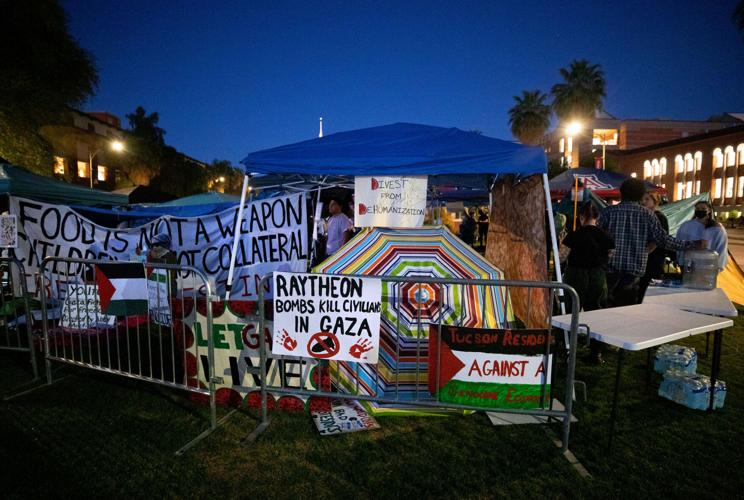
Gov. Katie Hobbs has signed legislation that requires administrators at Arizona universities and colleges to order protestors who set up camps on campus, like this one at the University of Arizona in 2024, to "immediately" dismantle them and vacate the campus. Violators will be subject to arrest on charges of trespass.
During Senate debate last month, Hernandez got support from lawmakers including Sen. John Kavanagh, a Fountain Hills Republican.
“These people are taking public university land and appropriating it, seizing it for themselves so other people can’t use it,’’ Kavanagh said during discussion of the measure. He said there have been cases elsewhere where antisemitic groups “are intimidating Jewish students and removing their right to free movement around the campus.’’
Others, like Tempe Democratic Sen. Lauren Kuby, however, questioned the need for the restrictions.
“These spaces are long-standing spaces for public discourse, academic inquiry and political dissent,’’ Kuby said. “Public education has to remain a robust space for dialogue, not a testing ground for censorship and retaliation.’’
There’s also the fact that already-existing state law appears to give universities and community colleges the power to limit such demonstrations. It spells out that the schools can impose “reasonable viewpoint and content-neutral restrictions on time, place and manner of expression’’ that are necessary to “achieve a compelling institutional interest.’’
Aside from making encampments a crime, the legislation will also require that disciplinary action be taken against students who refuse to leave.
Rep. Anna Abeytia questioned the wisdom of such legislation. “As an activist at heart, this is not a good bill for those of us who are activists and do go out and protest,’’ the Phoenix Democrat said when she voted against the plan in the House.
Pro-Palestinian protestors at the University of Arizona retreat after arrests.
“Encampments are a form of sit-ins,’’ she said. “And sit-ins have a long history, particularly in the Chicano culture.’’
Phoenix Democratic Rep. Quanta Crews said she fears how the proposal could be used to quash other protests.
“There are young people who are not trying to intimidate other people ... who are not trying to provide a fearful environment,’’ Crews said.
She said it would be one thing if the legislation was needed to give police more power to deal with those who intimidate others. But this measure is overly broad, she said.
“I feel like it could be weaponized against different groups that are not intending to harm other students and are just trying to exercise their First Amendment right,’’ Crews said.
Foes also had a technical concern.
The new law will ban not just any overnight temporary shelters or tents but also such items if they stay up “for a prolonged period of time.’’

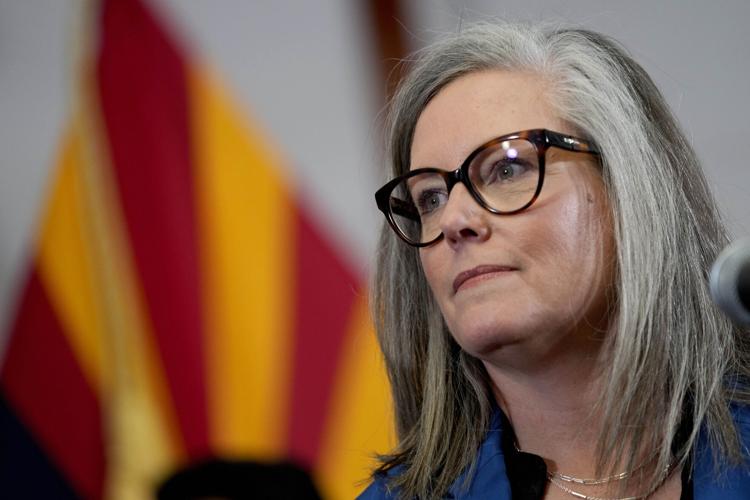
Gov. Katie Hobbs
Sen. Analise Ortiz, D-Phoenix, called that unconstitutionally vague, saying it could apply not just to protesters in tents but even to sun shades set up by civic groups.
That language also caught the attention of Rep. Alexander Kolodin, a Scottsdale Republican.
He said it could include tables and shades set up by conservative groups such as Turning Point USA seeking to register voters on campus, or “pro-life organizations when they’re handing out literature.’’
And he made no secret of his belief that enforcement will end up being based on who is affected.
“Let’s not fool ourselves about who runs these universities,’’ Kolodin said. “Is this bill really going to be used against Students for Justice in Palestine? Probably not. It is going to get used against Turning Point and pro-life organizations? Far more likely.’’
During debate, Hernandez defended the scope of the bill. She said Students Against Apartheid, which set up encampments a year ago at the UA, refused to leave, presenting the school with a “ridiculous list of demands,’’ such as divesting from certain companies profiting from the war between Israel and Hamas, halting surveillance of student organizers, publicly condemning “Israel’s genocidal campaign’’ and defunding the UA police department.
“These people had no intention of leaving,’’ she said.
The new law is expected to take effect early in the next school year, with the specific date depending on when the legislative session ends.
Photos: Police break up second pro-Palestinian encampment on University of Arizona campus
Pro-Palestine protests
Updated
Demonstrators retreat along University Boulevard in a cloud of teargas and taking hits from pepper balls as several area law enforcement agencies use chemical ammunition to clear an encampment of pro-Palestinian demonstrators off the University of Arizona campus, May 10, 2024, Tucson, Az.
Pro-Palestine protests
Updated
Demonstrators use homemade shields to fend off some of the pepper balls fired at them by law enforcement as pro-Palestinian protestors are pushed off the University of Arizona campus and west on University Boulevard, May 10, 2024, Tucson, Az.
Pro-Palestine protests
Updated
A demonstrator carries a street barricade, one of several protestors took to buttress the walls of their encampment of pro-Palestinian protestors on the University of Arizona campus, May 9, 2024, Tucson, Az.
Pro-Palestine protests
Updated
Law enforcement officers toss and kick away obstacles on Park Avenue left by retreating demonstrators as several area law enforcement clear an encampment of pro-Palestinian demonstrators off the University of Arizona campus, May 9, 2024, Tucson, Az.
Pro-Palestine protests
Updated
A line of demonstrators form a line to confront the area law enforcement agencies marching towards them near the intersection of Park Avenue and University Boulevard, May 10, 2024, Tucson, Az.
Pro-Palestine protests
Updated
Demonstrators retreats in a cloud of tear gas as several area law enforcement agencies clear an encampment of pro-Palestinian demonstrators off the University of Arizona campus, May 10, 2024, Tucson, Az.
Pro-Palestine protests
Updated
Arizona Department of Public Safety officers stop and don gas masks and riot helmets as they prepare to clear an encampment of pro-Palestinian demonstrators off the University of Arizona campus, May 9, 2024, Tucson, Az.
Pro-Palestine protests
Updated
A law enforcement officer pulls the pin on a tear gas canister while clearing an encampment of pro-Palestinian demonstrators off the University of Arizona campus, May 10, 2024, Tucson, Az.
Pro-Palestine protests
Updated
An officer fires a chemical ammunition round into a cluster of demonstrators while clearing an encampment of pro-Palestinian demonstrators off the University of Arizona campus, May 10, 2024, Tucson, Az.
Pro-Palestine protests
Updated
A line of several area law enforcement agencies stands at the intersection of University Boulevard and Park Avenue after ejecting a small group of pro-Palestinian demonstrators off the University of Arizona campus, May 10, 2024, Tucson, Az.
Pro-Palestine protests
Updated
A demonstrator claps to music in an encampment of pro-Palestinian demonstrators on the University of Arizona campus, May 9, 2024, Tucson, Az.
Pro-Palestine protests
Updated
Demonstrators hold a sign for traffic along Park Avenue outside an encampment of pro-Palestinian protestors on the University of Arizona campus, May 9, 2024, Tucson, Az.
Pro-Palestine protests
Updated
A demonstrator hauls in a pair of barricades appropriated to help reinforce the walls of an encampment of pro-Palestinian demonstrators on the University of Arizona campus, May 9, 2024, Tucson, Az.
Pro-Palestine protests
Updated
A demonstrator shines a laser into the faces of photographers watching an encampment of pro-Palestinian demonstrators on the University of Arizona campus, May 9, 2024, Tucson, Az.
Pro-Palestine protests
Updated
Officers from several area law enforcement agencies form a line and advance on an encampment of pro-Palestinian demonstrators on the University of Arizona campus, May 9, 2024, Tucson, Az.
Pro-Palestine protests
Updated
A demonstrator watches one line of law enforcement advance on the encampment of pro-Palestinian protestors at the University of Arizona, May 9, 2024, Tucson, Az.
Pro-Palestine protests
Updated
Demonstrators form a line as they prepare to face off with hundreds of law enforcement officers pushing them out of their encampment at the University of Arizona, May 9, 2024, Tucson, Az.
Pro-Palestine protests
Updated
Demonstrators lock arms after retreating out of their encampment as law enforcement officers push them down Park Avenue and off the University of Arizona campus, May 10, 2024, Tucson, Az.
Pro-Palestine protests
Updated
A demonstrator yells towards the law enforcement officers clearing an encampment of pro-Palestinian protestors at the University of Arizona, May 10, 2024, Tucson, Az.
Pro-Palestine protests
Updated
An organizer speaks to an encampment of pro-Palestinian demonstrators preparing to face off with law enforcement on the University of Arizona campus, May 9, 2024, Tucson, Az.
Pro-Palestine protests
Updated
A couple walks past graffiti on the wall of a Main Gate Square business after law enforcement forced a knot of pro-Palestinian demonstrators off the University of Arizona, May 10, 2024, Tucson, Az.
Pro-Palestinian protest
Updated
Two pro-Palestinian protesters organized set up a barrier to an encampment on the University of Arizona campus in Tucson, Ariz. on May 9, 2024. Police broke up the camp hours later.
Pro-Palestinian protest
Updated
A woman takes photos of pro-Palestinian protesters as they march on the University of Arizona campus and set up an encampment in Tucson, Ariz. on May 9, 2024.
Pro-Palestinian protest
Updated
Pro-Palestinian protesters organized push back on University of Arizona police as staff tried to set up flood lights on an encampment on the University of Arizona campus in Tucson, Ariz. on May 9, 2024. Police broke up the camp hours later.
Pro-Palestinian protest
Updated
Pro-Palestinian protesters set up tents for an encampment at the olive grove on the University of Arizona campus in Tucson, Ariz. on May 9, 2024. Police broke up the camp hours later.
Pro-Palestinian protest
Updated
Pro-Palestinian protesters organized by Students Against Apartheid march down University Blvd. to the University of Arizona campus in Tucson, Ariz. on May 9, 2024. Protesters set up another encampment which police broke up hours later.
Pro-Palestinian protest
Updated
A single pro-Palestinian protester walks down University Blvd. towards other marchers as they make their way to the University of Arizona campus in Tucson, Ariz. on May 9, 2024. The protesters set up another encampment, but it was broken up by police hours later.
Pro-Palestinian protest
Updated
Pro-Palestinian protesters organized by Students Against Apartheid gather in Catalina Park then marched to the University of Arizona campus and set up an encampment in Tucson, Ariz. on May 9, 2024.
Pro-Palestinian protest
Updated
Pro-Palestinian protesters stand along a wall at the olive grove on the University of Arizona campus and set up an encampment in Tucson, Ariz. on May 9, 2024. Police broke up the camp hours later.
Pro-Palestinian protest
Updated
An organizer speaks to pro-Palestinian protesters gathered at the olive grove on the University of Arizona campus in Tucson, Ariz. on May 9, 2024.
Pro-Palestinian protest
Updated
Pro-Palestinian protesters bring in supplies to set up an encampment at the olive grove on the University of Arizona campus in Tucson, Ariz. on May 9, 2024. Police broke up the camp hours later.
Pro-Palestinian protest
Updated
A University of Arizona police officer yells out to pro-Palestinian protesters that they will be arrested for trespassing as they set up an encampment at the olive grove on campus in Tucson, Ariz. on May 9, 2024.
Pro-Palestinian protest
Updated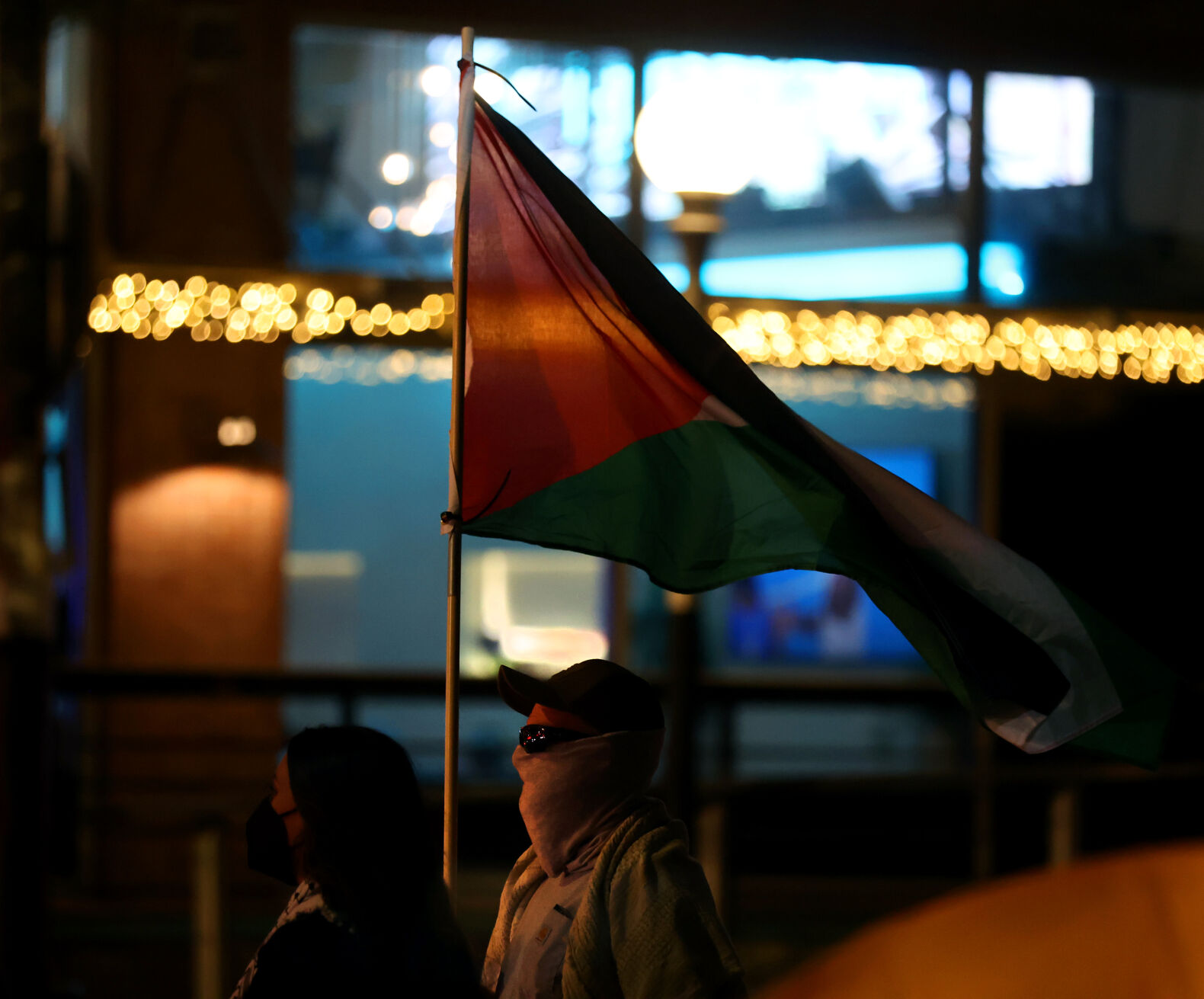
A pro-Palestinian protester stands along Park Ave. near the olive grove at the University of Arizona campus in Tucson, Ariz. on May 9, 2024.
Pro-Palestinian protest
Updated
Pro-Palestinian protesters organized by Students Against Apartheid gathered in Catalina Park then marched to the University of Arizona campus and set up an encampment in Tucson, Ariz. on May 9, 2024.
Pro-Palestinian protest
Updated
Pro-Palestinian protesters set up an encampment at the olive grove on the University of Arizona campus in Tucson, Ariz. on May 9, 2024. Police broke up the camp hours later.

