PHOENIX -- Arizona Opera on Friday night opened its 2014-15 season with the world's first mariachi opera featuring arguably the world's finest mariachi, Mariachi Vargas de Tecalitan.
The audience at Phoenix Symphony Hall, which is a beautiful venue with terrific acoustics, was heavily Hispanic -- an audience that is sorely underserved by the Eurocentric artform. In "Cruzar la Cara de la Luna" (To Cross the Face of the Moon) they found a story that is entirely relatable -- a Mexican immigrant in his final days reflecting on the life he left behind in Mexico including a son he hasn't seen since an ill-fated and tragic attempt to illegally immigrate to Arizona. And they found a musical style that resonates with the Mexican culture -- the distinctive twang of mariachi.
But this also is an Arizona story, one that even those of us who have no experience with the Mexican immigration story can relate.
Here are five reasons why you should not miss this production when it comes to Tucson Music Hall next weekend:
* The music: If you've lived in Arizona your whole life or only a fraction of it, you are familiar with mariachi. It's quintessential to the Southwest but particularly Tucson. It's rare to go to a southside Mexican restaurant and not hear an ensemble strolling through the dining room strumming the guitars with the swollen midsections -- they are called guitarrons -- and singing those wonderful folk songs. And Mariachi Vargas is the seminal ensemble, and one with close ties to Tucson; they appeared with Tucson native Linda Ronstadt at the 1986 Tucson International Mariachi Conference when she sang publicly in Spanish for the first time. To say they are fabulous is to underestimate their collective talent. At Friday's performance in Phoenix they earned every bit of the standing ovation they received for good reason: They were flawless, vocally and musically, performing on stage in the dual roles of orchestra and chorus.
Keep reading with a digital access subscription.
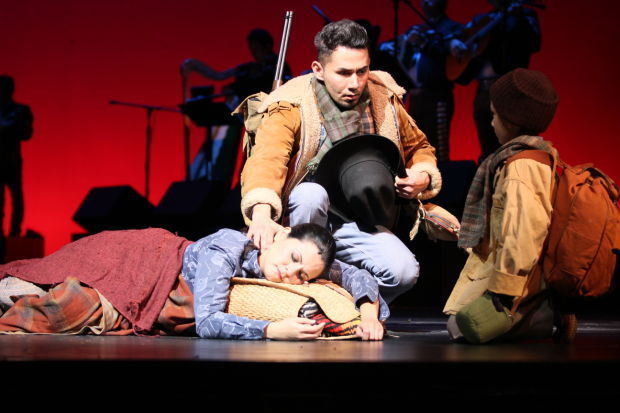
* The story: A Mexican immigrant has a deathbed wish: to be reunited with the son he left behind in Mexico after the boy was spirited away by his grandmother when his mother dies while attempting to cross the desert into Arizona. Laurentino (Hermosillo native Octavio Moreno, who possessed both a wonderful burnished baritone and passionate acting chops) flashes back to his life in Mexico with Renata, the love of his life (sung with amazing warmth and grace by Mexico-born mezzo-soprano Cecilia Duerte), then to the present day in Arizona with his American-born son and granddaughter. The granddaughter (the standout Ohio soprano Brittany Wheeler) tries to convince her father (Texas baritone Brian Shircliffe) to call her uncle Rafael (the amazing Colombian tenor David Guzman) in Mexico and tell him that Laurentino is dying. She ends up making the call herself and in a mix of English and Spanish convinces the uncle to come see her grandfather before he dies.
* Definition of home: This is a story that goes beyond the Mexico-Arizona border. It's a story about home -- not the physical structure or the geographical borders, but the place where you are surrounded by love and feel truly at peace. For Laurentino that place is defined by his family surrounding him as he takes his final breath.
* The voices: Wow, can this cast sing. Duerte has a sweetness to her voice that captivates in the role of the desperate mother Renata, who dies trying to cross the border and bridge the gap separating her and her son from her husband. Mezzo Vanessa Cerdo-Alonzo was arresting singing an aria asking her absent husband to call her name. And Guzman was simply out of this world terrific. In his duet with Moreno mourning the loss of Renata, he showed off a powerfully beautiful voice with the kind of warmth and sincerity that sneaks into your subconscious and pops up hours later with such clarity that you relive it over and over.
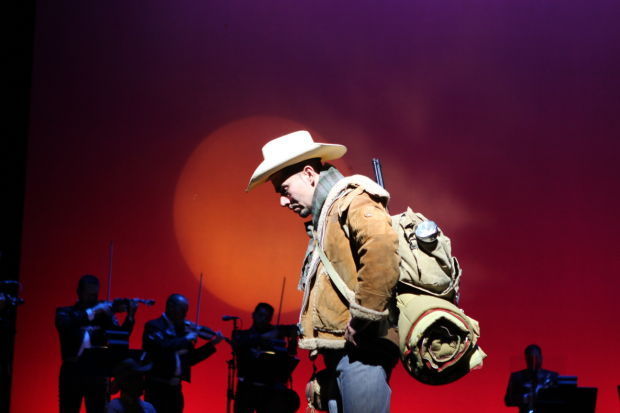
* Bite-size opera: For the opera uninitiated, "Cruzar la Cara" is perfect. It's 90 minutes long -- about the same length as a first-run movie -- and its sung and acted in a mix of Spanish and English with surtitles in each; Spanish when they are speaking/singing English; English with the action is in Spanish. There also is no intermission to fuss with. No Act 1, Act 2. The transitions are smooth; there's no elaborate staging beyond a trio of risers for the 14 members of Mariachi Vargas and the giant screen in the back that projects gorgeous champagne sunsets and brilliant full-mooned nights. A bed and ottoman are wheeled in as the only "sets" per se. And at Phoenix Symphony Hall, folks were allowed to bring their cocktails and wine into the theater, which is something very few movie theaters allow.