



Q: We have company coming for the holidays. My plans to have the house ready fell through. What are some things I can do to have things in good shape for company?
A: You will be amazed at how easy it is to give your home a holiday update. Here are a few suggestions to get you ready for your guests:
- Update old metal hardware on doors, windows and cabinets.
It may seem obvious, but this is a great fix for bathrooms and kitchens. Maybe you’re living in a 20-year-old house that still has the original builder’s polished brass hardware. Maybe you yearn to try brushed nickel, oiled bronze or champagne gold instead. This job can speed up with the aid of a power drill. Don’t worry if every metal object in the room doesn’t have the same finish. Mixing metals isn’t a DIY faux pas.
- Junk those yellowing plastic electric outlet covers and switch plates.
This update can be an easy fix for any room or maybe all of them. You can also replace the register covers, too. For safety’s sake, be sure to turn off the power to the room before you unscrew anything. If you want to replace the switches, too, like installing a dimmer, the job will be more complicated; maybe it’s time to call an electrician.
- Paint the baseboards in one room or all of them.
If baseboards have just a few scuffs, repaint the dirty spots. With big messes, you may decide to repaint all baseboards. Use two coats of semi-gloss or satin-finish paint so baseboards will be easier to clean later. First, sand the baseboards. Then, vacuum and wipe them with a wet cloth to remove the dust. Use painter’s tape and a drop cloth to protect the floor; the same tape can be used on the wall above the baseboard to protect it from paint.
- Clean the tile grout.
Daily doses of oil, grease and soapy water can make that cement-based grout look ugly.
To start, use mild cleaning products like warm water mixed with a few drops of dish soap while scrubbing with a stiff toothbrush. Rinse well with clean water and allow the area to dry thoroughly. If dish soap doesn’t work, try a half-and-half solution of vinegar and warm water or a paste of baking soda and water. Rinse again and dry thoroughly.
Important warning: Bleach-based and commercial cleaners can mar your tiles’ finish. And if you have natural stone tiles like granite or travertine, use only the very mildest cleaners on those grout lines, nothing acidic like vinegar.
After the area’s dry, you can seal grout to prevent mold, mildew and bacteria in cleaned grout lines. You should only seal cement-based grout, but it’s easy to do with a grout sealer that comes with a brush-tipped applicator. Read the manufacturer’s instructions and then apply sealer to small areas at a time. Use a dry, clean rag or paper towels to wipe off the excess sealer. Allow it to dry again, and then apply a second coat. Test the surface with a few drops of water. Liquid should bead up into droplets. If not, apply a third coat.
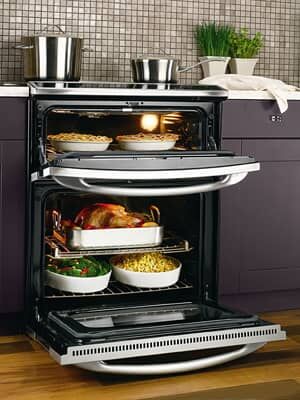
- Clean the oven.
Is a year’s worth of crusty food burned on the inside of your oven? Caked and burned food can smoke and create unpleasant odors in the kitchen and dining area.
Of course, you can run the self-cleaning function on your oven if you have one. But if you don’t have one or if you don’t like the wear and tear on your oven, you might want to spray on and wipe off a chemical cleaning product. These can be very corrosive, however.
If you prefer a “greener” option, wash the oven racks in a sink full of hot water and vinegar. Let them sit in the water for a while. Meanwhile, mix baking soda with water and spread the paste over the surfaces of the oven. You might have to let that mixture sit overnight before wiping it down and rinsing it off. Spraying vinegar on the mixture can help, too. Be sure to clean out the microwave and outdoor barbecue as well before your party.
- Add path lights leading to the front door.
These lights can make your home look more inviting for family and friends, and they’re a good safety measure.
This simple do-it-yourself project can probably be done in a few hours, along with time for a trip to the hardware store. First, measure the area you want to cover and estimate how many lights you need. You will be taking a sketch and measurements to the store.
You will power up these lights by using an outdoor GFCI or ground fault circuit interrupter outlet. There are probably several of these outlets outside; if not, have some installed by a licensed electrician. If you have existing GFCIs, make sure they work properly.
At the hardware store or home center, you’ll buy a kit including lights, 100 feet of low-voltage cable and a transformer to convert your home’s current into low-voltage current for the lights. Get a high-quality transformer that’s slightly bigger than the total wattage of the lights you will use. You may want to buy two smaller transformers instead of one large one.
Follow instructions on the kit. The hardest part of the job will probably be digging a shallow trench for the cable that carries power to the lights.
Another option for path lighting is solar lighting. You won’t have as much control over the lights, and they may not be as effective on cloudy days. However, they are a great option for those who are short on time.
Mold is very common in homes, it can grow on tiles, fabrics, carpets, wood and other materials when moisture is present.

