

Patio living is a great way to enjoy being outside after a long day at work or school, it’s great for entertaining, and it offers a great space for just hanging out. Let’s take a look and see how folks might liven up that old concrete patio without breaking the bank.
The starting point
For example, let’s consider a standard builder’s grade concrete patio outside with a single door or maybe a pair of sliding patio doors leading out from one of the living or common spaces in your home.

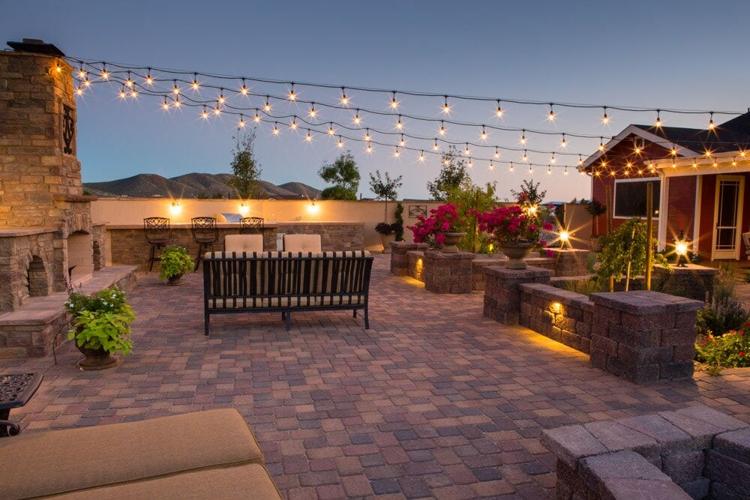
Lighting adds ambiance and extends the time on your patio into the evening.
The first thing to access is the size of the patio and the orientation to the sun. It is worth starting here to understand the conditions each orientation presents. There are things to consider if your patio faces:
— North: This could be ideal during the spring, summer and fall months. However, the space will be limited to growing shade-based plants.
— East: A patio facing east will receive morning sun and afternoon shade. This orientation offers a wonderful mix of possibilities for times of use and planting options.
— South: In the winter months, consistent access to the sun can increase the use of a south-facing patio. Plantings need to be rated as tolerant to full sun. Add a shade cover to prolong the time you can use this space.
— West: Afternoon and evening sun may limit summer usage in some areas of the state. Plantings can be a mix of plants that tolerate full to partial sun. A shade structure is desirable on a west-facing patio.
Ideas and tips

The orientation of your porch will determine which plants you can grow. Potted plants can be moved around to accommodate the sun they need.
While there are probably a million different effects that can be achieved, here are a few ideas to get us thinking and moving forward.
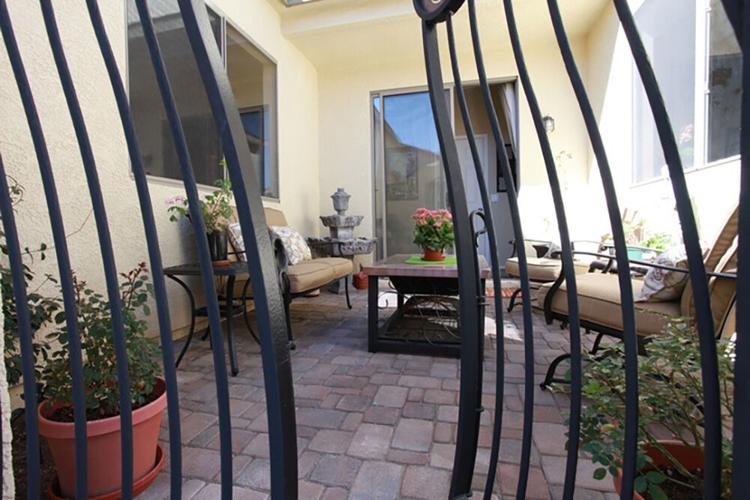
— Concrete patios provide an excellent base for laying down pavers. Check the distance between your access door threshold and the patio surface to ensure the area can accommodate the thickness of the pavers. Pavers can give that old concrete an upscale feel. If pavers are not practical, another way to define an area and spruce up the concrete patio is to use an outdoor carpet or an area rug. Carpets and rugs not only help define an area but also provide an opportunity to add some color.
— Plantings in adjacent gardens, raised container gardens, and decorative pots for plants contribute to the oasis feeling we are looking to achieve.
A couple of low-cost options
Vertical gardens where single or multiple plants grow up through a trellis or small pots hung off a wall.

Adding pavers on top of concrete? Make sure the pavers fit under the threshold of the door.
— Wooden pallets: Provide a great low-cost structure for vines to grow through, providing a minimal space-defining solution.
— Shade screens: Put some thought into the time of day and year you will use the space before choosing screens. Create a shade using wires or latticework threaded with vines to provide a roof that shades your patio. You can opt for a more expensive fabric screen cover, such as a retractable screen, or a fixed screen installation might be necessary. Retractable screens can be motorized or hand cranked. They even come with sensors that will automatically retract on a windy day. Often, the orientation of your patio will dictate the best solution.
— Privacy: If you live in a neighborhood where neighbors are close, privacy may be a consideration. Fencing is one way to screen your patio. Fencing can be a solid wall of plants (think stacked pallets). A low-cost and quick way to get visual privacy is to install outdoor curtains. This solution will require a simple framework to hang the curtains.
— Lighting: There are several options to think about.
Ground lighting: Helps define the space and can be used to set a peaceful ambiance. These can be as simple as the low-cost solar lights you can buy locally or more versatile hardwired LED lights with color.
Overhead lighting: Lighting strings, such as bistro lights, can set the mood for an evening or nighttime occasion.
Wall lights: Strings of light, such as single-color Christmas lights woven into a plant wall, can be a simple, inexpensive way to set the tone for your patio oasis.
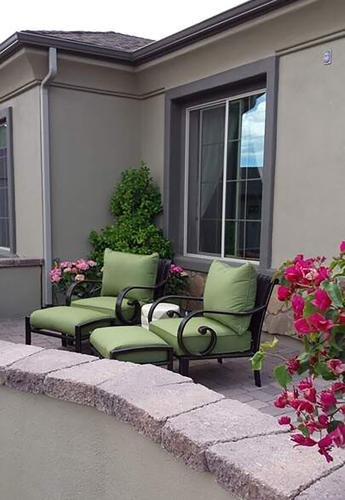
— Furniture: Chairs, couches, and loveseats can be arranged to foster conversation or solitary reflection. Hammocks or hanging chairs are fun If you have a structure covering the patio. Furniture design and color will also go a long way to establishing the look you want for your patio.
— Set the mood: You don’t have to build an elaborate fire pit. Check your local hardware store for simple gas-fired decorative fire pits.
— Water effects: There are few among us who would disagree that the sound of moving water is relaxing. You don’t have to break the bank to generate that effect, either. Options include small wall-mounted, ground-mounted, or even tabletop units. A self-contained water feature requires minimal upkeep.
While these tips and ideas can get you started, they are by no means an exhaustive list. We would love to see pictures of how you have created a patio paradise at your house, home, castle or cabin. Send your photos to info@rosieonthehouse.com.

