



We hear from homeowners being tricked out of their money every week. We have written articles and discussed current scams on air often. The surprising thing is that many of the scams are not new. Homeowners find themselves victimized by bad players wanting to take their money and/or personal information under nefarious circumstances, even though they are aware of many scams.
Theresa Chrest, an agent with Rosie Certified Partner Phocus Insurance Services, offers fraud warnings from an insurance provider’s perspective.
Home fraud
Stop and think before you sign the dotted line.
An all-too-common scam is the door-to-door salesperson wanting to provide some service or repair to your home, often after a storm. They often show up after a natural disaster and offer to help you fix a problem you may not even know you have. Natural disasters don’t have to be catastrophic, such as a tornado or wildfire. After a hailstorm, you might get a person saying they can inspect your roof and get your insurance to pay for it.
Here are a few red flags to watch out for:
— Any unsolicited approach, whether at your front door, on the phone, or email, offering to provide any service should cause you to be suspicious.
— Anyone who offers to contact your insurance company on your behalf.
— Anyone who needs you to sign a contract, or give them a deposit or your credit card, with the first contact is a red flag so big it would cause you to run.
— Anyone who offers to inspect the damage and then make promises of how much they will get through your insurance company. A common fraudulent practice is overstating the value of repairs.
Smart homeowner tip No. 1: Call your trusted insurance agent and talk through the scenario with them. They will be able to talk you through the process and help to determine whether the claim is legitimate or not.
Theresa tells us about common scams where folks are encouraged to sign a contract and give them a deposit right away, or use a credit card to lock you into a great price or deal. Her sage advice is, if it sounds too good to be true, it probably is.
There are steps you should take before entering any type of agreement.
Take the following information from the solicitor:
— Company name
— Business card; licensed contractors are required to have their license number on their cards and trucks
— License number and type
— Company location, to determine if they are local or out of state. Get a physical address.
— Ask for local references
Once you get all this information, follow through and check it out. Doing your due diligence can save you money.
The Arizona Registrar of Contractors is at roc.az.gov.
Smart homeowner tip No. 2: Don’t open the door to any door-to-door salesman. If you are interested in what he is offering, take his card and research the company. If they make the grade, call the company back and make an appointment.
Personal information fraud
Much of our personal information is easily accessible. Our credit card information is not the only concern anymore. Identity theft is all too common. The unscrupulous steal our personal information to steal and conceal the real thieves with your digital information.
Gaining key information needed to commit fraud happens in a lot of ways.
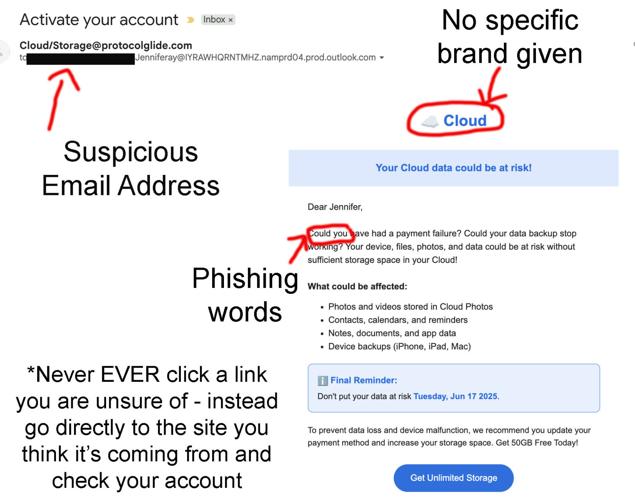
Emails: Every one of us who has an email account receives junk emails. Sometimes they offer an opportunity to gain money by responding to the email, attempt to sell you something, or provide a deal on updating your software programs. They often add an urgent “respond by date.”
Stop! If you don’t know the sender, don’t open it. Hover your computer mouse over the return address to see who it is from. Check for consistency of the sender’s email with the content. If the email says it is from APS, the sender should have an address that says APS. Emails with miscellaneous names and numbers are not from a company but from a scammer.
Phone calls: It seems many of us are getting more spam phone calls than legitimate ones lately. If you don’t recognize the phone number, don’t answer it. If it is important, let them leave a message. If you answer and are not sure, hang up and call the company back using the phone number on their website. Remember, scammers will use your voice to create voices that sound like you to use for fraudulent reasons, so it is better not to answer if in doubt.
Texts: There is a wave of texts recently, that say you owe money on a traffic ticket or that your package at the Post Office has insufficient information to ship it. Again, these are scams. Clicking on a text can lead you to a place where more information is required that can be used for more fraud. One trick is to look at the cell number that it was sent from. If it is from out of the country, you can be assured it is not legitimate. Put the number in the search engine on your computer, and it is likely it will come up as part of a current fraud scheme.
Smart homeowner tip No 3: We are not aware of any governmental agency at any level, local, state or federal that will ever solicit or demand payment with an email or a phone call.
If a phone caller or an email threatens you with legal action for not paying a fine or bill, don’t open or respond. If you feel there is any legitimacy to the claim, call the agency for clarification using the number that is on that agency’s website or some other common resource, not the one in the email. Never give out your credit card number, personal information such as driver’s license number or Social Security number over the phone to anyone who is an unsolicited caller, never, ever.
Resources:
Unsolicited calls — DoNotCall.gov
Unwanted emails — Know when to unsubscribe, ftc.gov
Unwanted texts — How to block texts, ftc.gov

