


Each year, thousands of Arizona residents email or call Rosie Romero’s radio show with questions about everything from preventing fires in their chimneys to getting rid of tree roots invading their sewer system. His goal is to provide answers that suit the specific lifestyle wherever someone lives in Arizona.
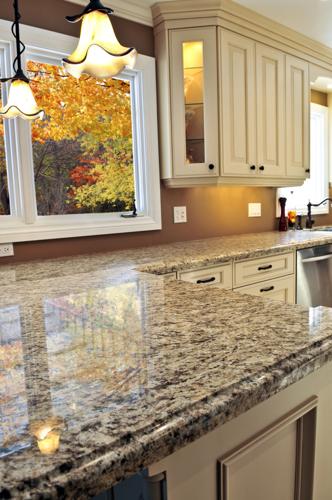
Q: I have laminate counter tops in my kitchen that have a triple bullnose edge. They also stick out pretty far from the counter. Is it possible to cut the bullnose off and put a more modern straight edge on the countertops?
A: It might be possible to cut it off and grind it down, but it could be hard to do that and it could create quite a mess in the kitchen. It also depends to some extent on what kind of cabinet you have under the laminate. You would need to have someone who is an expert in laminate surfaces take a thorough look at the counter before you try doing anything like this, as this operation is not a good prospect for a successful DIY project.
Q: I want to install laminate wood flooring over a concrete slab that has a 14-foot-long crack in it that is about 1/8-inch deep. What do I have to do before putting in the flooring?
A: You need to start by having a termite company treat that crack for possible termite infestation before laying the flooring. That’s because that crack could make it very easy for termites to attack your new flooring. You also need to determine whether the parts of the floor on both sides of the crack are level. If they are not, some grinding needs to be done on the concrete to make sure it’s flat. After that, you will need to seal the crack area with grout. These advance steps will ensure that you can put in a level floor.
Q: I have a plum tree in my yard that was planted four years ago and has not grown 1 inch in all that time. It’s healthy but it never grows. What should I do?
A: In a situation like this, it could be that the tree was of poor quality stock from the nursery and has encircling roots. The roots after planting just continue circling around and around and the tree never grows. You can do some root pruning, but it’s possible the tree can’t be saved.
Another possibility is that the tree was planted a little too deep and is not getting enough oxygen. So it is barely surviving. In that case, you have to dig down to the root collar and excavate some excess soil. It’s amazing how well a tree can do after you try that.
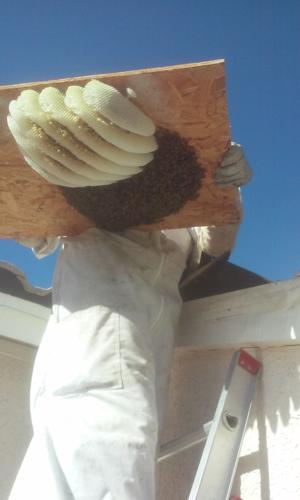
Q: I have a mature ash tree in my yard with a bees’ nest in one of the cavities. I would like to get rid of them, but everyone I call about the problem wants to exterminate them. Isn’t there any way to save them?
A: It is important to get rid of that nest because of a growing problem in Arizona with Africanized honey bees that can become more aggressive. However, there are bee removal companies that will try to recover the nest, remove it and rehabilitate it by changing the queen. The hive can then be used in honey production. However, doing that will be more costly than simply having an exterminator kill the bees.
Q: I want to plant a tree in my backyard that would be located about 16 feet away from an underground septic tank. Is that distance far enough away to prevent the possibility of the tree roots damaging the tank?
A: That should be a more than adequate distance, depending on the type of tree. However, whenever you’re worried about tree roots invading a structure nearby, you can also put in a 24-inch wide plastic root barrier underground just in front of the object you’re trying to protect. Then, you’ll probably not have a problem. It’s also a good idea to check with your local nursery to ask what the root spread is for the tree you have in mind.

