


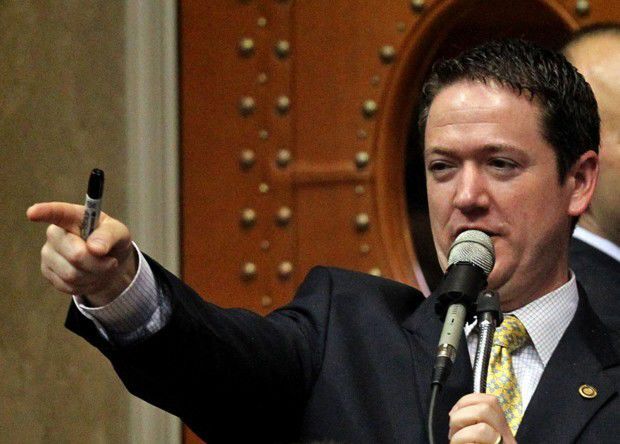
JEFFERSON CITY • Missouri House Speaker Tim Jones is asking Attorney General Chris Koster to wade into the ongoing fight over a tax cut bill that Gov. Jay Nixon vetoed.
The Republican-controlled Legislature passed the income tax cut — which would have been Missouri’s first in nearly a century — but Nixon, a Democrat, vetoed the measure shortly after the session ended.
Both sides have spent most of the summer waging campaigns for and against an attempt to override Nixon’s veto next month.
Nixon says that the legislation was not drafted well and has pointed out several provisions that he says are flawed. According to Nixon, the legislation will raise taxes on prescription drugs and textbooks and create a hole in the state budget because Missourians will be able to retroactively benefit from the tax cut.
That’s where Jones’ request for the attorney general comes in.
Jones, R-Eureka, is asking Koster, a Democrat and likely candidate for governor in 2016, to provide a legal opinion on Nixon’s claims.
Koster spokeswoman Nanci Gonder confirmed to the Post-Dispatch that the office had received Jones' request today but had no further comment.
Nixon's lengthy 10-part veto message on the bill highlights one provision that he says “could enable taxpayers to seek refunds of taxes previously paid for up to three tax years” if Congress passes the Federal Marketplace Fairness Act.
According to Jones, the General Assembly’s Legislative Research Office says Nixon’s claim isn’t true.
“The governor has taken great liberties with the truth during his campaign against the most significant tax cut Missourians have seen in nearly a century. His claims of a retroactive tax cut that would generate a significant revenue shortfall are sensationalized talking points and not in any way based on statutory reality or legal precedent,” he said in a statement today.
Meanwhile, Nixon has been traveling the state this week, highlighting various provisions of the legislation that he says will be harmful to Missourians — particularly children and seniors.
"House Bill 253 is a $200 million a year tax hike on prescription medication that will hit vulnerable Missourians the hardest," Nixon said in the news release from his appearance at the Warrensburg Senior Center on Tuesday. "Many of the lawmakers who voted for this bill must not have had the opportunity to read or fully understand all its negative consequences. But now that the House Bill 253 tax hike has been discovered, there is no excuse for voting a second time to raise taxes on Missouri families and seniors by $200 million a year."
(The tax bill is House Bill 253.)

