


Javier Duran, a University of Arizona professor who studies the culture and history of the U.S.-Mexico border region, wants to change mainstream America’s perception of the border.
“For better or worse, the border has become a political tool,” Duran said, noting some politicians’ focus on violent crime and calls for militarization of the area.
That kind of framing is pervasive in Arizona.
On Thursday, the Arizona Senate approved $700 million to build a border wall. Earlier in the week, Arizona gubernatorial candidate Kari Lake, who has pledged to act “boldly and aggressively to bring an end to our border crisis” if elected, likened activity on Arizona’s southern border to Russia’s invasion of Ukraine. And earlier this month, Arizona Attorney General Mark Brnovich, who is running for U.S. Senate, said that the “southern border is being flooded by cartels and gangs, trafficking people and drugs,” so he was “declaring war on the southern border invasion.”
But those narratives are one-dimensional and often misaligned with reality, said Duran, who pointed to Santa Cruz County Sheriff David Hathaway’s recent report that crime rates there are lower than the state averages.

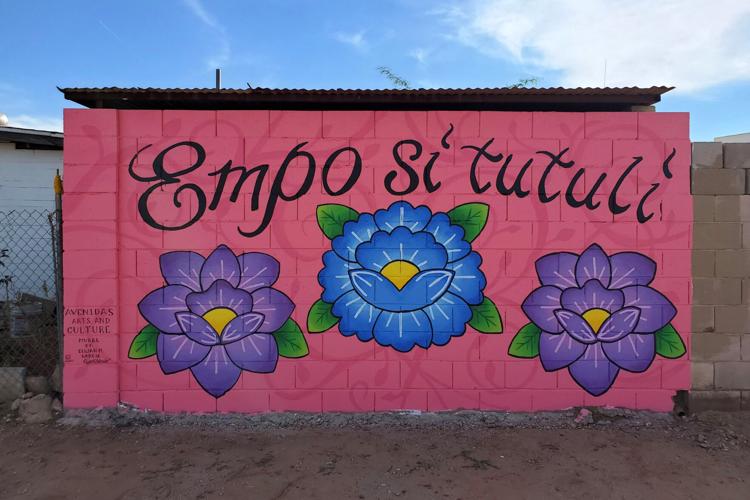
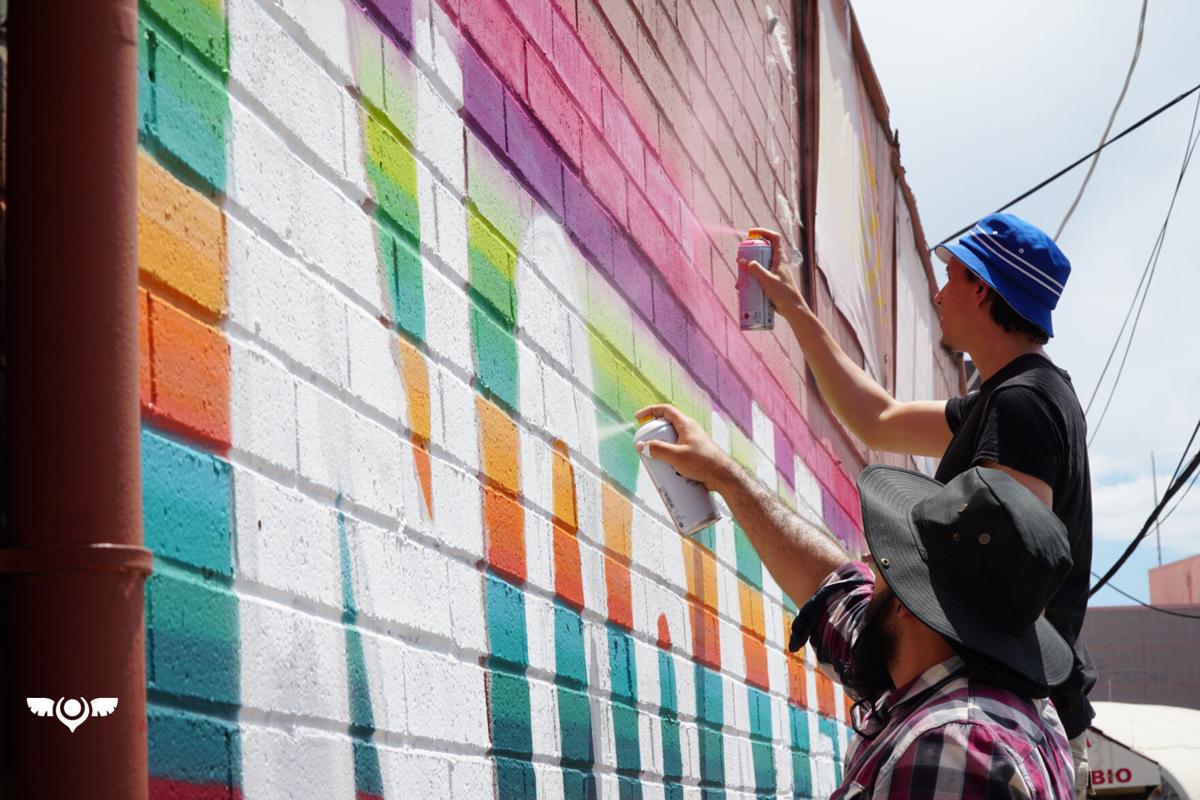
A view of a mural painted on the Pascua Yaqui reservation — the words are in Yoeme and translate to "You are Beautiful." The mural was created with the support of the Fronteridades project, a University of Arizona initiative that partners with community organizations (this mural was created in partnership with Galeria Mitotera) to broaden portrayals of border communities.
‘Dignify these communities’
“We need to be able to rethink and reimagine what happens in border spaces and also elevate the stories that remain underground,” said Duran, who heads the Confluencenter for Creative Inquiry at the UA, an interdisciplinary research institute.
“The other component is to dignify these communities because many times the portrayal is really negative — not only in terms of crime, but also that the people who live there are somehow immoral.”
In reality, the border communities he knows, such as Nogales and Douglas, are far more nuanced than those portrayals. They are made up of people who are going about their daily lives just as they have for generations.
Since 2018, Duran has worked toward capturing the cultural patchwork of Arizona-Sonora border communities through a project called “Fronteridades: Nurturing Collaborative Intersections in the U.S.-Mexico Borderlands.”
So far, it has used $800,000 in grant money from the Andrew W. Mellon Foundation to produce about 60 artistic and cultural projects in partnership with local people and organizations.
Now, Fronteridades will be able to do even more. This month, the Mellon foundation awarded Duran and his team at the Confluencenter another $1.5 million to continue and expand its borderlands research, education and storytelling initiatives.
The Confluencenter for Creative Inquiry at the University of Arizona is working to highlight life in Arizona-Sonora border communities through its "Fronteridades" program. Video courtesy of UA's Confluencenter for Creative Inquiry.
“One of the main goals of the project is to broaden understanding and inclusivity in the portrayals of the border by centering the stories and representations of activity around borderlands residents and communities,” he said.
Melissa Brown-Dominguez and Mel Dominguez, who own Galeria Mitotera in South Tucson, are among the many community partners Duran is working with to accomplish that goal. The couple’s gallery has hosted numerous community events featuring the work of Indigenous and Latinx artists, which is how they connected with Duran a few years ago.
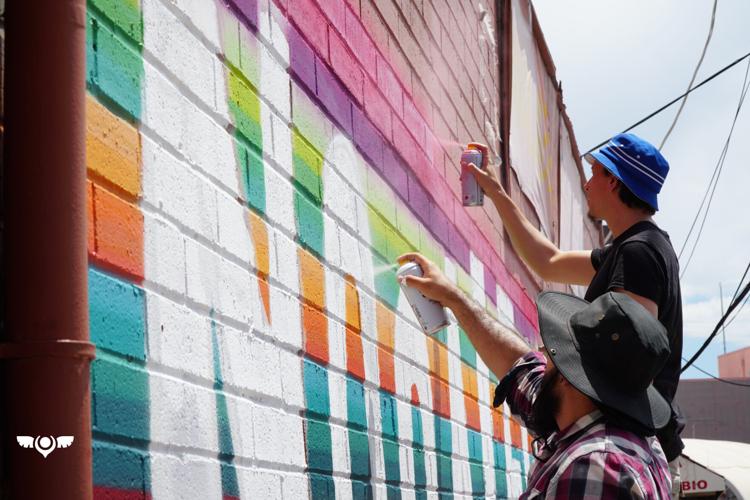
Murals, which Mel Dominguez called “our version of storytelling,” are one of the mediums they work with the most. And with additional money from this new grant, they’ll be able to expand their reach.
“What makes this super exciting to be involved with this grant is bringing up artists from Nogales,” Dominguez said. “With all that’s going on with COVID, and people going outside again now, art and culture are a form of communication. We’re super excited to not only find and meet these artists from Nogales, but also bring them into the environment here on native land.”

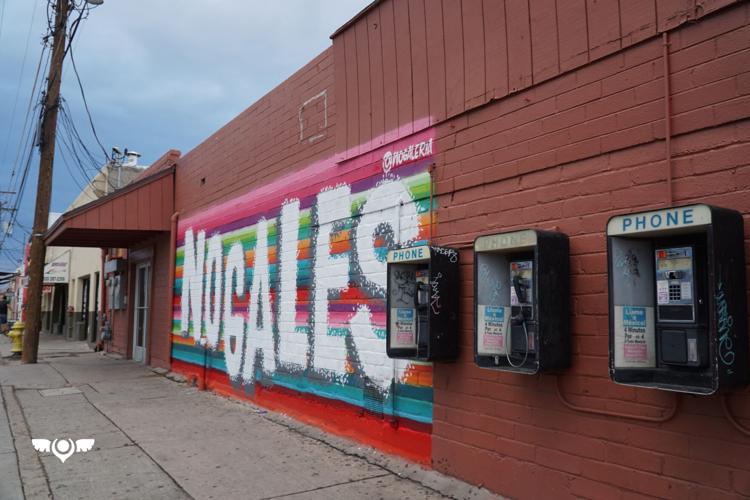
A view of some of the artwork the Fronteridades project, which just received a $1.5 million grant from the Andrew W. Mellon Foundation to broaden portrayals of border communities, has supported in Nogales.
‘Human rights work through the arts’
Documenting the culture and contributions of the Indigenous people whose ancestors have lived along what is now known as the Arizona-Sonora border for centuries is one of the Fronteridades project’s focal points.
Ofelia Zepeda is a professor of linguistics at the UA and author of the only pedagogical textbook on the Tohono O’odham language. She’s also a collaborator with the O’odham Arts Exchange, which is one of Fronteridades’ community partners.
The arts exchange, which has already produced photographic essays, poetry and research on people in the region, will use this new funding to support residencies for Indigenous artists working in a variety of mediums such as pottery, painting and weaving.
“The type of artist we’re looking for is someone who can address the humanistic aspects of the region, not necessarily the political aspects,” Zepeda said. “The main point that always gets drowned out is that this region that the border happens to cross is home to not only people, but also wildlife and plant life that has also been disturbed.
“Oftentimes those beings don’t have voices, so I would like to think this project helps to give a voice and talk about the impact it has had on the environment and the people who live in that environment.”

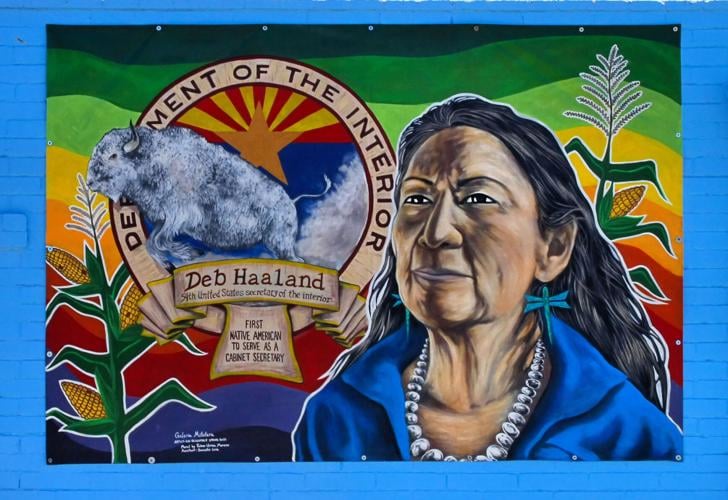
This mural depicts U.S. Secretary of the Interior Deb Haaland, who is the first Native American person to hold the position. The mural, which is at 802 S. Fourth Ave in Tucson but is being relocated, was created with support from the Fronteridades project. This mural was created in partnership with Galeria Mitotera.
Theatrical performances representing the complex experiences of migrants and asylum-seekers are another medium the grant will support.
Teatro Dignidad is a local theater company and new partner of the Fronteridades project. It will use some of the grant money to create a monument to migrants who have lost their lives as well as to produce three plays, which will be performed in both English and Spanish.
“The whole purpose is to educate audiences about the issues on the border, but also reframing the narrative where we uplift the voices of migrants. We want to tell those stories from a human rights perspective and in a way that honors our border communities,” Alba Jaramillo, founder of Teatro Dignidad, said.
“Theater, and all of the arts, have the power to open hearts and minds. It’s a different form of advocacy, but that’s our approach — doing human rights work through the arts.”

