



After nine months detained at Eloy Detention Center, an elderly Cuban asylum seeker with dementia — known among her fellow detainees as "la abuela," the grandmother — is free, pending the outcome of her deportation case.
Julia Benitez, 79, was released from Eloy Detention Center Thursday night.
The release came 11 days after the Arizona Daily Star first reported that Julia was being detained and that her physical and cognitive health had deteriorated significantly over her nine months at Eloy.

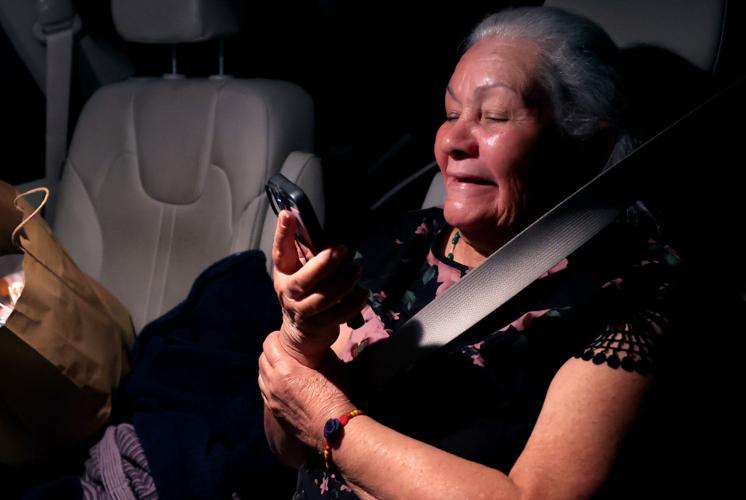
Julia Benitez, a 79-year-old Cuban asylum seeker, gets to talk to her daughter from the back seat of the vehicle that picked her up Thursday night from the Eloy Detention Center after her release. She was held nine months by ICE as her physical and cognitive health deteriorated.
She was likely released on humanitarian parole as her removal case proceeds — a discretionary decision by U.S. Immigration and Customs Enforcement. But the details of her release are still unclear, said her daughter Dayana Cosme Benitez, a lawful permanent resident who lives in Miami with her two sons.
Julia was to stay at the home of a Phoenix pastor on her first night out of Eloy, as her family determines the best way to get her to Miami, said Phoenix-based migrant-aid volunteers, speaking as they drove to pick her up from Eloy Thursday evening.
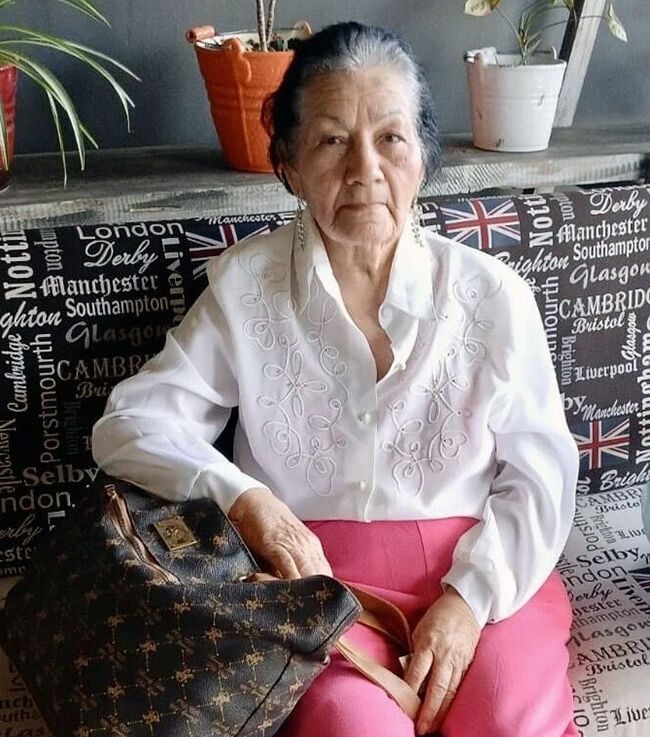
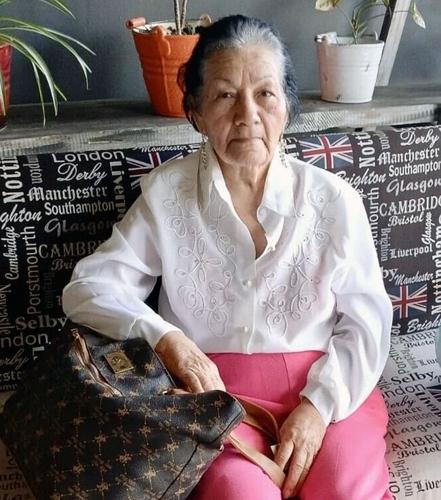
Cuban asylum seeker Julia Benitez is pictured last year in Mexico, then 78 years old, two days before crossing the U.S.-Mexico border near Lukeville, Arizona to surrender to border agents and request asylum. Benitez was released Thursday night after nine months in immigration detention in Eloy.
"We're shocked, we're elated, we're so happy that this has finally happened," said Anna Keating, a volunteer with a Phoenix shelter that receives detainees from detention centers in Eloy and Florence, Arizona.
Before crossing the U.S.-Mexico border in May 2025 and surrendering to Border Patrol agents, Julia was only having occasional memory lapses, her family said.
But after nine months in an unfamiliar, institutional setting, Julia's dementia worsened to the point that she often didn't know where she was and sometimes thought her daughter was her mother during their phone conversation, Dayana told the Star.
She's also had to start using a wheelchair, which she never needed before her time at Eloy, Dayana said.
Julia has relied on the kindness of other detainees to help her get dressed, use the bathroom and move around the facility, which houses about 1,330 ICE detainees currently.
She is subject to mandatory detention, since she recently entered the U.S. outside an official port of entry, and so she was denied a bond hearing before an immigration judge. But ICE always has the discretion to release detainees on parole, if they don't pose a public threat and aren't a flight risk, attorneys say.

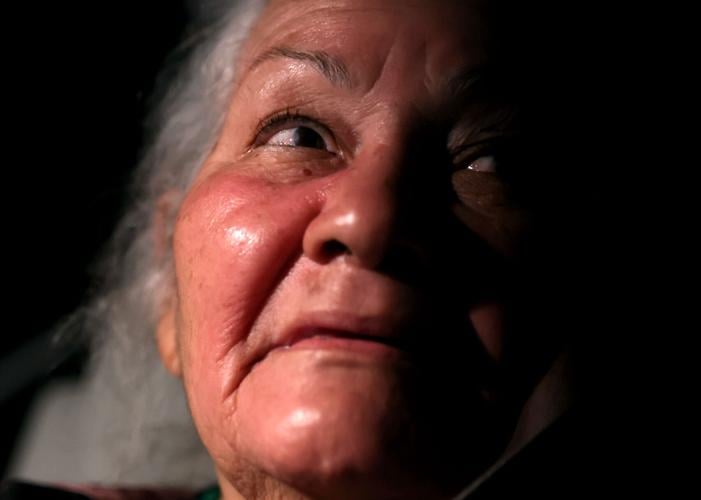
Julia Benitez shortly after being released Thursday night from ICE detention.
ICE did not respond to the Star's repeated requests for an explanation as to why the agency couldn't, or wouldn't, release Benitez on parole, despite her vulnerable state.
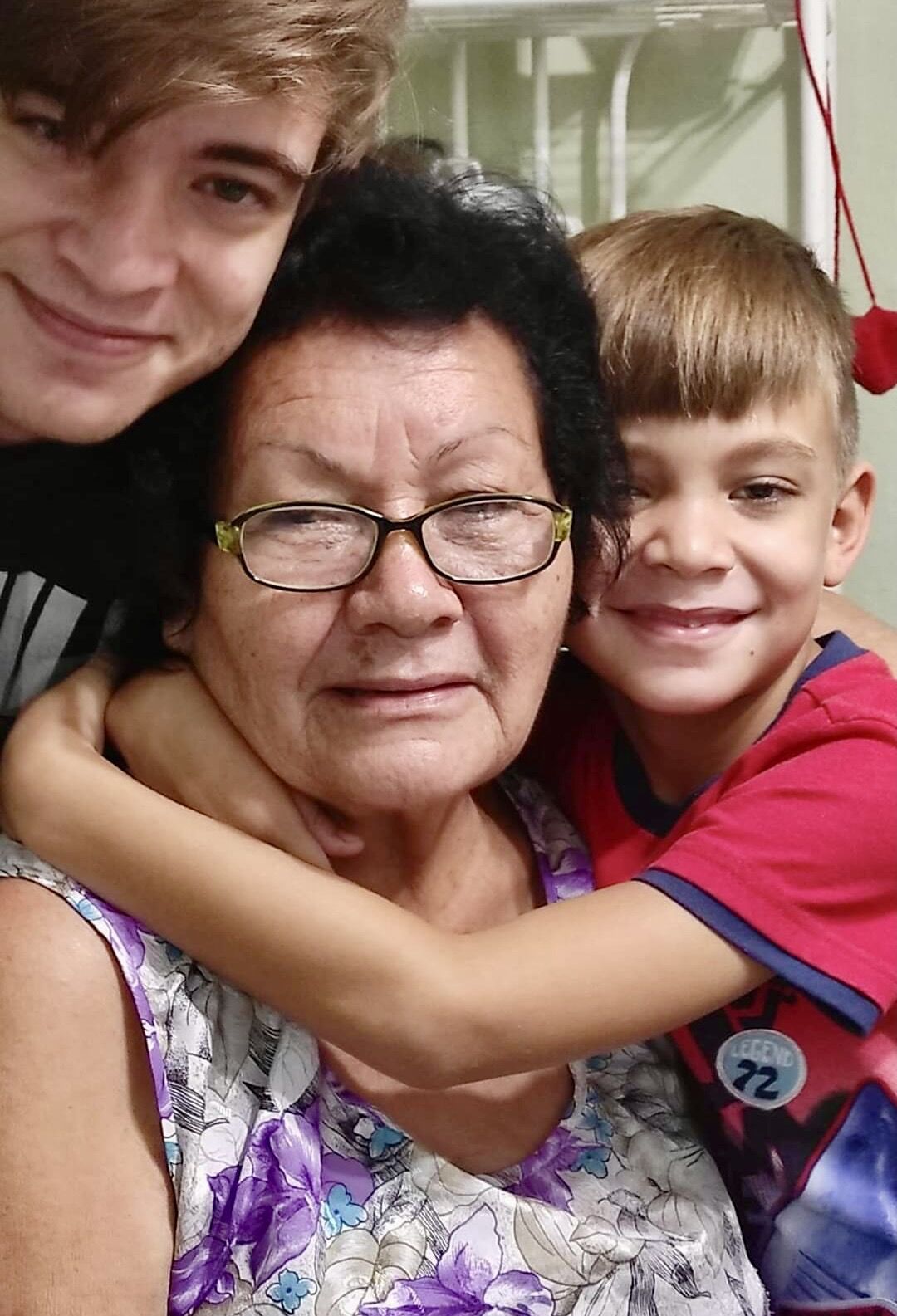
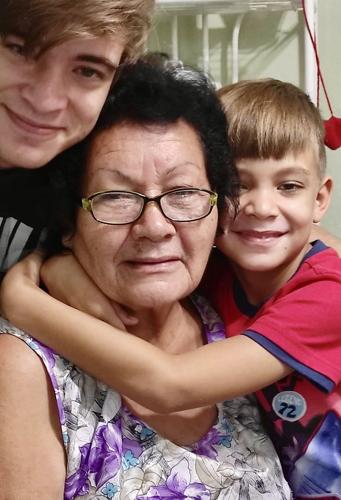
Julia Benitez is pictured in 2022 with her two grandsons, then 16 and 7 years old, when they lived together in Cuba.
On Tuesday, when Dayana first heard her mother could be released this week, she said she was overwhelmed with emotion, but trying to keep her excitement in check until her mother was actually free.
"I feel an immense joy that I cannot express," she wrote in a Tuesday text message. "I don't want to rush things, I just want to keep praying to our Savior."
Julia's asylum petition was denied last year due to insufficient evidence, and her Miami-based attorney is currently appealing that decision, Dayana said.
U.S. Rep. Adelita Grijalva, D-Arizona, had said she would advocate for Julia's release on parole, after reading the Star’s Feb. 15 investigation into the growing number of elderly and disabled immigrants in ICE detention facilities nationwide, including Julia. The Lee Enterprises Public Service Journalism Team contributed analysis of ICE detention data to the Star's report.
ICE has largely stopped using its discretion to release detainees on humanitarian parole since Trump took office in 2025, legal advocates say.
In the first 11 months of 2025, ICE "discretionary releases" — including release on humanitarian parole — fell by 87%, according to a January report from the immigrant-rights group the American Immigration Council.
ICE’s "blanket denials" in response to requests for release on humanitarian parole are leaving vulnerable people in inhumane detention conditions for no good reason, Liz Casey, a social worker with Arizona legal-advocacy group the Florence Immigrant and Refugee Rights Project, told the Star earlier this month.
"That’s ICE’s decision," Casey said. "ICE is not releasing anybody from detention, despite the increase in the number of deaths (in custody), despite mental health issues, despite medical issues, disabilities."
Grijalva visited with Julia at Eloy Feb. 20, during the first-term congresswoman’s first visit to an ICE detention facility. After the visit, Grijalva fought back tears as she told reporters that Julia started crying when she realized she wasn’t leaving Eloy with her visitors.
Eloy detainees told the Star they also saw Julia in tears after the visit with Grijalva last week; some of them had also thought she was being released. That morning, ICE officials had asked detainees to "dress her nicely," because she was getting "an important visit," one detainee told the Star, in a written message from Eloy.
"It warms my heart to know that soon, Julia will be able to hug her daughter and grandchildren," Grijalva said in a written statement Thursday night, after learning of Julia's release. "While I am pleased to learn about Julia’s release, her case begs the question: how many others like her are in federal detention?
"This administration has the authority to exercise discretion and grant humanitarian parole on a case-by-case basis for the elderly and disabled. Instead, it is choosing a cruel and restrictive approach that is needlessly holding medically-vulnerable individuals in detention. I will continue to advocate for those who are being silenced — because abuelas should be home with their families, not in federal detention."

